

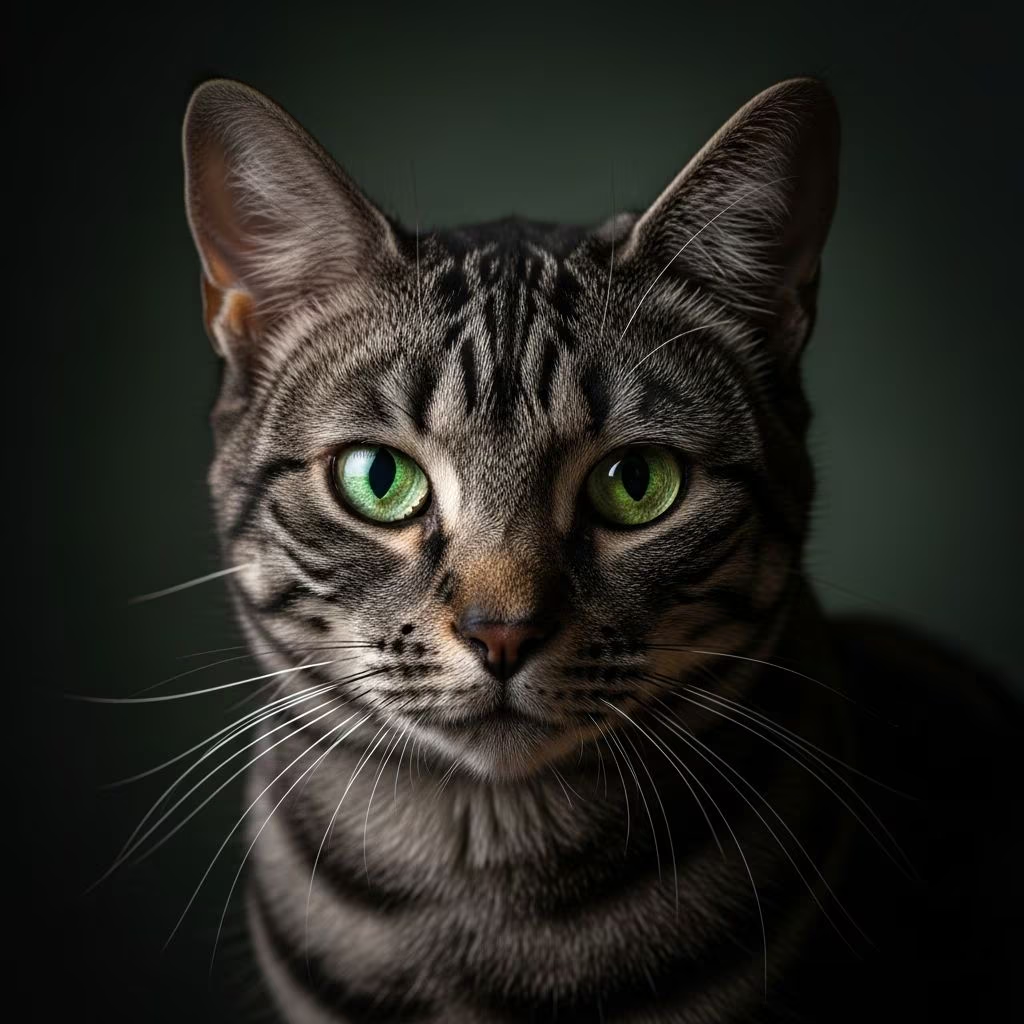
Black tabby cats stand out with their dramatic coats featuring bold patterns against a dark backdrop, making them one of the most visually striking domestic felines. These cats combine the mystery of solid black fur with intricate tabby designs, resulting in endless variations that appeal to pet enthusiasts worldwide.
Understanding the Essence of Tabby Patterns
The term “tabby” refers not to a breed but to a coat pattern found across many cat types, characterized by distinctive markings that evolved for survival in the wild. Black tabbies display these patterns in shades of deep black, charcoal, and subtle undertones of brown or gray, creating a mesmerizing contrast. Key identifiers include an iconic M-shaped mark on the forehead, stripes along the cheeks and legs, and banded fur that gives depth to their appearance.
Domestic cats exhibiting tabby traits trace their lineage to wild ancestors like the African wildcat, where such camouflage aided in hunting and evasion. In black tabbies, the dark base amplifies these natural designs, often revealing “ghost” striping under sunlight even in seemingly solid areas.
Diverse Coat Designs in Black Tabbies
Black tabby cats showcase several unique pattern variations, each governed by specific genetic factors. Here’s a breakdown of the primary types:
- Mackerel Tabby: The most prevalent, featuring narrow stripes resembling tiger markings running vertically along the body, tail, and legs. These bold lines break up the black fur into a striped illusion.
- Classic Tabby: Known for swirled, marbled whorls and bullseye-like spots on the flanks, with thicker bands rather than thin stripes. This recessive pattern dominates in about 80% of modern cats carrying the gene.
- Spotted Tabby: Characterized by round, distinct spots instead of stripes, often breaking up the classic swirls into more defined dots across the coat.
- Ticked Tabby: Subtle banding on individual hairs creates a grizzled effect without obvious stripes or spots, blending into a uniform shimmer.
- Patched Variations: Combinations with tortoiseshell or calico, where tabby patches mix with solid colors, producing caliby or torbie effects.
These patterns stem from interactions at the agouti and tabby gene loci. The dominant agouti allele (A) allows pattern expression, while recessive non-agouti (a) suppresses it, though black tabbies often show faint underlying designs.
| Pattern Type | Key Features | Genetic Note |
|---|---|---|
| Mackerel | Narrow stripes, tiger-like | Dominant allele (T^m) |
| Classic | Swirls, bullseyes | Recessive allele (T^b) |
| Spotted | Defined spots | Modifier gene influence |
| Ticked | Banded hairs, grizzled | Agouti expression |
The Genetic Blueprint Behind Black Tabbies
Genetics play a pivotal role in defining black tabby appearances. The tabby locus features alleles like T^m for mackerel (dominant) and T^b for classic (recessive), determining stripe thickness and arrangement. The agouti gene decides if patterns show: AA or Aa reveals them, while aa hides them under solid color, though environmental factors like lighting can expose ghost patterns in kittens or on tails.
Black pigmentation arises from melanin production, with the orange gene (O) influencing red tones absent in true blacks. Female cats with heterozygous X-chromosomes may show patched tabby due to X-inactivation, creating torbie mosaics. Most black cats are crypto-tabbies, inheriting the recessive non-agouti from both parents for solidity, but sunlight reveals stripes.
Understanding these genes aids breeders in predicting kitten coats and helps owners appreciate subtle variations in their pets.
Historical and Evolutionary Origins
Tabby patterns originated in wild felids, providing camouflage in grasslands and forests. Black tabbies echo big cats like leopards or jaguars, with markings that disrupt outlines for stealthy predation. Domesticated around 9,000 years ago from Near Eastern wildcats, these traits persisted as humans valued hunting prowess.
Folklore associates the forehead M with divine protection, such as the Virgin Mary’s touch on a cat saving baby Jesus, or Muhammad’s blessing. In ancient Egypt, tabby-like cats symbolized grace and mystery, influencing modern superstitions where black variants carry both ill and good omens depending on culture.
Temperament and Social Dynamics
Black tabby cats often exhibit vibrant personalities: curious, bold, and highly social. They thrive in interactive environments, forming strong bonds with humans, children, and other pets. Their playful energy manifests in enthusiastic chases and vocal greetings, making them ideal family companions.
- Outgoing and affectionate, often rubbing against newcomers.
- Intelligent problem-solvers, mastering toys and puzzles.
- Adaptable to multi-pet homes and various living spaces.
- Vocal yet not overly demanding, using meows to communicate needs.
While individual traits vary, tabbies generally display confidence from their wild heritage, excelling as hunters indoors with feather wands or laser pointers.
Health Strengths and Common Concerns
Black cats, including tabbies, benefit from melanin-linked genes enhancing immune response, offering better resistance to diseases like FIV compared to lighter-coated peers. However, they share typical feline vulnerabilities.
Potential issues include:
- Cerebellar hypoplasia (wobbly gait from underdeveloped cerebellum).
- Congenital heart or eye defects.
- Cryptorchidism in males.
- Polydactyly (extra toes).
Regular veterinary check-ups, vaccinations, and dental care mitigate risks. Studies note female tabbies may show more aggression at vets, warranting calm handling.
Care Essentials for Thriving Black Tabbies
To support their active nature, provide high-protein diets mimicking carnivorous needs, with wet food for hydration. Daily play sessions prevent boredom-induced mischief, using scratching posts to protect furniture.
Grooming suits their short to medium coats: weekly brushing reduces shedding and distributes oils. Indoor living enhances longevity, shielding from traffic and predators. Spaying/neutering curbs roaming and health issues.
Myths, Legends, and Cultural Impact
Black tabbies dispel solid-black myths, revealing hidden patterns that intrigue owners. In media, they appear as clever sidekicks, embodying independence and allure. Globally, they symbolize luck in some regions and caution in others, but their charm universally captivates.
Frequently Asked Questions
Are black tabby cats a specific breed?
No, tabby is a pattern appearing in breeds like American Shorthair or Domestic Shorthair.
Why do black tabbies have an M on their forehead?
This genetic mark forms from four lines uniting, present in all tabby patterns regardless of color.
Do black tabbies make good pets for beginners?
Yes, their friendly, adaptable nature suits novices, families, and multi-pet homes.
Can solid black cats be tabbies?
Most are, with faint stripes visible in sunlight due to underlying genetics.
How do I care for a black tabby kitten?
Focus on socialization, nutrition, play, and vet visits to build a healthy foundation.
References
- Tabby cat – Wikipedia — Wikipedia. 2023-10-01. https://en.wikipedia.org/wiki/Tabby_cat
- 8 Fascinating Facts About Black Tabby Cats (With Pictures) – Catster — Catster. 2023-01-15. https://www.catster.com/lifestyle/black-tabby-cat-facts/
- Black Cats—Everything You Should Know — My Lovely Feline. 2022-11-20. https://mylovelyfeline.com/blogs/content/black-cats-everything-you-should-know
- Your Tabby Cat Personality Guide — PetScreening. 2024-05-10. https://www.petscreening.com/blog/tabby-cat-personality-guide



