

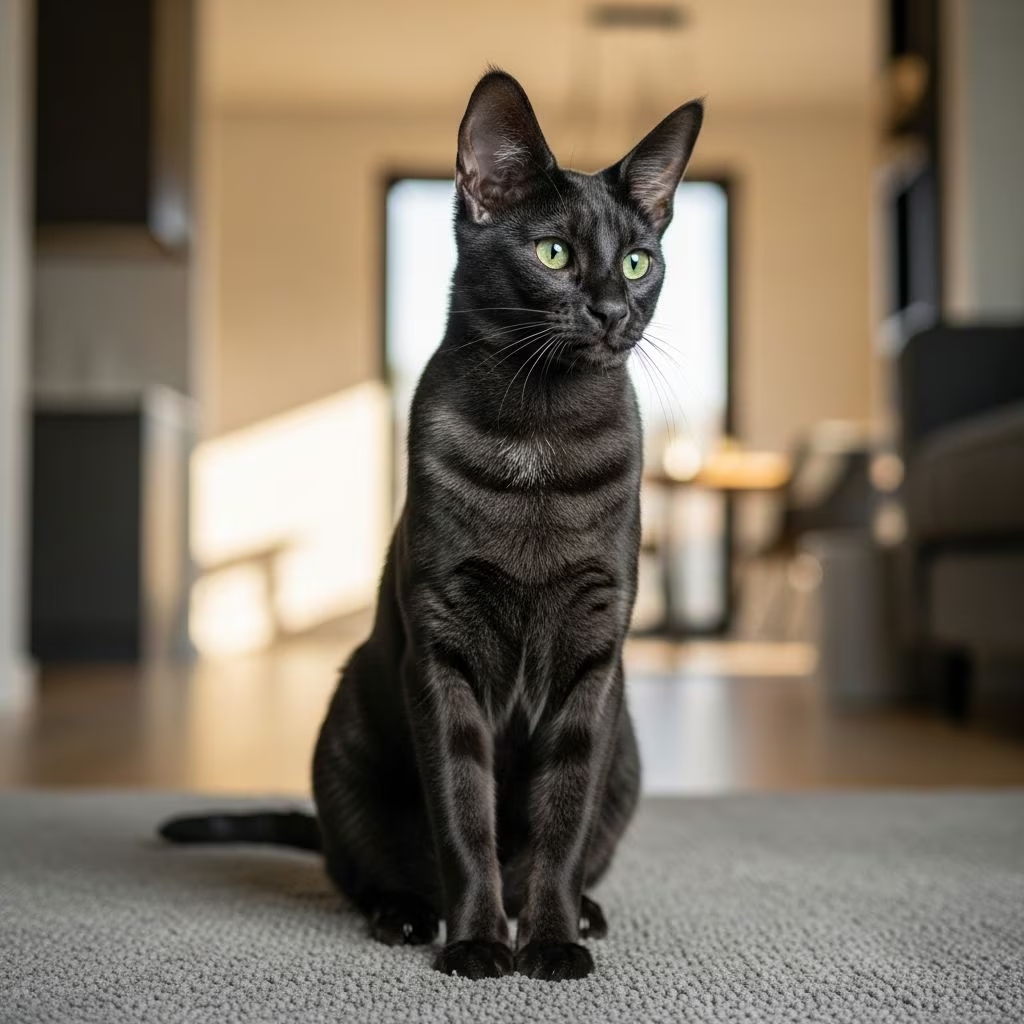
The black Savannah cat stands as one of the most visually striking and enigmatic feline breeds in the domestic cat world. This remarkable animal represents a deliberate cross between the African Serval, a wild African cat species, and domestic house cats, resulting in a companion animal that captures the exotic appeal of its wild ancestry while maintaining the domesticated traits necessary for household living. Black Savannahs, in particular, possess a mystique that extends beyond their stunning dark coats, encompassing their athletic physiques, intelligent personalities, and specialized care requirements that distinguish them from conventional pet cats.
Understanding the Genetic Foundation
The Savannah breed emerged from intentional breeding programs designed to create a domestic cat with the visual characteristics and some personality traits of the African Serval while maintaining trainability and sociability suitable for human companionship. The black coloration in Savannahs represents one of several accepted coat variations within the breed standard, recognized by The International Cat Association (TICA) and esteemed breeding organizations worldwide.
Black Savannahs carry the same genetic heritage as their spotted counterparts, derived from their Serval ancestry. What distinguishes black Savannahs from other color variations is the distribution and visibility of their coat patterns. While standard spotted Savannahs display prominent markings across golden or silver backgrounds, black Savannahs possess fully black and dark grey hairs throughout their coats. This darker coloration creates a subtle interplay of pattern and color that remains partially obscured within the black fur, often referred to as “ghost spotting,” where faint markings may be discernible under certain lighting conditions.
The “F” designation system describes a Savannah’s generational distance from its Serval ancestor. First-generation cats, labeled F1, carry approximately 50% Serval genetics and demonstrate significantly different behavioral characteristics compared to later generations. F2 through F5 designations indicate progressively more distant Serval ancestry, with corresponding behavioral modifications toward domesticated temperament patterns.
Physical Appearance and Distinctive Features
Black Savannahs embody the breed’s signature aesthetic, characterized by a uniquely tall and graceful silhouette that distinguishes them from standard domestic cats. These felines present a visual impression of elegance and power, with physical proportions that create an illusion of greater size than their actual weight suggests.
Structural Characteristics
- Height and Build: Savannahs rank among the tallest domestic cat breeds, despite weighing between 12 to 25 pounds. Their lean, muscular construction and elongated frame create an appearance of considerable size and presence.
- Head and Facial Features: The breed exhibits a triangular head shape with notably high-set, large ears positioned at or above eye level. These ears possess a deep base and widened structure, contributing substantially to the breed’s distinctive exotic appearance.
- Neck and Limbs: An exceptionally long, lean neck extends from the shoulders, while the legs are considerably longer than average, with rear legs slightly exceeding front leg length. This leg-to-body ratio enhances the breed’s overall impression of height and athleticism.
- Eyes and Expression: Savannahs display “hooded” eyes with flat upper eyelids that create an exotic, piercing gaze distinct from conventional feline expressions. Prominent tear duct lines further accentuate their distinctive appearance.
- Tail and Proportion: The medium-length tail tapers to a blunt end and typically extends to approximately hock height when the cat stands. The overall body proportion emphasizes length and grace over bulk or heaviness.
Coat Composition
Black Savannahs possess short to medium-length coats with moderate density and a characteristically coarse texture. The coat structure consists of coarser guard hairs overlaying a softer undercoat. Unlike glossy-coated breeds, Savannahs lack coat resilience and resist the reflective qualities found in some other breeds. The nose leather of black Savannahs must be entirely black, while paw pads should display deep charcoal or brownish-black coloration.
Behavioral Traits and Personality Dynamics
The temperament of black Savannahs mirrors that of other Savannahs within the breed, as coat color does not influence personality characteristics. Instead, behavioral expression depends primarily on the cat’s generational proximity to its Serval ancestry and the quality of early socialization and handling experienced during development.
Characteristic Personality Attributes
Savannahs are renowned for distinctive behavioral patterns that diverge significantly from typical domestic cats. These animals exhibit remarkable loyalty toward their human family members, often displaying dog-like qualities including responsiveness to human direction, interest in following family members throughout the home, and genuine attachment to their caregivers. Unlike many cat breeds that maintain independence, Savannahs actively seek human interaction and suffer noticeably during prolonged periods of isolation.
The breed demonstrates exceptional curiosity and assertiveness, constantly pursuing novel experiences and environmental exploration. This adventurous inclination, combined with their athletic capabilities, makes them unsuitable for sedentary households or owners unable to provide extensive daily engagement and stimulation.
Many Savannah cats display remarkable adaptability to water-based activities, a characteristic uncommon among domestic cats. Some individuals can be trained to walk on leashes, retrieve objects, and participate in interactive games more typically associated with canine companions. This training capacity reflects their intelligence and responsiveness to positive reinforcement.
Generational Temperament Variations
First-generation Savannahs (F1) present substantially different behavioral profiles compared to later generations. These early-generation cats retain elevated anxiety levels and fear responses attributable to their high proportion of wild Serval genetics. F1 cats require extraordinarily experienced owners capable of managing their pronounced wild instincts and behavioral unpredictability.
Contemporary breeding practices primarily involve Savannah-to-Savannah crosses rather than Serval-to-domestic cat pairings, resulting in F2 and beyond generations with progressively more stable, domesticated temperament patterns. These later generations demonstrate substantially improved suitability for conventional household environments while maintaining the breed’s distinctive personality characteristics.
Socialization timing and quality profoundly influence Savannah temperament throughout their lives. Early exposure to diverse people, environments, and stimuli during critical developmental periods establishes the foundation for confident, well-adjusted adult behavior.
Environmental Requirements and Care Considerations
Prospective black Savannah owners must understand that these cats represent a specialized commitment requiring thoughtful environmental planning and consistent engagement.
Activity and Enrichment Needs
Savannahs possess exceptionally high activity requirements compared to standard domestic cats. These athletes require extensive daily exercise, interactive play sessions, and mental stimulation to maintain physical and psychological well-being. A bored Savannah may engage in destructive behaviors including excessive climbing, furniture damage, and aggressive play that damages household furnishings.
Successful Savannah ownership incorporates:
- Multiple daily interactive play sessions using toys engaging their hunting instincts
- Vertical environmental enrichment including tall cat trees and wall-mounted pathways
- Puzzle feeders and food-dispensing toys encouraging problem-solving
- Leash training for outdoor exploration in secure environments
- Water features such as fountains or designated water play areas
Social Compatibility
When properly socialized, Savannahs display good compatibility with multi-pet households. Their loyalty extends to animal companions as well as human family members. However, their high prey drive and athletic intensity may prove problematic with particularly small or fragile pets. Introduction of Savannahs to existing pets requires careful management and gradual acclimation processes.
These cats thrive in households where family members can provide consistent attention and interaction. Savannahs should not be adopted by individuals or families unable to commit substantial daily time to active engagement and enrichment activities. Extended periods of solitude or confinement directly correlate with behavioral problems and stress-related health issues.
Suitability as Household Companions
Black Savannahs are not universally appropriate pets despite their undeniable appeal and distinctive characteristics. The decision to adopt a Savannah requires honest assessment of household circumstances, lifestyle compatibility, and owner expectations.
Ideal Ownership Scenarios
Savannahs flourish in homes with:
- Active family members capable of dedicating 2-4 hours daily to interactive engagement
- Spacious living environments permitting extensive climbing and running activities
- Experience with high-energy, intelligent animals requiring advanced training techniques
- Commitment to ongoing socialization and behavioral management throughout the cat’s life
- Financial resources for specialized veterinary care and premium nutrition
Unsuitable Living Situations
Savannahs struggle significantly in:
- Apartment living with limited space and activity opportunities
- Homes where owners work extended hours with insufficient interactive enrichment
- Households with young children unprepared for the cat’s intensity and exuberance
- Situations requiring unsupervised outdoor access, as Savannahs possess prey drive and escape inclinations
- Multi-cat households where established cats lack tolerance for high-energy newcomers
Health and Lifespan Expectations
Black Savannahs typically enjoy lifespans of 12 to 20 years when provided appropriate care, veterinary attention, and environmental enrichment. This extended lifespan reflects the breed’s genetic foundation combining domestic cat longevity with Serval hardiness.
Responsible breeding practices have minimized hereditary health conditions common in first-generation hybrids. Later-generation Savannahs demonstrate health profiles comparable to standard domestic cats, though individual variation occurs based on breeder practices and genetic management.
Training and Behavioral Management
The breed’s intelligence and responsiveness to training distinguish Savannahs from cats typically resistant to behavioral modification. These animals respond effectively to positive reinforcement techniques, reward-based training, and consistent boundary establishment.
Successful training incorporates:
- Early establishment of household rules and behavioral expectations
- Consistent use of reward-based reinforcement for desired behaviors
- Redirection of natural behaviors toward appropriate outlets
- Leash training for supervised outdoor exploration
- Environmental management preventing access to dangerous items or escape routes
Frequently Asked Questions
How do black Savannahs differ from spotted Savannahs?
Black and spotted Savannahs possess identical temperaments and physical structures. The primary distinction involves coat color presentation. Spotted Savannahs display prominent markings against lighter backgrounds, while black Savannahs present fully black and dark grey coats with subtle ghost spotting patterns. Both color variations are equally accepted within breed standards.
Are black Savannahs suitable for families with children?
Savannahs can coexist with families including older children capable of respecting the cat’s intensity and interactive nature. However, their exuberant play and unpredictable energy make them less suitable for households with very young children. Proper supervision and behavioral training are essential.
What is the typical lifespan of a black Savannah?
Black Savannahs typically live 12 to 20 years, with variations depending on genetics, veterinary care quality, and environmental factors.
How much space do Savannahs require?
Savannahs thrive in spacious environments permitting vertical climbing and horizontal running. While adaptable to various home sizes, they require more space than conventional domestic cats and should not be confined to small apartments without substantial daily outdoor access.
Conclusion: Is a Black Savannah Right for You?
The black Savannah cat represents an extraordinary feline breed offering distinctive beauty, intelligence, and personality for appropriately matched owners. Their striking appearance, remarkable loyalty, and trainability make them compelling companions for dedicated enthusiasts willing to invest substantial time, resources, and commitment. However, their high activity requirements, specialized care needs, and exuberant temperament demand specific household circumstances and owner characteristics.
Black Savannahs are decidedly not casual pet choices. Prospective owners must carefully evaluate whether their lifestyle, living situation, and long-term commitment align with the breed’s genuine requirements. For properly prepared households, a black Savannah offers unparalleled companionship, adventure, and joy. For others, conventional domestic cats may provide more suitable and satisfying pet ownership experiences.
References
- Savannah Cat Breed Information — Purina US. 2024. https://www.purina.com/cats/cat-breeds/savannah
- Savannah Breed Information & Characteristics — TICA (The International Cat Association). 2024. https://tica.org/breed/savannah/
- Savannah Breed Standard — Savannah Cat Breed. 2024. https://www.savannahbreedsection.com/savannah-breed-standard/
- Savannah: Personality, Diet, Grooming, Training — Petplan UK. 2024. https://www.petplan.co.uk/cat-insurance/cat-breeds/savannah.html
- Black Savannah Cat: Info, Pictures, Facts & History — Catster. 2024. https://www.catster.com/cat-breeds/black-savannah-cat/
- F1 thru F5 Savannah Cat Size Guide — African Cats. 2024. https://savannahcatbreed.com/which-cat-is-right-for-you/



