

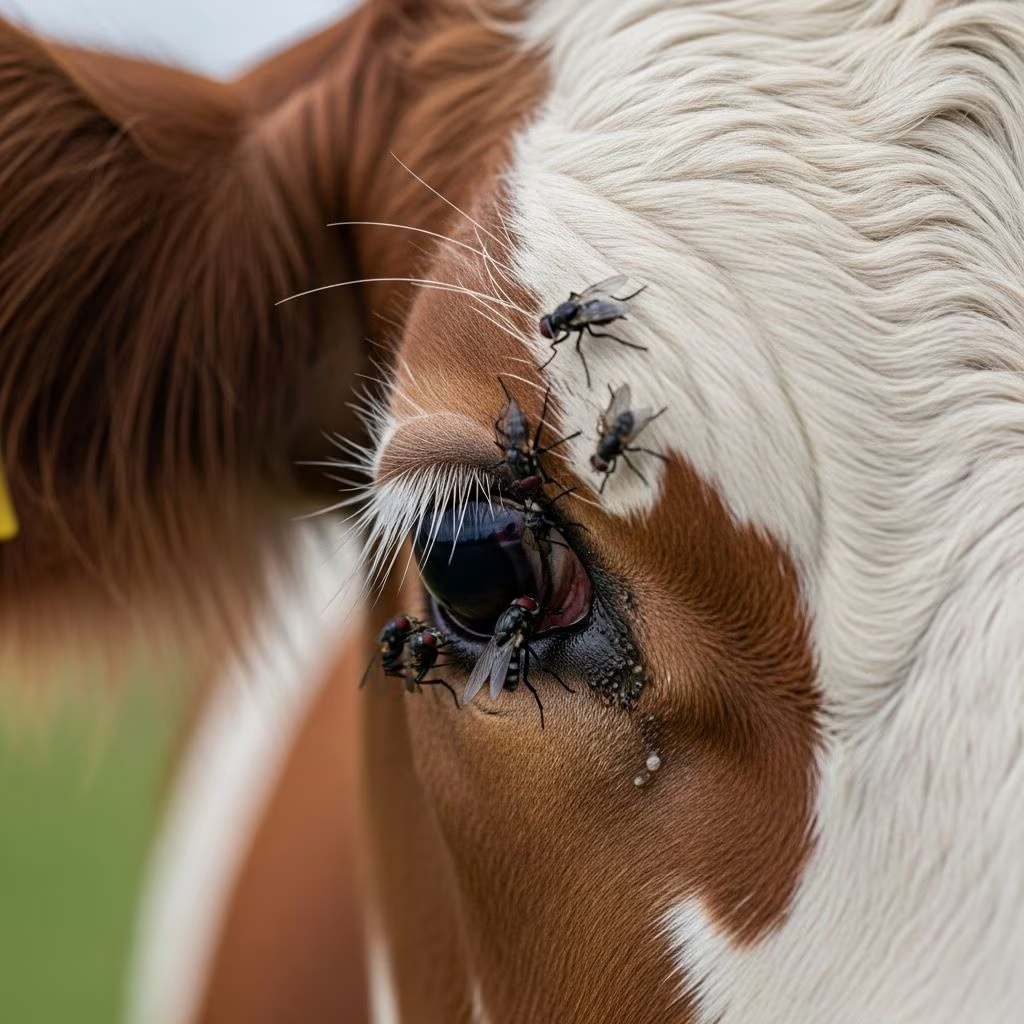
Fundamental Characteristics and Biology of Black Flies
Black flies, scientifically classified as Simuliidae, represent some of the smallest blood-feeding insects in the dipteran order, typically measuring between 1 to 6 millimeters in length. These diminutive arthropods possess distinctive morphological features that distinguish them from other biting flies. Their wings are notably broad and unspotted, with thick and prominent veins concentrated along the anterior margins, giving them a characteristic appearance under magnification. Despite their tiny size, black flies have developed specialized mouthparts specifically adapted for piercing animal skin and extracting blood.
The mouthparts of black flies feature minute serrated structures that create particularly painful wounds when they feed. Only the female black flies engage in blood feeding, as they require the protein obtained from blood meals for reproduction and egg development. Males feed exclusively on plant nectar and other non-blood food sources. This biological distinction is crucial for understanding why only female populations present direct threats to livestock and domesticated animals.
Black flies are commonly encountered during specific seasonal periods, with activity typically peaking during spring and early summer months when water temperatures in breeding habitats reach optimal levels. Their development is intrinsically linked to flowing water environments, where larvae and pupae develop in stream substrates. Understanding this lifecycle connection is fundamental to developing effective population management strategies.
Direct Pathological Effects and Clinical Manifestations
The pathophysiological consequences of black fly infestations extend far beyond simple skin irritation. When black fly females penetrate animal skin with their serrated mouthparts, they initiate a complex inflammatory cascade. The immediate bite sites typically manifest as local reactions including erythema (redness), pronounced itching sensations, and raised wheals or papules that can persist for extended periods.
A particularly problematic aspect of black fly feeding involves the anticoagulant properties present in their saliva. Black flies secrete powerful anticoagulant compounds that prevent blood clotting at the bite site, facilitating continuous blood extraction. This mechanism not only increases the volume of blood consumed per bite but also extends bleeding duration, potentially leading to sustained fluid loss from the host animal. In certain anatomical locations, such as the teats of dairy cattle, these lesions can become severe and require weeks to completely heal, complicating animal management and potentially affecting milk production.
Acute and Chronic Health Consequences
When animals experience attacks involving large numbers of black flies, the cumulative physiological stress can trigger severe systemic reactions. These reactions manifest differently depending on animal species, individual sensitivity, and attack intensity. The saliva of black flies contains toxins that significantly increase capillary permeability, allowing fluid from the circulatory system to escape into surrounding body cavities and tissue spaces. This fluid extravasation can lead to rapid cardiovascular collapse and shock-like conditions, particularly in severe mass attack scenarios.
Persistent exposure to black fly attacks produces a spectrum of chronic health effects that compromise animal productivity and welfare. These consequences include substantial weight loss, reduced milk production in dairy cattle, decreased egg production in poultry, malnutrition particularly affecting young animals, dermatitis with potential skin necrosis, and stress-related secondary diseases. Additionally, black fly attacks may trigger uncontrolled behavior patterns, causing affected animals to stampede, refuse grazing, or engage in destructive behaviors that result in injuries.
In extreme circumstances, mass black fly attacks have caused animal deaths through multiple mechanisms including suffocation when flies crawl into nasal passages and respiratory tract openings, exsanguination from blood loss exceeding physiological tolerance, and acute toxemia from concentrated salivary toxin exposure. This condition, termed simuliotoxicosis, represents the most severe manifestation of black fly attack and occurs most frequently in vulnerable populations including calves, young animals, and certain equine species.
Epidemiological Significance and Disease Transmission Mechanisms
Beyond their direct biting injuries, black flies function as important biological vectors for numerous pathogens affecting both wild and domesticated animals. The epidemiological significance of black flies varies geographically, with certain regions experiencing greater disease transmission burden than others.
Filarial Parasites and Onchocerciasis
Bovine onchocerciasis represents a significant parasitic condition transmitted to cattle through the filarial nematode Onchocerca lienalis. The black fly species Simulium jenningsi serves as the primary biological vector for this parasite. When infected female black flies take blood meals from susceptible cattle, they transmit larval stages of the parasite that establish infections in subcutaneous tissues and connective ligaments. While clinical signs associated with bovine onchocerciasis vary in severity, infected animals may develop dermatitis characterized by inflammatory skin reactions and connective tissue inflammation. Although individual cattle may not show severe systemic disease, the prevalence of infection within cattle populations can reach substantial levels, indicating widespread transmission exposure.
Protozoan Transmission and Leucocytozoonosis
Leucocytozoonosis, a protozoan infection affecting avian species, represents one of the most economically significant black fly-vectored diseases in the poultry industry. Black flies transmit Leucocytozoon species protozoans to susceptible bird populations, causing infections that range from subclinical to rapidly fatal. In acute infections, affected birds develop severe clinical signs including marked emaciation, dehydration, convulsions, and rapid death. Birds surviving acute infection frequently develop chronic infections characterized by persistent parasitemia and profoundly weakened immune function. These chronic infections severely impair reproductive capacity, causing substantial economic losses in commercial poultry operations. The disease has historically devastated poultry production in North America during periods of heavy black fly activity.
Additionally, black flies serve as mechanical transmitters of Trypanosoma confusum, a protozoan parasite that naturally infects North American bird populations. Transmission occurs through contaminated fecal material deposited during fly feeding activities, introducing another disease transmission pathway beyond direct salivary inoculation.
Viral Disease Transmission
Recent advances in molecular diagnostic techniques have revealed black flies as competent vectors for multiple viruses affecting livestock and wildlife. Vesicular stomatitis virus represents the most economically significant arbovirus transmitted by black flies to livestock. This contagious virus causes characteristic vesicular lesions in epithelial tissues, particularly affecting oral mucosa where painful ulcerations impair eating and drinking behaviors. Cases of vesicular stomatitis have been documented in livestock within regions of Mexico characterized by high black fly prevalence, establishing epidemiological evidence for field transmission.
Research investigations have demonstrated that certain black fly species, particularly Simulium vittatum, possess vector competence for vesicular stomatitis virus New Jersey serotype, while other species appear refractory to infection. Additional viruses including Venezuelan equine encephalitis virus and Rift Valley fever virus have been detected in black fly populations, though their epidemiological significance in animal disease remains under investigation. These viral transmissions occur through both biological vector mechanisms and mechanical transmission pathways when viral loads are sufficiently high and direct contact with infected animals facilitates transmission.
Comprehensive Management and Control Strategies
Effective black fly management requires integrated approaches addressing multiple life stages and implementing varied control strategies tailored to specific operational contexts.
Prevention and Avoidance Tactics
Primary prevention focuses on reducing animal exposure to black flies through strategic management practices. Early seasonal intervention involves moving grazing animals away from proximity to breeding habitats, particularly during peak fly activity periods occurring in early morning and evening hours. Providing shelter structures that exclude black flies allows animals temporary refuge during periods of intense fly activity. Environmental modification, such as reducing breeding habitat accessibility when feasible, can provide long-term benefits. These preventive measures should be implemented before fly populations reach peak densities for maximum effectiveness.
Chemical and Biological Control of Larvae
Large-scale effective control of black fly populations fundamentally depends upon systematic destruction of larval stages within flowing water breeding sites. This approach requires community-based coordination, as individual stream treatment efforts prove insufficient when larvae develop continuously downstream in untreated waters.
The most effective larvicide currently available contains Bacillus thuringiensis israelensis (Bti), a naturally occurring soil bacterium producing crystal protein toxins lethal to dipteran larvae. Bti must be metered into flowing water systems in repeated weekly applications timed to coincide with peak black fly activity periods. This microbial approach offers safety advantages over conventional chemical insecticides, causing minimal environmental disruption while effectively reducing larval populations. However, successful implementation requires technical expertise, appropriate monitoring equipment, and sustained treatment protocols throughout the season.
Topical and Systemic Treatments
Direct application of insecticides and repellent products to animal skin surfaces offers temporary protection against adult black fly feeding. Available topical products include those containing malathion, permethrin, and pyrethrin compounds, which provide variable durations of protection depending on formulation, environmental exposure, and reapplication intervals. These treatments require regular reapplication to maintain effectiveness, making them most practical for high-value animals requiring intensive protection.
Mechanical control options including ultra-low volume (ULV) insecticide applications targeting adult flies may provide temporary relief during acute outbreak situations. However, the ephemeral nature of adult fly activity and the impracticality of treating large outdoor areas limit the sustained effectiveness of such approaches.
Species-Specific Responses and Vulnerability Patterns
Different animal species exhibit varying susceptibility to black fly attacks and differential responses to parasitic and viral disease transmission. Cattle experience particular vulnerability to black fly feeding, with preferences for ear, neck, head, and abdominal feeding sites. The resulting lesions on sensitive areas such as teats create significant production impacts through reduced milk output and animal stress.
Equine species including horses, mules, and donkeys show heightened systemic hypersensitivity reactions to black fly toxins, potentially progressing to systemic anaphylaxis during swarm attacks. Swine, sheep, and goats similarly demonstrate considerable vulnerability to simuliotoxicosis following mass fly attacks.
Poultry populations exposed to large numbers of feeding black flies rapidly develop anemia from sustained blood loss combined with red blood cell destruction by protozoan parasites. Young animal populations across all species experience heightened mortality risk during intensive black fly activity periods due to their physiological sensitivity and reduced tolerance for blood loss and toxin exposure.
Frequently Asked Questions
What are black flies and how do they differ from other biting flies?
Black flies (Simuliidae) are tiny blood-feeding flies measuring 1-6 millimeters with broad, unspotted wings and prominent front-edge veins. Unlike larger biting flies, black flies have specialized serrated mouthparts creating particularly painful bites. Only females feed on blood, requiring it for egg production.
What diseases do black flies transmit to animals?
Black flies transmit filarial parasites (Onchocerca species causing bovine onchocerciasis), protozoan parasites (Leucocytozoon species fatal to poultry), and viruses (vesicular stomatitis virus, Venezuelan equine encephalitis, Rift Valley fever virus). They also transmit Trypanosoma confusum through contaminated feces.
How can I protect livestock from black fly attacks?
Protection strategies include moving animals away from breeding sites during peak activity times, providing shelter structures, applying topical insecticides (permethrin, malathion, pyrethrins), and implementing community-based larval control programs in breeding streams using Bti-based products.
What is simuliotoxicosis and how dangerous is it?
Simuliotoxicosis is acute poisoning from black fly saliva toxins causing anaphylactic shock. It represents the most severe outcome of mass black fly attacks, potentially causing rapid death through cardiovascular collapse. Young animals, calves, horses, and mules show highest vulnerability.
Can black fly infestations cause animal death?
Yes, black fly attacks can cause death through multiple mechanisms: simuliotoxicosis (acute toxemia and shock), suffocation when flies enter respiratory passages, exsanguination (death from blood loss), and secondary complications from parasitic or viral disease transmission.
How effective is Bacillus thuringiensis israelensis (Bti) for black fly control?
Bti is the most effective available larvicide, targeting developing stages in water habitats. It requires weekly metering into flowing water during peak activity periods and must be coordinated community-wide for optimal results. Effectiveness depends on proper application timing and coverage of breeding sites.
Conclusion: Integrating Knowledge for Effective Management
Black fly management requires comprehensive understanding of their biology, pathogenic effects, disease transmission capacity, and available control technologies. Successful animal protection depends upon implementing preventive measures before infestations reach peak densities, employing both direct animal protection methods and community-based larval control programs targeting breeding habitats. Given the multiple pathways through which black flies affect animal health—direct feeding injuries, toxin-induced shock, and disease transmission—integrated management approaches addressing multiple intervention points prove most effective for protecting vulnerable livestock and poultry populations.
References
- Black Fly – Livestock Veterinary Entomology — Texas A&M University Department of Entomology. Accessed 2026. https://livestockvetento.tamu.edu/insectspests/black-fly-simuliidae/
- Black Flies of Animals – Integumentary System — Merck Veterinary Manual. Accessed 2026. https://www.merckvetmanual.com/integumentary-system/flies/black-flies-of-animals
- Viruses in Simuliidae: An Updated Systematic Review of Arboviral Transmission — PMC/National Center for Biotechnology Information. 2024. https://pmc.ncbi.nlm.nih.gov/articles/PMC12113196/
- Simulium species — black flies or buffalo gnats — Western College of Veterinary Medicine, University of Saskatchewan. Accessed 2026. https://wcvm.usask.ca/learnaboutparasites/parasites/simulium-species-black-flies-or-buffalo-gnats.php
- Black Flies and Their Control — NC State Extension Publications. Accessed 2026. https://content.ces.ncsu.edu/black-flies-and-their-control
- Insects and Ticks: Black Flies — Purdue University Extension Entomology. Accessed 2026. https://extension.entm.purdue.edu/publichealth/insects/blackfly.html



