

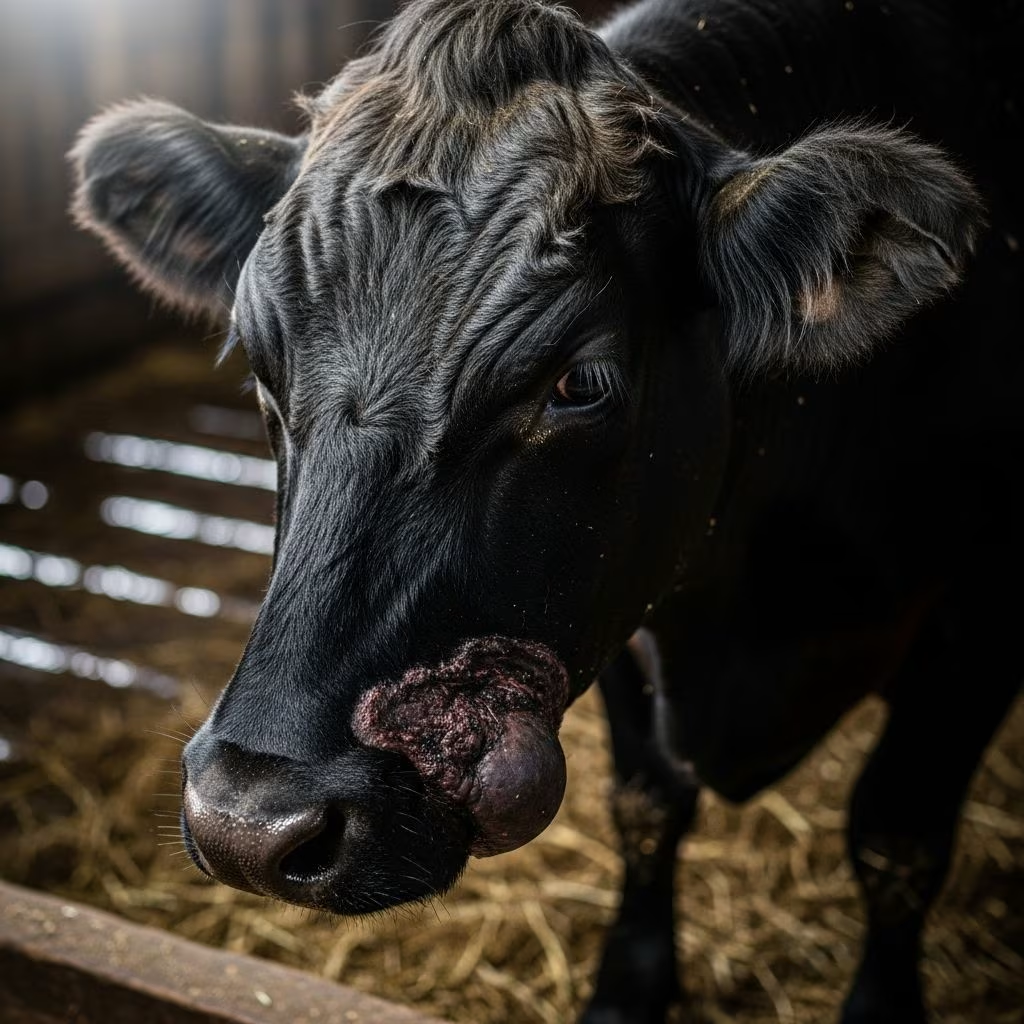
Infectious necrotic hepatitis, commonly referred to as black disease, represents one of the most rapid and fatal conditions affecting livestock, particularly sheep. This acute toxemia arises from the proliferation of Clostridium novyi type B within the liver, triggered by prior tissue damage that creates ideal anaerobic environments for bacterial growth. While primarily impacting ruminants, it occasionally strikes cattle, horses, and pigs, leading to sudden deaths that leave farmers grappling with unexplained losses.
The Pathogen Behind the Disease
At the core of black disease is Clostridium novyi type B, a spore-forming, gram-positive, anaerobic bacterium ubiquitous in soil, water, and the gastrointestinal tracts of animals. These resilient spores enter the body via ingestion, often through contaminated feed or water, and establish dormancy in the liver without immediate harm. The disease activates only when liver tissue undergoes necrosis from unrelated causes, such as migrating parasites, allowing spores to germinate, multiply, and release potent toxins.
These toxins exhibit dual destructive actions: they induce localized liver necrosis and inflict widespread vascular damage. The necrotoxic effects erode hepatic parenchyma, while systemic toxins disrupt microvascular integrity, culminating in capillary rupture, subcutaneous hemorrhages, and the hallmark skin discoloration that names the disease. In ruminants, this process unfolds with alarming speed, often evading clinical detection until death.
Risk Factors and Predisposing Conditions
Black disease thrives in environments conducive to both clostridial contamination and hepatic compromise. Key triggers include:
- Liver fluke infestations: Migration of immature Fasciola hepatica through liver tissue creates necrotic tracks, the primary predisposing factor in endemic areas. This is especially prevalent in damp, poorly drained pastures harboring snail intermediate hosts.
- Other hepatic insults: In horses, nematode migrations from the Strongylidae family or post-anthelmintic parasite die-off can initiate anaerobiosis.
- Environmental exposure: Animals grazing fluke-infested wetlands during summer and early autumn face heightened risk, coinciding with peak parasite activity.
- Nutritional status: Well-nourished adults aged 2-4 years are paradoxically more susceptible, possibly due to denser liver fluke burdens.
Without these insults, dormant spores pose no threat, underscoring the disease’s opportunistic nature.
Clinical Manifestations Across Species
The presentation of black disease varies by species, but peracute onset dominates, with many animals discovered dead without prior signs.
In Sheep
Sheep, the most affected species, often succumb overnight after isolating from the flock. Observable signs, when present, include sudden lameness, lagging behind, fever (40-42°C), rapid shallow breathing, hyperesthesia, and rapid decline to recumbency and death within hours. Appetite loss and pica may precede in vaccinated or subclinically affected groups.
In Cattle
Cattle exhibit a slightly protracted course of 1-2 days, marked by profound depression, reluctance to move, cold extremities, absent rumen motility, semifluid feces, abdominal pain on liver palpation, and periorbital edema. Heart sounds weaken, and body temperature remains normal or low.
In Horses
Rare equine cases manifest as severe peritonitis with toxemia lasting 12-72 hours. Signs encompass depression, ataxia, head tilt, icteric mucous membranes, colic, and progressive recumbency. Unlike ruminants, jaundice and neurological deficits are prominent, linked to hemolysis and hepatic failure.
In Pigs
Though infrequent, pigs mirror ruminant patterns with acute toxemia and hepatic necrosis, though detailed clinical reports are scarce.
| Species | Key Signs | Duration | Fatality |
|---|---|---|---|
| Sheep | Lagging, fever, dyspnea, sudden death | Hours | Near 100% |
| Cattle | Depression, colic, edema, rumen stasis | 1-2 days | High |
| Horses | Neurologic signs, icterus, peritonitis | 12-72 hours | Fatal |
| Pigs | Toxemia, necrosis (limited data) | Variable | High |
Pathological Hallmarks
Postmortem findings confirm the diagnosis. The carcass shows widespread capillary fragility, causing black subcutaneous discoloration from venous congestion. Body cavities accumulate straw-colored serosanguineous fluid, with pericardial, pleural, and peritoneal effusions. Subendocardial and epicardial hemorrhages are common.
The liver, swollen and friable, displays 1-2 cm grayish-yellow necrotic foci, often in the left lobe in horses but randomly scattered in sheep. Histologically, these feature central coagulation necrosis rimmed by neutrophils and eosinophilic inflammation from fluke tracks. Gram-positive rods abound in lesions, with cultures yielding C. novyi. Icterus and hemoglobinuria may appear in severe equine cases.
Laboratory and Diagnostic Approaches
Ante-mortem diagnosis challenges due to rapidity. Bloodwork reveals neutrophilia with left shift, elevated liver enzymes (AST, GGT), hyperbilirubinemia, azotemia, metabolic acidosis, and coagulopathies indicative of disseminated intravascular coagulation (DIC). Horses may show thrombocytopenia and hemolysis.
Definitive confirmation requires necropsy: lesion Gram staining, anaerobic culture, and toxin detection via ELISA or mouse bioassay. Differentiate from acute fascioliasis, enterotoxemias, and lightning strike via histopathology.
Treatment Challenges and Prognosis
Therapy is rarely feasible given the peracute course. High-dose penicillin G or tetracyclines target the bacterium, but rampant toxemia ensures dismal outcomes. Supportive care—fluids, anti-inflammatories, and hepatoprotectants—offers scant benefit once signs emerge. Prognosis is grave, with fatality nearing 100%.
Prevention: The Cornerstone of Control
Proactive strategies are paramount:
- Vaccination: Multivalent clostridial toxoids including C. novyi provide robust immunity. Administer two doses 4-6 weeks apart, with boosters annually or pre-fluke season.
- Fluke management: Strategic anthelmintics (e.g., triclabendazole), drainage of wet pastures, and snail control with molluscicides disrupt F. hepatica cycles.
- Herd hygiene: Avoid overgrazing fluke-prone areas; rotate pastures.
- Monitoring: Sentinel necropsies in outbreaks aid early detection.
In fluke-endemic regions, integrated vaccination and parasitism control slash incidence dramatically.
Epidemiology and Global Impact
Black disease haunts temperate, fluke-endemic zones like the UK, Australia, New Zealand, and parts of North America. Seasonal peaks align with fluke migration. Economic tolls include sudden flock losses, carcass condemnation, and intervention costs. Awareness and vaccination have curtailed outbreaks in managed herds.
Emerging Insights and Research Directions
Recent cases highlight equine susceptibility post-deworming, urging caution with anthelmintics in high-risk settings. Genomic studies of C. novyi strains may refine vaccines. Climate change expanding fluke ranges poses new threats, necessitating adaptive surveillance.
Frequently Asked Questions (FAQs)
What causes black disease in sheep?
Clostridium novyi type B activates in fluke-damaged livers, producing lethal toxins.
How can I prevent black disease on my farm?
Vaccinate with clostridial toxoids and control liver flukes via deworming and pasture management.
Is black disease contagious?
No, it’s not directly transmissible; spores are environmental, triggered individually.
Can horses get black disease?
Yes, rarely, presenting with peritonitis and icterus, often fatal.
What does a black disease carcass look like?
Blackened skin from hemorrhages, fluid-filled cavities, and yellow liver necrotic foci.
References
- Infectious necrotic hepatitis caused by Clostridium novyi type B in a horse — PMC/NCBI. 2019-04-17. https://pmc.ncbi.nlm.nih.gov/articles/PMC6505884/
- Infectious Necrotic Hepatitis (Black Disease) — University of Mosul College of Veterinary Medicine. 2025-05. https://uomosul.edu.iq/veterinarymedicine/wp-content/uploads/sites/7/2025/05/Infectious-Necrotic-Hepatitis-Black-Disease.pdf
- Infectious Necrotic Hepatitis in Animals — MSD Veterinary Manual. Recent update. https://www.msdvetmanual.com/infectious-diseases/clostridial-diseases/infectious-necrotic-hepatitis-in-animals
- Infectious necrotic hepatitis — Wikipedia (informational, primary sources cited). N/A. https://en.wikipedia.org/wiki/Infectious_necrotic_hepatitis
- Black Disease FAQs — Zoetis Australia. Recent. https://www.zoetis.com.au/_locale-assets/faq/faqs-black-disease.pdf



