

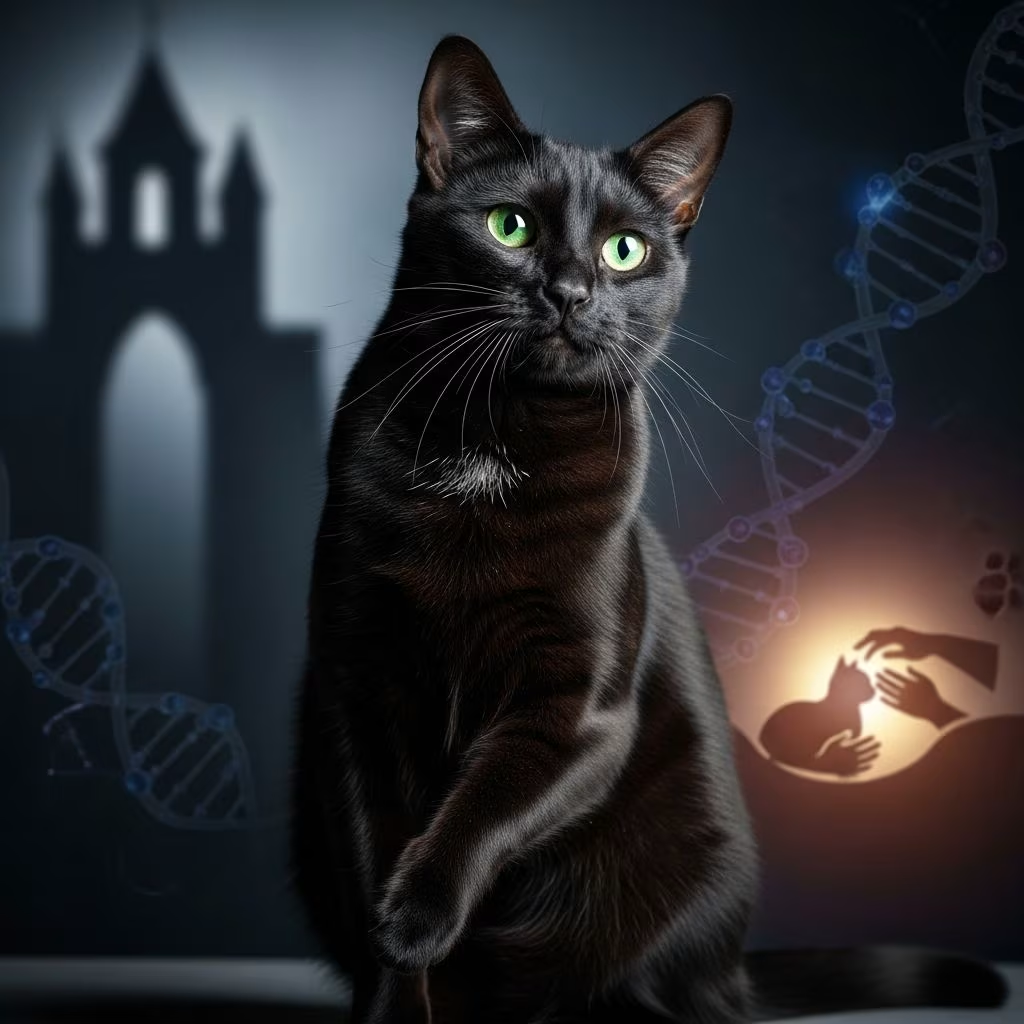
Black Cat Facts: Everything You Need to Know About Our Midnight Felines
Black cats have captured human imagination for centuries, serving as subjects of folklore, superstition, and popular culture. Yet despite their prevalence, these mysterious felines remain widely misunderstood. Whether you’re considering adopting a black cat or simply curious about them, understanding the facts can help dispel myths and reveal the true nature of these captivating companions. From their genetics to their adoption challenges, black cats deserve recognition for their unique qualities and charm.
The Genetics Behind the Black Coat
Black is actually the most common coat color among domestic cats, a fact that surprises many people. This prevalence is rooted in feline genetics and offers an evolutionary advantage. The gene responsible for producing eumelanin—the pigment that creates black fur—is dominant in cats. When a kitten inherits even one copy of the gene for black fur from either parent, the kitten will display a black coat. This genetic dominance means black kittens are born frequently and consistently across cat populations worldwide.
The evolutionary success of black coats provides cats with a distinct advantage in their natural environment. Black fur allows cats to blend seamlessly into nighttime settings, enabling them to hunt prey more effectively under cover of darkness. This camouflage ability likely contributed to black cats being healthier and more likely to breed successfully throughout history, further cementing black as the dominant coat color in feline populations.
Distinctive Physical Characteristics
Beyond their striking dark coats, black cats possess several unique physical features that set them apart from other felines.
Eye Color and Appearance
One of the most captivating features of black cats is their eye color. Most black cats have golden or amber irises, a characteristic directly related to their high melanin pigment content. This combination of jet-black fur and glowing golden eyes creates the distinctive and often mesmerizing appearance that has made black cats iconic in art and literature. The contrast between their dark coats and luminous eyes gives them an almost supernatural appearance, which may have contributed to their association with mysticism throughout history.
Surprising Skin and Fur Characteristics
Many people are unaware that black cats can exhibit an interesting phenomenon known as “rusting.” When exposed to prolonged sunlight, the melanin in a black cat’s coat can fade, causing their fur to develop rusty brown or reddish tinges. This is a natural occurrence and doesn’t indicate any health problems. Additionally, despite their black fur, most black cats actually have gray skin underneath their coat—another surprising fact that reveals the complexity of feline pigmentation.
Black Cat Breeds and Varieties
While black is a common coat color that appears across many domestic cat breeds, certain breeds are particularly associated with black coats. The Cat Fanciers’ Association (CFA) recognizes 22 cat breeds that can be born with solid black coats. However, the Bombay breed stands unique as the only domestic cat breed that is exclusively black. The Bombay was developed specifically to achieve this striking all-black appearance and is prized for its sleek, panther-like appearance and affectionate temperament.
The History of Superstitions Surrounding Black Cats
The relationship between humans and black cats has been complicated by centuries of superstition and misconception. Understanding this history provides context for current challenges these cats face in shelters and adoption centers.
Medieval and European Origins of Black Cat Superstitions
The negative associations with black cats trace back over 800 years to the 13th century. A pivotal moment occurred when a Catholic Church document linked black cats to Satan, establishing a connection between the feline and evil that would persist for centuries. This religious decree set off a chain reaction of superstitions and fears that spread throughout Europe and eventually worldwide.
The consequences for black cats were devastating. Since black cats were believed to embody the devil, they were subjected to horrific treatment in the name of purging evil. In various European regions, black cats met tragic fates: they were beaten to death in medieval Europe, burned alive in France, and hurled from the belfries of Belgian churches during the “Kattenstoet” or “Festival of Cats.” Although this festival continues today, organizers now use stuffed cats instead of live animals. By the 1300s, Europe’s cat population had been decimated by these cruel practices.
The Tragic Consequences of Superstition
The mass killing of black cats during the Middle Ages had unforeseen and catastrophic consequences. As the cat population plummeted, the rodent population exploded, particularly mice that carried the plague. Rather than recognizing black cats as pest controllers that would have prevented disease spread, people blamed the cats themselves for the Bubonic Plague that devastated Europe in the early 14th century. In tragic irony, black cats—great night hunters that could have significantly reduced the rodent population and limited disease transmission—were killed in even greater numbers, making the plague worse.
Modern Superstitions and Cultural Beliefs
Despite scientific advancement and modern understanding, superstitions surrounding black cats persist in contemporary culture. The most famous superstition states that a black cat crossing your path will bring bad luck. Even today, black cats remain unfairly linked to being symbols of evil, omens of misfortune, and iconic Halloween decorations associated with the macabre rather than appreciated for their own qualities.
Interestingly, these superstitions vary by culture. In some traditions, black cats are considered symbols of good luck rather than bad luck, demonstrating that these beliefs are culturally constructed rather than universal truths. Regardless of cultural interpretation, the persistence of superstitions has real consequences for black cats in the modern world.
Adoption Challenges and Shelter Statistics
One of the most significant impacts of historical superstitions is the disparity in black cat adoption rates compared to other cats. The data reveals a troubling pattern that affects thousands of felines annually.
The Adoption Rate Disparity
According to the National Library of Medicine, black cats face significant challenges in finding homes. Black cats have the lowest adoption rate of any cat color at just 10% of all cats adopted from shelters, despite representing a large portion of shelter populations. This is particularly concerning when compared to adoption rates for other cats. Research shows that kittens generally are adopted at rates of 82%, while adult cats aged 1.5 years or older are adopted at only 60%. Black kittens, however, are the last and least likely to be adopted compared to all other kittens, even at young ages when adoption rates typically peak.
Euthanasia Rates and Shelter Outcomes
The consequences of low adoption rates are severe. Black cats have the highest rate of euthanasia among all cats in shelters at 74.6%, according to the National Library of Medicine. This heartbreaking statistic reflects not only low adoption rates but also the practical challenges shelters face when space is limited and animals cannot find homes.
Contributing Factors to Adoption Challenges
Several factors contribute to the adoption challenges black cats face beyond superstition alone. Black cats are more difficult to photograph than lighter-colored cats, which disadvantages them in shelter environments where potential adopters scroll through online listings and photos. When black cats are placed in already crowded shelters with dim lighting, they may literally blend into shadows, making them invisible to visitors walking through the facility. The combination of these practical challenges, coupled with lingering superstitions that many people subconsciously hold, creates significant barriers to adoption.
Debunking Common Black Cat Myths
While superstitions persist, modern research and data analysis have debunked many claims about black cats. It’s important to separate fact from fiction.
The Halloween Danger Myth
One widespread belief is that black cats face increased danger around Halloween, with claims that they are stolen or harmed for ritualistic purposes or used as temporary decorations and then abandoned. To protect cats, some shelters have limited or suspended black cat adoptions during October. However, there is no reliable data supporting claims that black cats are targeted for rituals—this is widely regarded as an urban myth. In fact, no one has ever documented in the history of humane work any relationship between adopting black cats around Halloween and cats being killed or injured. When such killings are reported, forensic evidence has typically pointed to natural predators such as coyotes, eagles, or raptors rather than human harm.
The Adoption Rate Debate
While some organizations report that black cats take longer to be adopted, the data is more complex than it initially appears. According to Shelter Animals Count’s animal-level data analysis, black cats actually have a strong adoption rate, with October being a particularly important month for black cats to find new families. This suggests that the narrative of black cats struggling dramatically to find homes may be overstated, though regional variations and individual shelter experiences do show differing outcomes.
Surprising Health Benefits of Black Cats
Beyond the physical characteristics, black cats may possess health advantages that researchers are beginning to understand. The high melanin content that creates their distinctive appearance may provide protective benefits. Some research suggests that black cats may have increased immunity compared to cats with other coat colors, though more research is needed to fully understand this potential advantage. The same melanin that makes their fur black and gives them their glowing eyes may contribute to enhanced disease resistance and overall health resilience.
Genetics and Color Variations
An interesting genetic fact about cats is that all cats are essentially variations of orange and black, controlled by different genes at different loci. This means that even cats that don’t appear obviously orange or black carry these genetic instructions in their DNA. The interplay of multiple genes determines a cat’s final coat color, pattern, and appearance. Understanding this helps explain why black cats appear so frequently and why genetic diversity in coat colors is actually quite limited in the feline world.
Gender and Black Cats
Another interesting characteristic of black cats is that they tend to be male more often than female. This relates to the genetics of coat color in cats and how certain colors are distributed across genders. While the reasons for this gender skew are rooted in feline genetics, it’s a notable pattern that has been observed in black cat populations.
Cultural Celebrations and Appreciation Days
Recognizing the challenges black cats face, various organizations have established special days to celebrate and promote their adoption. In the United Kingdom, October 27 has been designated ‘Black Cat Day’ by Cats Protection to celebrate the virtues of black cats and encourage adoption. In the United States, August 17 is recognized as “Black Cat Appreciation Day,” created by Wayne H. Morris in honor of his late sister June and her beloved black cat, Sinbad.
These celebrations have expanded to include adoption initiatives. In 2014, Toronto held a Black Friday event offering free adoption of black cats to encourage people to bring them home. This trend has spread across the United States, with many shelters now offering free or discounted adoption of black cats on Black Friday, making it an excellent opportunity for potential adopters to welcome a black cat into their homes at no cost.
Why Black Cats Make Wonderful Companions
Despite their troubled history and current adoption challenges, black cats make exceptional pets. They deserve the same love and companionship as any other cat. Their striking appearance, combined with affectionate personalities, makes them wonderful family members. By adopting a black cat, you’re not only gaining a devoted companion but also saving a life and helping combat centuries-old superstitions with your own positive experience.
How to Support Black Cat Welfare
If you’re passionate about helping black cats, there are several ways to make a difference. Consider adopting a black cat from a local shelter, where they face the greatest challenges. Support animal rescue organizations that specifically work with black cats or general feline rescue efforts. Spread awareness about black cat facts and debunk superstitions in your community. During adoption events and special occasions like Black Friday or Black Cat Appreciation Day, consider making a donation to shelters that help these deserving animals.
Frequently Asked Questions About Black Cats
Q: Are black cats really bad luck?
A: No, black cats are not bad luck. This superstition originated in medieval times and is not supported by any scientific evidence. Black cats are simply beautiful felines that deserve love and respect like any other cat.
Q: Are black cats harder to adopt?
A: Black cats do face adoption challenges compared to other coat colors, though the reasons are practical rather than inherent to the cats themselves. They’re harder to photograph, blend into shadows in shelters, and are affected by lingering superstitions. However, adoption events and awareness campaigns are helping change this trend.
Q: Why do black cats have golden eyes?
A: Most black cats have golden or amber eyes due to their high melanin content. The same pigment that creates their black fur contributes to their eye color, creating a striking contrast.
Q: Is it dangerous to adopt a black cat around Halloween?
A: No, there is no credible evidence that black cats face increased danger around Halloween. Claims of ritualistic harm are urban legends without documented support. Adopting a black cat any time of year, including Halloween, is safe and rewarding.
Q: What breeds can be black?
A: The Cat Fanciers’ Association recognizes 22 cat breeds that can have solid black coats. The Bombay breed is exclusively black, making it the only breed where all cats are black.
Q: Can black cat fur change color?
A: Yes, black cats can experience “rusting” when exposed to prolonged sunlight, causing their fur to develop rusty brown or reddish tinges. This is a natural phenomenon and not a health concern.
References
- The Power of Black Cats: Legends That Haunt Them, Responsible Adoption — Mississippi State University. 2024-02. https://www.msj.edu/news/2024/02/the-power-of-black-cats.html
- The Magic of Black Cats: Debunking Myths with Animal-Level Data — Shelter Animals Count. https://www.shelteranimalscount.org/the-magic-of-black-cats-debunking-myths-with-animal-level-data/
- Black Cat — Wikipedia. https://en.wikipedia.org/wiki/Black_cat
- 8 Facts You Didn’t Know About Black Cats — YouTube. https://www.youtube.com/watch?v=1luz2NAYEpw
- 10 Interesting, Little-Known, and Fun Facts About Black Cats — PetMD. https://www.petmd.com/cat/general-health/black-cat-facts
- 6 Fun Black Cat Facts — Meow Mix. https://www.meowmix.com/cat-care/black-cats-facts



