

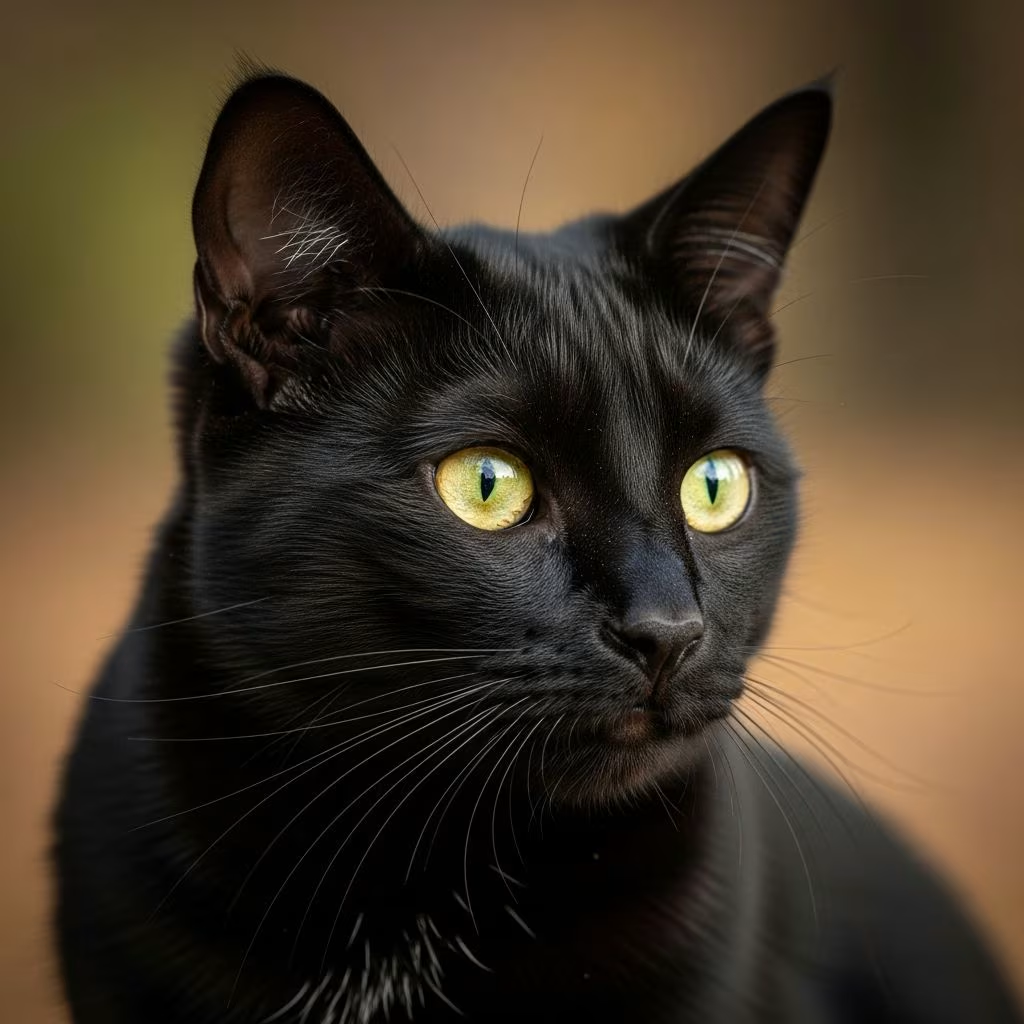
Black cats have long captivated imaginations with their sleek, mysterious appearance, often shrouded in superstition yet beloved by owners for their unique charm. Despite myths linking them to bad luck, these felines are among the most common and resilient cats, thanks to dominant genetics producing eumelanin pigment for their striking coats. This article dives into 15 essential facts, from their genetic dominance and sun-fading quirks to affectionate personalities and historical lore, helping you appreciate why black cats deserve a spot in every home.
1. Black Is the Most Common Feline Coat Color
The black coat is the most prevalent among domestic cats due to the dominant gene for eumelanin, the dark pigment responsible for black fur. Cats inherit one gene from each parent; if at least one codes for black, the kitten will display this color, overriding others like tabby patterns. This genetic prevalence likely evolved as an advantage for nocturnal hunting, allowing black cats to blend seamlessly into the night while stalking prey. The ‘non-agouti’ gene further suppresses tabby stripes, resulting in a solid black appearance, though faint ghost markings may appear under certain lights.
2. Black Cats Are Less Likely to Be Adopted
Despite their commonality, black cats linger longer in shelters due to persistent superstitions associating them with witchcraft and misfortune, a bias rooted in medieval European folklore. Shelters report black cats are adopted at lower rates, especially around Halloween when fears peak, prompting many to implement no-adoption policies for them during the holiday. This unfortunate stigma overlooks their wonderful temperaments, making black cats some of the most underappreciated gems in rescue centers.
3. Black Cats Can Rust in the Sun
Prolonged sun exposure can cause black cats’ fur to ‘rust,’ turning reddish-brown tones as eumelanin breaks down under UV rays, particularly in lighter-coated blacks. Owners in sunny climates notice this fading on ears, nose, and tails first; providing shade, window films, or limited outdoor access prevents it. Interestingly, black cats’ paw pads match their fur color, so pure blacks have dark pads, while those with white markings show pink patches.
4. It’s Rare To See a Solid Black Cat
Truly solid black cats are uncommon because the tabby gene is dominant, often leaving subtle stripes or swirls visible upon close inspection or in sunlight. A recessive ‘solid’ gene is needed to fully suppress these patterns, and even then, black cats may have white roots or appear as ‘black smoke’ undercoat. This rarity adds to their allure, as most appear uniformly ebony but reveal hidden patterns to observant eyes.
5. The Bombay Is the Only Breed That’s Always Black
The Bombay breed, bred to resemble a miniature black panther, is the sole cat breed recognized by the Cat Fanciers’ Association (CFA) as exclusively black across all specimens. Developed from Burmese and American Shorthairs, Bombays boast sleek, patent-leather coats, rounded heads, and muscular builds, making them playful, dog-like companions. Other breeds like the Chantilly-Tiffany or Norwegian Forest Cat can be black but aren’t exclusively so.
6. Black Cats Almost Always Have Yellow Eyes
Most black cats feature striking yellow, gold, orange, copper, or green eyes due to high eumelanin levels influencing iris pigmentation. Blue eyes are rare, typically linked to partial albinism causing white fur patches alongside the black. This eye-fur synergy creates their signature ‘glowing’ gaze in low light, enhancing their mystical reputation.
7. Black Cats Have Black Whiskers and Paws
Matching their coats, black cats possess black whiskers and paw pads, a direct result of eumelanin distribution. Whiskers, technically specialized hairs, absorb the same pigments, appearing inky against their fur. Paw pads range from solid black to mixed if white fur is present, providing grip suited to their agile lifestyles.
8. Black Cats May Be More Disease-Resistant
Research suggests black cats enjoy enhanced disease resistance thanks to a melanism mutation, potentially offering protection against infections like Feline Immunodeficiency Virus (FIV). This genetic trait, linked to higher melanin, may bolster immune responses, contributing to their prevalence in populations. While not exclusive to blacks, it underscores their hardy nature beyond mere coat color.
9. Black Is Genetically Dominant
Black fur dominates feline genetics; kittens from a black parent have high odds of being black, even if the other carries recessive colors. The B gene (Black/Brown) in dominant form, combined with non-agouti, ensures black overrides others, explaining abundant black cats without higher breeding rates. Mating two blacks doesn’t guarantee black kittens, as recessive traits can emerge unpredictably.
10. The Science Behind the Black Color
Eumelanin production, driven by the non-agouti gene, halts tabby banding for solid black coats. Variations include coal black, brownish-black, or grayish tones, with ‘black smoke’ showing white underfur. This melanin also tints skin grayish, visible on noses, lips, and paw pads, tying coat to overall pigmentation.
11. Personality Myths vs. Reality
No scientific evidence links coat color to temperament; black cats’ personalities stem from genetics, breed, and environment, not fur hue. Owners describe them as intelligent, playful, affectionate ‘lap cats’ forming strong bonds, often dog-like in loyalty. Studies show minimal color-personality correlations, emphasizing individual variation over myths of aloofness or spookiness.
12. Common Personality Traits of Black Cats
Black cats frequently exhibit high intelligence, playfulness, and affection, thriving on human interaction and cuddles. Many follow owners room-to-room, seek laps, and excel in puzzle toys, showcasing problem-solving skills. While not universal, these traits make them sociable companions, debunking witchy stereotypes with loving reality.
13. Black Cats in History and Superstition
Black cats symbolize both fortune and doom across cultures: good luck in Japan (招き猫), bad omens in Western Europe tied to witch trials. Ancient Egyptians revered them as Bastet’s guardians; medieval fears linked them to Satan. Today, Halloween boosts adoptions in some areas while fueling shelter cautions elsewhere.
14. Black Cat Care Tips
Provide high-protein diets to maintain coat shine and prevent rusting; regular grooming distributes oils, reducing shedding. Monitor sun exposure with SPF-safe sunscreens for outdoor cats, and ensure vaccinations against diseases where their resilience shines. Enrichment through toys and perches supports their active minds.
15. Why Adopt a Black Cat?
Black cats offer loyalty, smarts, and low-maintenance beauty, thriving in any household with proper socialization. Overcoming adoption biases reveals hidden treasures: resilient health, stunning looks, and endless affection await those who look past the color.
Frequently Asked Questions (FAQs)
Do black cats have different personalities?
No, fur color doesn’t determine personality; traits like affection and intelligence vary individually.
Are black cats bad luck?
This is a superstition without basis; many cultures view them as lucky.
Why do black cats have yellow eyes?
Eumelanin influences both fur and iris color, producing yellow/gold hues.
Can black cats have kittens of other colors?
Yes, recessive genes can produce non-black offspring.
Are black cats healthier?
They may resist some diseases better due to melanism.
References
- Black Cat Personality: Myths, Traits, and Bonds — Basepaws. 2023. https://basepaws.com/blog/black-cat-personality-myths-traits-and-bonds
- 10 Interesting, Little-Known, and Fun Facts About Black Cats — PetMD. 2023-10-01. https://www.petmd.com/cat/general-health/black-cat-facts
- Black cat — Wikipedia. 2026-01-10. https://en.wikipedia.org/wiki/Black_cat
- 9 SURPRISING FACTS ABOUT BLACK CATS! — YouTube (Cole and Marmalade). 2023. https://www.youtube.com/watch?v=vqd0MVJ1d9Q
- 8 Facts You Didn’t Know About Black Cats — YouTube (Black Cat Holistic Rescue). 2023. https://www.youtube.com/watch?v=1luz2NAYEpw



