

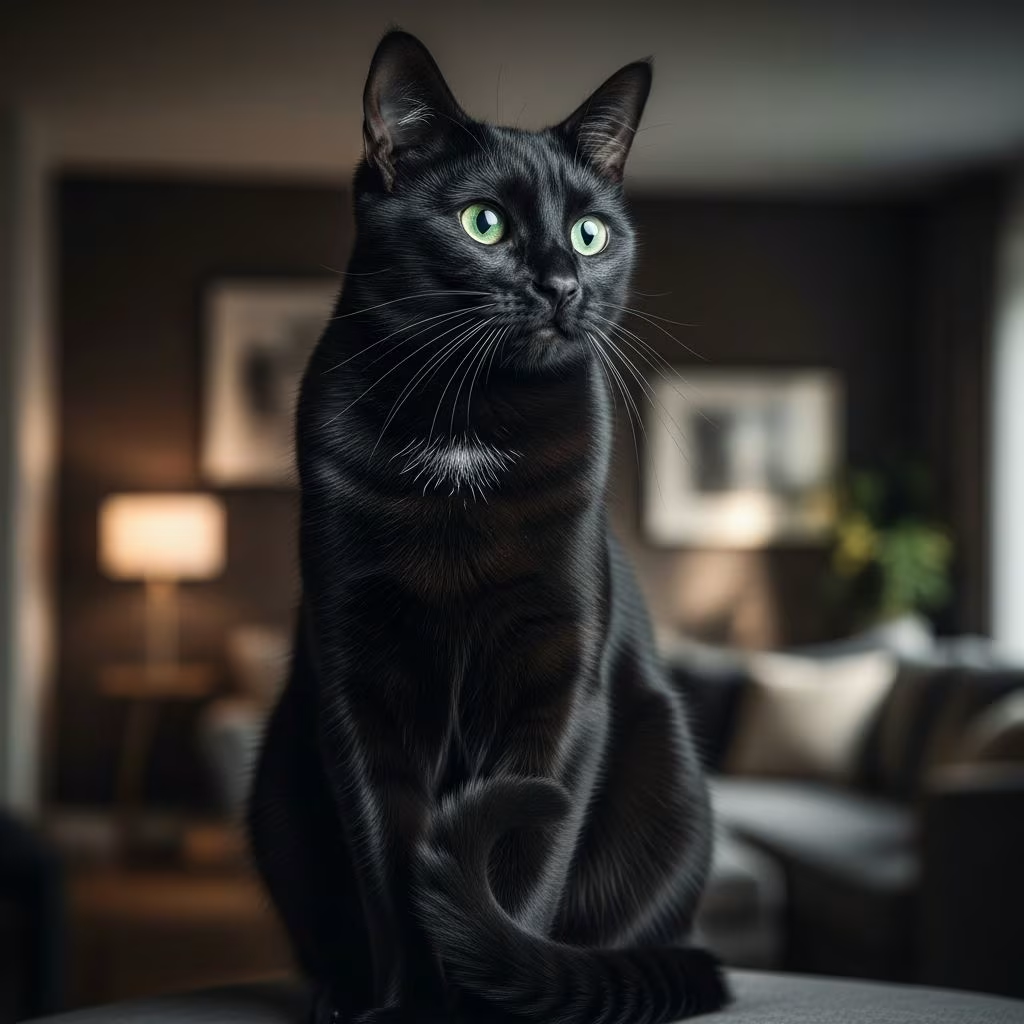
Black cats have long captivated pet lovers with their sleek, mysterious coats and vibrant personalities. Contrary to superstitions, these ebony felines are affectionate, playful companions found across many breeds. Black fur results from a dominant gene that suppresses tabby patterns, producing solid coal-black coats from roots to tips. This article explores 22 black cat breeds, detailing their origins, appearances, temperaments, care needs, and suitability for various homes. Whether you seek a lap cat or an adventurous hunter, black cats offer diverse options backed by breed standards from organizations like the Cat Fanciers’ Association (CFA) and The International Cat Association (TICA).
Why Choose a Black Cat Breed?
Black cats aren’t a single breed but appear in many due to the genetically dominant black pigmentation. They often have golden, copper, or green eyes that contrast strikingly against their dark fur. Owners report black cats as highly intelligent, playful, and affectionate, often excelling as lap cats. Myths of bad luck persist in some cultures, but scientifically, their traits mirror other colors—cute, social, and loyal. Selecting a purebred black cat ensures predictable size, coat, and personality, ideal for first-time owners or families.
Popular Black Cat Breeds
1. Bombay
The Bombay, bred in the 1950s by crossing American Shorthairs and Burmese, boasts a patent-leather black coat and muscular build. Their round heads feature strong jaws and golden eyes, earning them the ‘parlor panther’ nickname. Bombays are affectionate, friendly, and playful, thriving as family pets. They demand interactive play but adapt well to apartments. Coat care is minimal—weekly brushing suffices. Health watch: hypertrophic cardiomyopathy (HCM).
2. American Shorthair
American Shorthairs, with roots in colonial America, display dense black coats on sturdy frames. Kittens may show smoky undersides that darken with age. Known for gentle, playful temperaments, they’re excellent with kids and dogs. Low-maintenance grooming and robust health make them ideal. They enjoy hunting toys, reflecting their mousing heritage.
3. Persian
Persians feature luxurious long black coats, flat faces, and copper eyes. Gentle and loving, these lap cats prefer quiet homes. Daily grooming prevents mats; brachycephalic faces increase tearing and breathing issues. They’re calm cuddlers, perfect for relaxed owners.
4. British Shorthair
British Shorthairs have plush, velvety black fur, stocky builds, and round copper-gold eyes. Calm and easygoing, they’re not overly vocal. Weekly brushing maintains their coat. Prone to obesity, they suit active households. Historical muses for artists like Churchill.
5. Cornish Rex
Cornish Rex cats sport curly, short black coats resembling lamb’s wool, with large ears and egg-shaped heads. Intelligent and alert, they bond closely with humans. Even paw pads are black. Minimal shedding but prone to skin issues; provide warm spots. Originated from a 1950s barn cat mutation.
6. Maine Coon
Maine Coons, gentle giants up to 25 pounds, have thick black coats, tufted ears, and bushy tails. Playful climbers needing large cat trees, they’re sociable with families. Water-loving and dog-friendly. Groom bi-weekly; screen for hip dysplasia.
7. Manx
Manx cats, tailless due to a genetic mutation, have longer hind legs for high jumps. Black-coated ones are smart, playful hunters. Affectionate yet independent, they excel at mousing. Check for spinal issues (Manx syndrome).
8. Exotic Shorthair
Exotic Shorthairs resemble Persians with short, dense black coats and big round eyes. Calm and cuddly, they adapt to any home. Groom weekly; watch brachycephalic breathing problems.
9. Selkirk Rex
Selkirk Rex have curly, messy black coats (short or long) from a dominant curl gene. Cuddly and patient, they’re family-friendly. Unpredictable colors make black variants popular. Brush to prevent mats.
10. Siberian
Siberians boast triple-layered black coats and bushy tails, hypoallergenic for some. Varying personalities: lap cats or hunters. Skilled swimmers and climbers. Heart-healthy but screen for HCM.
11. Norwegian Forest Cat
Norwegian Forest Cats (‘Wegies’) have water-repellent black coats, loving climbs and swims. Gentle with kids despite independence. Provide tall perches; thick fur needs grooming.
12. Oriental Shorthair
Orientals feature sleek black coats, almond eyes, and large ears. Vocal, social trick-learners who crave interaction. Slim builds prone to overeating.
13. Japanese Bobtail
Japanese Bobtails have pom-pom tails and dense black coats. Sociable and playful, they follow owners everywhere. Unique tails like fingerprints.
14. American Bobtail
American Bobtails are athletic with short, rabbit-like black coats. Intelligent family pets loving to please. Short or long hair variants.
15. Sphynx
Sphynx have ebony skin (furless black), requiring baths and sweaters. Wrinkly, warm, and extroverted cuddlers.
16. Devon Rex
Devon Rex sport soft, wavy black coats, elf-like ears. Mischievous and people-oriented.
17. Scottish Fold
Scottish Folds have folded ears and plush black fur. Sweet but prone to cartilage issues.
18. Chantilly-Tiffany
Chantilly-Tiffanies even out to solid black. Affectionate with colorpoint ghosts.
19. Ragamuffin
Ragamuffins allow solid black in plush coats. Dog-like loyalty.
20. LaPerm
LaPerms have curly black coats. Playful and adaptable.
21. Australian Mist
Australian Mists spotted but black variants exist. Friendly Aussies.
22. Elf
Elves combine Sphynx hairlessness with curls for black shimmer.
Black Cat Genetics and Appearance
Solid black (melanistic) cats suppress tabby via recessive genes, yielding coal, brownish, or smoky shades. Standards demand uniform tone: black noses/pads for most. Eyes vary: gold for Bombays, copper for Persians. ‘Black smoke’ shows white roots.
Temperament of Black Cats
Black cats mirror breed traits: Bombays dog-like, Persians sedentary. Generally playful, smart, bonded. Socialize early for families.
Caring for Black Cat Breeds
- Grooming: Short coats weekly; long daily (Persian, Maine Coon).
- Exercise: Toys for hunters (Manx); trees for climbers.
- Diet: Breed-specific to prevent obesity (British Shorthair).
- Vet Care: Annual checks; breed HCM/polycystic kidney screens.
Health Considerations
| Breed | Common Issues |
|---|---|
| Bombay | HCM |
| Persian | PKD, breathing |
| Maine Coon | Hip dysplasia |
| Manx | Spinal defects |
| Sphynx | Skin infections |
Genetic testing recommended.
Fun Facts About Black Cats
- Black dominant, explaining prevalence.
- Bombays bred for panther look.
- Manx jump extraordinarily.
- Norwegians love water.
Frequently Asked Questions
Are black cats good pets?
Yes, black cats are affectionate and playful like any color.
Do black cats need special care?
Care matches breed: Persians need grooming; Bombays minimal.
Why are some black cats smoky?
White roots under black tips create ‘smoke’ effect.
Are black cats healthier?
No, health breed-specific, not color.
Best black cat for apartments?
Bombay or British Shorthair: low-maintenance, adaptable.
References
- Black Cat Breeds – Our Guide to the Top 5 Black Cats — Waggel. 2023. https://www.waggel.co.uk/blog/post/black-cat-guide
- 20 Black Cat Breeds — PetMD. 2024-01-15. https://www.petmd.com/cat/general-health/black-cat-breeds
- Black cat — Wikipedia. 2025-12-01. https://en.wikipedia.org/wiki/Black_cat
- Black Cat Personality: Myths, Traits, and Bonds — Basepaws. 2023. https://basepaws.com/blog/black-cat-personality-myths-traits-and-bonds
- Top 11 Beautiful Black Cat Breeds — Rover.com. 2024. https://www.rover.com/blog/black-cat-breeds/



