

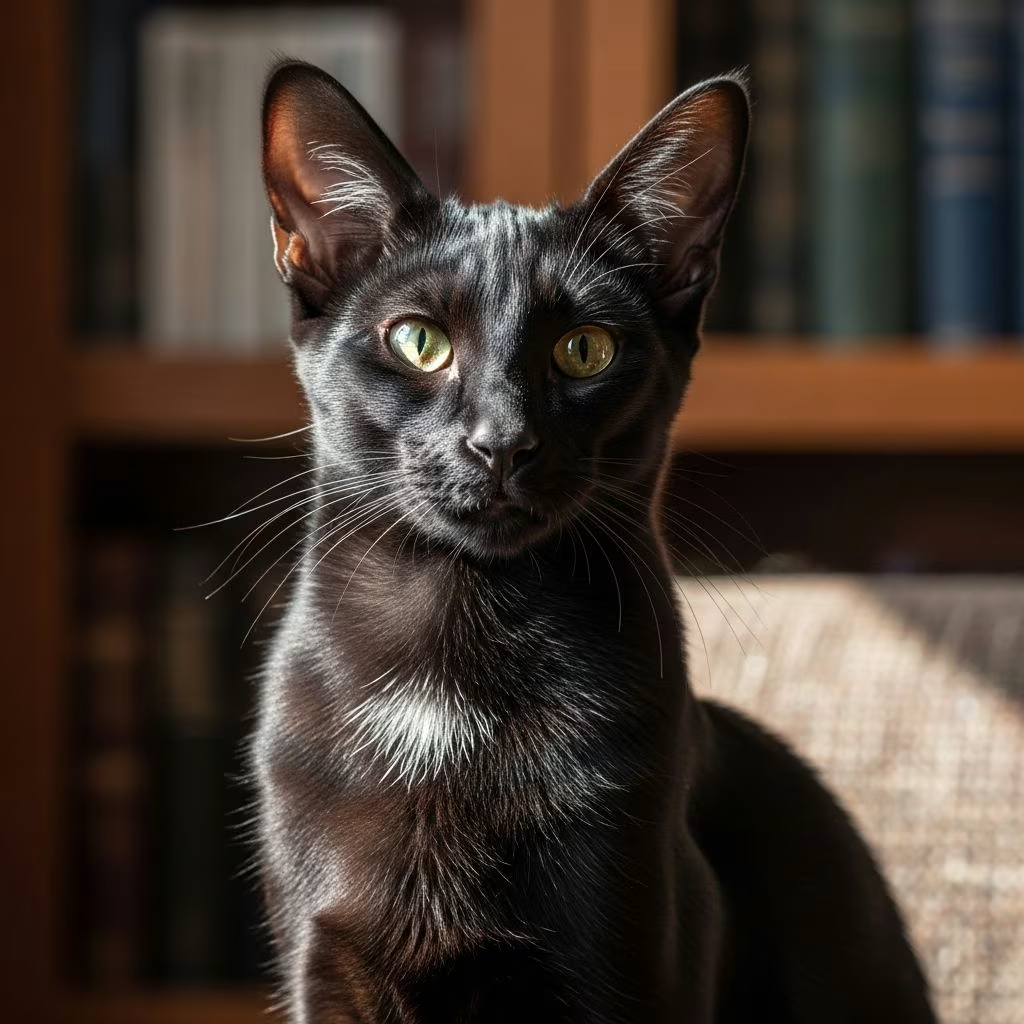
The Abyssinian cat captivates with its elegant, athletic build, large ears, and distinctive ticked coat that mimics a wild ancestry. But what about a black Abyssinian cat? Technically, yes, a solid black version exists genetically, though it’s exceedingly rare and not accepted in breed standards by major associations like The Cat Fanciers’ Association (CFA). This article delves into the genetics, history, traits, care requirements, and more for these unique felines, helping you decide if one fits your home.
Quick Links
- Black Abyssinian History
- Genetics of the Black Abyssinian
- Appearance
- Temperament & Intelligence
- Things to Consider
- Care & Feeding
- Health & Grooming
- Nutrition
- Pros & Cons
- Frequently Asked Questions (FAQs)
Black Abyssinian History
The Abyssinian breed traces its roots to ancient Egypt, where depictions of lithe, ticked cats adorn temple walls, suggesting a lineage from the African wildcat Felis lybica. Modern Abyssinians emerged in the late 19th century in Britain, with the first recognized specimen, “Zula,” imported from Ethiopia (then Abyssinia) around 1868. The breed’s hallmark is its agouti ticked coat, created by banded hairs that give a glowing, ruddy appearance in standard colors like ruddy (brown ticked black), red (sorrel), blue, and fawn.
Solid black Abyssinians arise from recessive genetics but were never selectively bred for shows. CFA and other registries disqualify solid colors, emphasizing the ticked pattern as essential to the breed standard: “a colorful cat with a distinctly ticked coat.” Today, black Abyssinians appear sporadically in litters from non-standard matings, often rehomed as pets rather than show cats. Their rarity stems from breeders prioritizing ticking; without it, they resemble domestic shorthairs despite pure Abyssinian pedigree.
Genetics of the Black Abyssinian: Info & Genetics
Cat coat color and pattern are governed by multiple genes. The agouti gene (A) is dominant and produces the ticked tabby effect in Abyssinians, where each hair shaft features alternating light and dark bands. Standard Abyssinians carry at least one dominant A allele (A/A or A/a), resulting in the breed’s shimmering coat.
A solid black coat requires the recessive homozygous state (a/a), suppressing banding and yielding uniform eumelanin (black pigment). This “non-agouti” mutation eliminates ticking, producing a sleek black feline. Other factors like the melanistic allele contribute, but agouti recessiveness is key. While genetically Abyssinian, these cats fail breed standards, which penalize “barring on legs, dark broken necklace markings, rings on tail” and demand even ticking.
| Color | Genotype (Agouti) | Ticking Pattern | Recognized? |
|---|---|---|---|
| Ruddy | A/- | Brown base, black ticking | Yes |
| Red/Sorrel | A/- | Red base, chocolate ticking | Yes |
| Blue | A/- | Beige base, blue ticking | Yes |
| Fawn | A/- | Cream base, cocoa ticking | Yes |
| Black | a/a | Solid, no ticking | No |
Silver variants (inhibitor gene) exist for ticked coats but not solids. Breeders avoid a/a pairings to preserve ticking.
Black Abyssinian Appearance & Size
Black Abyssinians mirror standard ones in build: medium-sized (8-12 lbs for adults), lithe, muscular bodies with long legs and a graceful tail. Their wedge-shaped heads feature large, almond eyes (gold, green, or hazel) outlined by dark lines, and prominent ears tilted forward for an alert expression. The coat is short, dense, silky, and resilient, but solid black rather than ticked—lacking the glowing bands.
- Body: Medium-long, hard-muscled, elegant without coarseness.
- Head: Modified wedge, smooth contours.
- Eyes: Large, expressive; brilliance preferred.
- Ears: Large, cupped, forward-set.
- Coat: Fine-textured black; no ghost tabby markings ideal.
- Paws: Oval, compact; black pads.
Kittens darken initially, lightening to reveal ticking in standards—but blacks stay uniform.
Black Abyssinian Temperament & Intelligence
Like their ticked kin, black Abyssinians are vibrant, curious explorers—never lap cats but affectionate companions. High-energy athletes, they leap to high perches, chase toys, and follow owners demandingly. Intelligent problem-solvers, they communicate subtly with paws rather than meows.
- Playful and dog-like: Bonds deeply, greets at doors.
- Social: Thrives with families, kids, other pets; hates solitude.
- Athletic: Needs climbing trees, interactive play.
- Affectionate yet independent: Seeks attention on terms.
Ideal for active homes; pair with another cat if alone often.
8 Things to Consider Before Adopting a Black Abyssinian
- Energy Levels: Requires daily vigorous play; not for couch potatoes.
- Social Needs: Avoids isolation; get two for quiet homes.
- Child-Friendly: Great with supervised kids due to playfulness.
- Non-Show Quality: No competitions; pet-only.
- Space: Vertical territory essential—cat trees mandatory.
- Grooming: Minimal, but shedding occurs seasonally.
- Health Screening: Test for breed risks like PKD.
- Adoption Sources: Shelters or ethical breeders; avoid mills.
Black Abyssinian Care & Food
Feed high-protein diets mimicking their active hunter heritage. Kittens need frequent meals; adults 2-3 times daily. Provide fresh water, puzzle feeders for mental stimulation.
- Protein: 40%+ for muscle maintenance.
- Avoid grains/fillers; wet food for hydration.
- Portion control: 200-300 calories/day based on weight/activity.
Black Abyssinian Health & Grooming
Generally robust, lifespan 12-15 years. Groom weekly with rubber brush; baths rare. Dental care vital—brush 2-3x/week.
Common issues: Pyruvate kinase deficiency (PKD), progressive retinal atrophy (PRA), dental disease. Annual vet checks, vaccinations essential.
Black Abyssinian Nutrition: What to Feed & How Much?
Balanced kibble/wet food; omega-3s for coat shine despite solid color. Monitor weight—active but prone to obesity indoors.
| Life Stage | Calories/Day | Meals |
|---|---|---|
| Kitten (3-6 mo) | 300-400 | 4 |
| Adult | 200-300 | 2-3 |
| Senior | 180-250 | 2 |
Pros & Cons of the Black Abyssinian
| Pros | Cons |
|---|---|
| Stunning black coat, low-shedding. | Not show-eligible; rarity raises costs. |
| Playful, loving personality. | High energy demands exercise. |
| Intelligent, trainable. | Not ideal alone; needs company. |
| Good with kids/pets. | Potential genetic health tests needed. |
| Minimal grooming. | Curious nature leads to mischief. |
Frequently Asked Questions (FAQs)
Q: Do black Abyssinian cats exist?
A: Yes, genetically via recessive non-agouti (a/a), but rare and not breed-standard recognized.
Q: Are black Abyssinians good family pets?
A: Excellent for active families; playful with kids, social with pets.
Q: How do I care for a black Abyssinian’s coat?
A: Weekly brushing; short, silky coat needs little beyond that.
Q: What’s the lifespan of a black Abyssinian?
A: 12-15 years with proper care and health screenings.
Q: Can black Abyssinians be shown?
A: No, due to lack of ticking; CFA disqualifies solid coats.
References
- Abyssinian Breed Standard — The Cat Fanciers’ Association. Accessed 2026. https://cfa.org/breed/abyssinian/
- Black Abyssinian Cat: Does This Breed Exist? — Catster. Accessed 2026. https://www.catster.com/cat-breeds/black-abyssinian-cat/
- Abyssinian Cat Breed — Hill’s Pet Nutrition. Accessed 2026. https://www.hillspet.com/cat-care/cat-breeds/abyssinian
- Abyssinian Cat — Wikipedia (sourced from breed standards). Accessed 2026. https://en.wikipedia.org/wiki/Abyssinian_cat
- The Curious Nature of Abyssinian Cats — FELIWAY. Accessed 2026. https://www.feliway.co.uk/blogs/news/the-curious-nature-of-abyssinian-cats-interesting-facts



