
Birth Skin Defects In Animals: Diagnosis, Treatment, Prevention
Exploring genetic and developmental skin anomalies from birth in pets and livestock, their signs, breeds at risk, and care options.
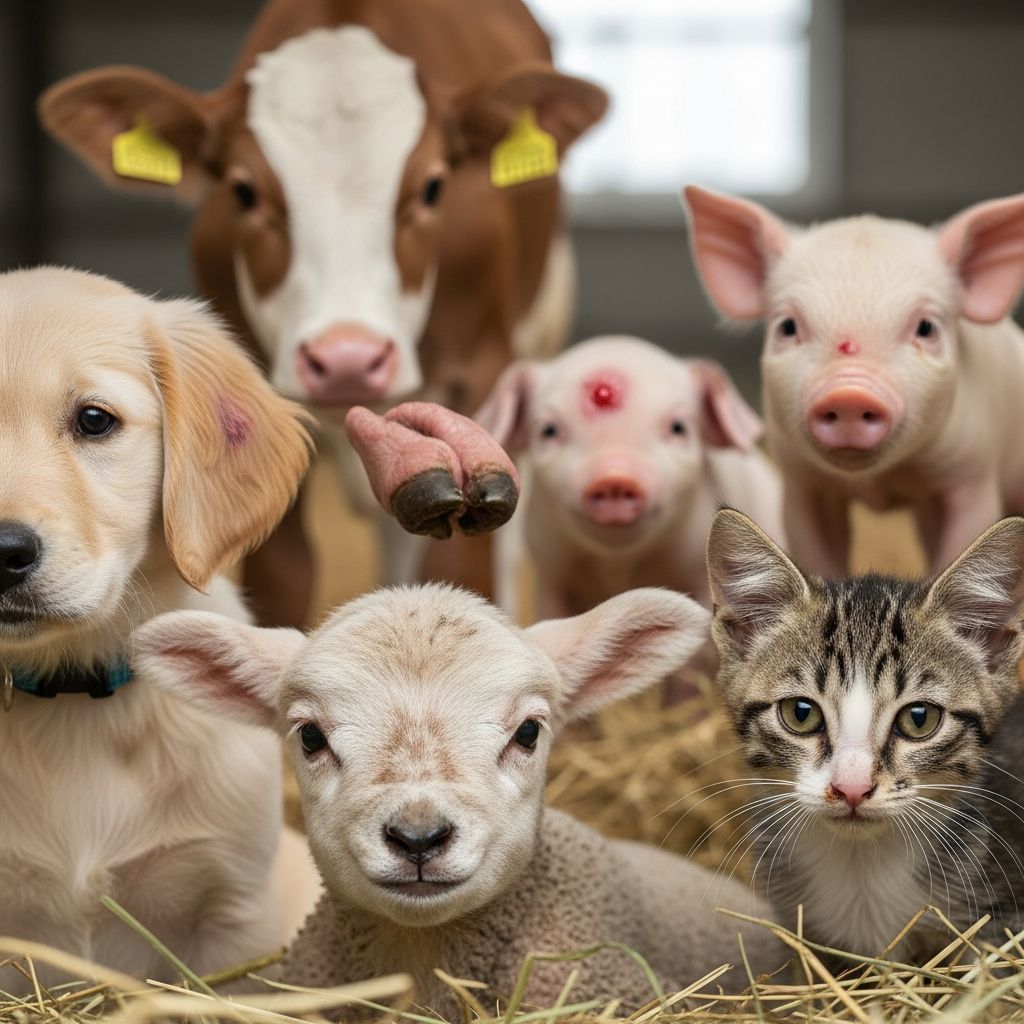
Congenital skin abnormalities in animals arise either from inherited genetic mutations or disruptions during early embryonic growth. These conditions can manifest immediately at birth or emerge later as delayed developmental issues, impacting the skin’s structure, function, and appearance across various species including dogs, cats, cattle, horses, and pigs.
Understanding the Origins of Skin Birth Defects
Skin develops from the ectoderm layer during embryogenesis, making it susceptible to anomalies that often coincide with issues in other ectodermal structures like teeth or claws. Genetic factors dominate in many cases, with specific gene variants identified in breeds prone to these disorders. Environmental influences during gestation can also trigger nongenetic defects. Recognition early in life is crucial for prognosis and intervention, as some defects lead to severe complications like infections or organ involvement.
In livestock such as cattle and swine, these anomalies are well-documented due to breeding practices that amplify hereditary traits. Companion animals like dogs show a wide array of defects linked to selective breeding for aesthetics or function. Veterinary literature emphasizes pedigree analysis to trace inheritance patterns, aiding in prevention through responsible breeding.
Major Categories of Congenital Skin Conditions
Skin birth defects can be grouped by their primary impact: failure of skin layer formation, structural weaknesses, growth abnormalities, pigmentation irregularities, and hair follicle issues. Each category presents unique challenges in diagnosis and care.
Defects in Skin Layer Development
Conditions where skin layers fail to form properly result in exposed tissues vulnerable to trauma and infection. Epitheliogenesis imperfecta, or aplasia cutis, exemplifies this, featuring complete absence of the epidermis and sometimes deeper layers. In cattle breeds like Holstein-Friesian and Hereford, it appears as large, raw patches on the legs, mouth, or body at birth, inherited autosomally recessive. Swine show similar glistening ulcers, often with missing hooves, leading to high mortality if extensive.
- Cattle: Affects multiple breeds; surgical repair possible for small lesions.
- Swine: Common, with early ulceration; fatal in severe cases.
- Horses and rare in dogs/cats: Linked to junctional epidermolysis bullosa in some foals.
Focal hypoplasia involves partial underdevelopment of skin or subcutaneous tissues, creating depressions primarily in pigs. These localized failures highlight the patchy nature of embryonic disruptions.
Fragility and Blistering Disorders
Epidermolysis bullosa syndromes cause dermal-epidermal separation from minor trauma, producing blisters that rupture into ulcers. Seen in cats (Siamese, Persians), dogs, and horses, signs include fragile skin from birth, poor healing, and detachment of claws or footpads. Oral and genital areas suffer most, with fatality common in severe forms.
In dogs, related conditions like cutaneous asthenia (Ehlers-Danlos syndrome) feature hyperextensible, tear-prone skin due to collagen defects. Breeds like German Shepherds show footpad issues and fistulas.
Growths and Hamartomatous Lesions
Nevi and hamartomas are disorganized overgrowths from faulty development. Dogs exhibit sebaceous nevi, comedonicus nevi, and linear organoid nevi, often along body lines. Horses have cannon bone keratosis. These may be cosmetic or prone to secondary issues like infection.
Dermoid sinuses, tracked to genes like fgf3 and fgf4, form tracts from incomplete neural tube-epidermis separation. Common in Rhodesian Ridgebacks and Thoroughbreds, they accumulate debris, risking meningitis if deep. Surgical removal is standard.
Species-Specific Prevalence and Examples
Different animals show varying susceptibility based on genetics and breeding.
Dogs: Diverse Genetic Dermatoses
Dogs top the list for documented defects, including hypotrichosis in hairless breeds (Chinese Crested, Mexican Hairless), pigment disorders like albinism or piebaldism, and inflammatory conditions like sebaceous adenitis in Standard Poodles. Dermatomyositis affects Collies and Shelties, causing skin/muscle inflammation.
| Breed | Common Defect | Inheritance |
|---|---|---|
| Rhodesian Ridgeback | Dermoid sinus | Genetic variants |
| West Highland White Terrier | Epidermal dysplasia | Hereditary |
| Collie, Sheltie | Dermatomyositis | Autosomal dominant |
| Standard Poodle | Sebaceous adenitis | Autosomal recessive |
Cats: Rare but Severe Presentations
Cats experience epitheliogenesis imperfecta rarely, with missing skin and claws. Epidermolysis bullosa leads to blisters and ulcers. Congenital mastocytosis in Siamese causes leathery, itchy skin from mast cell proliferation.
Livestock: High-Impact Economic Concerns
Cattle and swine face epitheliogenesis imperfecta frequently, impacting meat production. Horses with dermoid cysts or nevi require intervention to prevent complications.
Diagnostic Approaches for Early Detection
Diagnosis combines history, pedigree review, clinical exam, and biopsy. Skin biopsies reveal layer absences, collagen issues, or gene-linked changes. Ultrastructural analysis confirms epidermolysis types. Genetic testing for known variants (e.g., fgf genes) guides breeding decisions. Differential diagnoses include infectious ulcers or trauma.
- Pedigree analysis: Identifies inheritance patterns.
- Histopathology: Key for structural defects.
- Genetic panels: Emerging for at-risk breeds.
Treatment Strategies and Management
Many defects lack cures, focusing on supportive care. Surgical excision suits small aplasia cutis or dermoid sinuses. Wound management prevents infection in blistering disorders. Anti-inflammatories help dermatomyositis. Breeding avoidance is preventive.
Prognosis varies: Cosmetic for some nevi, guarded for extensive fragility syndromes.
Prevention Through Informed Breeding
Screening carriers and pedigree tracking reduce incidence. Organizations promote genetic testing in purebreds. Public awareness aids early reporting.
Frequently Asked Questions (FAQs)
What causes most congenital skin defects in animals?
Primarily genetic mutations, with some from embryonic environmental factors.
Can these defects be cured?
Rarely; management focuses on symptoms and prevention of complications.
Which dog breeds are most affected?
Collies, Ridgebacks, Poodles, and hairless varieties.
Is surgery always needed?
Only for localized issues like sinuses or small aplasias.
How to prevent in breeding programs?
Use genetic testing and avoid carrier matings.
References
- Congenital Anomalies of the Skin in Animals — Merck Veterinary Manual. 2023. https://www.merckvetmanual.com/integumentary-system/congenital-and-inherited-anomalies-of-the-integumentary-system/congenital-anomalies-of-the-skin-in-animals
- Congenital and Inherited Skin Disorders of Cats — Merck Veterinary Manual. 2023. https://www.merckvetmanual.com/cat-owners/skin-disorders-of-cats/congenital-and-inherited-skin-disorders-of-cats
- Congenital skin diseases — PubMed (NIH). 1990-10-01. https://pubmed.ncbi.nlm.nih.gov/2134611/
- Skin: congenital and hereditary defect – overview in Dogs — Vetlexicon. Recent. https://www.vetlexicon.com/canis/dermatology/articles/skin-congenital-and-hereditary-defect-overview/
- Genodermatoses – Genetic Skin Diseases — MedVet. Recent. https://www.medvet.com/genodermatoses-genetic-skin-diseases/
- Congenital diseases — Veterinary Dermatology (Wiley). 2000. https://onlinelibrary.wiley.com/doi/10.1046/j.1365-3164.2000.00227.x
Similar Articles








Read full bio of Sneha Tete


