

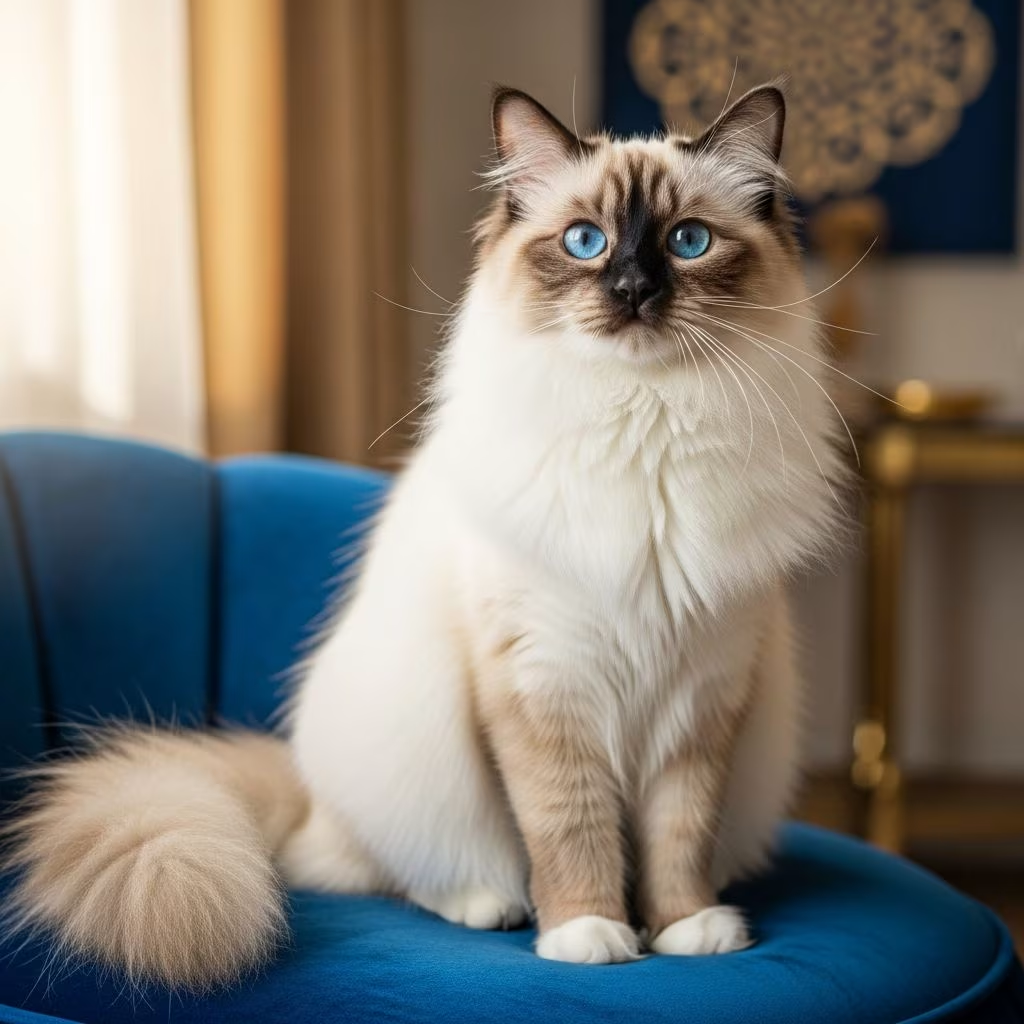
The Birman cat stands out as one of the most captivating breeds, blending mystical lore with striking physical elegance and a profoundly affectionate demeanor. Originating from ancient tales tied to Burmese temples, these cats feature a luxurious semi-long coat, vivid blue eyes, and distinctive white paws that give them an almost ethereal appearance.
Legendary Beginnings in the Temples of Burma
The story of the Birman cat is woven with enchantment, tracing back to the temples of Burma, now Myanmar. Legend recounts that these felines were revered guardians in the laity of Kittah priests, particularly at sites like the Lao Tsun or Golden Pagoda. One poignant tale describes a cat named Sinh, companion to a priest named Mun-Ha. As the priest lay dying after defending a statue of the goddess Tsun Kyan Kse from raiders, Sinh leapt onto his chest. Miraculously, the cat’s white coat transformed to a golden hue, its eyes turned sapphire blue, and its paws remained pure white—symbolizing divine blessing. The next day, other temple cats mirrored these markings, birthing the Birman lineage.
While folklore paints a vivid picture, documented history emerges in the early 20th century. Around 1919, two Birmans—a pregnant female named Sita and a male—were gifted to French residents August Pavie and Major Gordon Russell for protecting a temple. The male perished en route to France, but Sita birthed a litter, preserving the breed amid challenges. World War II nearly eradicated them in Europe, leaving just one pair: Orloff de Kaabaa and Xenia de Kaabaa. French breeders revived the line through careful outcrossing with Persians and Siamese, achieving purebred litters by the 1950s.
The breed gained formal recognition progressively: in France by 1925, the UK and US in the 1960s, and today by major bodies like CFA (1967) and TICA. Early US importers like Mrs. Griswold and Mrs. Clum established catteries such as Clover Creek and Gaylands, laying foundations for North American popularity.
Physical Characteristics: A Study in Grace and Contrast
Birmans embody balanced proportions: medium to large size, elongated yet stocky bodies neither overly slender nor compact. They boast broad, rounded heads with strong jaws, firm chins, and a signature Roman nose—curving gently from forehead in profile, ending low at the nose leather. Ears are medium-sized with good width between them, framing large, rounded, sapphire-blue eyes that convey deep intelligence and warmth.
Their coat is the crowning glory: semi-long, silky, and plush without a dense undercoat, resistant to matting. Birmans are colorpointed, meaning darker “points” on ears, face, legs, and tail contrast a lighter body. Signature “gloves”—symmetrical white markings on all four paws—extend evenly up the legs, with hind legs featuring spurs toward the hocks. Tail is long, tapering to a plume-like fan without knots.
| Key Physical Trait | Description |
|---|---|
| Head & Face | Rounded skull, Roman nose, vivid blue eyes |
| Body Type | Stocky, elongated, muscular |
| Coat | Semi-long, silky, colorpoint with white gloves |
| Size | Medium-large; males 12-18 lbs, females 8-12 lbs |
| Eyes | Deep blue, large, expressive |
Kittens emerge white, developing points from one week (darker shades like seal) or two weeks (lighter like lilac), fully maturing at two years post-winter exposure. Recognized colors include seal, chocolate, blue, lilac, red, cream, and lynx/tabby variants.
Temperament: Devoted Companions with Quiet Charm
Birmans shine in personality, earning descriptors like “gentle giants” for their calm, loving nature. Highly social, they crave family interaction, shadowing owners like faithful aides without excessive vocalization or demand. Loyal bonds form quickly, often extending to children, seniors, and even canine housemates, though initial wariness of strangers may require gradual introductions.
Playful yet not hyperactive, Birmans enjoy interactive toys and puzzles, balancing activity with relaxation. Their adaptability suits apartments or homes, thriving on affection over solitude. Minimal meowing and dog-like devotion make them ideal for harmonious households.
- Affectionate and people-oriented
- Calm and adaptable to lifestyles
- Gentle with kids and other pets
- Curious explorers who love attention
- Low-maintenance emotionally
Grooming and Everyday Care Essentials
Despite luxurious fur, Birmans shed moderately and resist tangles due to absent undercoat. Weekly brushing with a stainless steel comb maintains sheen, distributes oils, and bonds owner-pet. Bathing is rare; focus on nail trims biweekly, ear cleaning monthly, and dental care via brushing or treats.
Diet emphasizes high-protein, moderate-fat formulas preventing obesity—a breed predisposition. Measure portions, encourage activity. Litter training is instinctive; provide unscented, clumping options. Average lifespan: 12-16 years with proper care.
Health Considerations: Proactive Wellness for Longevity
Birmans generally enjoy robust health, benefiting from outcrossings that diversified genes. Screen for hypertrophic cardiomyopathy (HCM) via ultrasounds, polycystic kidney disease (PKD), and hip dysplasia. Obesity risks demand portion control; annual vet checks catch issues early.
Genetic testing by breeders ensures diverse, healthy lines. Recent studies underscore HCM screening’s role in sustaining vitality.
Bringing Home a Birman: Adoption and Breeder Tips
Acquire from CFA/TICA-registered breeders prioritizing health testing, socialization. Rescues offer adults; kittens need preparation: scratching posts, perches, toys. Cost: $800-$2000+. Prepare for 15+ years commitment.
Fun Insights and Birman Trivia
- Nearly extinct post-WWII, revived by one pair.
- Born white, points develop gradually.
- Temple guardians in lore.
- Blue eyes mandatory for show.
- Plume tails like squirrels.
Frequently Asked Questions (FAQs)
Are Birman cats good with children?
Yes, their patient, gentle nature makes them excellent family pets.
How often should I groom a Birman?
Brush weekly; more during shedding seasons.
Do Birmans get along with dogs?
Often yes, with proper introductions.
What colors do Birmans come in?
Seal, blue, chocolate, lilac, plus tabby variants.
Are Birman cats vocal?
Quiet compared to Siamese relatives.
Why Choose a Birman?
Birmans offer timeless allure: mythical heritage, stunning looks, unwavering devotion. Ideal for loving homes seeking elegant, easygoing companions that enrich daily life with quiet joy.
References
- Cat Breed Spotlight: Birman — Dr. Bill’s Pet Nutrition. 2023. https://drbillspetnutrition.ca/cat-breed-spotlight-birman/
- Birman Cat Breed Complete Guide — A-Z Animals. 2024. https://a-z-animals.com/animals/birman/
- Historical Facts – The Birman Cat — Birman BC. N/A. http://birmanbc.org/historical-facts.html
- Birman – TICA — The International Cat Association. 2025. https://tica.org/breed/birman/
- 34 Facts About Birman Cats — Feliway UK. 2023. https://www.feliway.co.uk/blogs/news/34-facts-about-birman-cats
- Sacred Cat of Birma — Wildcats Magazine. 2022. https://wildcatsmagazine.nl/sacred-cat-of-birma/
- Birman — Cat Fanciers’ Association. 2025. https://cfa.org/breed/birman/



