

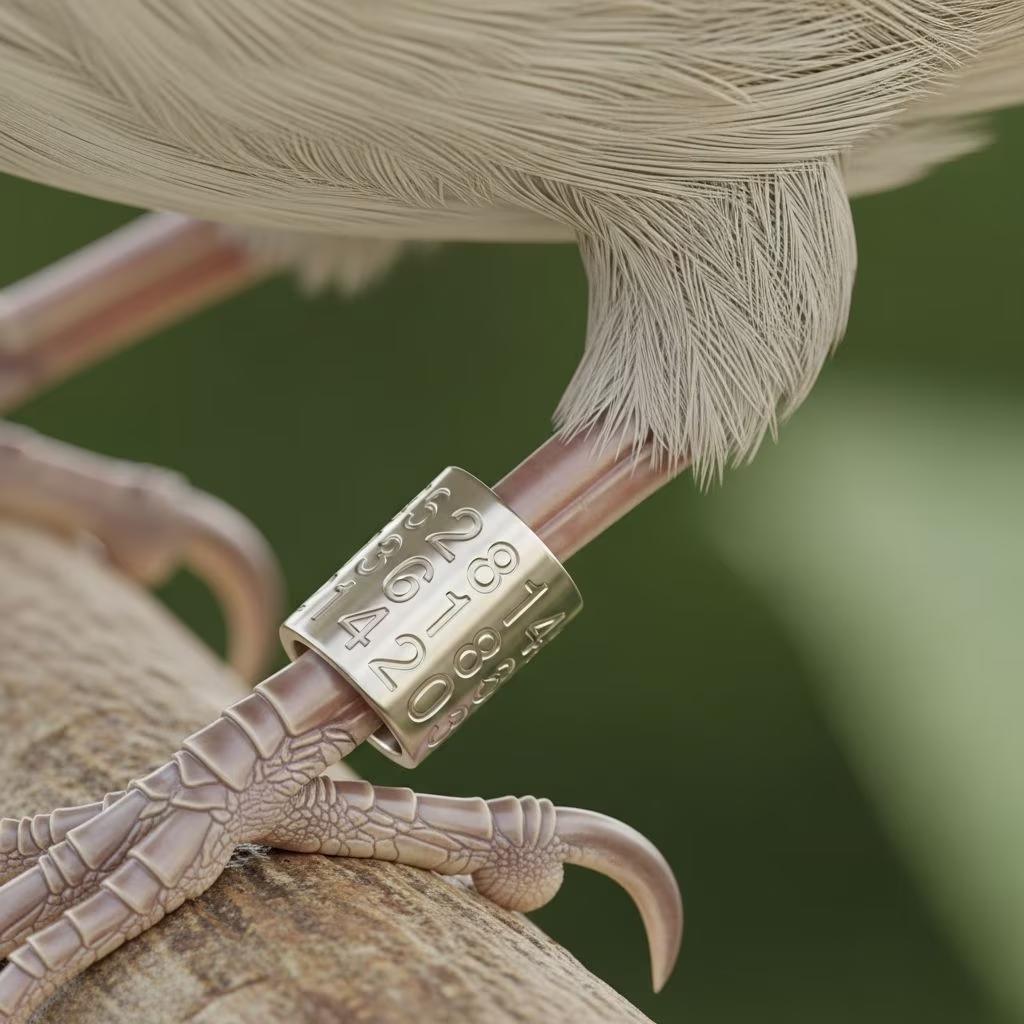
Bird Leg Band Decoder: A Complete Guide to Understanding Your Pet’s Identification
If you’ve ever looked closely at your pet bird’s leg, you may have noticed a small metal or plastic band wrapped around it. This leg band serves as a crucial form of identification that can reveal important information about your bird’s origin, breeder, and history. Whether you’re a new bird owner or an experienced avian enthusiast, understanding how to read and decode these bands can provide valuable insights into your feathered companion’s background.
Leg banding is a non-intrusive identification method that has been used for decades in aviculture and ornithology. The codes imprinted on these bands contain specific information about the bird’s species, owner, breeder, or importing facility. This guide will help you decipher the meaning behind your bird’s leg band and understand what each component of the code represents.
What Are Bird Leg Bands?
Bird leg bands are small rings made from metal, plastic, or other durable materials that are affixed to a bird’s leg as a permanent form of identification. These bands contain alphanumeric codes that provide a wealth of information about the bird wearing them. The practice of banding birds has been standardized internationally and is recognized as one of the most reliable ways to track individual birds, whether they are captive-bred pets or wild populations.
The primary purposes of leg banding include individual identification, tracking breeding history, monitoring migration patterns, and providing ownership documentation. For pet bird owners, a leg band can help prove ownership, provide information about the bird’s age and breeder, and potentially help locate a lost bird if it’s equipped with contact information.
Types of Bird Leg Bands
There are two main categories of bird leg bands: closed bands and open bands. Understanding which type your bird is wearing is the first step in decoding the information it contains.
Closed Leg Bands
Closed leg bands are unbroken rings that are permanently affixed to a bird’s leg when the bird is very young, typically within the first few weeks of life. These bands are slid onto the leg and cannot be removed without cutting, as they form a complete circle around the leg. A closed band indicates that the bird has been captive-bred, as wild-caught birds cannot be banded this way.
Closed bands are used by breeders, avian clubs, and breeding facilities to identify their birds. The codes on closed bands can vary significantly depending on the organization or breeder using them. Many use systems developed by organizations like the American Federation of Aviculture (AFA), while others may use proprietary coding systems. This variation makes closed bands more challenging to decode than open bands, as there is no single standardized system.
One disadvantage of closed bands is that they can become too tight as the bird grows into adulthood, potentially causing circulation issues or discomfort. For this reason, some bird owners choose to have the band safely removed by an avian veterinarian.
Open Leg Bands
Open leg bands are split rings or rounded bands with a gap that can be opened and closed. These bands are placed on the legs of adult birds and are typically used to mark birds that have been imported or transferred between countries. An open band indicates that the bird was once detained at an importation or quarantine station.
Open bands are significantly easier to decode than closed bands because they are primarily issued by the United States Department of Agriculture (USDA) or privately owned facilities supervised by the USDA. This standardization means there are only two main coding systems to consider, compared to the thousands of different systems used by various closed-band breeders.
Decoding Open Leg Bands
Open bands are the most straightforward type to decode due to their standardized coding systems. There are two primary formats you may encounter.
USDA Band Format
USDA bands follow a specific format that always begins with the letters “USDA” followed by identifying information. The structure is as follows:
USDA + State Code (2-3 letters) + Facility Number (3-4 digits)
For example, a band reading “USDAM 1234” indicates that the bird passed through the USDA importation station in Miami. The letter “M” represents Miami, Florida. Other common state abbreviations include:
- NY for New York
- CA for California
- TX for Texas
- FL for Florida
If a state has multiple USDA facilities, the code may include an additional letter to specify which location. The numbers following the state code are sequential identifiers assigned by that specific facility to the birds processed there.
Privately Owned Facility Band Format
Privately owned importation stations supervised by the USDA use a different coding format. These bands typically consist of three letters followed by three numbers, such as “CRO 123.” The format breaks down as follows:
First Letter: State abbreviation (e.g., C = California)
Second Letter: Facility identifier within that state
Third Letter: Part of the individual bird’s identification code
Three Numbers: The remainder of the individual bird’s identification code
This arrangement allows for up to 26,000 unique combinations before a facility would need to repeat a code. This system provides sufficient capacity for most importation stations to track the thousands of birds they process annually.
Understanding Closed Leg Band Codes
Closed leg bands present a greater challenge in decoding because there is no single universal system. However, many breeders follow standards established by avian organizations, particularly the American Federation of Aviculture (AFA). Understanding common formats can help you identify your bird’s information.
AFA Band System
The American Federation of Aviculture has established guidelines for closed band codes. These typically include breeder initials or a breeder identification number, along with a sequential number assigned by the breeder. For example, a band reading “BLB CA 539” might indicate:
BLB: Breeder initials or breeder code
CA: State of origin (California)
539: Sequential bird identification number assigned by that breeder
Proprietary Breeder Systems
Many individual breeders and breeding facilities use their own coding systems that may not correspond to any standardized format. These might include:
- Breeder name or abbreviation
- Year of hatching
- Species code or color mutation designation
- Sequential identification number
Without access to the specific breeder’s documentation, these codes can be difficult to decode. In such cases, contacting local avian clubs, breed associations, or the breeder directly may be necessary to interpret the band.
What Information Can You Extract from a Bird Leg Band?
Depending on the type and format of your bird’s leg band, you may be able to determine several pieces of important information.
Geographic Origin
The location codes on leg bands can indicate where your bird was bred or imported. For birds with open bands, this is straightforward—the state abbreviation clearly identifies the importation station. For closed bands using AFA or similar systems, state abbreviations may also be included.
Breeder or Facility Information
Closed bands often include codes that identify the breeder or breeding facility responsible for producing the bird. This information can help you research the bird’s genetic background and potentially contact the breeder for health or breeding history information.
Individual Identification
The numerical portion of a leg band serves as a unique identifier for that specific bird. This number allows breeders, facilities, and veterinarians to track individual birds and maintain records specific to each animal.
Wild-Caught Status
An open band indicates that the bird was at some point wild-caught or imported from another country. A closed band indicates the bird is captive-bred. This distinction is important for understanding your bird’s health requirements and behavioral tendencies.
Why Leg Bands Matter for Bird Owners
Understanding your bird’s leg band provides several practical benefits:
Proof of Ownership: A leg band with traceable information can help prove ownership if your bird is lost and later found or if there is a dispute about the bird’s origin.
Health Insights: Knowing whether your bird is captive-bred or wild-caught can inform veterinary care decisions. Wild-caught birds may have different health considerations and behavioral needs.
Breeding History: If you plan to breed your bird or are interested in understanding its genetic background, the breeder information on the band can be invaluable.
Lost Bird Recovery: If your bird is equipped with an open band from a USDA facility, you may be able to use that information to locate the original importer or facility, potentially helping to identify the bird if it becomes lost.
How to Read a Bird Leg Band Safely
To accurately read your bird’s leg band, you’ll need to examine it closely. Follow these guidelines to do so safely:
- Use proper handling techniques to ensure your bird remains calm and safe during examination
- Have good lighting to clearly see all the characters on the band
- Note the exact sequence of letters and numbers, paying attention to whether characters are uppercase or lowercase
- Check both the inside and outside of the band, as some codes may wrap around
- Take a clear photograph of the band if possible for future reference
If your bird is nervous about handling or if the band is difficult to read, consider having your avian veterinarian assist with the examination. They can also advise whether the band is causing any discomfort and whether removal might be beneficial.
When to Contact Breeders or Organizations
If you cannot decode your bird’s leg band using the guidelines provided, several resources are available:
Local Avian Clubs: Local bird owner organizations often have experienced members who can help decode band codes, particularly those from regional breeders.
The American Federation of Aviculture: This organization maintains records and can sometimes help identify breeders using AFA-standard bands.
Your Avian Veterinarian: Your bird’s veterinarian may have resources or contacts that can assist in decoding the band.
USDA Importation Records: If your bird has an open USDA band, you may be able to request records from the facility indicated on the band.
FAQs About Bird Leg Bands
Q: What does it mean if my bird doesn’t have a leg band?
A: A bird without a leg band may be wild-caught (if imported before the ban on wild-caught bird imports), hatched by a breeder who did not band their birds, or the band may have been removed. Without a band, there’s no way to verify the bird’s origin or history with certainty.
Q: Can I remove my bird’s leg band?
A: Closed leg bands cannot be safely removed without cutting, which should only be done by an avian veterinarian. Open bands can sometimes be carefully removed, but this should also be done by a professional. Removing a band eliminates the ability to verify ownership or access historical information about the bird.
Q: Is a leg band harmful to my bird?
A: When properly fitted, leg bands are not harmful. However, closed bands can become too tight as birds grow and may require removal by a veterinarian. Regular inspection ensures the band is not causing circulation problems.
Q: What if I inherited a bird and don’t know what its band means?
A: Start by determining whether it’s a closed or open band. Take a clear photo and contact local avian organizations, clubs, or an avian veterinarian for help decoding it. If it’s an open band with USDA information, you may be able to contact that facility directly.
Q: Do all pet birds have leg bands?
A: No. While most captive-bred birds from reputable breeders have closed bands, and most imported birds have open bands, not all birds are banded. Some breeders do not band their birds, and some older birds may have had their bands removed.
Q: What does the color of a leg band indicate?
A: For wild birds monitored by researchers, color banding is used extensively and color combinations identify individual birds. For pet birds, the color typically indicates the year of hatching or may be specific to a breeder’s system. Check with your breeder for specific color-coding information.
References
- Federal Bands — U.S. Geological Survey. 2024. https://www.usgs.gov/labs/bird-banding-laboratory/science/science-topics/federal-bands
- Leg Bands and Identification for Birds — VCA Animal Hospitals. 2024. https://vcahospitals.com/know-your-pet/leg-bands-and-identification
- Reading Your Bird’s Leg Band — BirdTricks. 2024. https://birdtricksstore.com/blogs/birdtricks-blog/reading-your-bird-s-leg-band
- How to Read a Bird Band — A Handy Guide — The Happy Chicken Coop. 2024. https://www.thehappychickencoop.com/how-to-read-a-bird-band/
- Bird Species Chart and Band Sizes — National Band and Tag Company. 2024. https://www.nationalband.com/bird-chart-2/



