Bird Handling Techniques: How to Hold a Bird
Master safe and respectful bird handling with expert techniques for building trust.
Understanding Your Bird’s Handling Preferences
Quality time with your bird is essential to a healthy relationship, but this doesn’t necessarily mean extensive physical handling. Every bird has unique preferences when it comes to human interaction. Some birds genuinely enjoy hanging out and playing with their people but prefer to avoid physical contact altogether. Others might perceive you as a potential mate and require limited physical interaction, especially during hormonal seasons. Meanwhile, some birds thrive on extended periods of head scratches and gentle handling.
The key to successful bird ownership is becoming intimately familiar with your individual bird’s personality and comfort level. By observing your bird’s reactions and body language, you can determine the appropriate amount of handling they’re comfortable with and adjust your interactions accordingly.
Establishing a Consistent Handling Routine
When you bring home a new bird, establishing a consistent routine from day one is crucial. The amount of handling and interaction you provide initially sets the foundation for your bird’s expectations going forward. If you plan to have one hour of daily interaction with your bird six months from now, you should commit to that same amount of time from the very beginning.
Disruptions in routine can cause significant frustration and stress in birds. They thrive on predictability and consistency. By maintaining a stable schedule from the start, you prevent behavioral issues that might develop if your bird becomes accustomed to frequent interaction and then suddenly experiences reduced contact.
Teaching Your Bird to Step Up
One of the most valuable skills you can teach your bird is the step-up command. This foundational training creates a safe way to move your bird from one location to another and strengthens your bond through positive reinforcement. Here’s a step-by-step approach to teaching this essential behavior:
Step 1: Familiarization with Your Arm
Begin by allowing your bird to hang out on top of their cage. Place your arm on the cage top directly in front of the bird and leave it there without moving. Repeat this several times until your bird becomes comfortable with your arm being in their personal space. This establishes trust and reduces fear of your limbs.
Step 2: Using Treats as Motivation
Once your bird is familiar with your stationary arm, offer their favorite treat using your other hand in a way that requires them to lean over your resting arm. Gradually increase the distance of the treat so the bird must step up onto your arm to retrieve it. Provide abundant praise and treats each time they successfully step up.
Step 3: Adding the Verbal Cue
Practice the stepping-up behavior multiple times before introducing the verbal cue “step up.” This ensures the action becomes automatic before you associate it with the command word.
Step 4: Gradual Height Increases
Once your bird is completely comfortable standing on your arm, slowly raise your arm a few inches. Continue practicing until your bird reliably steps up on command at various heights.
Alternative Methods for Fearful Birds
Some birds experience significant fear of human hands. If this applies to your bird, you can teach the step-up command using alternative objects. A towel or washcloth can serve as a stepping surface, providing your bird with a less intimidating option while still learning the behavior.
The Art of Petting Your Bird Correctly
Proper petting technique is essential for maintaining a healthy relationship with your bird. Understanding which areas are appropriate to touch can prevent behavioral and hormonal issues.
Safe Petting Zones
To foster a healthy bond between your bird and both you and other people, restrict petting to the bird’s head and feet exclusively. Encourage others who interact with your bird to follow this same guideline. This boundary is important because birds’ sexual organs are located directly under their wings on their back. Stroking the full body, wings, or back stimulates the production of sexual hormones, which can lead to behavioral problems and frustration.
Why Feet Are Safe to Handle
Beyond the head, it’s perfectly fine and beneficial to handle your bird’s feet regularly. This familiarity is particularly valuable for practical reasons—if your bird is accustomed to you handling their toes, nail trimming and veterinary care become significantly easier.
Maintaining Healthy Boundaries
A respectful companion relationship should always be your goal. Often, birds actively encourage inappropriate handling by leaning into touches or seeking more contact. However, it is ultimately the human’s responsibility to maintain healthy boundaries and refrain from responses that could create behavioral issues.
The Shoulder Perching Debate
While it might seem convenient or cute to have your bird perch on your shoulder, this practice carries significant risks. When a bird is positioned on your shoulder, you cannot adequately see or read their body language. If your bird becomes startled or upset, they might fly off your shoulder toward something dangerous or react defensively with a bite.
In contrast, when your bird is perched on your arm, you maintain a clear view of their body language and can immediately recognize signs of agitation. This positioning allows you to take appropriate steps to make your bird more comfortable and prevents potentially dangerous situations.
Using Towels Effectively
Towels are valuable tools in bird care, but your bird needs to develop positive associations with them before they’re used for restraint or medical purposes. Familiarizing your bird with a towel in advance of any handling situation prevents trauma and stress.
Building Positive Towel Associations
Make towel interaction fun and enjoyable through games such as peekaboo, gentle tug-of-war, and “swing the birdie”—where your bird holds one end of the towel while you gently swing it back and forth. When your bird views the towel as a positive plaything, using it for necessary restraint becomes far less stressful for both you and your bird.
Proper Towel Restraint Technique
If you need to restrain your bird with a towel for grooming, medical examination, or safety reasons, use a soft, clean towel that’s large enough to wrap gently around your bird. Approach calmly and speak softly to keep your bird relaxed. Gently wrap the towel around your bird, ensuring their wings are covered so they cannot flap. Always leave the head exposed to allow proper breathing. Hold your bird’s head firmly but gently, and never squeeze the torso area.
Safety Considerations for Bird Handling
Birds are surprisingly fragile creatures that can be easily injured through improper handling. Many people, particularly children, underestimate how delicate birds are and how easily they can suffer internal injuries from squeezing or rough treatment.
Teaching Children Proper Handling
If you have children in your home or who visit, teaching them proper bird handling and petting techniques is essential. This education serves dual purposes: protecting your bird’s safety and preventing painful bites, as parrots and other larger birds possess strong beaks capable of inflicting serious injury. Always supervise interactions between children and birds, and encourage respectful, gentle engagement.
Handling Injured or Wild Birds
Different situations require different handling approaches. If you encounter an injured wild bird or need to move an injured pet bird, proper technique minimizes additional trauma.
General Support Technique
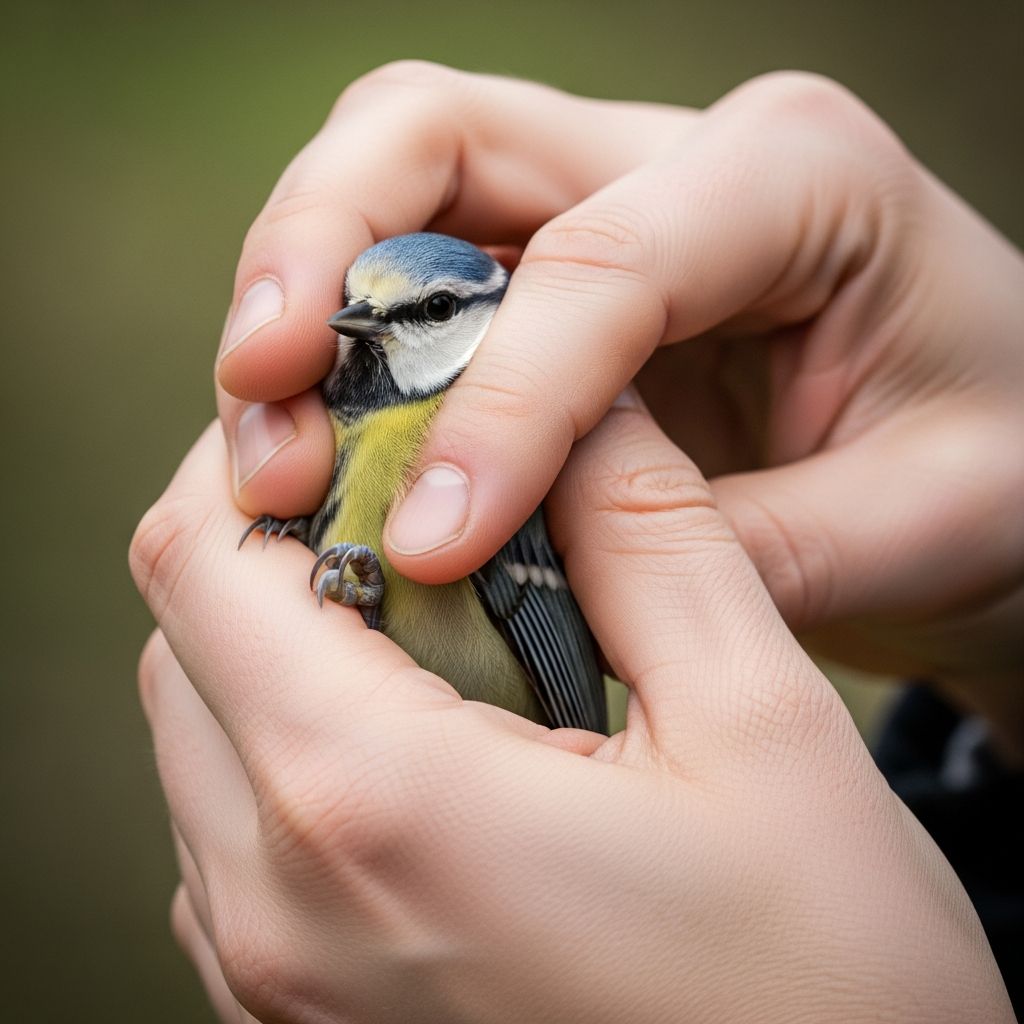
Support both the body and feet of the bird with one hand, ensuring the feet are positioned just underneath the bird’s body in the palm of your hand rather than dangling. For small birds that fit in your palm, place your other hand gently over the top to hold them securely while preventing escape. Leave no gaps between your hands that the bird could wiggle through.
Handling Larger Birds
For birds larger than your palm, such as pigeons, hold them in one hand while placing your other hand around the shoulders of both wings to keep them in their normal resting position against the body. Never pick up any bird by the wings or head, as this risks serious injury.
Building Trust Through Voluntary Engagement
One of the most important principles in bird handling is understanding that forced interactions undermine trust and create stress and behavioral problems. Birds that are forced to engage in unwanted activities develop anxiety and may become aggressive or withdrawn.
Conversely, allowing birds to choose their interactions—even when motivated by treats or trained commands—fosters a sense of control and security. This voluntary engagement is far more effective in building a deep, trusting bond with your bird. By respecting your bird’s autonomy and preferences, you create a relationship based on mutual respect rather than dominance.
Recognizing Individual Bird Variations
Different bird species express themselves in unique ways, and even individual birds within the same species have distinct personalities and communication styles. Recognizing these variations is key to accurately gauging your bird’s mood and intentions. By tailoring your interactions based on your specific bird’s cues and preferences, you demonstrate respect for their boundaries. This individualized approach is essential in nurturing a trusting relationship with your feathered companion.
Frequently Asked Questions
Q: How much time should I spend handling my new bird?
A: Handle and interact with your new bird as much as you realistically plan to six months in the future. If you anticipate having one hour daily for interaction, commit to that amount from the start to establish consistent expectations.
Q: What should I do if my bird is afraid of hands?
A: Use alternative stepping surfaces like towels or washcloths instead of your hand. Gradually introduce your hand at a distance while using treats to build positive associations.
Q: Why shouldn’t I pet my bird’s wings or back?
A: Birds’ sexual organs are located under their wings on their back. Stroking these areas stimulates sexual hormone production, which can cause behavioral problems and hormonal frustration.
Q: Is it safe to have my bird perch on my shoulder?
A: No, shoulder perching is discouraged because you cannot adequately see or read your bird’s body language, making it difficult to recognize signs of agitation before your bird flies away or bites.
Q: How can I prepare my bird for necessary towel restraint?
A: Build positive associations by playing games with the towel, such as peekaboo, tug-of-war, and gentle swinging. This way, your bird won’t associate the towel with stressful situations.
Q: What’s the safest way to hold an injured bird?
A: Support both the body and feet with one hand, keeping feet under the body rather than dangling. For small birds, gently place your other hand over the top. Never hold a bird by its wings or head.
Q: How do I teach my bird to step up reliably?
A: Start by letting your bird become familiar with your arm. Use their favorite treat to encourage stepping onto your arm, offer praise and rewards, then gradually add height and the verbal cue only after the behavior is automatic.
References
- Bird Handling Techniques: How to Hold a Bird — Best Friends Animal Society. Accessed November 2025. https://bestfriends.org/pet-care-resources/bird-handling-techniques-how-hold-bird
- How to Pet a Parrot — BirdSupplies.com. Accessed November 2025. https://birdsupplies.com/blogs/news/96593031-how-to-pet-a-parrot
- How to Help an Injured Wild Bird — Best Friends Animal Society. Accessed November 2025. https://bestfriends.org/pet-care-resources/how-help-injured-wild-bird
- Bird Training: Understanding the Basics — Best Friends Animal Society. Accessed November 2025. https://bestfriends.org/pet-care-resources/bird-training-understanding-basics
- How to Pet a Parakeet: 5 Vet-Reviewed Places It’s Safe to Touch — Hepper. Accessed November 2025. https://articles.hepper.com/how-to-pet-a-parakeet/
Similar Articles








Read full bio of medha deb