
Bird Flu in Birds: Poultry and Wildlife Risks
Explore the devastating effects of avian influenza on poultry flocks and wild bird populations, including transmission patterns and control strategies.
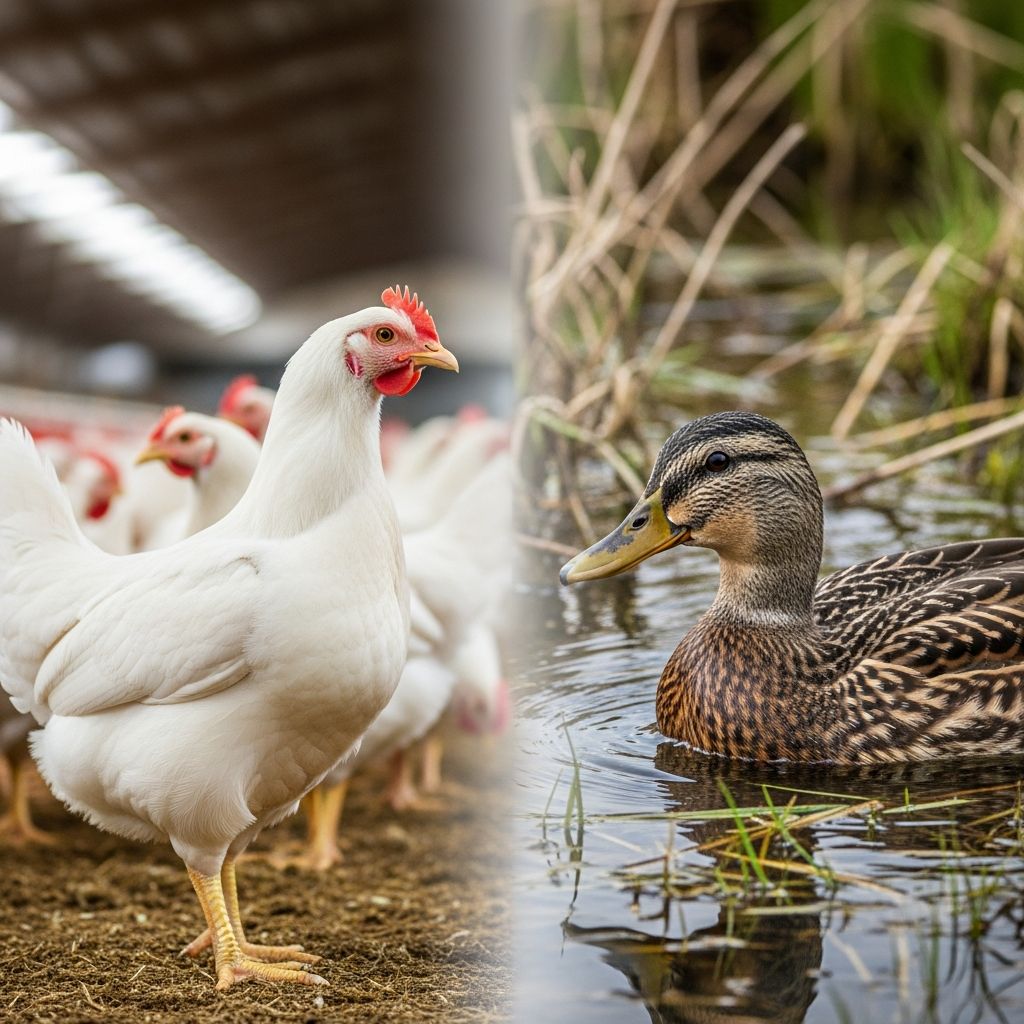
Avian influenza, commonly known as bird flu, represents a significant viral threat to both commercial poultry operations and natural wild bird populations worldwide. Caused by influenza A viruses, this disease manifests in varying degrees of severity, from mild respiratory issues to rapid, flock-wide fatalities. Understanding its dynamics is crucial for veterinarians, farmers, and conservationists aiming to mitigate outbreaks that disrupt food supplies and ecosystems.
The Nature of Avian Influenza Viruses
These viruses primarily target birds, with wild aquatic species like ducks, geese, and shorebirds serving as natural reservoirs. Most infections in these wild hosts remain subclinical, allowing carriers to migrate across continents and introduce the pathogen to new regions. In domestic settings, particularly chickens and turkeys, the viruses can evolve into more dangerous forms, leading to devastating losses.
Influenza A viruses are classified based on two surface proteins: hemagglutinin (H) and neuraminidase (N), resulting in subtypes such as H5N1 or H7N9. The key distinction lies in pathogenicity: low-pathogenic avian influenza (LPAI) causes minimal disruption, while highly pathogenic avian influenza (HPAI) triggers systemic failure and mortality rates approaching 100% in susceptible gallinaceous birds.
Distinguishing LPAI and HPAI Infections
| Aspect | LPAI | HPAI |
|---|---|---|
| Severity in Poultry | Mild respiratory signs or subclinical | Severe multi-organ disease, high mortality |
| Mortality Rate | Low, unless complicated | Up to 100% in days |
| Common Hosts | Wild waterfowl, domestic flocks | Chickens, turkeys primarily |
| Spread Mechanism | Bird-to-bird, fomites | Rapid via aerosols, contact |
This table highlights the stark differences, emphasizing why HPAI demands immediate quarantine and culling protocols in affected areas.
Clinical Manifestations in Domestic Poultry
Infections with LPAI often present subtly, with birds showing nasal discharge, sneezing, coughing, and reduced egg output. Swollen sinuses are prevalent in turkeys, ducks, and quail, sometimes mimicking other respiratory pathogens. Without complications, recovery is typical, but stressors like poor ventilation exacerbate outcomes.
HPAI strikes swiftly, causing cyanosis of combs and wattles, diarrhea, neurological tremors, and sudden deaths. Necropsy reveals hemorrhages in multiple organs, edema, and fibrinous exudates, confirming the virus’s aggressive replication.
- Respiratory distress: Primary in LPAI, progresses systemically in HPAI.
- Production drops: Egg shells become soft or production halts entirely.
- Behavioral changes: Lethargy, huddling, and feed refusal signal onset.
Impacts on Wild Bird Populations
Wild birds, especially migratory waterfowl, perpetuate the virus cycle without overt illness under normal conditions. However, certain HPAI strains, notably clade 2.3.4.4b, have triggered mass die-offs in species like terns, pelicans, cranes, and Antarctic penguins. These events underscore shifting virulence, threatening biodiversity in wetlands and coastal regions.
Geographic expansion follows migration routes, with outbreaks reported from North America to Europe and beyond. In 2025, U.S. detections extended to dairy cattle, illustrating interspecies jumps.
Transmission Pathways and Risk Factors
The virus spreads via direct contact with infected feces, secretions, or contaminated equipment. Fomites on boots, vehicles, and crates amplify farm-to-farm transmission. Wild birds introduce it through shared water sources or droppings near poultry housing.
Seasonal peaks align with migrations in fall and spring, heightening vigilance needs. Human activities, including live bird markets, further propagate strains.
- Direct bird-to-bird aerosol or fecal-oral.
- Indirect via feed, water, or personnel movement.
- Long-distance via migratory carriers.
Biosecurity Measures for Poultry Farms
Robust biosecurity forms the frontline defense. Key practices include restricting visitor access, designating clean/dirty zones, and disinfecting all incoming materials. Wild bird deterrents like netting over ponds and roofs prevent incursions.
Vaccination strategies, where approved, target high-risk flocks, though they require surveillance to detect silent carriers. Prompt reporting to authorities enables containment.
Essential Daily Protocols
- Footbaths and shower-in/shower-out for personnel.
- Vehicle disinfection at farm perimeters.
- All-in-all-out production cycles.
- Regular serology testing for early detection.
Spillover to Mammals and Zoonotic Potential
Beyond birds, HPAI has infected over 60 terrestrial mammal species and 19 marine ones, including foxes, seals, and sea lions. Dairy cattle outbreaks in 2025 affected numerous U.S. herds, linked to contaminated feed or milk. Cats and dogs contract it via raw poultry or milk consumption.
Human cases remain sporadic, typically from close poultry exposure, with no sustained person-to-person transmission reported. Nonetheless, surveillance is paramount given pandemic precedents.
Diagnosis and Laboratory Confirmation
Suspected cases demand rapid testing via PCR on swabs or tissues, targeting viral RNA. Virus isolation in eggs confirms viability, while sequencing identifies subtypes and clades. Pathognomonic lesions aid field diagnosis, but lab verification is essential for control decisions.
Management and Control Strategies
Outbreak response involves stamping out infected flocks, establishing protection zones, and tracing movements. International standards from WOAH guide trade restrictions. Long-term, genetic surveillance tracks mutations, informing vaccine updates.
In wildlife, intervention is limited to monitoring die-offs and habitat protection to curb amplification.
Global Surveillance and Recent Trends
Ongoing monitoring by USDA APHIS and WOAH reveals persistent circulation, with 2024-2025 seeing expansions into new regions and hosts. Clade 2.3.4.4b dominates, driving mammal incursions.
FAQs on Avian Influenza
What is the biggest risk for poultry farmers?
The introduction via wild birds or poor biosecurity, potentially leading to total flock loss from HPAI.
Can wild birds be vaccinated?
No practical vaccines exist for wild populations; focus remains on habitat management.
How does AI affect egg production?
LPAI reduces output; HPAI halts it abruptly with high mortality.
Is bird flu transmissible to humans from wild birds?
Rarely; primary risk is from handling sick poultry.
What role do migrations play?
They disseminate viruses globally, peaking seasonally.
Avian influenza’s dual threat to agriculture and wildlife necessitates integrated approaches combining science, policy, and vigilance to protect avian health worldwide.
References
- Avian Influenza in Poultry and Wild Birds — Merck Veterinary Manual. 2025. https://www.merckvetmanual.com/poultry/avian-influenza-in-poultry-and-wild-birds/avian-influenza-in-poultry-and-wild-birds
- Avian Influenza — USDA APHIS. 2025-02-01. https://www.aphis.usda.gov/livestock-poultry-disease/avian/avian-influenza
- Avian Influenza — World Organisation for Animal Health (WOAH). 2025. https://www.woah.org/en/disease/avian-influenza/
- Avian influenza in birds: Insights from a comprehensive review — PMC (NCBI). 2024. https://pmc.ncbi.nlm.nih.gov/articles/PMC11736375/
- Highly Pathogenic Avian Influenza (Bird Flu) Resource Center – Wildlife — Cornell University College of Veterinary Medicine. 2025. https://www.vet.cornell.edu/highly-pathogenic-avian-influenza-bird-flu-resource-center/wildlife
- A(H5) Bird Flu: Current Situation — CDC. 2026-02-01. https://www.cdc.gov/bird-flu/situation-summary/index.html
Similar Articles








Read full bio of Sneha Tete


