
Bird Flu in Dairy Cattle: HPAI H5N1 Threat
Understand the emergence of highly pathogenic avian influenza in cattle, its symptoms, spread, and protective strategies for farms.
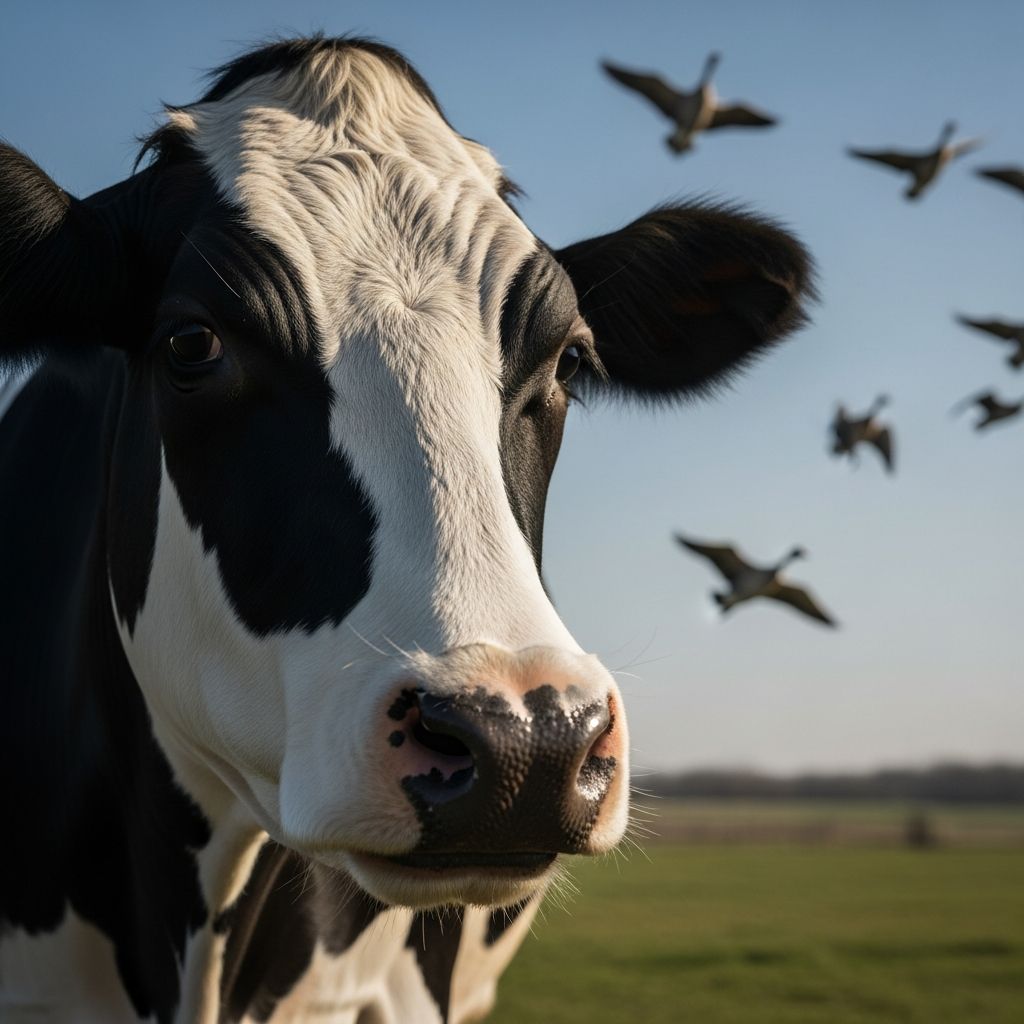
Highly pathogenic avian influenza (HPAI), particularly the H5N1 strain, has recently crossed species barriers to infect dairy cattle, posing new challenges for livestock health and farm management. First detected in U.S. dairy herds in March 2024, this virus causes significant production losses without high mortality rates.
Understanding the Virus Behind the Outbreak
HPAI H5N1 belongs to the influenza A virus family, known for high fatality in poultry but milder effects in mammals like cattle. The clade 2.3.4.4b variant drives current outbreaks, spreading via respiratory droplets, contaminated milk, and fomites. In cattle, it targets mammary glands, lungs, and digestive tracts, leading to detectable viral loads in milk and nasal secretions.
This shift to bovines marks an evolutionary adaptation, likely from wild birds contaminating feed or water sources. Unlike in birds, where it causes sudden death, cattle experience a protracted illness peaking 1-2 weeks post-exposure, affecting 10-40% of herds.
Recognizing Symptoms in Affected Herds
Dairy cows show a spectrum of signs, primarily in lactating animals. Key indicators include:
- Fever ranging 39-42°C (103-108°F), often early onset.
- Lethargy and inappetence, reducing feed intake and rumination.
- Milk changes: thickened, yellow-gray colostrum-like consistency, lower volume, elevated somatic cells.
- Respiratory issues: nasal discharge (serous to bloody), increased breathing effort.
- Digestive alterations: diarrhea, mucus-laden feces, or firm stools.
- Other: dehydration, scleral injection, salivation, udder involution resembling dry-off.
Non-lactating cattle and youngstock exhibit milder flu-like symptoms, rarely severe. Disease progression follows a bell curve, with peak morbidity in 5-60% of animals.
| Category | Common Signs | Rare Signs |
|---|---|---|
| Mammary | Thickened milk, drop in production | Mastitis in quarters |
| Systemic | Fever, lethargy, dehydration | Subcutaneous emphysema |
| Respiratory | Nasal discharge, tachypnea | Bloody secretions |
| Digestive | Altered feces, reduced rumen fill | Maldigestion |
Lesions include vasculitis in mucous membranes, pulmonary consolidation, and mammary inflammation, confirmed postmortem.
Herd-Level Impacts: Morbidity, Mortality, and Economics
Morbidity hits 10-40% on average, with herds peaking higher. Mortality stays low (<5%), but 15% may require euthanasia due to comorbidities. Production drops persist, with some herds losing 30% milk yield long-term, prompting culling.
Economic tolls encompass veterinary costs, lost revenue, and quarantine. Affected farms report sustained lower baselines, exacerbating dairy industry pressures.
How HPAI Spreads Among Cattle and Beyond
Transmission occurs cow-to-cow via shared milking equipment, contaminated feed, or aerosols. Wild birds introduce the virus, amplified in dense herds. Milk shedding heightens risks during machine milking.
Inter-species jumps from poultry or wildlife underscore surveillance needs. Premovement testing curbs spread between farms.
Human Health Concerns: Zoonotic Potential
As of late 2024, 17-40+ U.S. human cases link to dairy exposure, mostly farmworkers. Symptoms: conjunctivitis, flu-like illness (fever, cough, sore throat), mild respiratory distress—all recoverable without hospitalization.
No sustained human-to-human transmission noted. Risks rise with raw milk contact or splashes to eyes/mucous membranes. Prompt antivirals mitigate severity.
Confirming Infection: Diagnostic Approaches
Diagnosis combines history, signs, and lab tests:
- PCR on milk, nasal swabs detects viral RNA rapidly.
- Serology identifies antibodies.
- Virus isolation confirms viability.
- Postmortem: tissue exams for lesions, IHC.
Rule out differentials like mastitis or BRSV via targeted testing.
Management Strategies for Infected Animals
No specific antiviral exists; focus supportive care:
- Hydration, electrolytes.
- Anti-inflammatories for fever.
- Treat secondary infections (antibiotics for mastitis).
- Separate sick cows, monitor closely.
Recovery typical in 2-3 weeks, but production lags.
Prevention: Fortifying Farm Defenses
Biosecurity forms the cornerstone:
- Perimeter controls: Limit wild bird access, secure feed storage.
- Traffic management: Vehicle disinfection, PPE for visitors/workers.
- Testing protocols: Pre-move PCR on cattle, surveillance milking.
- Cleaning: Disinfect milking parlors post-use.
- Vaccination research: Ongoing trials, not yet standard.
Federal guidelines from APHIS emphasize daily health checks.
Regulatory Responses and Surveillance
USDA/APHIS mandates reporting, movement restrictions in outbreaks. States track via NAHLN labs. International alerts highlight global risks.
Future Outlook: Research and Preparedness
Ongoing studies probe transmission dynamics, vaccine efficacy, genomic evolution. Enhanced surveillance and farmer education aim to contain spread. Economic modeling predicts billions in potential losses without controls.
Frequently Asked Questions (FAQs)
Is HPAI H5N1 fatal in cattle?
No, mortality is low (<5%), but production losses drive culling.
Can humans get bird flu from cow milk?
Raw milk poses risks via eye/skin contact; pasteurization inactivates virus.
How do I protect my dairy herd?
Implement biosecurity: PPE, testing, bird exclusion.
What if a worker shows symptoms?
Seek medical care immediately; report to health authorities.
Is there a vaccine for cattle?
Not commercially available yet; research progresses.
References
- High-Pathogenicity (Highly Pathogenic) Avian Influenza in Cattle — MSD Veterinary Manual. 2024-10. https://www.msdvetmanual.com/infectious-diseases/high-pathogenicity-highly-pathogenic-avian-influenza-in-cattle/high-pathogenicity-highly-pathogenic-avian-influenza-in-cattle
- Avian Influenza — USDA APHIS. 2024. https://www.aphis.usda.gov/livestock-poultry-disease/avian/avian-influenza
- Dairy Cattle and HPAI — Cornell University College of Veterinary Medicine. 2024. https://www.vet.cornell.edu/highly-pathogenic-avian-influenza-bird-flu-resource-center/dairy
- Bird Flu in Cows? What is H5N1 — CU Anschutz News. 2024. https://news.cuanschutz.edu/news-stories/bird-flu-in-cows-what-is-h5n1-and-what-is-all-the-fuss-about
- Avian Influenza Virus Type A (H5N1) in U.S. Dairy Cattle — AVMA. 2024. https://www.avma.org/resources-tools/animal-health-and-welfare/animal-health/avian-influenza/avian-influenza-virus-type-h5n1-us-dairy-cattle
- Highly Pathogenic Avian Influenza (H5N1) Clade 2.3.4.4b in Cattle — PMC/NCBI. 2024. https://pmc.ncbi.nlm.nih.gov/articles/PMC12248869/
- Highly Pathogenic Avian Influenza in Dairy Cattle — NMHealth.org. 2024. https://www.nmhealth.org/about/erd/ideb/zdp/hpai/
Similar Articles








Read full bio of medha deb


