

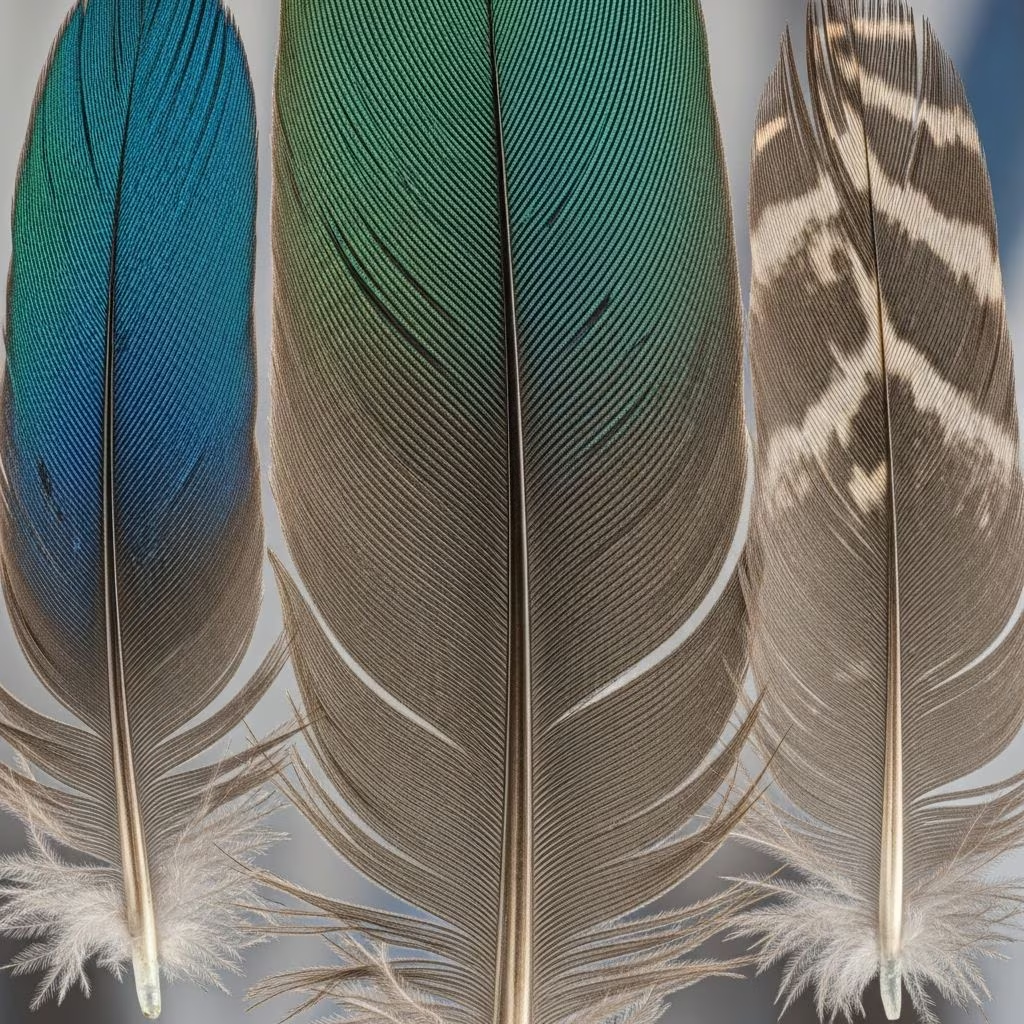
Bird feathers represent one of nature’s most remarkable adaptations, serving critical roles in flight, insulation, protection, and display. Composed primarily of keratin, these lightweight yet durable structures enable birds to soar, stay warm, and attract mates through vibrant displays. This comprehensive guide delves into their intricate anatomy, varied types, growth processes, coloration mechanisms, and the essential molting cycle that renews them periodically.
Understanding Feather Anatomy
At the core of every feather lies a sophisticated structure optimized for strength and flexibility. The central shaft, known as the rachis, forms a hollow yet rigid tube that branches into flat surfaces called vanes on either side. Below the skin, the feather anchors via the calamus, a hollow quill-like base that fits into a follicle.
These vanes arise from barbs, which extend perpendicularly from the rachis. Each barb features smaller branches called barbules, equipped with tiny hooks or hamuli that interlock like Velcro, creating a smooth, cohesive surface. This pennaceous arrangement—characterized by tightly hooked barbules—produces stiff, flat feathers ideal for aerodynamic purposes. In contrast, plumaceous feathers lack these hooks, resulting in a fluffy texture suited for insulation.
- Rachis: Provides lightweight structural support.
- Calamus: Anchors the feather in the follicle.
- Barbs and Barbules: Form the vane through interlocking mechanisms.
- Hamuli: Hook-like structures ensuring vane integrity.
This anatomy allows feathers to withstand wind forces while remaining repairable; birds can preen to realign barbules if damaged.
Key Types of Bird Feathers
Birds possess six primary feather types, each tailored to specific functions, from powering flight to sensory detection. Understanding these distinctions helps bird enthusiasts identify health issues or species traits.
| Feather Type | Description | Key Features | Primary Function |
|---|---|---|---|
| Flight Feathers | Long, stiff, asymmetrical with broad vanes | Hooked barbules; attach to bones | Aerodynamics for flight |
| Contour Feathers | Overlapping body covering; part fluffy, part stiff | Pennaceous tips, plumaceous bases | Shape, protection, camouflage |
| Down Feathers | Tiny, soft, fluffy without rachis | Smooth barbules; undercoat | Thermal insulation |
| Semiplumes | Hybrid: fluffy base, partial vane | Intermediate structure | Insulation and minor display |
| Filoplumes | Hair-like with few barbs at tip | Slender shaft; tufted tip | Sensory role near follicles |
| Bristle Feathers | Reduced barbs at base; stiff shaft | Minimal vane | Facial protection |
Flight feathers, or remiges (wings) and rectrices (tail), feature asymmetrical vanes for efficient lift and steering. Contour feathers, including wing coverts, form the bird’s streamlined silhouette while shielding against weather. Down provides essential warmth by trapping air, vital for fledglings and cold climates. Semiplumes bridge insulation and contour roles, filoplumes act as proprioceptors for positioning, and bristles safeguard eyes and mouths during feeding.
The Growth Cycle of Feathers
Feathers aren’t permanent; they emerge from dermal papillae in the skin, growing continuously until reaching full size. Pin feathers initially appear as blood quills, encased in a waxy sheath that birds split open through preening. Growth proceeds from the follicle outward, with the rachis elongating as barbs unfurl.
This process demands nutrients like protein and minerals; deficiencies can stunt growth or cause faulty feathers. In captivity, balanced diets support robust development, preventing issues like stress bars—translucent lines indicating past nutritional shortfalls. Fully grown feathers cease growth, relying on molting for replacement.
How Feathers Get Their Colors
Bird plumage dazzles with hues from subtle browns to iridescent blues, derived from two main sources: pigments and structural properties. Melanins produce blacks, browns, and grays via eumelanin and phaeomelanin, while carotenoids yield reds, yellows, and oranges ingested from diet.
Structural coloration arises from light interference on feather microstructures, creating blues, greens, and metallic sheens without pigments—think peacock tails. These effects depend on barbule layering and keratin arrangement, making them angle-dependent. Females often select mates based on color vibrancy, signaling health and genetics.
- Pigment Colors: Stable, diet-influenced (e.g., flamingo pink from shrimp).
- Structural Colors: Iridescent, from nanoscale reflectors.
- Combined: Many feathers blend both for complex patterns.
The Molting Process Explained
Molting is the systematic shedding and regrowth of feathers, typically annually but varying by species—some undergo two cycles yearly. It ensures worn plumage is replaced, maintaining flight capability, waterproofing, and insulation.
Strategic feather loss prevents imbalance; primaries molt from inner to outer, preserving wing integrity. The process spans weeks to months, overlapping growth to minimize vulnerability. During heavy molt, birds may appear scruffy, reduce activity, and increase preening to zip vanes.
Complete molt (all feathers) contrasts partial molt (e.g., body only). Juveniles undergo post-fledging molt to adult plumage. Nutritional support—high protein, calcium—is crucial; stressors like poor light or illness prolong molt or cause abnormal feathers.
Caring for Your Bird’s Feathers
Pet bird owners play a key role in feather health. Provide dust-free environments to avoid buildup, offer misting baths for preening, and ensure UV lighting for vitamin D synthesis aiding keratin production. Monitor for signs of trouble: frayed edges, bald patches, or excessive plucking signal mites, allergies, or stress.
Regular vet checkups detect issues early. Species-specific needs vary—parrots thrive with foraging toys stimulating preen glands, while finches need flight space. Supplements like omega-3s enhance feather sheen, but consult professionals first.
Frequently Asked Questions
What causes a bird to lose feathers abnormally?
Abnormal loss stems from mites, fungal infections, nutritional gaps, or behavioral stress like boredom. Unlike molt, it’s patchy and non-seasonal; seek avian vet care promptly.
How long does a full molt take?
Typically 4-12 weeks, depending on species size and health. Larger birds like macaws take longer than small finches.
Can diet affect feather color?
Yes, carotenoids must be dietary for yellow/orange hues; deficiencies fade colors in species like canaries.
Do all birds have the same feather types?
No, but all share the six basics. Flightless birds emphasize down and contour over remiges.
How do birds keep feathers waterproof?
Uropygial gland oil, spread via preening, coats feathers with water-repellent lipids.
References
- A Guide To Bird Feathers — Avian Report. 2023. https://avianreport.com/bird-feathers/
- Bird Feathers | Types, Parts & Anatomy – Lesson — Study.com. 2024. https://study.com/academy/lesson/bird-feathers-types-parts.html
- How Do Feathers Work, And What Can They Tell You? — Open Sanctuary Project. 2023. https://opensanctuary.org/how-do-feathers-work/
- The Parts of a Feather and How Feathers Work — Science of Birds. 2022. https://www.scienceofbirds.com/blog/the-parts-of-a-feather-and-how-feathers-work
- Feathers — Ask A Biologist (Arizona State University). 2023. https://askabiologist.asu.edu/explore/feather-biology
- Bird Feather Identification: Complete Guide for USA Species — Curlew Call. 2024. https://www.curlewcall.org/bird-feather-identification-complete-guide-for-usa-species/



