Understanding Anting: Why Birds Use Ants for Self-Care
Discover the mysterious ways birds utilize ants for health and survival.
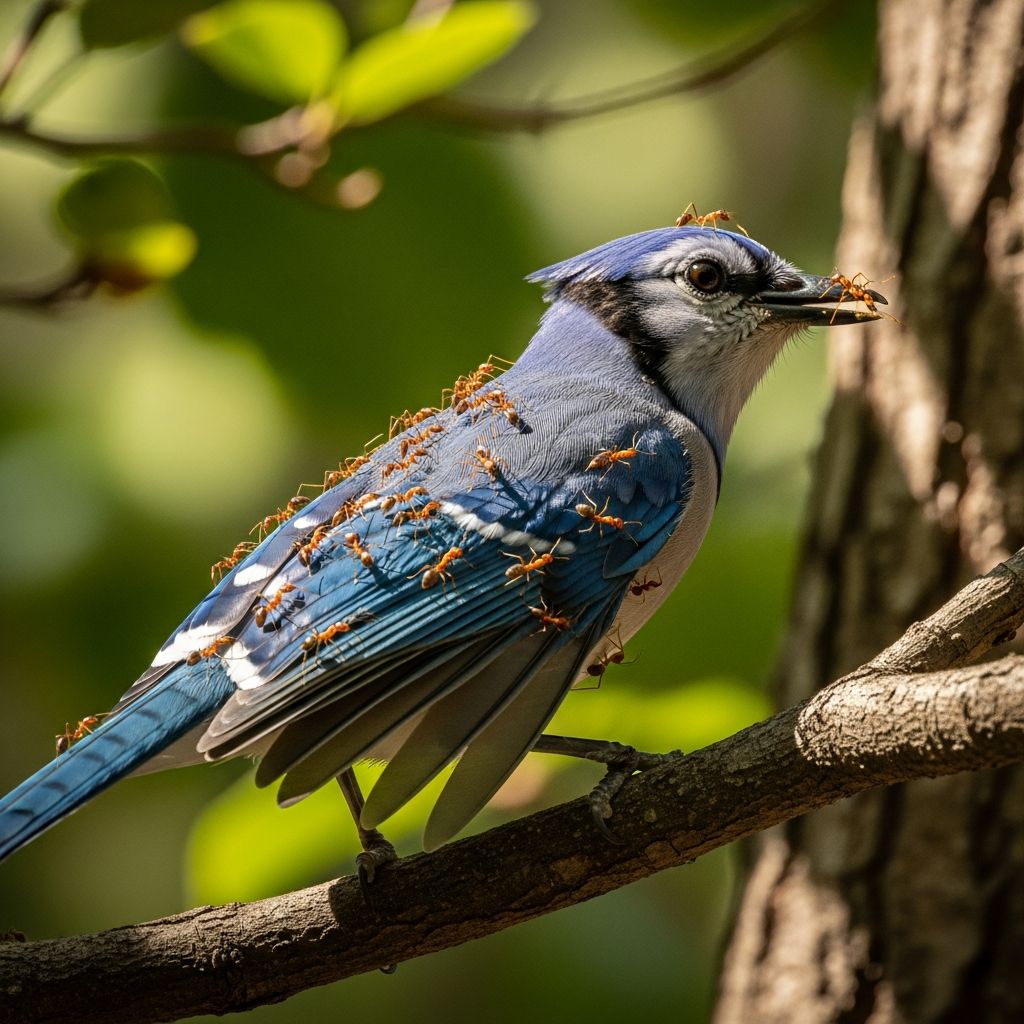
Among the most peculiar yet ingenious behaviors observed in the avian world is a practice known as anting. This fascinating phenomenon involves birds deliberately using ants to interact with their feathers and skin in ways that continue to intrigue ornithologists and bird enthusiasts alike. What might initially appear as erratic or nonsensical activity is, in fact, a sophisticated survival strategy that has evolved across more than 200 bird species worldwide. The complexity of anting reveals just how remarkable bird behavior can be, demonstrating the extraordinary adaptability and intelligence of these creatures.
Defining Anting: A Unique Avian Behavior
Anting represents a specialized maintenance behavior during which birds engage with ants in highly stereotyped patterns. The behavior manifests in two distinct forms that ornithologists have categorized based on how birds interact with the insects. Understanding these variations is essential to grasping the full scope of this remarkable adaptation.
In its active form, birds seize individual ants in their beaks and methodically rub them across their feathers, particularly focusing on the primary feathers of the wings and tail. The bird typically assumes a characteristic posture during this process, holding its wings outstretched while bending its tail forward between its legs. This deliberate positioning allows the bird to apply the ants across the maximum surface area of its plumage.
Passive anting, by contrast, involves a different approach altogether. Rather than selecting and manipulating individual ants, birds employing this technique position themselves directly on or near ant nests, allowing the insects to naturally traverse their feathers and skin. Some birds in passive anting may even assume a posture reminiscent of sunbathing, lying prone on the ground with their feathers fully spread, creating an almost trance-like state as countless ants work their way through their plumage for several minutes at a time.
The Instinctive Nature of Anting Behavior
One of the most compelling discoveries regarding anting is that this behavior is fundamentally instinctive rather than learned. Research involving hand-raised Blue Jays that had never encountered insects, including ants, demonstrated that these birds initiated typical anting behavior upon their very first exposure to ants. This finding fundamentally altered our understanding of anting, revealing that birds possess an innate genetic predisposition toward this complex behavioral sequence.
The fact that naïve birds with zero prior experience could execute the precise choreography of anting suggests that millions of years of evolution have encoded this survival mechanism directly into avian neurology. This genetic programming ensures that even birds raised in isolation from natural populations retain the ability to perform this essential self-care routine when circumstances permit.
Multiple Theories Behind Anting’s Purpose
Despite decades of scientific investigation, ornithologists have yet to definitively establish a singular explanation for why birds engage in anting. Instead, multiple competing hypotheses have emerged, each supported by varying degrees of evidence. The lack of consensus reflects the complexity of avian behavior and suggests that anting may serve multiple functions depending on context, species, or seasonal factors.
Parasite Control and Chemical Defense
One of the most widely accepted explanations centers on parasite management. Ants produce formic acid as a defense mechanism against predators, and this chemical compound may serve a secondary purpose when applied to bird plumage. The formic acid acts as a natural pesticide, potentially helping birds control feather mites, lice, and other ectoparasites that routinely afflict avian populations. By deliberately rubbing ants across their bodies, birds essentially apply a self-administered chemical treatment that protects their feathers from parasitic infestation.
The timing of anting episodes provides circumstantial support for this hypothesis. Anting occurs most frequently during late summer and early fall, precisely when parasitic burdens tend to peak in bird populations. This seasonal correlation suggests that birds may intensify their anting behavior when parasite pressure becomes most acute.
Feather Maintenance During Molting
Another prominent theory proposes that anting serves a grooming and maintenance function, particularly during the molting process when birds shed and regrow their feathers. During molt, birds experience significant skin irritation as new feathers emerge and old ones detach. The formic acid secreted by ants may provide soothing relief from this temporary discomfort, while also stimulating healthy feather growth.
Passerine birds, which represent the largest order of avian species, typically undergo molting in the summer months. Notably, when these birds engage in anting during this period, they often concentrate their efforts on the wings and tail—precisely where the largest and most metabolically demanding feathers emerge. This targeted approach to anting during molt further supports the connection between this behavior and feather renewal cycles.
Food Preparation Strategy
Perhaps the most intriguing hypothesis suggests that anting primarily functions as a food preparation mechanism. This theory emerged from meticulous laboratory research demonstrating that anting specifically targets the removal of formic acid from ants before ingestion. According to this model, birds grasp ants at the thorax—the middle body segment—deliberately avoiding the acid sac located in the ant’s abdomen. As the bird rubs the ant through its feathers, the friction triggers the ant’s defense mechanism, causing the insect to eject its formic acid.
Through this elegant process, birds essentially “disarm” their prey, rendering it safe for consumption. The anting continues until the poison sac has been completely emptied, after which the bird ingests the harmless insect. Research with ants that had their acid sacs surgically removed demonstrated that birds consumed these insects without first subjecting them to anting, providing strong evidence that the presence of formic acid specifically triggers the anting response.
This food preparation hypothesis extends beyond ants to other insects that employ similar defensive spraying mechanisms. Blue Jays have been observed performing anting-like behavior with bombardier beetles, insects that eject caustic sprays as defense. The behavioral sequence remains consistent: the bird manipulates the insect through its feathers until the defensive spray mechanism is exhausted, then consumes the now-harmless prey.
The Role of Formic Acid in Anting
Formic acid emerges as the central chemical actor in most anting hypotheses. This compound, produced by ants of the subfamily Formicinae, possesses multiple properties that could explain its role in avian self-care routines. The majority of anting observations involve formic acid-bearing ants, which suggests this specific chemical composition holds particular significance.
As a powerful antimicrobial and antiparasitic agent, formic acid can potentially control both arthropod pests and microorganisms that colonize bird feathers. The chemical’s properties align with what one would expect from a natural pesticide, making it theoretically useful for parasite suppression. Simultaneously, formic acid’s irritant properties may provide sensory stimulation that relieves the discomfort associated with molting, creating a soothing sensation against irritated skin.
Behavioral Observations and Variations
Birds engaging in anting display remarkable behavioral variation depending on their species, the specific context, and their individual preferences. Some bird species appear to enter altered states during anting episodes, becoming almost completely absorbed in the process while remaining motionless for extended periods. This absorbed state may indicate that the behavior triggers significant sensory or psychological responses in the bird’s nervous system.
The postures adopted during anting vary considerably across species. Some birds maintain normal standing positions while ants crawl over their feathers, whereas others adopt the prone, wings-spread posture reminiscent of sunbathing. The diversity of approaches suggests that birds have flexibility in how they execute anting, adapting their technique to available resources and circumstances.
Evolutionary Distribution Across Species
The prevalence of anting across more than 200 bird species indicates that this behavior represents an evolutionarily successful strategy. The widespread adoption of anting across taxonomically diverse species suggests that the behavior confers significant fitness advantages, otherwise natural selection would not have maintained it so broadly.
Species ranging from European starlings to Blue Jays to various passerine birds engage in anting, indicating that the behavior transcends specific ecological niches or evolutionary lineages. This universal distribution hints that the underlying adaptive value—whether parasite control, feather maintenance, or food preparation—addresses fundamental challenges faced by most bird species.
Unanswered Questions and Future Research
Despite substantial research efforts, fundamental questions about anting remain unresolved. Scientists continue to debate whether anting serves a singular primary function with secondary benefits, or whether multiple distinct functions operate simultaneously in different contexts or species. The possibility that anting fulfills different purposes for different bird populations adds another layer of complexity to understanding this behavior.
The seasonal and contextual variation in anting frequency suggests that environmental pressures influence when birds engage in this behavior most intensely. Yet the precise triggers that prompt anting episodes remain incompletely understood. Future research employing advanced behavioral monitoring and chemical analysis may eventually resolve these outstanding questions.
Comparative Behavior: Anting and Mammalian Self-Anointing
Interestingly, anting bears functional similarities to self-anointing behaviors observed in mammals, where animals deliberately apply substances to their bodies for health or defensive purposes. This convergent evolution of superficially similar behaviors across distantly related animal groups suggests that using external substances for self-care represents a broadly successful survival strategy across the vertebrate world.
Practical Implications for Bird Observation
For birdwatchers and naturalists, understanding anting behavior enhances appreciation for avian complexity and sophistication. Recognizing anting when it occurs in the field provides insight into the hidden pressures and challenges birds face in maintaining health and managing parasites. These observations remind us that bird behavior, when examined closely, reveals layers of ingenuity and adaptation that reflect millions of years of evolutionary refinement.
Conclusion: The Remarkable Sophistication of Bird Self-Care
Anting stands as a testament to the remarkable sophistication embedded within avian behavior. Whether functioning primarily as parasite control, feather maintenance, food preparation, or some combination thereof, anting demonstrates that birds possess innate solutions to significant survival challenges. The instinctive nature of this behavior, combined with its widespread occurrence across diverse species, underscores how evolution has equipped birds with elegant biological strategies for maintaining health and managing the complex demands of their environments. As ornithologists continue investigating anting’s precise mechanisms and functions, this mysterious behavior continues to remind us of the extraordinary complexity hidden within the seemingly simple act of a bird grooming itself with ants.
References
- Anting is widespread and fascinating, but its purpose is uncertain — Birdwatching Daily. 2024. https://www.birdwatchingdaily.com/news/science/anting-widespread-fascinating-purpose-uncertain/
- Anting in Blue Jays: evidence in support of a food-preparatory hypothesis — PubMed Central (PMC2630239). National Institutes of Health. 2024. https://pmc.ncbi.nlm.nih.gov/articles/PMC2630239/
- Anting (behavior) — Wikimedia Foundation. 2025. https://en.wikipedia.org/wiki/Anting_(behavior)
- Birds’ Use of Ants in Self-Care: A Fascinating Behavioral Adaptation — Birdorable. 2024. https://www.birdorable.com/blog/birds-use-of-ants-in-self-care-a-fascinating-behavioral-adaptation
- How Birds Use Ants for Pest Control — A-Z Animals. 2024. https://a-z-animals.com/articles/how-birds-use-ants-for-pest-control/
Similar Articles




Read full bio of Sneha Tete