

Introduction to Bilirubin as a Metabolic Byproduct
Bilirubin represents one of the most important measurable indicators of hepatic function in veterinary medicine. This bile pigment originates from the natural breakdown of aging red blood cells and serves as a crucial diagnostic marker for evaluating liver health and various disease states. Understanding how animals synthesize, transport, and eliminate bilirubin is fundamental to veterinary clinical practice, as abnormal bilirubin levels can indicate systemic disease affecting multiple organ systems.
The journey of bilirubin from its origin as a heme component to its final excretion in bile or urine involves multiple organs and sophisticated enzymatic processes. Each step in this pathway—from initial production in the reticuloendothelial system through hepatic processing and eventual intestinal conversion—reflects the body’s intricate mechanisms for managing waste products. Species variations in these pathways demonstrate the remarkable adaptability of different animals to their ecological niches and dietary requirements.
Origins of Bilirubin: The Hemoglobin Degradation Pathway
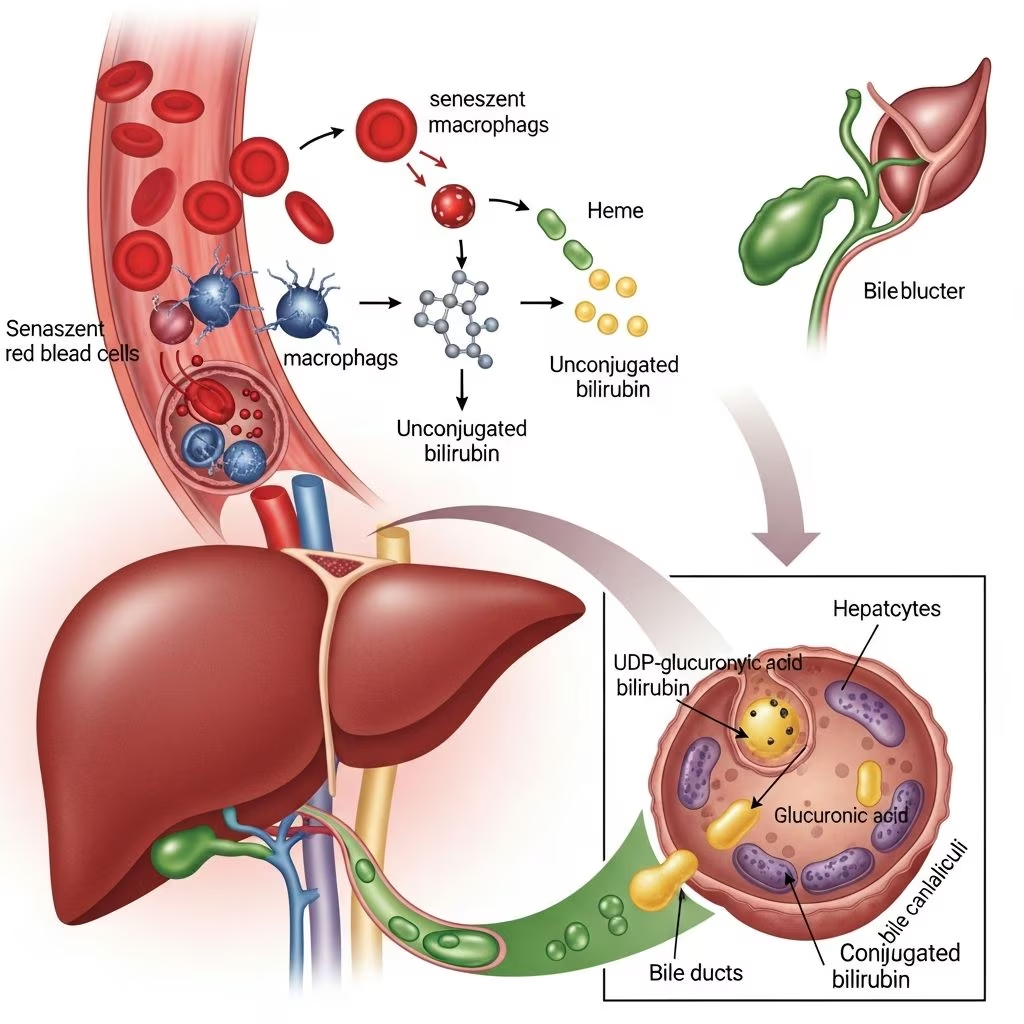
The primary source of bilirubin in animal circulation stems from the catabolism of hemoglobin contained in senescent red blood cells. When erythrocytes reach the end of their lifespan—typically 120 days in most mammals—the reticuloendothelial system, particularly macrophages in the spleen and liver, engulfs these aging cells for processing. Within these macrophages, the hemoglobin molecule undergoes sequential breakdown to release its component parts.
The initial enzymatic step involves heme oxygenase, a microsomal enzyme that oxidizes the heme group (consisting of an iron atom coordinated within a porphyrin ring structure) into biliverdin, simultaneously releasing the iron component. This iron is then either stored as ferritin for future use or released into the plasma where it binds to transferrin for transport to sites of iron utilization. The biliverdin molecule retains a green coloration and exhibits water solubility, characteristics that distinguish it from the next metabolic product.
Following biliverdin formation, the enzyme biliverdin reductase catalyzes the reduction of biliverdin into unconjugated bilirubin. This unconjugated form—also termed indirect bilirubin—possesses water-insoluble lipophilic properties that necessitate binding to albumin for transport through the bloodstream. In clinical laboratory settings, the indirect bilirubin measurement correlates directly with unconjugated bilirubin concentrations, providing valuable diagnostic information about hemoglobin breakdown rates.
Species-Specific Variations in Initial Metabolism
Significant evolutionary adaptations have resulted in striking differences among animal species in their capacity to metabolize heme breakdown products. Avian species, for instance, lack the enzyme biliverdin reductase, preventing conversion of biliverdin into bilirubin. Consequently, birds excrete heme degradation products predominantly as biliverdin rather than bilirubin, representing a fundamental divergence from mammalian metabolic pathways.
Additionally, tissues beyond the reticuloendothelial system can participate in bilirubin synthesis. Both renal and hepatic parenchymal cells express heme oxygenase activity, enabling these tissues to independently take up heme molecules and convert them into bilirubin. This distributed capacity for bilirubin synthesis provides metabolic flexibility and may become clinically relevant in disease states affecting the primary sites of heme degradation.
Hepatic Uptake and Conjugation Mechanisms
Once unconjugated bilirubin enters the systemic circulation bound to albumin, it must be transported to the liver for further processing. The albumin-bilirubin complex circulates through the bloodstream until reaching hepatic sinusoids, where hepatocytes selectively extract unconjugated bilirubin from the blood via specific uptake mechanisms. This extraction represents an essential step in preventing unconjugated bilirubin accumulation in peripheral tissues, which can cause potentially toxic effects.
Following hepatic uptake, unconjugated bilirubin undergoes conjugation—a critical enzymatic modification that increases water solubility by disrupting hydrogen bonds within the molecule structure. This transformation makes the central methylene group available for chemical detection and, more importantly, permits biliary excretion. The conjugation process involves binding bilirubin to various compounds, with the specific conjugates varying by species. Horses predominantly conjugate bilirubin to glucose, while other mammals often utilize glucuronic acid residues as the conjugation partner.
The enzyme UDP glucuronyl transferase catalyzes the primary conjugation reaction in hepatocytes. Notably, research has identified this enzyme in renal tissue of certain species, including dogs and rats, suggesting that renal tubular epithelial cells may also possess limited capacity for bilirubin conjugation. This finding indicates redundancy in the conjugation pathway, potentially providing compensatory mechanisms when hepatic conjugation becomes compromised.
Conjugation as a Critical Rate-Limiting Step
Hepatic conjugation serves an additional physiological function beyond rendering bilirubin water-soluble. The conjugation reaction inhibits binding of bilirubin to albumin and intracellular proteins, thereby preventing the accumulation of bilirubin within hepatocytes that could otherwise cause cellular dysfunction. This dual function—facilitating excretion while preventing intracellular sequestration—demonstrates the elegant efficiency of metabolic regulation.
However, the actual rate-limiting step in the entire bilirubin metabolism pathway occurs not at the conjugation stage but at the subsequent excretion step. Once hepatocytes conjugate bilirubin, the molecule must be transported across the canalicular membrane into bile for eventual intestinal delivery. This excretion process depends upon a specific transporter protein designated multidrug-resistance associated protein-2 (MRP2), which requires energy in the form of ATP to function. Impairment of this ATP-dependent transporter represents a significant mechanism by which hepatic disease can lead to conjugated hyperbilirubinemia, as conjugated bilirubin accumulates within hepatocytes and eventually leaks back into the bloodstream.
Biliary Transport and Intestinal Processing
Once excreted into bile via the MRP2 transporter, conjugated bilirubin travels through the biliary system and enters the small intestine at the duodenum. During transit through the intestinal tract toward the colon, bacterial enzymes—particularly bilirubin reductases—progressively deconjugate and reduce the bilirubin molecules. This bacterial action converts bilirubin diglucuronide into urobilinogen, a colorless compound that represents a critical waypoint in the bilirubin metabolic pathway.
The generation of urobilinogen marks a juncture where bilirubin metabolism diverges into multiple elimination routes. A substantial portion of the urobilinogen generated in the terminal ileum and colon undergoes further bacterial reduction into stercobilinogen. This compound and related stercobilins are ultimately excreted in feces, providing the characteristic brown coloration that reflects normal bilirubin metabolism. However, not all intestinally-produced urobilinogen follows this excretory pathway.
Enterohepatic Circulation and Urinary Excretion
Approximately 15 to 20 percent of the urobilinogen produced in the colon undergoes absorption across the intestinal mucosa and returns to the liver via the portal venous circulation. This enterohepatic recycling pathway represents an efficient mechanism for recovering bilirubin metabolites and subjecting them to re-hepatic processing. The liver can re-conjugate and re-excrete this recycled urobilinogen, creating a closed loop of bilirubin handling that minimizes loss of potentially useful compounds.
The remaining urobilinogen that escapes enterohepatic recycling enters the systemic circulation and becomes available for urinary excretion. Small quantities of urobilinogen normally appear in urine as a consequence of this systemic circulation, reflecting the continuous processing of bilirubin metabolites. Additionally, some unconjugated bilirubin—up to 4 percent of bile bilirubin—may undergo enterohepatic recycling after bacterial deconjugation of conjugated forms, further contributing to the complexity of bilirubin metabolic pathways.
Variations in Conjugation Patterns Across Species
Equine animals demonstrate a distinctive conjugation preference that sets them apart from most other domestic species. In horses, the majority of bilirubin conjugation occurs with glucose rather than glucuronic acid, reflecting species-specific expression patterns of conjugating enzymes. This variation becomes clinically significant when interpreting hepatic function tests in horses, as the expected proportions of different conjugated bilirubin species may differ from those observed in other mammals.
The metabolic basis for species variation in conjugation substrates likely reflects evolutionary adaptation to different dietary compositions and metabolic demands. Horses, as herbivores with specialized digestive physiology, may have evolved conjugation patterns optimized for processing plant-derived compounds and maintaining specific metabolic relationships with intestinal microbiota. In contrast, the predominance of glucuronic acid conjugation in other species may reflect their distinct evolutionary histories and dietary niches.
Pathophysiological Responses to Increased Bilirubin Production
Conditions characterized by accelerated hemolysis—the premature destruction of red blood cells—generate excessive unconjugated bilirubin that overwhelms normal metabolic capacity. In such circumstances, the measurement of indirect bilirubin concentrations exceeds direct (conjugated) bilirubin levels, reflecting the predominance of unconjugated bilirubin in circulation. This pattern indicates that defective uptake, impaired conjugation, or increased production mechanisms dominate the pathophysiological response, even though some cholestasis may simultaneously occur.
Dogs with hemolytic anemia exemplify this principle, typically demonstrating predominantly unconjugated hyperbilirubinemia despite concurrent cholestasis. The mechanism underlying this cholestasis in hemolytic conditions remains incompletely understood, though prevailing hypotheses suggest a combination of hypoxic hepatocyte injury and ATP depletion that impairs the MRP2-mediated excretion of conjugated bilirubin. This creates a functional bottleneck where unconjugated bilirubin continues entering hepatocytes through normal uptake mechanisms, becomes conjugated through normal enzymatic processes, but encounters difficulty in being excreted across the canalicular membrane into bile.
The Hepatic Excretion Bottleneck in Disease
The rate-limiting nature of hepatic excretion becomes most apparent in disease states where ATP production becomes compromised or when MRP2 transporter function deteriorates. This bottleneck mechanism can be conceptualized as a funnel where unconjugated bilirubin enters the wide opening while conjugated bilirubin must exit through an increasingly narrow opening. As hepatocyte dysfunction progresses, this narrowing progressively worsens, eventually leading to conjugated bilirubin accumulation within hepatocytes and subsequent regurgitation into the bloodstream.
Different disease processes can affect specific segments of this functional pathway. Primary hepatocellular damage may impair conjugation and excretion simultaneously. Cholestasis from bile duct obstruction dramatically impairs excretion without necessarily affecting conjugation. Hemolytic conditions increase substrate delivery while potentially compromising hepatocyte function through secondary ischemic injury. These distinctions in pathophysiological mechanisms explain why different conditions produce characteristic patterns of unconjugated versus conjugated hyperbilirubinemia.
Diagnostic Interpretation of Bilirubin Fractionation
Clinical laboratory evaluation of hyperbilirubinemia relies upon measurement of total bilirubin and direct (conjugated) bilirubin concentrations, with indirect bilirubin calculated by subtraction. The proportional distribution between conjugated and unconjugated fractions provides critical diagnostic information regarding the location and nature of bilirubin metabolism disruption.
In most domestic species, unconjugated hyperbilirubinemia predominantly indicates prehepatic causes (hemolysis) or hepatic uptake/conjugation defects. Conjugated hyperbilirubinemia suggests either intrahepatic cholestasis (excretion failure) or post-hepatic obstruction (bile duct blockade). However, horses present an important exception to this general principle, as cholestasis in horses produces predominantly unconjugated hyperbilirubinemia rather than the conjugated pattern expected from other species. This species variation reflects the glucose-conjugation preference in equine hepatocytes and underscores the importance of considering species-specific metabolic patterns when interpreting laboratory results.
Genetic and Inherited Bilirubin Metabolism Disorders
Hereditary defects affecting specific components of the bilirubin metabolism pathway have been documented across multiple animal species. Southdown sheep demonstrate defective clearance of bilirubin, bile acids, and bromsulphthalein (BSP), indicating a primary hepatic uptake carrier defect. Despite this uptake impairment, these animals also show elevated conjugated bilirubin, suggesting concurrent defects in canalicular excretion mechanisms. This syndrome in sheep parallels Gilbert’s syndrome in humans, a benign condition characterized by mild unconjugated hyperbilirubinemia.
Other species display different inherited patterns. Corriedale sheep and Golden lion tamarins manifest Dubin-Johnson syndrome, a condition characterized by defective transport of conjugated bilirubin into bile, resulting in predominantly conjugated fasting hyperbilirubinemia. These animals demonstrate normal conjugation capacity but fail to excrete conjugated bilirubin effectively, creating a clinical presentation dominated by conjugated hyperbilirubinemia despite normal hepatic function in other respects. Monkeys and rats also express inherited bilirubin metabolism defects affecting various steps in the pathway, providing valuable animal models for understanding comparable disorders in humans and other species.
Fetal and Neonatal Considerations
Bilirubin metabolism in fetal animals operates with substantially reduced efficiency compared to postnatal individuals. Research in dog and monkey fetuses demonstrated prolonged elevated plasma bilirubin concentrations following administration of radioactively labeled bilirubin, indicating both slower plasma clearance and reduced hepatic excretion capacity. Species differences become apparent during fetal development, with canine fetuses demonstrating greater capacity for hepatic conjugation and excretion compared to primate fetuses.
In fetal monkeys, conjugated bilirubin excretion into bile remains negligible despite some conjugation occurring, suggesting that the canalicular excretion mechanism develops late in fetal life. Instead, fetal monkeys rely substantially upon placental transfer of bilirubin to maternal circulation, where the maternal liver handles excretion of fetal metabolic products. This reliance on placental transfer reflects the immature development of hepatic excretory mechanisms and the efficiency of maternal-fetal metabolic exchange during pregnancy.
Clinical Significance and Practical Applications
Understanding bilirubin metabolism provides essential foundation for interpreting hepatic function tests and diagnosing disease in veterinary patients. The complexity of the bilirubin pathway, with its multiple rate-limiting steps and species-specific variations, explains why different diseases produce characteristic patterns of hyperbilirubinemia. Recognition of these patterns guides clinical diagnosis and influences therapeutic decision-making.
Evaluating a hyperbilirubinemic animal requires consideration of multiple factors: the species involved, the proportional distribution between conjugated and unconjugated fractions, the presence or absence of other signs of hepatic disease, and the clinical context suggesting potential causes. This multifactorial approach, grounded in understanding bilirubin metabolism, enables veterinarians to formulate differential diagnoses and select appropriate diagnostic procedures and treatments.
References
- Bilirubin — eClinPath, University of California Davis School of Veterinary Medicine. https://eclinpath.com/chemistry/liver/cholestasis/bilirubin/
- Bilirubin metabolism — Merck Veterinary Manual. https://www.merckvetmanual.com/multimedia/image/bilirubin-metabolism
- Bilirubin metabolism — MSD Veterinary Manual. https://www.msdvetmanual.com/multimedia/image/bilirubin-metabolism
- Bilirubin — Wikipedia. Accessed from academic sources via reference citations. 2024.
- Bilirubin metabolism in the fetus — National Center for Biotechnology Information (NCBI), National Institutes of Health. https://pmc.ncbi.nlm.nih.gov/articles/PMC535739/



