

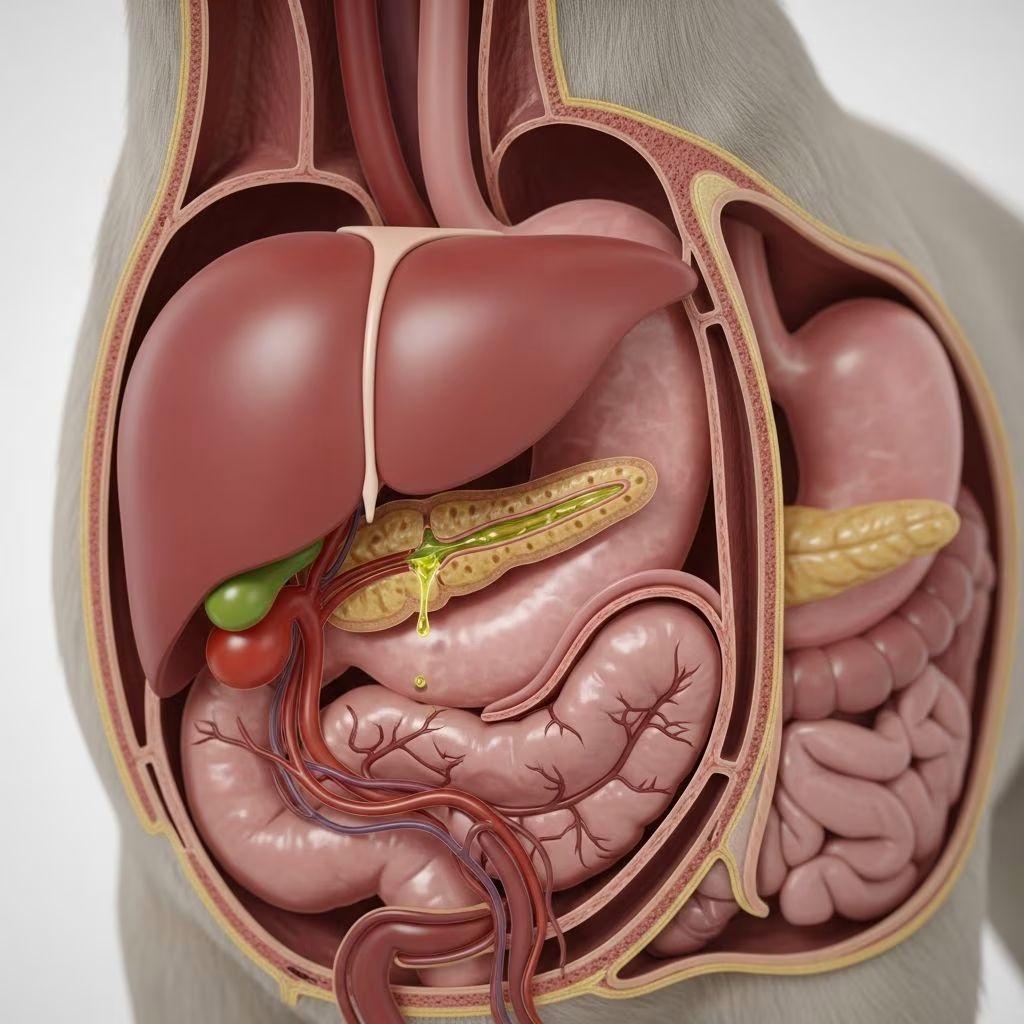
Bile duct ruptures and the resulting bile peritonitis represent serious abdominal crises in small animals like dogs and cats. These conditions arise when the biliary system, responsible for transporting bile from the liver to the intestines, fails due to trauma, obstruction, or inflammation, leading to bile leakage into the peritoneal cavity. Bile, a digestive fluid rich in bile acids and bilirubin, becomes highly toxic outside its normal pathways, causing severe inflammation, tissue damage, and secondary bacterial infections. Prompt recognition and intervention are critical for survival.
Overview of the Biliary System in Small Animals
The biliary system includes the gallbladder, cystic duct, common bile duct, and intrahepatic ducts. In dogs, the gallbladder stores and concentrates bile, while cats have a more diffuse biliary network with less prominent storage. Bile aids fat digestion and eliminates waste products. Disruptions, such as ruptures, lead to bile peritonitis—a chemical and bacterial peritonitis triggered by free bile in the abdomen.
Common in middle-aged to older small-breed dogs and certain cats, these issues often stem from cholelithiasis (gallstones) or trauma. Many cases remain subclinical until complications like rupture occur.
Primary Causes of Biliary Ruptures
Biliary tree ruptures occur through several mechanisms:
- Trauma: Blunt abdominal injuries from car accidents or falls frequently damage the common bile duct more than the gallbladder. Penetrating wounds can also cause leaks.
- Obstruction and Pressure Buildup: Gallstones (choleliths) made of calcium bilirubinate or pigments block ducts, leading to distension and eventual rupture. Bacterial infections exacerbate this by causing inflammation (cholecystitis or choledochitis).
- Inflammation and Necrosis: Necrotizing cholecystitis or vascular thrombosis can infarct gallbladder tissue, resulting in perforation. In cats, extrahepatic biliary duct obstruction (EHBDO) heightens risks.
- Neoplasia or Cysts: Tumors or cystic malformations compress ducts, promoting rupture. Biliary cystadenomas in older cats present as cystic lesions prone to complications.
These factors often interplay; for instance, pigment stones from hyperbilirubinemia or stasis promote infection and weakening of duct walls.
Recognizing Clinical Signs
Symptoms vary by severity but typically include:
- Acute abdominal pain, vomiting, and lethargy.
- Jaundice (icterus) from bilirubin buildup, though not always present.
- Fever (pyrexia), anorexia, and diarrhea signaling sepsis.
- Abdominal distension due to effusion in advanced peritonitis.
In cats, nonspecific signs like nausea mimic hepatic lipidosis, delaying diagnosis. Dogs may show more overt pain from cholelith-related issues. Bile peritonitis progresses rapidly, with bile salts causing necrosis and bacterial overgrowth.
Diagnostic Approaches
Diagnosis combines history, imaging, and lab tests:
| Method | Purpose | Key Findings |
|---|---|---|
| Ultrasonography | Primary imaging | Dilated ducts, gallstones >2mm, gallbladder wall thickening, abdominal effusion, poor detail from peritonitis. |
| Bloodwork | Biochemical profile | Elevated ALP, GGT, bilirubin; inflammatory leukogram. |
| Radiography | Survey films | Detects mineralized stones; effusion outlines. |
| Cytology/Biopsy | Invasive confirmation | Bile analysis for bacteria, crystals; liver/gallbladder histology for necrosis or neoplasia. |
Ultrasound guides fine-needle bile aspiration for culture. In trauma cases, free abdominal fluid confirms leakage. Biopsies rule out underlying cholangitis or ductal malformations like Caroli syndrome.
Therapeutic Strategies
Treatment demands aggressive, multimodal care:
Medical Stabilization
- IV fluids for shock and dehydration.
- Broad-spectrum antibiotics targeting anaerobes and enteric pathogens.
- Anti-nausea drugs and nutritional support to prevent lipidosis in cats.
- Hepatoprotectants and choleretics like ursodeoxycholic acid (UDCA) to thin bile.
Surgical Interventions
Surgery is often definitive:
- Cholecystectomy: Gallbladder removal for rupture, necrosis, or mucocele—standard for dogs.
- Duct Repair or Bypass: Suturing leaks or cholecystojejunostomy/duodenostomy for obstructions.
- Lavage and Drainage: Abdominal flushing to remove bile, drains for ongoing effusion.
In cats, surgery carries higher risks due to lipidosis predisposition. Biopsy everything: liver, ducts, stones for culture.
Complications and Prognosis
Outcomes depend on timeliness:
- Short-term Risks: Sepsis, pancreatitis, DIC from bile toxicity.
- Long-term: Recurrent cholangitis, strictures post-bypass.
Guarded prognosis in cats with EHBDO (high mortality); dogs fare better post-cholecystectomy. Early surgery improves survival; delays lead to 50%+ mortality in peritonitis.
Preventive Measures and Monitoring
High-risk pets (older small dogs, obese cats) benefit from routine ultrasounds. Treat underlying infections promptly. Post-op, monitor liver enzymes, cultures.
Frequently Asked Questions (FAQs)
What triggers bile peritonitis in pets?
Trauma, gallstones, or inflammation causing duct/gallbladder leaks.
Can bile peritonitis resolve without surgery?
Rarely; supportive care stabilizes, but source control via surgery is essential.
Is cholecystectomy safe for cats?
Riskier than dogs due to healing challenges, but viable with nutrition.
How do I know if my dog has gallstones?
Ultrasound detects them; many asymptomatic until complications.
What’s the recovery like post-surgery?
2-4 weeks with antibiotics, diet; watch for jaundice recurrence.
References
- Feline biliary tree and gallbladder disease: Aetiology, diagnosis and treatment — PMC/NCBI. 2024. https://pmc.ncbi.nlm.nih.gov/articles/PMC10816526/
- Cholelithiasis in Small Animals — Merck Veterinary Manual. 2026. https://www.merckvetmanual.com/digestive-system/hepatic-diseases-of-small-animals/cholelithiasis-in-small-animals
- Canine Extrahepatic Biliary Tract Disease and Surgery — VetFolio. 2023. https://www.vetfolio.com/learn/article/canine-extrahepatic-biliary-tract-disease-and-surgery
- Biliary Duct or Gallbladder Rupture and Bile Peritonitis — Wiley Online Library. 2018. https://onlinelibrary.wiley.com/doi/10.1002/9781119376293.ch136



