

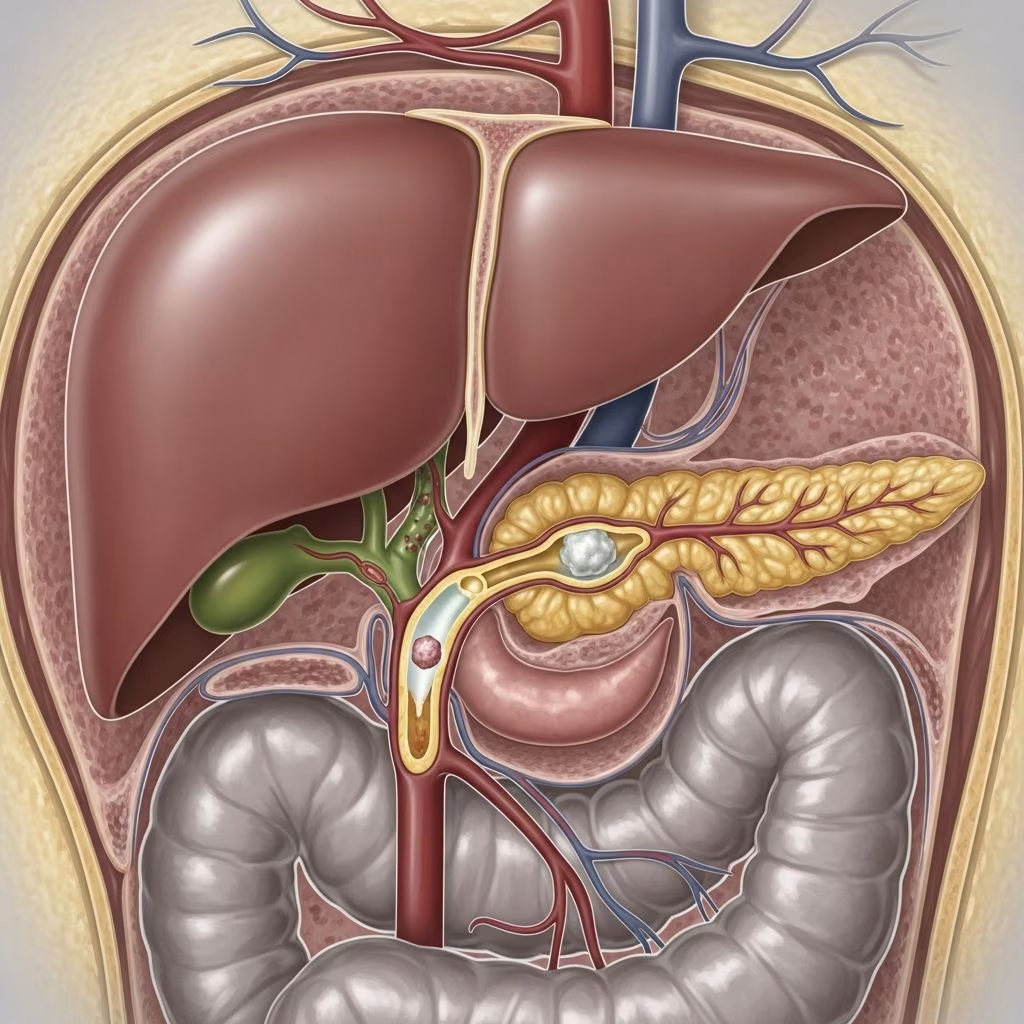
Extrahepatic bile duct obstruction (EHBDO) represents a critical condition in small animals where the pathway for bile from the liver to the intestines is impeded, triggering rapid health declines. This blockage halts the essential digestive and detoxifying roles of bile, often manifesting as visible jaundice and systemic illness in dogs and cats.
Understanding the Bile System in Companion Animals
Bile, produced by the liver, aids in fat digestion and waste elimination through the gallbladder and bile ducts into the duodenum. In small animals, the common bile duct serves as the primary conduit. When obstructed externally to the liver, bile accumulates, causing liver enlargement (hepatomegaly) and duct dilation almost immediately. Short-term blockages may resolve with fibrosis regression, but prolonged cases exceeding six weeks foster irreversible scarring, cirrhosis-like changes, portal hypertension, and alternative blood vessel formations.
In severe instances, the bile turns pale or white due to bilirubin absence, compounded by mucin buildup and potential bacterial overgrowth, as bile’s natural flushing mechanism fails.
Common Triggers of Bile Flow Interruption
Diverse factors precipitate EHBDO in pets. Gallstones (cholelithiasis), tumors, pancreatitis-induced inflammation, thickened bile, gallbladder mucoceles, parasites, and duodenal foreign bodies top the list. Pancreatitis, particularly, compresses the bile duct through swelling, while foreign objects in the proximal duodenum can mechanically block the duct’s entry point. Neoplastic growths or strictures from chronic inflammation further contribute.
- Pancreatitis-related: Swelling compresses ducts; common in dogs with high surgical risks.
- Foreign bodies: Duodenal items obstruct papilla, as seen in boxer and cattle dogs.
- Gallbladder issues: Mucoceles or stones impede flow.
- Tumors: Intramural or extramural masses.
Recognizing the Signs: From Subtle to Severe
Acute full blockages provoke lethargy, recurring fevers, and jaundice within hours, with bilirubin levels spiking rapidly. Owners often note episodic vomiting, appetite fluctuations—ranging from refusal to increased hunger due to fat malabsorption—and abdominal discomfort. Chronic cases reveal pale gums from anemia, either non-regenerative or regenerative if bleeding occurs.
Blood tests show elevated liver enzymes: ALT and AST from tissue damage, ALP and GGT markedly rising within 8-12 hours. Leukocytosis with left shifts indicates infection or inflammation. Vitamin K deficiency emerges as a peril, impairing clotting and causing hemorrhages.
| Symptom | Acute Presentation | Chronic Presentation |
|---|---|---|
| Jaundice | Within 4 hours | Persistent icterus |
| Appetite | Inappetent or polyphagic | Weight loss from maldigestion |
| Blood Changes | Neutrophilia | Anemia, high enzymes |
| Other | Fever, vomiting | Ascites, bleeding |
Diagnostic Pathways for Accurate Identification
Veterinarians rely on history, physical exams revealing icterus and hepatomegaly, and imaging like ultrasound to spot dilated ducts and obstruction sites. Radiographs may suggest stones or masses, while contrast studies highlight blockages. Bloodwork confirms cholestasis patterns. Advanced endoscopy, though limited in vets, aids human analogs but relies on surgery for confirmation. Liver biopsies via laparotomy provide tissue insights without risking bile leakage from needle methods.
In foreign body cases, barium studies show delayed emptying, prompting exploratory surgery.
Emergency Interventions and Management Strategies
Swift biliary decompression is cornerstone therapy, demanding surgical exploration. Palpation identifies masses or distended ducts; gentle gallbladder pressure tests patency. Procedures include duodenotomy, cholecystotomy, or choledochotomy to clear sludge, stones, or infections.
For pancreatitis-linked cases, monitoring for 2-3 weeks allows spontaneous resolution in many dogs, avoiding high-risk surgery (up to 50% mortality). Temporary stenting or percutaneous ultrasound-guided aspiration offers alternatives, though bile peritonitis risks persist. Infected bile ducts necessitate debris removal and antibiotics, with fluid support to counter shock. Vitamin K supplementation prevents coagulopathies.
- Surgical options: Direct decompression, stent placement.
- Non-surgical: Medical management for mild pancreatitis cases.
- Supportive care: Fluids, nutrition, antibiotics.
Prognosis: Factors Influencing Recovery
Outcomes hinge on obstruction duration, cause, and intervention speed. Early resolution averts permanent damage; prolonged cases risk cirrhosis and shunts. Foreign body removals yield excellent recoveries. Pancreatitis cases vary, with surgical risks high but medical approaches promising. Long-term issues include abscesses, chronic pancreatitis, or hypertension.
Preventive Measures and Owner Education
Minimize pancreatitis risks via diet control in predisposed breeds. Regular check-ups detect early gallstones or tumors. Prompt vomiting evaluation prevents progression. Post-op care involves monitoring for leaks, infections, and nutrition.
Frequently Asked Questions (FAQs)
What causes yellow skin in my dog?
Jaundice from bile buildup, often EHBDO; seek vet immediately.
Is surgery always needed for bile duct issues?
Not always; pancreatitis cases may resolve medically, but persistent ones require decompression.
How quickly does liver damage occur?
Hepatomegaly immediate; irreversible after 6 weeks.
Can cats get this condition?
Yes, though less common than dogs; similar signs and treatments.
What’s the survival rate post-surgery?
Variable; 50% risk in pancreatitis dogs, better for foreign bodies.
Long-Term Care After Treatment
Survivors need hepatic diets low in fats, ongoing enzyme monitoring, and ultrasound follow-ups. Ursodiol may aid bile flow; antioxidants support liver health. Owners should watch for relapse signs like renewed jaundice.
References
- Extrahepatic Bile Duct Obstruction in Small Animals — MSD Veterinary Manual. 2026. https://www.msdvetmanual.com/digestive-system/hepatic-diseases-of-small-animals/extrahepatic-bile-duct-obstruction-in-small-animals
- Features, management, and long-term outcome in dogs with pancreatitis and extrahepatic biliary obstruction — PubMed (Wiley). 2023-07-01. https://pubmed.ncbi.nlm.nih.gov/37451676/
- Extrahepatic biliary duct obstruction secondary to duodenal foreign body in two dogs — PMC (Can Vet J). 2019. https://pmc.ncbi.nlm.nih.gov/articles/PMC6697016/
- Extrahepatic Biliary Tract Obstruction — Wiley Online Library. 2021. https://onlinelibrary.wiley.com/doi/abs/10.1002/9781119693741.ch17



