
Bile Duct Abnormalities in Companion Animals
Understanding congenital and acquired biliary disorders in dogs and cats
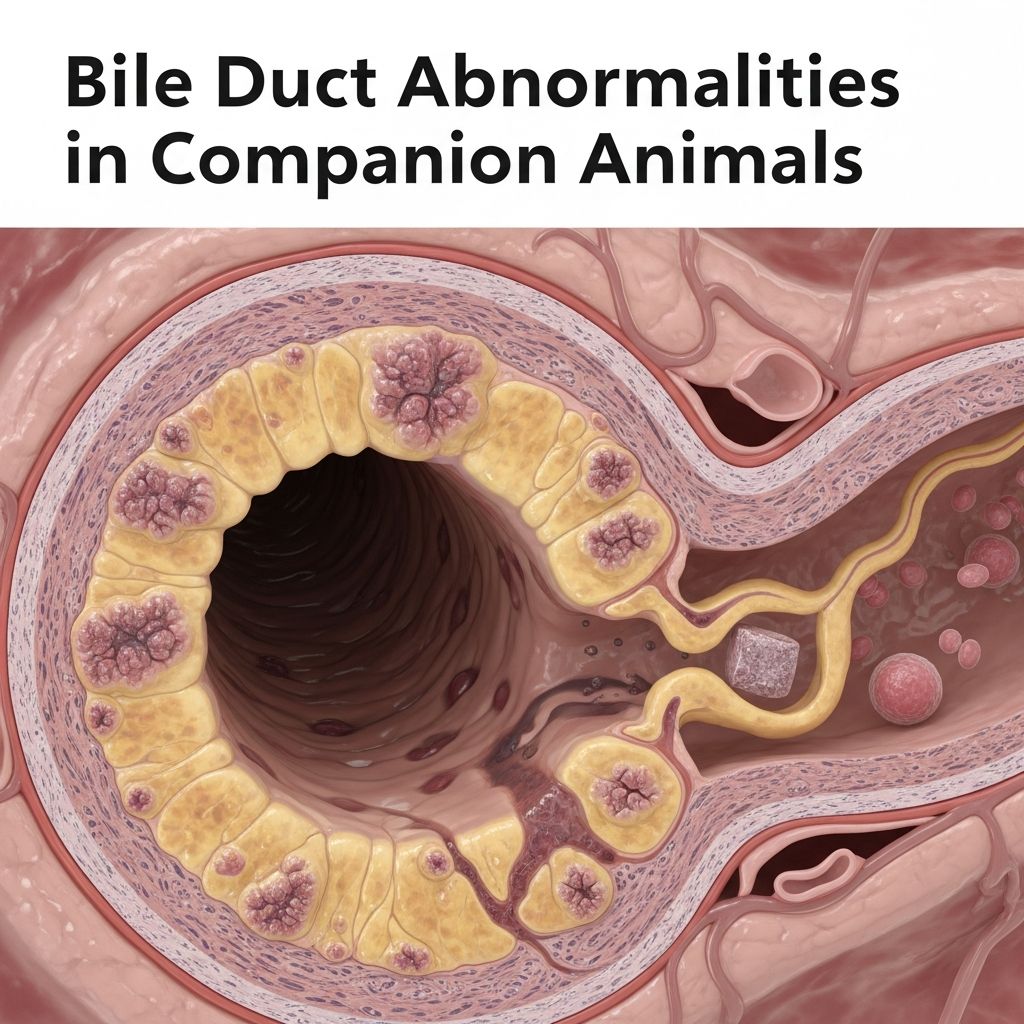
The biliary system in dogs and cats represents a critical component of hepatic function, responsible for the production, storage, and delivery of bile necessary for proper digestion and nutrient absorption. When structural or functional abnormalities affect the bile ducts, the consequences can range from minimal clinical impact to severe, life-threatening complications. Understanding these disorders is essential for veterinary professionals tasked with diagnosing and managing hepatic disease in small animal patients.
Embryologic Origins and Developmental Disorders
Numerous biliary disorders originate during fetal development, stemming from disruptions in the embryologic processes that establish the ductal architecture of the liver. These congenital abnormalities arise from disruptions in primary ciliary function, which normally orchestrates the formation of bile duct tubules and contributes to the development of renal structures as well. When cilia fail to function properly during gestation, defective tubulogenesis results, leading to structural malformations that may affect either the hepatic system, the urinary system, or both simultaneously.
The classification system used in human medicine to categorize fibropolycystic syndromes provides a useful framework for understanding similar conditions in veterinary patients. These disorders encompass a spectrum of presentations, from microscopic ductal abnormalities to macroscopic cystic lesions, and from localized malformations to widespread structural disorganization of the entire biliary tree.
Fibropolycystic Syndromes: Structural Characteristics and Classification
Fibropolycystic syndromes represent a group of congenital hepatic disorders characterized by abnormal proliferation of bile ductules in association with increased deposition of fibrous connective tissue. These conditions are categorized into distinct types based on their morphologic features and pathophysiologic consequences.
Congenital Hepatic Fibrosis Type
The first category encompasses diffuse ductal plate malformations accompanied by prominent deposition of extracellular matrix throughout the portal regions of the liver. This excessive fibrotic response leads to increased resistance to blood flow within the liver itself, creating a condition known as intrahepatic presinusoidal portal hypertension. The consequence is structural stiffening of the liver parenchyma, hepatomegaly, and ultimately the development of acquired portosystemic vascular shunts as the body attempts to bypass the obstructed portal circulation.
Caroli-Type Malformations
A second category of fibropolycystic disease involves sacculation of the intrahepatic and interlobular bile ducts, creating outpouching or segmental dilatation of these normally tubular structures. Caroli malformations may occur in isolation or in association with congenital hepatic fibrosis. These dilated ductal segments may contain stagnant bile and represent sites susceptible to secondary infection and stone formation.
Von Meyenburg Complexes
A third type consists of microscopic, isolated ductal plate malformations scattered throughout the hepatic parenchyma. These von Meyenburg complexes are typically asymptomatic and may be discovered incidentally during histologic examination of liver tissue obtained for other diagnostic purposes.
Clinical Manifestations and Complications
The clinical presentation of bile duct abnormalities depends upon the extent and type of structural malformation, the degree of functional compromise, and whether secondary complications have developed.
Hepatic Encephalopathy and Portal Hypertension
In cats and dogs with extensive fibropolycystic disease, the progressive fibrosis and structural disorganization lead to portal hypertension. This elevated blood pressure within the portal system triggers the formation of acquired shunt vessels that bypass the liver, allowing blood to enter the systemic circulation without undergoing the normal detoxifying processes. The result is hepatic encephalopathy, characterized by neurologic signs including altered mental status, disorientation, and in severe cases, seizures or coma.
Ascites and Fluid Accumulation
Portal hypertension also causes fluid to leak from the hepatic vasculature into the peritoneal cavity, resulting in ascites. The combination of hepatic encephalopathy and ascites indicates advanced disease with significant hepatic dysfunction.
Inflammatory and Infectious Complications
Affected animals may demonstrate elevation in hepatic enzyme activity, including alanine aminotransferase (ALT), aspartate aminotransferase (AST), and alkaline phosphatase (ALP), reflecting inflammation or infection within the biliary system. Secondary cholangitis, inflammation of the bile ducts, can develop as a complication of stasis and bacterial overgrowth. Some patients develop cholelithiasis, the formation of calcified deposits within the biliary tree, which may become complicated by mineralization.
Jaundice and Hyperbilirubinemia
Interestingly, many cats with diffuse ductal plate malformations do not develop jaundice or elevated bilirubin levels despite significant structural abnormalities. In some cases, liver enzyme values may remain within normal limits, making diagnosis challenging and necessitating advanced imaging studies such as ultrasonography to identify the underlying pathology.
Species-Specific Considerations
Feline Presentations
Cats demonstrate a high prevalence of biliary disease relative to primary liver parenchymal disorders. A specific genetic mutation identified in cats leads to autosomal dominant polycystic kidney disease, which can manifest as biliary ductule malformations and hepatic fibrosis. However, in most affected cats, renal manifestations predominate, with only a subset developing clinically significant diffuse fibropolycystic liver disease. Some cats develop numerous large hepatic cysts that cause marked enlargement of the liver and may require intervention through repeated drainage procedures or surgical fenestration.
Canine Presentations
Dogs develop biliary dysplastic syndromes less frequently than cats, and the association with concurrent renal cystic disease is uncommon. Nevertheless, ductal plate malformations are identified in dogs with similar prevalence to cats. Affected canine patients may display elevated alkaline phosphatase activity and increased total serum bile acid concentrations. As in feline patients, extensive connective tissue deposition can lead to portal-to-portal bridging fibrosis, portal hypertension, acquired portosystemic shunts, and progressive hepatic dysfunction.
Choledochal Cyst: A Distinct Entity
Definition and Pathophysiology
Choledochal cysts represent a distinctly different congenital abnormality from the fibropolycystic syndromes described above. These lesions consist of congenital, appendix-like dilatations of the extrahepatic bile duct, creating a cystic outpouching from the main ductal structure. Although recognized uncommonly in cats, these malformations create a particularly problematic clinical scenario due to their functional consequences.
Clinical Problems Associated with Choledochal Cysts
The cystic structure functions as a dependent pouch or sump that cannot drain effectively. Bile stagnates within this space, and bacteria readily colonize the static fluid environment. Patients typically present with fever, abdominal pain, and jaundice resulting from infection of the cyst and obstruction of bile flow. The immotile nature of the cyst walls prevents effective emptying, perpetuating infection and inflammation.
Diagnostic and Surgical Management
Definitive diagnosis frequently requires surgical exploration of the abdominal cavity to visualize and characterize the cystic malformation. Treatment involves extirpation of the abnormal tissue or marsupialization, a procedure in which the cyst is opened and sutured to the wall of the common bile duct, converting the blind pouch into an open cavity that drains into the normal biliary system. Postoperative management includes prolonged antimicrobial therapy guided by bacterial culture of bile obtained during surgery, as well as repeated ultrasonographic surveillance to detect recurrence or complications.
Diagnostic Approaches to Biliary Disorders
Laboratory Assessment
Laboratory evaluation provides important clues to the presence of biliary disease, although results must be interpreted in context. Hepatic enzyme elevation, particularly alkaline phosphatase, frequently accompanies biliary disorders. Total serum bile acid concentration serves as a more specific marker of hepatic synthetic dysfunction. However, normal laboratory values do not exclude significant structural abnormality.
Ultrasonographic Imaging
Ultrasonography represents the most valuable diagnostic modality for detecting biliary and hepatic abnormalities. This noninvasive imaging technique can identify dilated bile ducts, intrahepatic cysts, cholelithiasis, and other structural abnormalities. Ultrasonography also enables guided percutaneous aspiration of bile for cytologic and bacteriologic analysis when infection is suspected.
Histopathologic Examination
Definitive diagnosis of many congenital biliary disorders requires hepatic tissue examination through biopsy. Histology reveals the characteristic ductular proliferation, fibrosis patterns, and cystic changes that distinguish different types of fibropolycystic disease. Biopsy may be initiated when ultrasonographic findings raise concern for congenital malformation despite normal or minimally abnormal laboratory parameters.
Therapeutic Approaches and Management Strategies
Medical Management of Hepatic Encephalopathy
For patients with fibropolycystic disease and bridging portal fibrosis, medical therapy focuses on palliation of hepatic encephalopathy rather than reversal of the underlying structural abnormality. Dietary modification using protein-restricted formulas reduces the nitrogen load presented to the compromised liver for metabolism. Lactulose administration reduces intestinal pH and alters the enteric bacterial flora, decreasing the production of ammonia and other neurotoxic compounds. Low-dose metronidazole similarly modifies the bacterial population and has been used as an adjunctive measure to control encephalopathy.
Management of Ascites
When fluid accumulation in the abdomen occurs secondary to portal hypertension, diuretic therapy combined with dietary sodium restriction helps reduce fluid retention. These measures address the symptom rather than the underlying cause but provide symptomatic relief.
Surgical Intervention
Surgical options exist for certain presentations. In cats with numerous large hepatic cysts causing significant hepatomegaly, repeated drainage via needle aspiration, placement of drainage catheters, marsupialization of cyst walls, and partial surgical resection have been employed. These procedures carry the risk of introducing infection, and neoplastic transformation of cystic epithelium, though uncommon, remains a potential long-term complication. Cystadenomas, cystic structures with dysplastic epithelium, are particularly difficult to manage due to their complex internal architecture and resistance to needle aspiration.
Transplantation
In human medicine, hepatic transplantation has become the definitive treatment for advanced fibropolycystic disease with portal hypertension and encephalopathy. This option is not currently available in veterinary medicine, limiting treatment to supportive and palliative measures.
Prognosis and Long-Term Considerations
The prognosis for animals with congenital biliary abnormalities varies according to the extent of disease and the presence of complications. Microscopic ductal plate malformations may have minimal clinical impact and excellent long-term prognosis. Conversely, diffuse fibropolycystic disease with bridging fibrosis and portal hypertension carries a guarded prognosis, with progressive deterioration expected despite supportive therapy.
In cases where secondary complications develop, particularly cholangitis or cholelithiasis, the prognosis becomes more guarded. Ascending cholangitis can progress rapidly and lead to sepsis. Biliary obstruction from stones may require emergency surgical intervention. Secondary hepatic lipidosis, which can develop in cats through the anorexia and malnutrition accompanying biliary disease, substantially worsens the overall prognosis.
Research Directions and Future Perspectives
Multiple mutations have been identified in human fibropolycystic syndromes, and similar genetic heterogeneity is suspected in dogs and cats. Further investigation into the molecular basis of these congenital disorders may eventually enable genetic screening and identification of carriers, permitting more informed breeding decisions in susceptible populations. Additionally, continued refinement of supportive therapeutic strategies and development of new pharmacologic interventions may improve outcomes for affected animals.
References
- Miscellaneous Disorders of the Bile Ducts in Small Animals — Merck Veterinary Manual. 2025. https://www.merckvetmanual.com/digestive-system/hepatic-diseases-of-small-animals/miscellaneous-disorders-of-the-bile-ducts-in-small-animals
- Pathological Changes in Bile in Small Animals — Merck Veterinary Manual. 2025. https://www.merckvetmanual.com/digestive-system/pathophysiology-of-hepatic-disease-in-small-animals/pathological-changes-in-bile-in-small-animals
- Feline biliary tree and gallbladder disease: Aetiology, diagnosis and management — PubMed Central. NIH. 2024. https://pmc.ncbi.nlm.nih.gov/articles/PMC10816526/
- Internal Medicine: Medical Conditions — Cornell University College of Veterinary Medicine. 2025. https://www.vet.cornell.edu/hospitals/services/imaging-service/internal-medicine-medical-conditions
Similar Articles








Read full bio of Sneha Tete


