

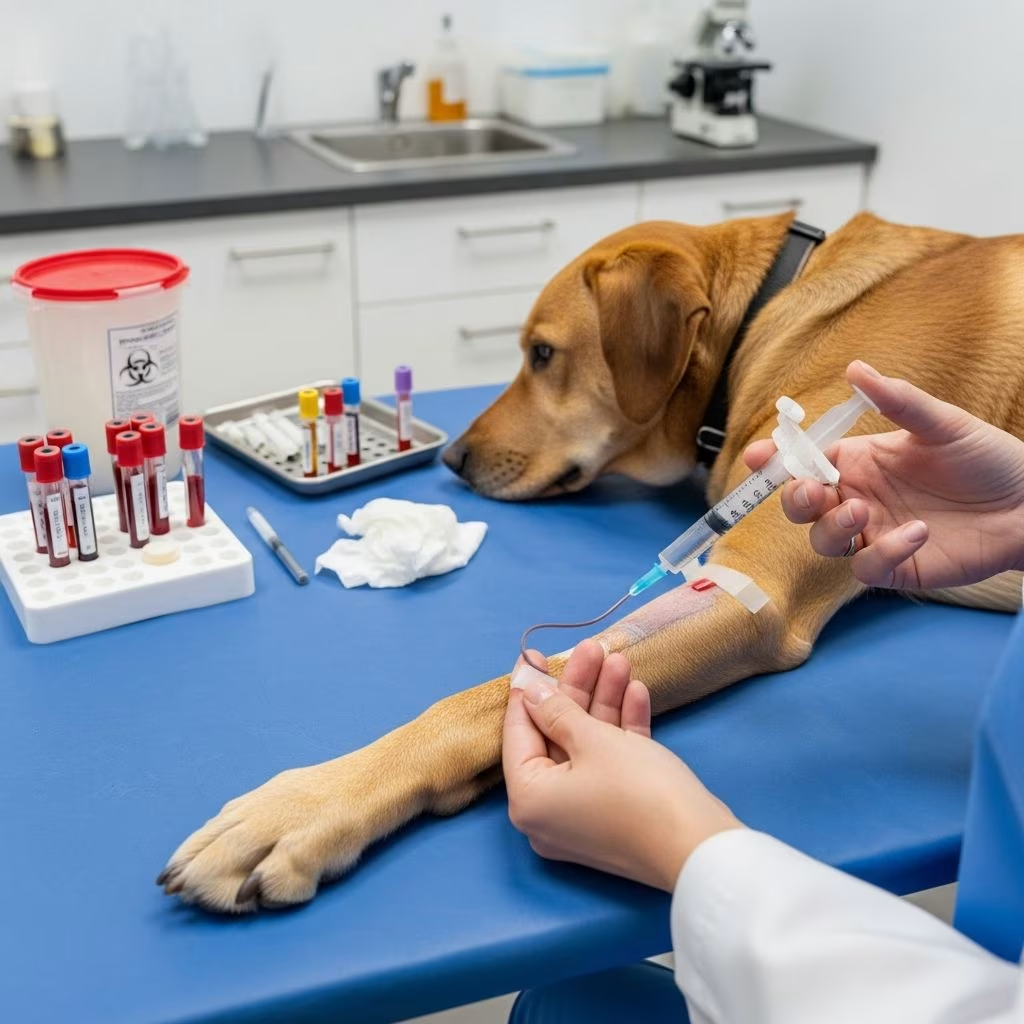
Understanding the Bile Acid Test for Pets
The bile acid test is an important diagnostic tool that veterinarians use to evaluate liver health in dogs and cats. This blood test helps determine whether the liver is functioning properly by measuring the concentration of bile acids in the bloodstream. Unlike some other liver tests, the bile acid test specifically assesses the liver’s ability to perform its critical recycling function, making it one of the most reliable indicators of hepatic dysfunction.
What is the Purpose of the Bile Acid Test?
The bile acid test serves a specific purpose in veterinary medicine: it helps determine if the liver is working properly by answering three critical questions about liver function. These questions guide veterinarians in diagnosing potential liver problems and developing appropriate treatment plans.
The bile acid test is based on the principle that a healthy liver can efficiently recycle bile acids, while a damaged or defective liver cannot. When the liver’s function is compromised, bile acids accumulate in the bloodstream at higher-than-normal levels, which the test can detect.
The three key questions the bile acid test answers are:
- Does the liver have enough healthy cells to do its job?
- Does the liver have a good blood supply?
- Is bile moving freely through and out of the liver?
How Bile Acid Recycling Works
To understand why the bile acid test is so valuable, it helps to know how bile acids function in the body. Bile acids are produced by the liver and stored in the gallbladder. When a pet eats, particularly a fatty meal, the gallbladder contracts and releases bile acids into the small intestine to help break down and absorb fats. After performing their digestive function, bile acids are reabsorbed by the intestines and returned to the liver through the portal blood circulation. The liver then removes these bile acids from the blood and recycles them back into the bile for storage in the gallbladder. This recycling process is highly efficient in healthy animals, meaning very low levels of bile acids remain in the peripheral blood.
Special Preparation for the Bile Acid Test
Proper preparation is essential for obtaining accurate bile acid test results. Veterinarians must strictly enforce specific pre-test protocols to ensure the validity of the results.
Fasting Requirements
Fasting is generally required for 12 hours before the bile acid test is performed. This fasting period is a critical component of the test protocol and must be strictly enforced. During the fasting period, no food, treats, or chew toys should be given to the pet. The fasting period gives the liver time to retrieve any bile acids remaining in the bloodstream, ensuring that before the test starts there are no bile acids, or only very low levels of bile acids in the blood stream. This establishes an accurate baseline measurement for the initial blood sample.
What to Feed During Testing
The type and amount of food offered after the initial blood sample is collected matters significantly. Veterinarians recommend feeding a small amount of the patient’s normal canned maintenance diet to stimulate gallbladder contraction. The specific amount varies based on the animal’s size: typically 2 tablespoons for cats or small dogs and 4 tablespoons for medium to large dogs. It is important that the animal consumes the entire meal quickly, as this ensures proper gallbladder stimulation and reliable test results.
The Bile Acid Test Procedure
The bile acid test is straightforward but requires precise timing and attention to detail to produce valid results.
Step-by-Step Testing Process
The test begins by collecting an initial blood sample, called the resting sample or preprandial (“before eating”) sample. This establishes a baseline or starting point for measuring bile acid levels. This blood sample is typically collected after an overnight fast, when the animal is hungry and has not eaten recently.
Following the initial blood draw, a small tasty meal of canned food is offered to the pet. Since the animal is usually hungry after fasting, it typically eats the food quickly. Exactly 2 hours after the meal is finished, a second blood sample is collected, called the postprandial (“after eating”) sample. Both blood samples are tested for bile acid levels at the laboratory.
In clinical practice, many veterinarians find it beneficial to collect the postprandial sample at home, where the animal is more likely to eat normally and have natural gastrointestinal motility. Both blood samples should be collected into plain red-top vacutainers, and serum should be separated promptly from cells to preserve sample integrity.
How Important is Protocol Compliance?
The protocol for the bile acid test is simple, but it must be followed precisely. Even small deviations from the established protocol can significantly affect the validity and reliability of test results. Common errors that can invalidate results include:
- Failing to enforce fasting properly before the initial blood draw
- Feeding too large a meal after the initial blood test
- Feeding dry kibble rather than canned food
- Collecting blood samples at incorrect times
- Improper sample handling or storage
Veterinarians must emphasize the importance of protocol adherence to pet owners and ensure that all steps are followed correctly to obtain reliable diagnostic information.
Situations When the Bile Acid Test Should Not Be Done
While the bile acid test is a valuable diagnostic tool, it is not appropriate for all patients. The test requires that the pet’s stomach and bowel are working properly to produce valid results. Therefore, the bile acid test should not be used in pets that have certain conditions.
The test should be avoided in animals with:
- Vomiting, diarrhea, or constipation: These digestive problems may interfere with normal digestion or alter the rate at which bile acids are recycled in the intestines
- Previous surgery to remove a section of the small intestine: These patients may not be able to absorb bile acids from the intestine to recycle them properly, leading to inaccurate results
- Recent sedation or anesthesia recovery: Stomach and bowel function may not be normal due to the effects of anesthetic drugs, compromising test validity
- Increased direct (conjugated) bilirubin or bilirubinuria: These indicators of cholestasis make bile acid testing invalid for assessing hepatic function or portosystemic shunting
In these situations, veterinarians may recommend alternative diagnostic tests or waiting until the underlying condition has resolved before performing the bile acid test.
Understanding Test Results and Interpretation
Proper interpretation of bile acid test results is essential for accurate diagnosis and appropriate clinical decision-making.
Normal Results
If the liver is functioning properly, bile acid levels will be very low in the resting blood sample and only slightly higher in the postprandial sample. This pattern indicates that bile acids released from the gallbladder during the test meal were adequately recaptured by the liver during the 2-hour period following the meal. The conclusion would be that the liver has enough cells to do its job, there is adequate blood supply, and bile is flowing properly through the hepatobiliary system.
Reference Values and Clinical Significance
According to veterinary diagnostic guidelines, bile acid concentrations greater than 25-30 μmol/L in dogs and greater than 25 μmol/L in cats are suggestive of hepatobiliary disease. However, these guidelines apply to pre-prandial (fasting), post-prandial, and random (unrelated to eating) samples. Most animals have higher post-prandial than fasting bile acid concentrations, though some animals (up to 20% of dogs) may have higher fasting than post-prandial bile acid concentrations due to a recent meal, gallbladder contraction during fasting, or delayed gastric emptying.
Dogs with bile acid concentrations less than 25 μmol/L do not typically have evidence of hepatic pathology on biopsy, whereas dogs with values greater than 25 μmol/L usually have hepatic pathology. Dogs with bile acid values between 15-25 μmol/L are in an equivocal zone, meaning they may or may not have hepatic pathology, and additional testing may be warranted.
Elevated Results and Disease Patterns
Most animals with congenital or acquired portosystemic shunting have markedly increased post-prandial bile acid concentrations. This finding helps veterinarians differentiate between various types of liver disease and vascular abnormalities affecting the hepatobiliary system.
Several factors can lower bile acid concentrations and decrease the sensitivity of bile acid testing for hepatobiliary disease, including prolonged fasting, intestinal malabsorption, or rapid gastrointestinal transit. These factors must be considered when interpreting results and may necessitate repeat testing or additional diagnostic procedures.
Laboratory Testing Methods
Modern laboratories use sophisticated enzymatic assay methods to measure bile acid concentrations. The most widely used total bile acid (TBA) test in clinical laboratories is the enzyme cycling method, also called the 5th generation TBA assay. This method uses an enzyme called 3-α-hydroxysteroid dehydrogenase (3α-HSD) to catalyze the oxidation reaction, converting the 3-α-hydroxyl group of bile acids to a 3-keto group with concomitant formation of NADH from NAD+. The enzyme cycling TBA assay offers analytical performance far beyond the capabilities of conventional bile acids test methods, providing higher detection sensitivity and more accurate results.
Factors That Can Affect Test Validity
Several factors can interfere with bile acid testing and produce inaccurate results. Marked hemolysis (destruction of red blood cells) and lipemia (excessive fat in the blood) can interfere with the assay. Additionally, ursodeoxycholic acid, which may be used therapeutically in some cases, can be detected by the bile acid assay and cause falsely elevated values. Pet owners and veterinarians must be aware of these potential interferences when interpreting results.
When to Consider Additional Testing
The bile acid test is most valuable when interpreted in conjunction with clinical findings and other laboratory results. In animals with clinical signs of jaundice or increased direct bilirubin, the bile acid test does not provide meaningful information about hepatic function or portosystemic shunting in the presence of cholestasis. In such cases, veterinarians may recommend additional diagnostic approaches, including liver biopsy, ultrasound imaging, or other blood chemistry panels.
Frequently Asked Questions About Bile Acid Testing
Q: How long does it take to get bile acid test results?
A: Turnaround time for bile acid test results typically ranges from 1-2 days, depending on the laboratory. Some facilities may provide results more quickly, while others may take slightly longer.
Q: Can the bile acid test be done in the veterinary clinic or must it go to an outside laboratory?
A: While the blood sample collection can be done at the veterinary clinic, the actual bile acid measurement requires specialized laboratory equipment. Blood samples are typically sent to a reference laboratory or a laboratory at an academic veterinary institution for analysis.
Q: What if my pet won’t eat the test meal?
A: If your pet refuses to eat the canned food offered during the test, contact your veterinarian immediately. The test cannot be accurately completed without consumption of the meal. Your veterinarian may need to reschedule the test or consider alternative diagnostic approaches.
Q: Can the bile acid test diagnose specific liver diseases?
A: The bile acid test indicates whether liver dysfunction is present, but it does not diagnose specific diseases. Additional tests, such as ultrasound, liver biopsy, or other blood chemistry panels, are often needed to determine the underlying cause of liver disease.
Q: Is the bile acid test safe for all pets?
A: The bile acid test itself is safe, involving only blood draws and a small meal. However, it should not be performed in animals with active gastrointestinal disease, recent anesthesia, or certain other conditions, as discussed above.
Q: Why is fasting so important before the bile acid test?
A: Fasting allows the liver to clear bile acids from the bloodstream, establishing a true baseline measurement. Without proper fasting, residual bile acids from recent meals could artificially elevate the initial sample and compromise test validity.
References
- Bile Acid Test — VCA Animal Hospitals. https://vcahospitals.com/know-your-pet/bile-acid-test
- Serum Bile Acids Results: Guidelines for Interpretation — Cornell University Animal Health Diagnostic Center. https://www.vet.cornell.edu/animal-health-diagnostic-center/veterinary-resources/testing-guidelines/clinical-pathology-panels-and-guidelines
- Bile Acids PRE and POST Test Guide — Antech Diagnostics. https://www.antechdiagnostics.com/test/bile-acids-pre-and-post/
- Bile Acid Testing Protocol — VetPath NZ. https://www.vetpath.co.nz/wp-content/uploads/2024/12/Bile-Acid-Testing-v2.pdf
- Bile Acids Canine and Feline Testing — UPEI Veterinary Diagnostic Services Laboratory. https://diagnosticservices.avc.upei.ca/bile-acids/
- Total Bile Acids Test and Clinical Diagnosis — VitroScience. http://www.vitroscience.cl/pdf/diazyme/Total_Bili_Acids.pdf
- Bile Acid Stimulation Protocol (canine and feline) — IDEXX Laboratories. https://www.idexx.co.uk/files/bile-acid-stimulation-test-en-gb.pdf



