

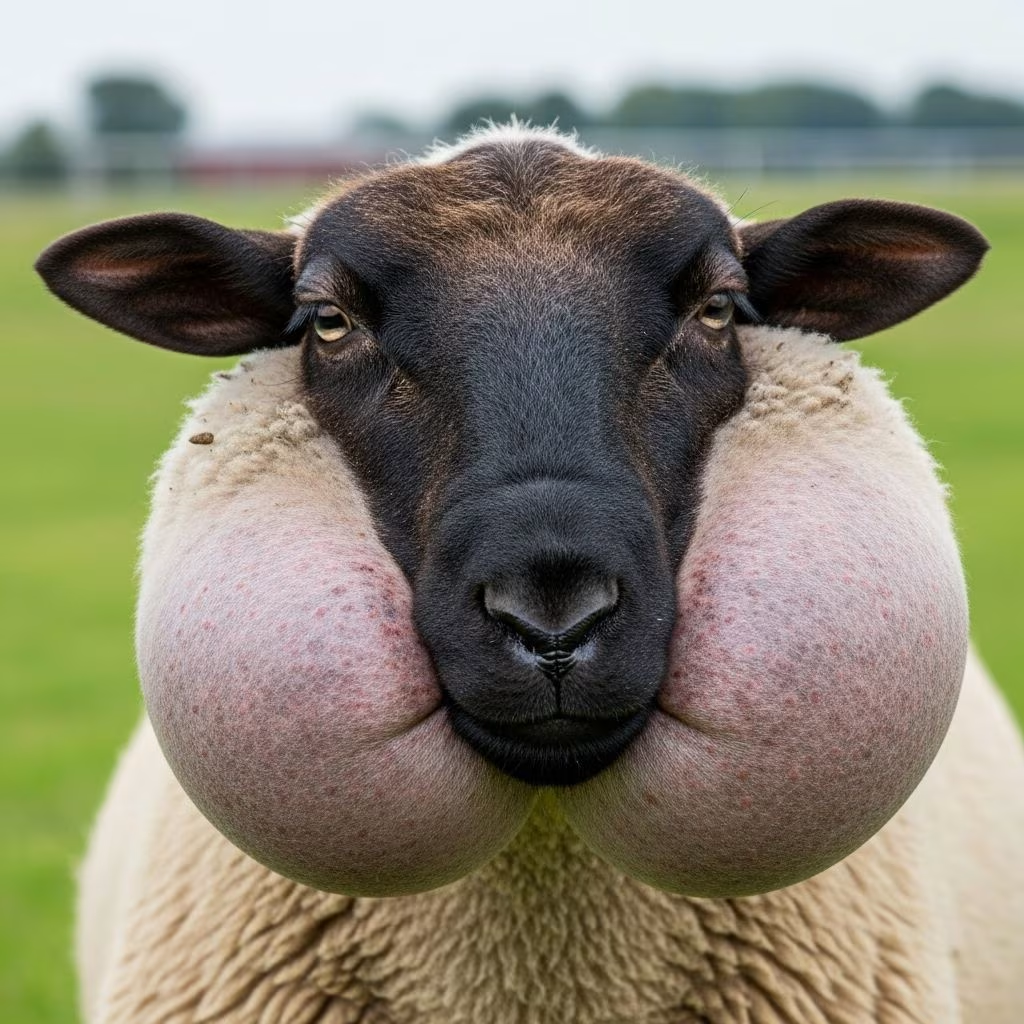
Big head disease represents a significant health challenge in veterinary practice, manifesting as pronounced facial swelling and skeletal abnormalities in various animals. Primarily observed in horses and rams, this condition arises from two distinct etiologies: a nutritional disorder linked to mineral imbalances and an acute bacterial infection caused by clostridial organisms. Understanding these mechanisms is crucial for timely intervention and management in affected populations.
Nutritional Origins in Horses
The nutritional variant, often termed nutritional secondary hyperparathyroidism (NSH) or equine big head, stems from prolonged dietary deficiencies in calcium relative to phosphorus, exacerbated by high-oxalate forages. Tropical and subtropical grasses such as buffel, setaria, and pangola contain oxalates that bind calcium in the gut, impairing absorption and triggering parathyroid hormone overproduction. This hormone mobilizes calcium from bones, leading to fibrous osteodystrophy where normal bone is replaced by weak fibrous tissue.
Certain breeds like Quarter Horses, Appaloosas, and ponies aged 2-8 years show higher susceptibility, alongside pregnant or lactating mares and young colts due to elevated calcium demands. The imbalance must be chronic and severe; minor fluctuations do not suffice to induce pathology.
Infectious Causes in Rams and Other Species
In contrast, the infectious form predominantly affects rams, caused by Clostridium novyi, C. sordellii, or rarely C. chauvoei. This acute condition produces edematous, non-hemorrhagic swelling of the head and neck without gas formation. Entry occurs through skin wounds, particularly post-shearing or dipping, where bruised tissues favor bacterial proliferation.
While horses experience the nutritional type, rams face this clostridial threat, highlighting the need for species-specific awareness in flock and herd management.
Clinical Manifestations Across Species
Symptoms vary by cause and species but converge on skeletal compromise. In horses with NSH:
- Facial bone swelling, creating a ‘big head’ appearance.
- Lameness, stiff gait, or reluctance to move due to limb bone weakening.
- Excessive recumbency and difficulty rising.
- Depression, coarse coat, and pica (dirt-eating).
- Chewing difficulties from jaw bone resorption, leading to weight loss.
In rams, acute onset features massive head and neck edema, often following trauma. Progression can involve systemic toxemia if untreated.
| Symptom | Horses (NSH) | Rams (Clostridial) |
|---|---|---|
| Facial Swelling | Gradual, bony | Acute, edematous |
| Mobility Issues | Chronic lameness | Secondary to swelling |
| Onset | 2-9 months post-diet | Hours to days post-injury |
| Fatality Risk | Starvation if severe | Toxemia |
Pathophysiology Explained
In NSH, hypocalcemia stimulates parathyroid glands, elevating serum parathyroid hormone (PTH) levels from normal 4-65 pg/mL to 110-518 pg/mL. PTH activates osteoclasts, resorbing bone mineral and replacing it with fibrous tissue, most visibly in the skull’s maxilla and mandible. Radiographs reveal porosity after 30% mineral loss, progressing faster in facial bones.
Clostridial infections release toxins causing gelatinous edema and inflammation in subcutaneous tissues, without suppuration or gas, distinguishing it from blackleg or malignant edema.
Veterinary Diagnostic Approaches
Diagnosis integrates history, clinical exam, imaging, and labs. For NSH:
- Blood: Low ionized calcium, high phosphate, elevated alkaline phosphatase (ALP), and PTH.
- Urine: Normal calcium, high phosphate.
- Radiographs: Osteoporosis, fibrous proliferation.
- Diet analysis: High oxalate, low Ca:P ratio (<1:1 ideal).
For clostridial big head, wound inspection, culture, and response to antibiotics confirm. Necropsy shows edematous tissues with bacterial presence.
Management and Therapeutic Interventions
Treatment hinges on etiology. For nutritional big head:
- Immediate removal from oxalate-rich pastures.
- Calcium supplementation: 1.2 kg mix of 1/3 limestone, 2/3 dicalcium phosphate daily, doubled for 6 months.
- Balanced feeds restoring Ca:P to 2:1.
- Bisphosphonates like tiludronate (Tildren®) inhibit osteoclasts; IV administration improves clinical signs in case studies.
Recovery spans 4-12 months; severe deformities may persist despite remineralization.
For infectious cases, high-dose penicillin or broad-spectrum antibiotics parenterally, alongside wound care. Prognosis improves with early action.
Proactive Prevention Strategies
Prevention outperforms treatment:
- Horses: Test forages for oxalates; supplement preemptively on risky pastures (e.g., buffel, kikuyu). Studies show supplemented horses remain asymptomatic.
- Rams: Delay dipping post-shearing; ensure clean facilities, vaccinate against clostridia where endemic.
- General: Monitor young, pregnant animals; provide free-choice minerals.
A Queensland study demonstrated zero cases in supplemented groups versus high incidence in controls.
Case Studies Illuminating Outcomes
A 3-year-old pony with skull deformity and fatigue received tiludronate IV. Post-30 days, ALP dropped significantly, breathing eased, and it was discharged, though bone changes lingered.
In a 1972 Queensland outbreak, four Thoroughbreds on oxalate pasture developed gaits and head swelling. Supplementation resolved symptoms, confirming dietary causality.
These underscore reversibility with prompt, targeted care.
Frequently Asked Questions (FAQs)
What causes big head in horses?
Primarily calcium deficiency from high-oxalate grasses disrupting absorption, leading to secondary hyperparathyroidism.
Is big head contagious?
No; nutritional form is dietary, infectious form wound-related, not person-to-person.
How long does recovery take?
4-12 months for bone remineralization in NSH; faster for clostridial with antibiotics.
Can big head be fatal?
Yes, via starvation in advanced NSH or toxemia in infections if untreated.
Which grasses pose highest risk?
Buffel, setaria, pangola, kikuyu, guinea—common in tropical regions.
Long-Term Implications for Herd Health
Beyond acute cases, big head signals broader nutritional gaps, risking reduced performance, fertility, and economic losses. Routine soil testing, forage analysis, and mineral profiling prevent outbreaks. In endemic areas, year-round supplementation for at-risk groups ensures resilience. Integrating veterinary oversight with farmer education fortifies livestock against this debilitating disorder, promoting sustainable production.
References
- Big Head | Mullum Vets — Mullum Vets. Accessed 2026. https://www.mullumvet.com/big-head
- Big Head Disease: Nutritional Secondary Hyperparathyroidism in Horses — Mad Barn. Accessed 2026. https://madbarn.com/big-head-disease-in-horses/
- Big Head in Animals – Infectious Diseases – MSD Veterinary Manual — MSD Veterinary Manual. Accessed 2026. https://www.msdvetmanual.com/infectious-diseases/clostridial-diseases/big-head-in-animals
- Bighead & Osteoporosis In Horses — Jenquine. Accessed 2026. https://www.jenquine.com/news/bighead-osteoporosis-in-horses
- Bighead (Equine Nutritional Secondary Hyperparathyroidism) — Maraboon Rural Vet Services. Accessed 2026. https://www.maraboonruralvetservices.com.au/blog/bighead-equine-nutritional-secondary-hyperparathyroidism



