

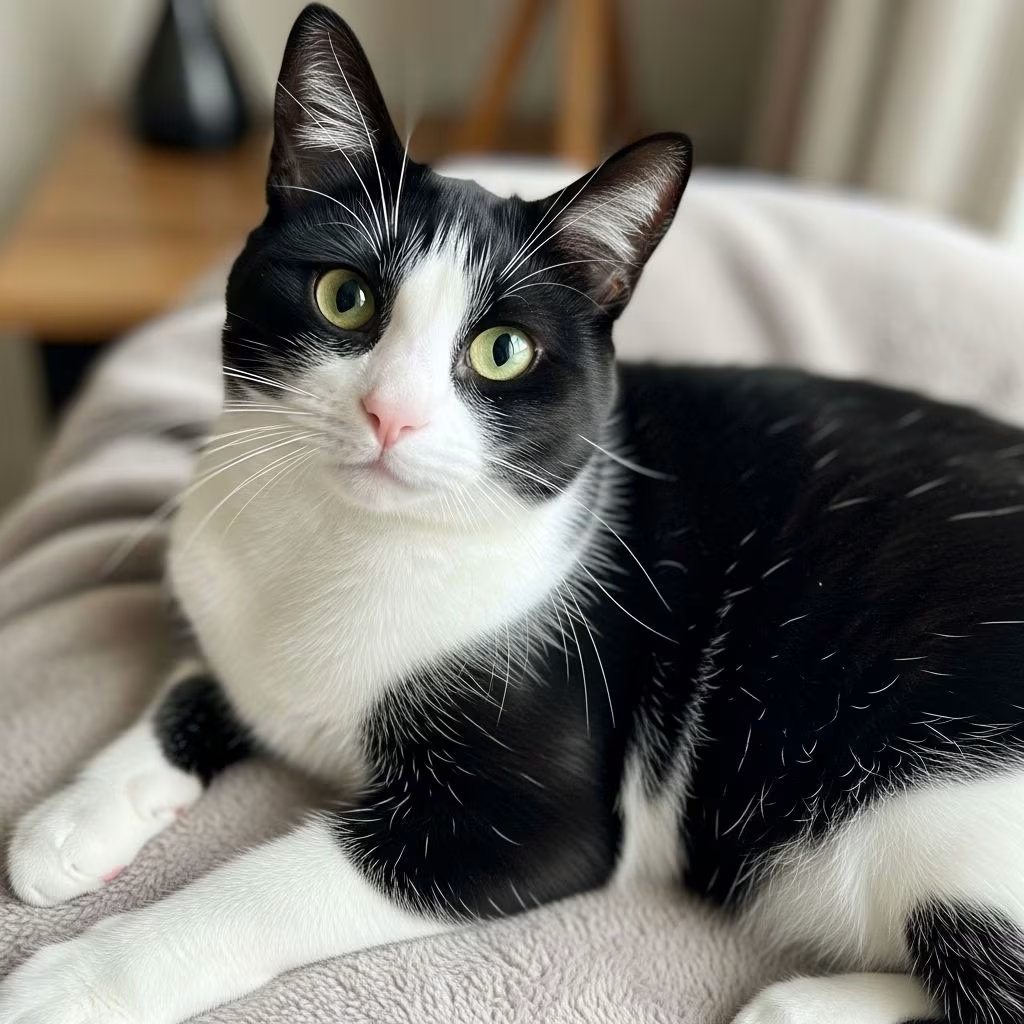
Bicolor cats captivate with their striking contrast of white fur against another solid color or pattern, creating visually arresting coats that range from subtle accents to bold designs. These patterns arise from the white spotting gene, which determines the extent and placement of white areas on the body.
The Science Behind Bicolor Coats
The hallmark of bicolor cats is the interplay between the white spotting gene (often denoted as S or WS) and other genetic factors like the agouti gene. The white spotting gene causes irregular patches of white fur by preventing pigment production in certain skin cells during embryonic development. When paired with a recessive non-agouti allele, it produces solid-color bicolors without tabby stripes, resulting in sharp color boundaries.
In tabby bicolors, the dominant agouti gene allows banded hairs and striping within the colored sections. Degrees of spotting vary: low-grade shows minimal white (like a chest locket), while high-grade approaches nearly all-white with color confined to the head and tail. This spectrum is graded from 1 (least white) to 10 (most white, nearly solid white).
Classic Bicolor Variations
Bicolor patterns manifest in numerous styles, each with distinct aesthetics and genetic underpinnings.
- Tuxedo Pattern: Resembling formal attire, this features a dark body (often black) with white paws, chest, and chin. Variations include full ‘bibs’ or minimal white ‘buttons.’ Common in domestic shorthairs.
- Van Pattern: High spotting where color is limited to the head and tail on a white body, epitomized by the Turkish Van breed. Some show ‘black-footed’ variants.
- Harlequin or Magpie: Large, random color patches on a predominantly white coat, evoking a jester’s outfit. Bold and playful in appearance.
Other notable types include cap-and-saddle (color on head and back like a saddle), mask-and-mantle (colored hood and cape over white underbody), and locket/button (tiny chest spots on otherwise solid coats).
Breeds That Showcase Bicolor Patterns
While bicolors appear across mixed breeds, several purebreds standardize these patterns.
| Breed | Typical Bicolor Style | Key Traits |
|---|---|---|
| American Shorthair | Tuxedo, standard bicolor | Robust build, adaptable, common in black/white. |
| British Shorthair | Tuxedo variations | Stocky, plush coat, blue/white combos. |
| Persian | Bi-color standards (e.g., black/white) | Longhair, flat face, white paws/chest. |
| Oriental Shorthair | Tuxedo-like with inverted V blaze | Sleek, large ears, various color pairs. |
| Turkish Van | Van pattern | Water-loving, color on head/tail. |
Domestic shorthairs and longhairs dominate bicolor populations due to their prevalence and genetic diversity.
Genetic Grading of White Spotting
Cat registries like the Cat Fanciers’ Association use a 10-point scale for bicolor spotting:
- Minimal white (locket).
- Chest and paws white.
- Expanding to belly.
- Throat and chin included.
- Blaze or spots on face.
- Half-colored, half-white (standard bicolor).
- Sparse color patches.
- Only head/tail colored.
- Patchy remnants.
- Nearly all white.
This grading aids breeding for specific looks, though natural variation persists.
Caring for Bicolor Cats
Bicolor cats share general feline needs but benefit from pattern-specific attention. White areas may show dirt more visibly, requiring regular grooming. Those with high white content risk sunburn; apply pet-safe sunscreen to ears and nose.
- Diet: Balanced nutrition supports coat vibrancy; omega-3s enhance color contrast.
- Grooming: Brush weekly to distribute oils, preventing matting in longhaired breeds like Persians.
- Health: Monitor for deafness linked to high white spotting (up to 20% risk in extreme cases, per veterinary studies).
Personality-wise, bicolors often display curiosity and independence, with tabby versions adding playfulness.
Fun Facts and Myths
Contrary to lore, tuxedo cats aren’t inherently female—males are common. The pattern’s name derives from 19th-century British cats mimicking formal wear. York Chocolate bicolors show unique ‘spotting particolour’ with consistent white Vs.
Frequently Asked Questions
What causes the white patches in bicolor cats?
The white spotting gene disrupts melanin migration during fetal development, creating unpigmented areas.
Can bicolor be bred true?
Yes, selective breeding standardizes patterns in breeds like Turkish Van, though randomness occurs in domestics.
Are bicolor cats healthier than others?
Generally yes, but high spotting correlates with higher deafness risk in white-heavy cats.
What colors pair with white in bicolors?
Black, blue, red, cream, tabby, chocolate; any base color works.
Is a tuxedo cat a breed?
No, it’s a pattern found in many breeds and mixes.
Bicolor cats blend elegance and whimsy, their patterns a canvas of genetic artistry. Whether tuxedo formalities or van splashes, they enrich homes with visual and affectionate appeal.
References
- Bicolor Cat: Characteristics and Breeds — Uahpet. 2023. https://www.uahpet.com/blogs/hydration-health/bicolor-cat-characteristics-and-breeds
- Bicolor Cat — Cats Wiki (Fandom). 2024-01-15. https://cats.fandom.com/wiki/Bicolor_Cat
- Bicolor cat — Wikipedia. 2025-10-20. https://en.wikipedia.org/wiki/Bicolor_cat
- BICOLOURS – TUXEDO AND MAGPIE CATS — Messybeast. 2022. http://messybeast.com/bicolours.htm
- 9 Bicolor Cat Patterns (With Info & Pictures) — Catster. 2024. https://www.catster.com/cat-breeds/bicolor-cat-patterns/



