Bichon Frise Alone Time: Duration & Care Guide
Learn how long Bichon Frises can safely stay alone and strategies to prevent separation anxiety.
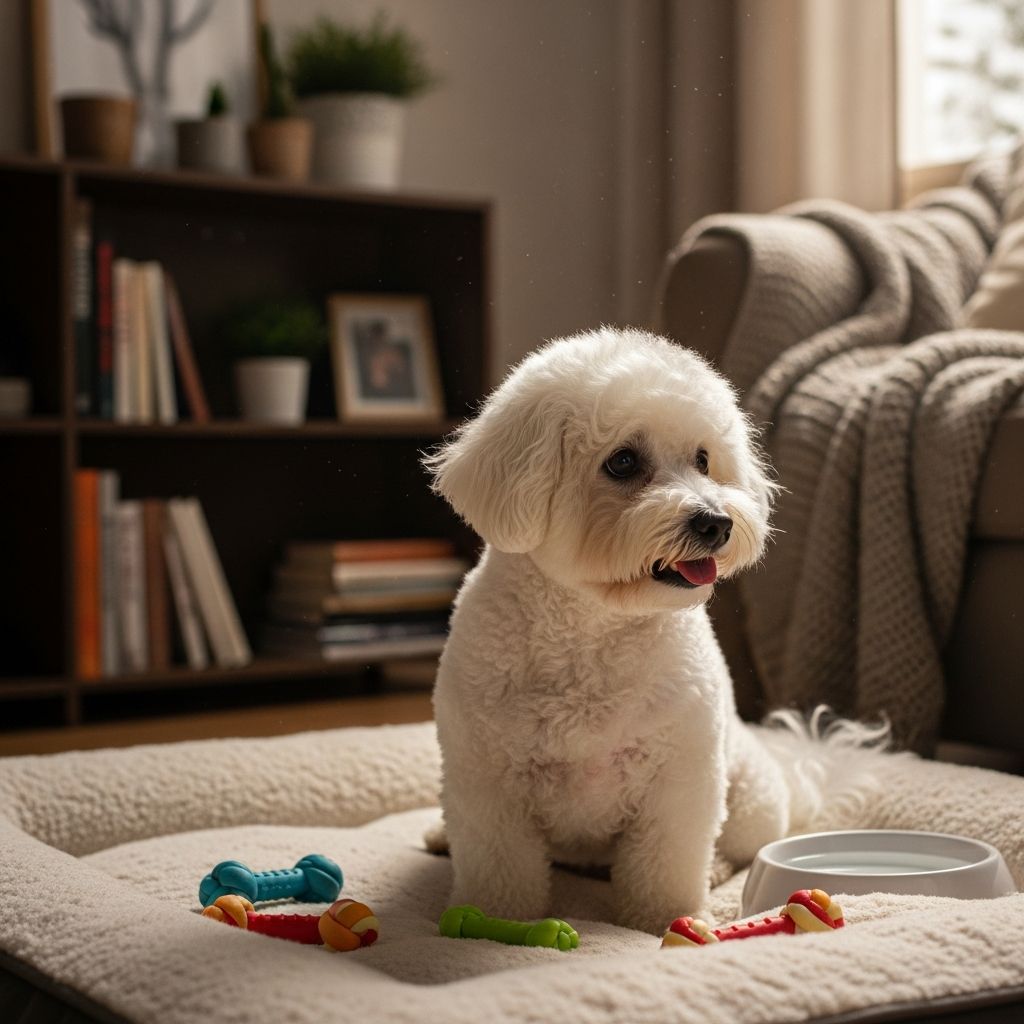
Managing Solitude: Bichon Frise Alone Time Guidelines and Best Practices
Bichon Frises are beloved companion dogs known for their affectionate nature and playful personality. However, their strong attachment to human companionship creates unique challenges for owners who must leave them alone during work hours or other commitments. Understanding how long these small dogs can safely remain unattended is essential for their physical and emotional wellbeing. This guide explores the factors that influence alone time tolerance in Bichon Frises and provides practical strategies for managing their care when separation is unavoidable.
Understanding Bichon Frise Temperament and Social Needs
Bichon Frises are fundamentally social animals that thrive on constant interaction with their human family members. These small dogs, typically weighing between 3-5 kilograms and standing 23-30 centimeters tall, display a temperament characterized by friendliness, gentleness, and an inherent need for companionship. Their happy-go-lucky attitude and eagerness to please make them excellent family pets, but this same characteristic also means they struggle significantly when forced to spend extended periods in isolation.
The breed’s tendency toward strong emotional bonds with their owners stems from their history as companion dogs. Unlike working breeds that developed independence through their roles, Bichon Frises were bred specifically to provide companionship and affection. This genetic predisposition shapes their behavioral patterns and creates distinct vulnerabilities when managing their solitude.
Maximum Safe Alone Time Duration
Veterinary experts establish clear guidelines regarding safe alone time for dogs in general. The maximum recommended duration without access to bathroom facilities is six to eight hours. However, this represents an absolute ceiling rather than an ideal target, particularly for breeds like the Bichon Frise that are predisposed to anxiety and emotional distress when separated from their owners.
For puppies specifically, the limitations are even more stringent. Young Bichon Frises cannot reliably hold their bladders for extended periods and require frequent potty breaks. A general guideline suggests that puppies need bathroom access every one to two hours, with very young pups requiring breaks every hour. Forcing a puppy to remain confined without relief opportunities can create lasting housetraining problems and stress-related behavioral issues.
Adult Bichon Frises in good health may technically tolerate six to eight hours alone, but this duration should be considered the exceptional circumstance rather than the regular routine. Regular patterns of extended solitude can trigger or exacerbate behavioral problems specific to this breed.
Separation Anxiety: The Bichon Frise’s Primary Concern
Separation anxiety represents the most significant challenge facing Bichon Frise owners managing alone time. This condition manifests when dogs experience acute distress upon separation from their owners, leading to destructive behavior, excessive vocalization, and emotional suffering. The Bichon Frise’s predisposition to this condition makes it a central consideration in any alone-time management strategy.
Signs of separation anxiety in Bichon Frises include:
- Destructive behavior targeting doors, windows, or furniture
- Excessive barking or howling during owner absence
- Inappropriate elimination despite successful housetraining
- Restlessness and pacing before owner departure
- Attempts to escape confinement areas
- Loss of appetite or refusal to engage with toys or treats
The emotional distress underlying these behaviors is genuine and significant. Owners should not dismiss separation anxiety as simple misbehavior but rather recognize it as a manifestation of genuine psychological distress requiring compassionate intervention.
Building Tolerance Through Gradual Conditioning
Bichon Frises, like all puppies and dogs, must learn to tolerate alone time through careful, incremental exposure. This process cannot be rushed without risking the development or intensification of separation anxiety.
An effective conditioning protocol includes the following elements:
- Starting with very brief separations of 5-10 minutes in a safe, prepared environment
- Creating positive associations with alone time through treat-dispensing toys and comfort items
- Gradually extending duration over days and weeks, not hours
- Varying departure and return routines to prevent anticipatory anxiety
- Maintaining calm, matter-of-fact demeanor during departures and arrivals
- Rewarding calm behavior during and after separation periods
- Never using punishment or expressing frustration during reintegration
The initial 15-20 minutes of separation typically proves most difficult for Bichon Frises. Successful navigation of this period often indicates that the dog will tolerate longer durations more readily. However, even when a dog appears calm during extended alone time, regular separation should not exceed what is genuinely necessary for the owner’s commitments.
Daily Socialization and Companionship Requirements
Beyond managing alone time, Bichon Frises require substantial daily social engagement to maintain emotional equilibrium. Experts recommend a minimum of two hours of dedicated social time with humans or other dogs each day, distributed throughout the day rather than concentrated in single blocks.
This socialization time serves multiple purposes:
- Reinforces the dog’s sense of belonging and security within the family unit
- Provides mental stimulation and behavioral enrichment
- Allows for exercise and play tailored to the dog’s needs
- Creates positive associations with human interaction
- Reduces baseline anxiety and improves overall emotional resilience
Dogs receiving adequate social engagement demonstrate improved ability to manage necessary alone time. Conversely, dogs experiencing social deprivation show heightened anxiety and behavioral problems even during brief separations.
Exercise and Mental Stimulation Needs
Bichon Frises require approximately 30 minutes to one hour of physical activity daily. This moderate exercise level can be achieved through daily walks, interactive play sessions, and engagement in secure outdoor spaces. Regular exercise provides both physical conditioning and mental enrichment essential to behavioral health.
Beyond physical exercise, mental stimulation proves equally important for this intelligent breed. Activities that engage their minds include puzzle toys, training sessions, scent work, and interactive games. Dogs receiving insufficient mental stimulation often develop behavioral problems including excessive barking and destructive behavior, which can worsen when alone.
Exercise and stimulation before alone time periods proves particularly effective. A tired dog is generally calmer and more capable of resting quietly during separation than one experiencing pent-up energy or understimulation.
Environmental Preparation for Solo Time
Creating an appropriate environment significantly impacts a Bichon Frise’s ability to tolerate alone time. The designated alone space should include:
- A comfortable resting area with familiar bedding or blankets
- Access to fresh water
- Durable, interactive toys that provide extended engagement
- Treat-dispensing toys or puzzle feeders to create positive associations with alone time
- Comfort items such as clothing carrying the owner’s scent
- Safe confinement preventing access to hazardous materials or escape routes
- Minimal sensory stimulation that might trigger alertness or anxiety
Crate training, when introduced positively, provides a secure den-like space that many dogs find reassuring. However, the crate should never be used as punishment, and the dog must have been thoroughly acclimated to it before relying on it during alone time.
Professional Support and Alternative Care Solutions
When work commitments or lifestyle circumstances necessitate alone periods exceeding six to eight hours, alternative care arrangements become essential rather than optional. These solutions provide both practical support and emotional comfort for the Bichon Frise.
Viable alternatives include:
- Professional dog walkers: Midday visits breaking up extended alone time and providing potty breaks and social interaction
- Doggy daycare: Full-day or partial-day supervised care with socialization opportunities and professional staff
- Pet sitters: In-home visitors providing feeding, potty breaks, and companionship
- Family or friend arrangements: Trusted individuals visiting to provide interaction and basic care
- Flexible work arrangements: Working from home partially or bringing the dog to a pet-friendly workplace
Professional doggy daycare proves particularly valuable for Bichon Frises, as it provides not only supervision but also structured socialization with other dogs and trained handlers familiar with canine behavior.
Training Approaches for Building Alone-Time Competence
Positive reinforcement training methods prove most effective with Bichon Frises, whose sensitive temperaments respond poorly to punishment-based approaches. These dogs are quick learners when motivated by praise, treats, and affection.
A structured training approach for alone time involves:
- Establishing consistent pre-departure routines that signal without creating anxiety
- Rewarding calm behavior before, during, and after separations
- Using high-value treats reserved exclusively for alone-time periods
- Practicing departures during times when the dog is naturally calm
- Maintaining consistency across all household members and caregivers
- Celebrating small improvements rather than expecting rapid progress
Working with a certified professional dog trainer or veterinary behaviorist can provide personalized guidance, particularly when separation anxiety has already developed or when standard approaches prove insufficient.
Nutritional and Health Considerations
A Bichon Frise’s ability to manage alone time relates directly to their overall physical health and nutritional status. Dogs receiving balanced, high-quality nutrition specifically formulated for small breeds demonstrate improved emotional resilience and behavioral stability.
Feeding schedules should align with alone-time management. Puppies require three to four daily meals until six months of age, then transition to twice-daily feeding. Timing the final meal so that the dog receives nourishment well before a separation period supports both physical comfort and behavioral stability. Conversely, feeding immediately before alone time may cause digestive discomfort and anxiety.
Frequency Considerations and Long-Term Patterns
While a single day or occasional period of extended alone time may not cause permanent harm, regular patterns of lengthy separation fundamentally undermine a Bichon Frise’s emotional wellbeing. Dogs are not solitary animals, and the Bichon Frise specifically has been selectively bred for centuries to seek human companionship.
Owners considering adoption or already caring for a Bichon Frise should honestly assess whether their lifestyle permits adequate companionship. Dogs requiring regular eight-hour or longer alone periods may not be well-matched to this breed’s inherent needs. Recognizing this incompatibility early allows for either lifestyle adjustment or consideration of alternative pet species better suited to extended solitude.
Age-Related Variations in Alone-Time Tolerance
Bichon Frises demonstrate different alone-time capacities at various life stages. Puppies require frequent breaks and cannot physiologically manage the bladder control necessary for extended confinement. Senior dogs, while sometimes more settled than younger adults, may develop cognitive changes affecting their ability to manage alone time and may require more frequent potty breaks.
Young adult Bichon Frises in their prime years can theoretically manage the maximum six to eight hours with proper conditioning, though this remains the exception rather than the rule for the breed. Middle-aged adults generally maintain good tolerance when consistently conditioned and provided adequate companionship outside of work commitments.
Creating a Sustainable Alone-Time Schedule
Successful management of a Bichon Frise’s alone time requires realistic planning that balances owner commitments with the dog’s genuine emotional needs. A sustainable schedule might look like:
- Weekday mornings: Brief alone time of 1-2 hours while owner runs errands
- Midday: Professional dog walker or daycare providing potty break and socialization
- Late afternoon: Owner return providing social interaction before evening activities
- Evenings and weekends: Dedicated companionship, exercise, and training sessions
This pattern ensures the dog receives adequate total alone time to learn self-soothing skills while never experiencing psychological distress from prolonged isolation. It also provides consistency, which Bichon Frises find emotionally stabilizing.
Recognizing When Professional Help Is Needed
Some Bichon Frises develop separation anxiety despite owner efforts or demonstrate such extreme reactions that owner-managed training proves insufficient. In these cases, consultation with a veterinary behaviorist becomes necessary rather than optional.
Warning signs suggesting professional intervention is needed include:
- Severe destructive behavior causing injury risk to the dog
- Inability to eat, drink, or rest during owner absence
- Continuous vocalization for extended periods
- Self-injury attempts or escape behaviors risking safety
- Escalating anxiety despite consistent management efforts
- Regression to severe anxiety after previous progress
Veterinary behaviorists can prescribe medications, implement specialized behavioral protocols, or recommend additional interventions beyond standard owner management.
Frequently Asked Questions
Can a Bichon Frise be left alone for 8 hours?
While eight hours represents the maximum recommended duration for dogs generally, this should remain an occasional exception for Bichon Frises rather than a regular pattern. The breed’s predisposition to separation anxiety makes regular eight-hour absences problematic for their emotional wellbeing.
At what age can Bichon Frise puppies stay alone longer?
Puppies cannot be expected to manage extended alone time until approximately 12-18 months of age when physical development reaches maturity. Before this point, frequent potty breaks and social engagement remain necessary.
How can I tell if my Bichon Frise has separation anxiety?
Separation anxiety manifests through destructive behavior, excessive barking, inappropriate elimination, or apparent distress before owner departure. These signs indicate genuine psychological distress requiring intervention.
Does crate training help with alone time?
Positive crate training can help by providing a secure, den-like space many dogs find reassuring. However, the crate should never be used as punishment, and the dog must be thoroughly acclimated before relying on it during alone time.
What is the ideal daily socialization time for Bichon Frises?
A minimum of two hours of dedicated social time with humans or other dogs daily supports emotional health and improves the dog’s ability to manage necessary alone time.
Are Bichon Frises suitable for working owners with long commutes?
Bichon Frises require regular companionship and struggle with extended daily alone periods. Working owners with long commutes should arrange midday care through dog walkers, daycare, or other support systems to meet the breed’s needs.
Conclusion: Prioritizing Your Bichon Frise’s Emotional Wellbeing
Managing alone time for a Bichon Frise requires genuine commitment to the breed’s inherent social needs. While these dogs can learn to tolerate necessary separation, they thrive when companionship remains a primary feature of their daily lives. Owners must honestly assess whether their lifestyle permits adequate time for this affectionate breed or whether alternative pet species might better suit their circumstances. By prioritizing the Bichon Frise’s emotional wellbeing and implementing thoughtful alone-time management strategies, owners can enjoy the breed’s wonderful companionship while supporting their dogs’ long-term behavioral and psychological health.
References
- American Kennel Club: Alone Time for Dogs: How Much Is Too Much? — American Kennel Club. https://www.akc.org/expert-advice/training/alone-time-dogs-how-much/
- Bichon Frise Dog Breed Guide — BorrowMyDoggy. https://www.borrowmydoggy.com/doggypedia/dog-breed-guides-bichon-frise
- Separation Anxiety: Scared to Be Home Alone — Bichon Frise Club of America. https://bichon.org/health/health-articles/general-health/separation-anxiety-scared-to-be-home-alone/
- Understanding the Behavior of Bichon Frise Dogs — The Small Dog Store. https://thesmalldog-store.com/blogs/bichon-frise/understanding-the-behavior-of-bichon-frise-dogs
- Training the Bichon Frise: What Every Owner Should Know — The Training of Dogs. https://www.thetrainingofdogs.com/post/training-the-bichon-frise
Similar Articles






Read full bio of medha deb