

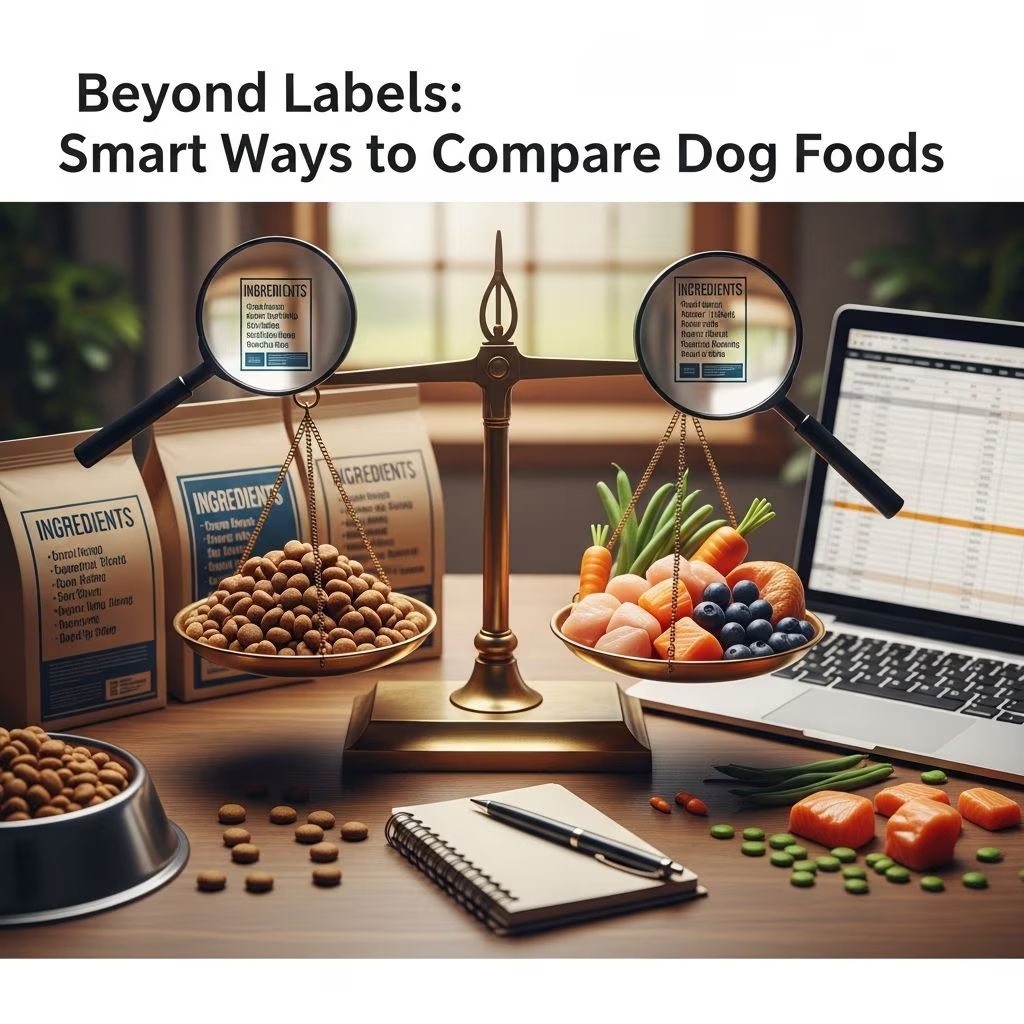
Choosing the right dog food can feel overwhelming with countless options claiming to be ‘complete and balanced.’ While labels provide basic info, they often hide significant nutritional differences. This guide equips you with tools to compare foods objectively, focusing on methods like dry matter analysis and caloric normalization for fair evaluations.
Why Surface-Level Comparisons Fall Short
Dog food labels list guaranteed analysis values ‘as fed,’ including moisture, which skews comparisons between dry kibble (usually 10% moisture) and wet foods (up to 80%). A dry food with 25% protein might seem superior to a canned one at 9%, but this ignores water content. True nutritional value requires adjusting for these variances to reveal actual nutrient density.
Regulatory bodies like AAFCO ensure minimum standards for ‘complete and balanced’ claims, but foods meeting these can vary widely in quality. High-end formulas exceed baselines with superior proteins and fewer fillers, while budget options scrape by with minimal compliance.
Mastering Dry Matter Analysis for Fair Comparisons
Dry matter (DM) basis strips out moisture, enabling apples-to-apples evaluations. Calculate it by subtracting moisture percentage from 100, then scaling other nutrients accordingly.
Step-by-Step Dry Matter Calculation:
- Locate moisture % on the label (e.g., 10% for dry food).
- DM % = 100 – moisture % (e.g., 90%).
- For protein: (Protein % / DM %) x 100 (e.g., 25% protein / 90% = 27.8% DM protein).
This method highlights that canned foods often pack more protein punch once water is removed.
| Food Type | As Fed Protein | Moisture | DM Protein |
|---|---|---|---|
| Dry Kibble | 25% | 10% | 27.8% |
| Canned | 9% | 80% | 45% |
The table shows how canned food’s DM protein dwarfs kibble’s, proving labels alone mislead.
Caloric Basis: The Gold Standard for Nutrient Evaluation
Even DM analysis overlooks calorie density. Veterinary experts recommend per-1000-kcal comparisons for precision, as dogs eat to energy needs.
Calculation Steps:
- Add 1.5% to label protein % and 1% to fat % (estimates digestibility).
- Divide kcal/kg by 10,000 for caloric factor.
- Divide adjusted % by factor for g/1000 kcal.
Example: Dry food (3589 kcal/kg, 25% protein): Adjusted protein 26.5%; factor 0.3589; result ~74g/1000kcal. Canned (950 kcal/kg, 8% protein): Adjusted 9.5%; factor 0.095; result ~100g/1000kcal.
| Nutrient | Ideal Adult Maintenance (g/1000kcal) | Low | Optimal | High |
|---|---|---|---|---|
| Protein | 50 | <80 | 80-120 | >120 |
| Fat | 22.5 | <40 | 40-60 | >60 |
| Carbs | N/A | <35 | 35-70 | >70 |
Use this table to benchmark foods against NRC guidelines.
Decoding Ingredient Lists Like a Pro
Ingredients are listed by weight pre-cooking. Prioritize real meats first, avoiding ‘meals’ unless specified as high-quality (e.g., ‘chicken meal’). Watch for split ingredients like ‘peas, pea flour’ inflating carbs.
Red Flags in Ingredients:
- Multiple grain fillers early (corn, wheat, rice).
- Unnamed ‘animal by-products.’
- Artificial colors/preservatives.
Top formulas feature whole proteins, veggies, and fruits without excessive carbs.
Understanding AAFCO Labeling Rules
AAFCO governs claims: ‘Complete and balanced’ means lab-tested for all life stages or maintenance. Naming rules include 95% Rule (e.g., ‘Beef Dog Food’ = 95% beef), ‘With’ Rule (3% minimum), and ‘Flavor’ (detectable amount only).
Always verify AAFCO statement on labels for species, life stage match.
Practical Tools and Charts for Quick Assessments
Create your own comparison chart:
| Brand/Recipe | 1st Ingredient | DM Protein | g Prot/1000kcal | AAFCO Statement |
|---|---|---|---|---|
| Premium Kibble A | Chicken | 32% | 95 | All Life Stages |
| Budget Dry B | Corn | 22% | 65 | Adult Maintenance |
Online tools like comparison charts speed evaluations across 3,000+ recipes.
Buzzwords vs. Reality: What to Trust
Terms like ‘human-grade,’ ‘organic,’ ‘grain-free’ sound great but lack regulation beyond marketing. Focus on nutrition facts over hype. Vet-recommended or nutrient-dense claims warrant scrutiny via labels.
Common Pitfalls and How to Avoid Them
- Ignoring Moisture: Always convert to DM or caloric basis.
- Overvaluing First Ingredient: Check top 5 for balance.
- Skipping Calorie Checks: Match to your dog’s needs.
- Missing Feeding Guides: Adjust for age/activity.
Tailoring Choices to Your Dog’s Needs
Puppies need higher protein (22%+ DM), seniors lower calories. Active breeds thrive on fat-rich diets; allergies demand limited ingredients. Consult vets for personalized advice.
Frequently Asked Questions
What does ‘complete and balanced’ really mean?
It indicates the food meets AAFCO nutrient profiles via formulation or testing.
Is wet food better than dry?
Not inherently; compare via DM/caloric methods—wet often higher protein.
How do I calculate carbs?
100 – (protein + fat + fiber + moisture + ash); ash ~8% if unlisted.
Grain-free is always best?
No evidence; balanced grains aid digestion unless allergic.
Can I mix foods?
Yes, but recalculate totals to ensure balance.
Final Tips for Confident Dog Food Selection
Combine methods: Scan ingredients, compute DM/caloric values, verify AAFCO. Test small bags, monitor health (coat, energy, stool). Your dog’s vitality hinges on informed choices.
References
- How to Compare Pet Food Nutrient Profiles: Part 2 — PetMD, Dr. Justin Shmalberg. 2016-01. https://www.petmd.com/blogs/nutritionnuggets/dr-coates/2016/january/how-compare-pet-food-nutrient-profiles-part-2-333-33383
- How To Compare Dog Food Brands — Darwin’s Natural Pet Products. N/A. https://www.darwinspet.com/blogs/transitioning/how-to-compare-dog-food-brands
- How to Compare Dog Food Brands & Recipes — Sundays for Dogs. N/A. https://sundaysfordogs.com/blog/how-to-compare-dog-food-brands-recipes
- Comparing Pet Foods — Today’s Veterinary Practice. 2013. https://todaysveterinarypractice.com/wp-content/uploads/sites/4/2015/02/TVP_2013_GuaranteedAnalysisComparingPetFoods.pdf
- How to Read and Compare Dog Food Labels — Think Jinx. N/A. https://www.thinkjinx.com/blogs/news/how-to-read-and-compare-dog-food-labels-a-beginners-guide
- Selecting the Right Pet Food — AAFCO. N/A. https://www.aafco.org/consumers/understanding-pet-food/selecting-the-right-pet-food/



