

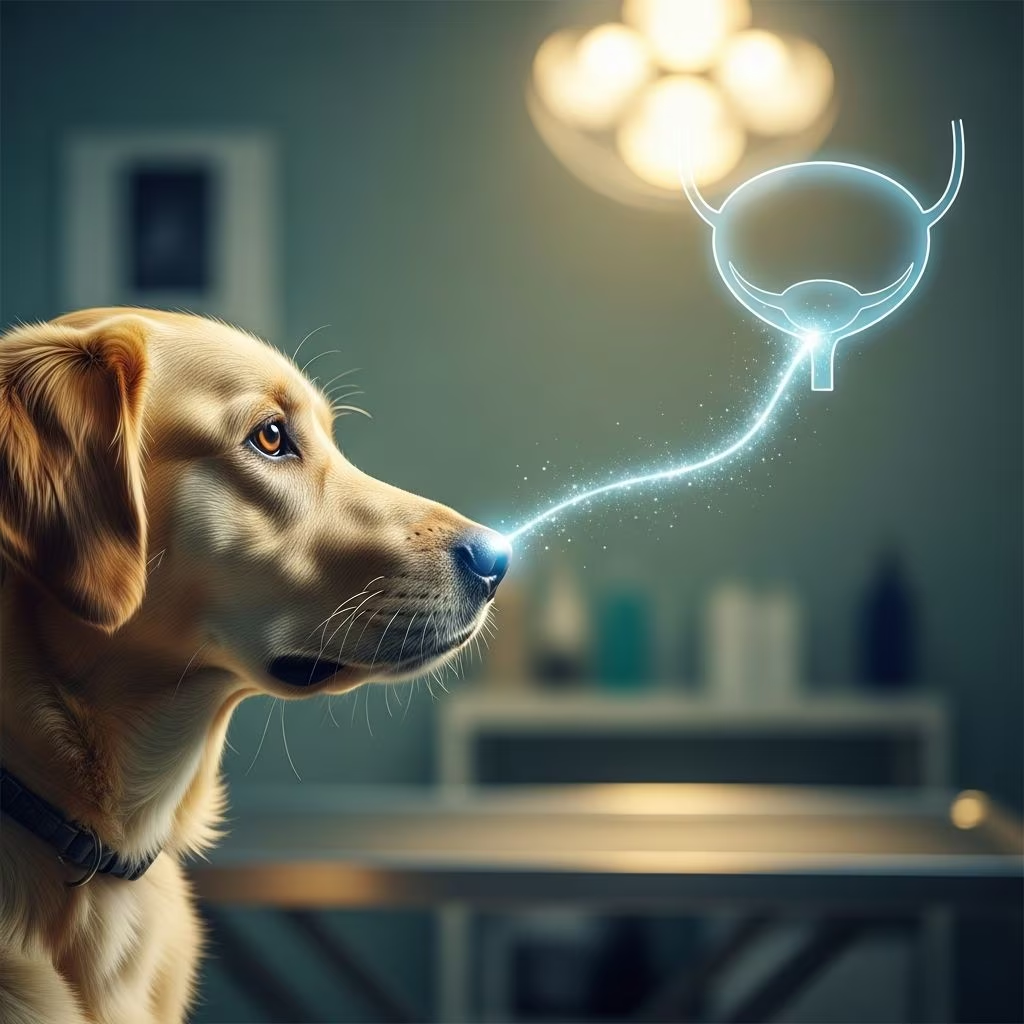
Bethanechol chloride serves as a key cholinergic agent in veterinary practice, primarily employed to enhance bladder muscle contractions in dogs experiencing urinary challenges. This medication targets detrusor muscle function, promoting effective urine expulsion in cases of diminished bladder tone.
Understanding Bladder Function in Dogs
The canine urinary system relies on coordinated muscle activity for proper emptying. The detrusor muscle, a smooth muscle layer in the bladder wall, contracts during micturition to expel urine, while sphincters maintain continence. Disruptions such as neurological impairments or muscle weakness can lead to incomplete emptying, fostering risks like infections or overflow incontinence.
Common culprits include post-surgical atony, where bladder tone weakens after procedures, or conditions impairing nerve signals. In dogs, maintaining this balance is crucial for overall health, as retained urine can ascend to kidneys, causing pyelonephritis.
Mechanisms of Bethanechol Action
As a muscarinic agonist, bethanechol selectively stimulates parasympathetic receptors in the bladder, inducing detrusor contraction without significant nicotinic effects at therapeutic doses. This promotes rhythmic bladder activity and strengthens expulsion force.
- Primary Effect: Enhances detrusor tone and contractility.
- Secondary Benefits: May improve gastrointestinal motility and esophageal function in dysautonomia cases.
- Onset: Effects typically begin within 30 minutes orally, lasting 2-3 hours.
Unlike broader cholinergics, bethanechol minimizes systemic overstimulation, focusing efficacy on smooth muscle targets.
Primary Applications in Canine Care
Veterinarians prescribe bethanechol for dogs with non-obstructive urinary retention, particularly detrusor hyporeflexia or atony. It proves valuable post-anesthesia or in lower motor neuron disorders where partial reflex integrity persists.
| Condition | Description | Bethanechol Suitability |
|---|---|---|
| Bladder Atony | Weakened detrusor post-surgery or illness | Highly suitable; aids recovery of tone |
| Dysautonomia | Autonomic nervous system dysfunction | Supportive for urinary symptoms |
| Neurogenic Retention | Partial sacral/pelvic nerve damage | Effective if reflex partially intact |
| Suprasacral Lesions | Upper spinal cord injury | Contraindicated due to sphincter hypertonicity |
In dysautonomia, it alleviates regurgitation and constipation alongside urinary aid, though comprehensive management is needed.
Dosing Protocols for Dogs
Standard oral dosing ranges from 2.5 to 10 mg per dog, administered 2-3 times daily, ideally on an empty stomach for optimal absorption. Subcutaneous routes may be used initially at similar doses.
- Small breeds (<10 kg): Start at 2.5-5 mg TID.
- Medium/Large breeds: 5-10 mg TID, titrate based on response.
- Duration: Condition-dependent; complete full course to avoid relapse.
Always initiate under veterinary supervision, monitoring urine output and tolerance. Adjustments prevent under- or overdosing.
Contraindications and Precautions
Bethanechol is unsuitable for mechanical obstructions, recent bladder/intestinal surgery, or weakened bladder walls, as it risks rupture.
- Absolute Contraindications: Urinary outflow block, hyperthyroidism, GI ulcers/obstructions, hypersensitivity.
- Caution in: Epilepsy, asthma, hypotension, bradycardia-prone dogs.
- Drug Interactions: Antagonized by atropine, epinephrine; enhanced by other cholinergics.
Avoid in upper motor neuron lesions with urethral hyperreflexia, where it may worsen retention.
Recognizing and Managing Side Effects
Most effects stem from cholinergic excess and are dose-related, often resolving with reduction.
| Common Side Effects | Symptoms | Management |
|---|---|---|
| Gastrointestinal | Vomiting, diarrhea, anorexia | Administer with food; dose reduction |
| Salivary | Excessive drooling, lacrimation | Mild; monitor hydration |
| Cardiovascular | Bradycardia (rare) | Discontinue if severe; vet consult |
| Respiratory | Bronchoconstriction (overdose) | Seek immediate care |
Owners should track urination patterns and report persistent issues. In spina bifida cases, it notably aids partial voiding, reducing infection risks.
Monitoring and Therapeutic Success
Success metrics include increased urine volume per void, reduced residual urine (via ultrasound), and fewer infections. Pair with manual expression or catheterization if needed.
Regular vet check-ins assess efficacy, tweaking protocols. In refractory atony, combine with prazosin for sphincter relaxation.
Availability and Veterinary Considerations
Bethanechol lacks FDA animal approval but is legally used extra-label. Human formulations (Urecholine, generics) are compounded or prescribed.
Vets follow prescribing cascades, weighing benefits against risks. Storage: Room temperature, away from moisture.
Frequently Asked Questions (FAQs)
Can bethanechol be used long-term in dogs?
Yes, for chronic conditions like dysautonomia, under monitoring to prevent tolerance or side effects.
What if my dog vomits after dosing?
Try with food or lower dose; consult vet if persists.
Is bethanechol safe for puppies?
Use cautiously; dosing scaled by weight, vet approval required.
How quickly does it improve urination?
Within hours; full benefits in days with consistent use.
Alternatives to bethanechol?
Depends on cause: prazosin for detrusor-urethral mismatch, catheterization for acute cases.
Integrating Bethanechol into Comprehensive Care
Bethanechol shines in targeted scenarios but complements holistic approaches: hydration encouragement, litter adaptations, and infection prophylaxis. Early intervention preserves bladder integrity, enhancing life quality.
For dysautonomia, multidisciplinary plans address multi-system involvement. Owners play pivotal roles observing changes, ensuring adherence.
In equine extensions, though less proven, it aids neurogenic retention, hinting broader utility.
References
- Rational Use of Bethanechol in Dogs and Cats with Bladder … — PubMed. 1974. https://pubmed.ncbi.nlm.nih.gov/41012843/
- Bethanechol (Urecholine®) for Dogs and Cats — PetPlace.com. N/A. https://www.petplace.com/article/drug-library/drug-library/library/bethanechol-urecholine-for-dogs-and-cats
- Bethanechol Tablets — Heartland Vet Supply. N/A. http://www.heartlandvetsupply.com/p-6855-bethanechol-tablets.aspx
- Bethanechol chloride — Pennard Vets. 2025-07. https://pennardvets.scdn7.secure.raxcdn.com/wp-content/uploads/2025/07/Bethanechol_chloride.pdf
- Bethanechol Chloride (Generic) Rx — VetRxDirect. N/A. https://www.vetrxdirect.com/product/view/bethanechol-tablets-for-dogs-and-cats-rx
- Pharmacotherapeutics in Urine Retention in Animals — Merck Veterinary Manual. N/A. https://www.merckvetmanual.com/pharmacology/systemic-pharmacotherapeutics-of-the-urinary-system/pharmacotherapeutics-in-urine-retention-in-animals



