

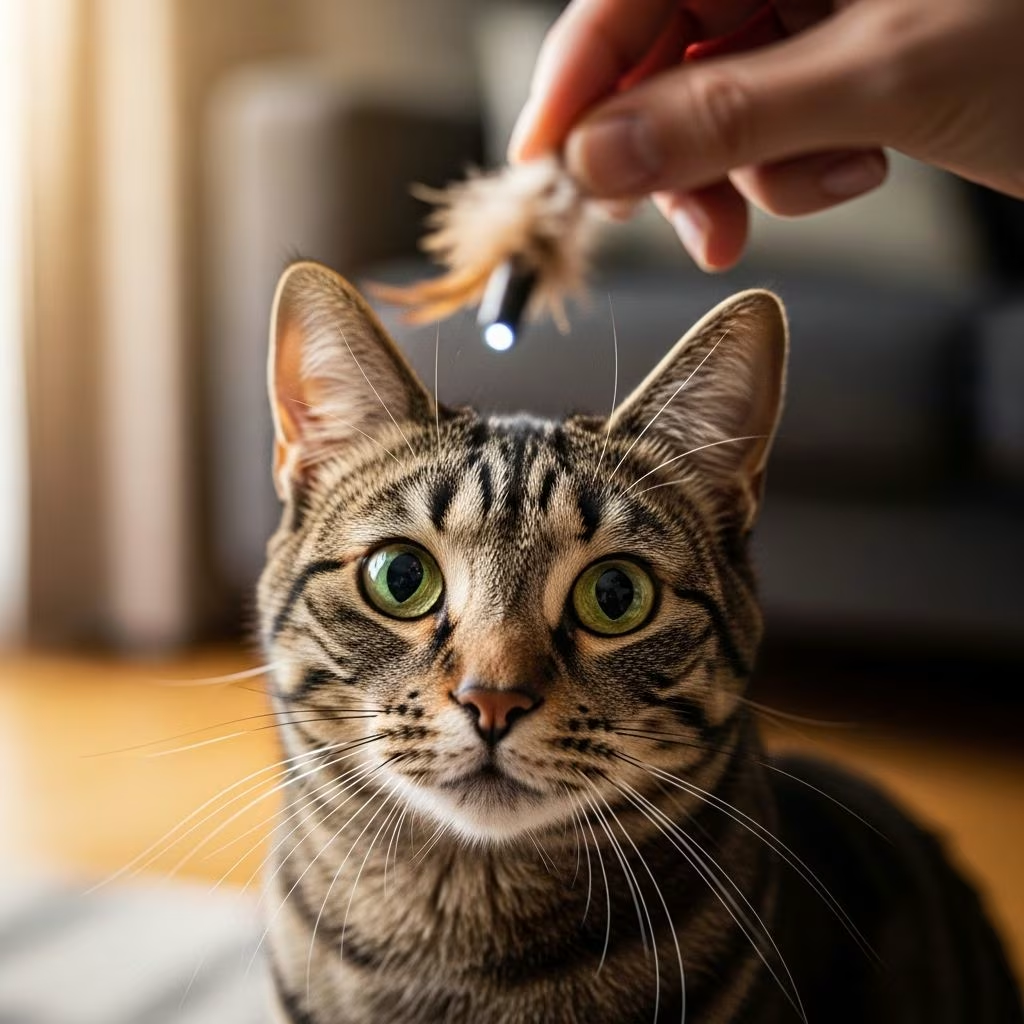
A 2023 study from Paris Nanterre University revealed that combining vocalizations with gestures is the fastest way to capture a cat’s attention, outperforming single methods or ignoring them. Researchers observed cats responding quickest to this multimodal approach, highlighting cats’ sensitivity to familiar human signals.
Understanding Cat Communication: What Science Reveals
Cats possess sophisticated social cognitive abilities, adjusting their behavior based on human attentional states during tasks like accessing treats. In solvable scenarios, cats independently retrieve rewards, but in unsolvable ones, they increase gaze alternation toward attentive humans, seeking assistance. This demonstrates cats’ capacity for social referencing, where they look to caregivers for cues.
Domestic cats form strong bonds with owners, influenced by early socialization and genetics. Well-socialized cats exhibit friendliness, preferring specific petting zones like the head and modifying postures to encourage interaction. Studies show symmetry in interaction initiation, with cats adapting to owner responsiveness levels.
The Groundbreaking Paris Nanterre Study on Cat Responses
Led by Charlotte de Mouzon at the Laboratory of Compared Ethology and Cognition, the study involved 12 cats at a cat café. After habituating the cats, researchers tested four interaction methods upon entering the room:
- Calling out without gestures
- Gesturing (hand extension) without vocalizing
- Vocalizing with gestures (using ‘pff pff’ sounds)
- Ignoring the cats entirely
Cats responded fastest to vocalizing plus gesturing, approaching sooner than with other tactics. This combination leverages cats’ preference for familiar voices, including baby talk, and visual cues from trusted owners. De Mouzon noted cats distinguish pet parents from strangers through these signals.
Why Vocalizations and Gestures Work Best
Cats associate human vocal tones with attention and rewards, responding more readily to high-pitched ‘cat-directed speech’. Gestures provide visual confirmation, especially effective in familiar relationships where cats read owner emotions via posture and voice.
Quantitative observations confirm cats initiate contact symmetrically with owners, rubbing and vocalizing more with responsive humans. In emotional contexts, cats match human facial expressions to vocalizations cross-modally, particularly high-intensity ones.
| Method | Response Time | Effectiveness |
|---|---|---|
| Vocal + Gesture | Fastest | Very High |
| Vocal Only | Moderate | High |
| Gesture Only | Slower | Moderate |
| Ignore | Slowest | Low |
Other Effective Ways to Get Your Cat’s Attention
Beyond the study, cats respond to toys, laser pointers, and crinkle sounds mimicking prey. Food calls work reliably, as cats beg more from attentive humans. Slow blinks signal trust, prompting reciprocal engagement.
- Use their name: Cats recognize and orient to their names, especially in multi-cat homes.
- Clicker training: Pairs sound with rewards, grabbing focus instantly.
- Interactive toys: Feather wands elicit chase responses, combining movement and vocal encouragement.
- Body language: Crouching low mimics play invitations, drawing curious approaches.
How Cats Communicate Back: Reading Their Signals
Cats employ gaze alternation, head rubbing, and sequential behaviors (looking between object and human) to solicit help. With inattentive caregivers, they reduce approaches but persist in unsolvable tasks. Purring indicates contentment, while tail flicks signal irritation—key for timing interactions.
In social referencing tests, cats gazed longer and sooner at attentive humans, approaching treats more. This adaptability underscores greater socio-cognitive skills than previously thought.
Factors Influencing Cat Responsiveness
Early socialization determines boldness and friendliness; genetic ‘father effects’ influence exploratory tendencies. Indoor cats rate higher in curiosity toward owners. Owner affection correlates with cat proximity-seeking and physical contact enjoyment.
Age, health, and environment matter: Kittens respond eagerly, seniors may prefer subtle cues. Stress reduces engagement, so create positive associations.
Practical Tips for Everyday Cat Attention-Grabbing
Incorporate study findings daily:
- Pair your cat’s name with a hand gesture and treat.
- Use ‘pff pff’ or meow-like sounds during play.
- Observe their gaze for engagement cues.
- Avoid startling; build on trust.
For training, consistency amplifies results. Cats in high-interactivity homes initiate more, fostering mutual bonds.
Common Mistakes Cat Owners Make
Many yell or chase, eliciting fear responses instead of curiosity. Ignoring preferred petting spots leads to rejection. Overlooking attentional states frustrates cats, reducing future engagement.
- Forcing interaction when ignored.
- Using harsh tones, unlike soothing baby voices.
- Missing subtle signals like ear twitches.
Building a Stronger Bond Through Attention
Responsive communication enhances welfare, reducing stress and boosting play. Cats alleviate owner negative moods via proximity and rubbing. Mutual initiation symmetry predicts relationship success.
Studies affirm cats’ niche expansion into human kinship via adaptive behaviors.
Frequently Asked Questions (FAQs)
What’s the best way to get my cat’s attention quickly?
Combine vocal calls (like their name or ‘pff pff’) with a gentle hand gesture; cats respond fastest per the 2023 study.
Why does my cat ignore me sometimes?
They may perceive you as inattentive or the task solvable independently; adjust by being visibly available.
Do cats prefer vocal or visual cues?
The multimodal combo wins, but familiar voices and owner gestures are highly effective.
How can I train my cat to come when called?
Use consistent vocal-gesture pairs with rewards; leverage their name recognition.
Are cat cafés good for studying behavior?
Yes, as in the Paris study, socialized café cats reliably demonstrate human-directed communication.
This comprehensive guide, drawing from peer-reviewed research, empowers cat owners to communicate effectively. Vocal-gesture synergy not only grabs attention but deepens companionship.
References
- Your Cat Can Read the Room Better Than You Think — Kinship. 2023. https://www.kinship.com/cat-behavior/cat-communication-study
- This Is the Most Effective Way to Get Your Cat’s Attention, Study Says — Kinship. 2023. https://www.kinship.com/cat-behavior/best-way-to-get-cat-attention
- Feline communication strategies when presented with an unsolvable task — PMC/NIH (Takagi & Arahori). 2021-08-02. https://pmc.ncbi.nlm.nih.gov/articles/PMC8360888/
- The Mechanics of Social Interactions Between Cats and Their Owners — PMC/NIH (Vitale Shreve). 2021-04-20. https://pmc.ncbi.nlm.nih.gov/articles/PMC8044293/
- Cats Associate Words With Images Faster Than Babies, New Study — Kinship. 2023. https://www.kinship.com/cat-behavior/cats-associate-words-with-images-study-news
- Niche Expansion and the Natural History of Human-Cat Kinship — University of Chicago Press Journals. 2024. https://www.journals.uchicago.edu/doi/10.1086/737151



