

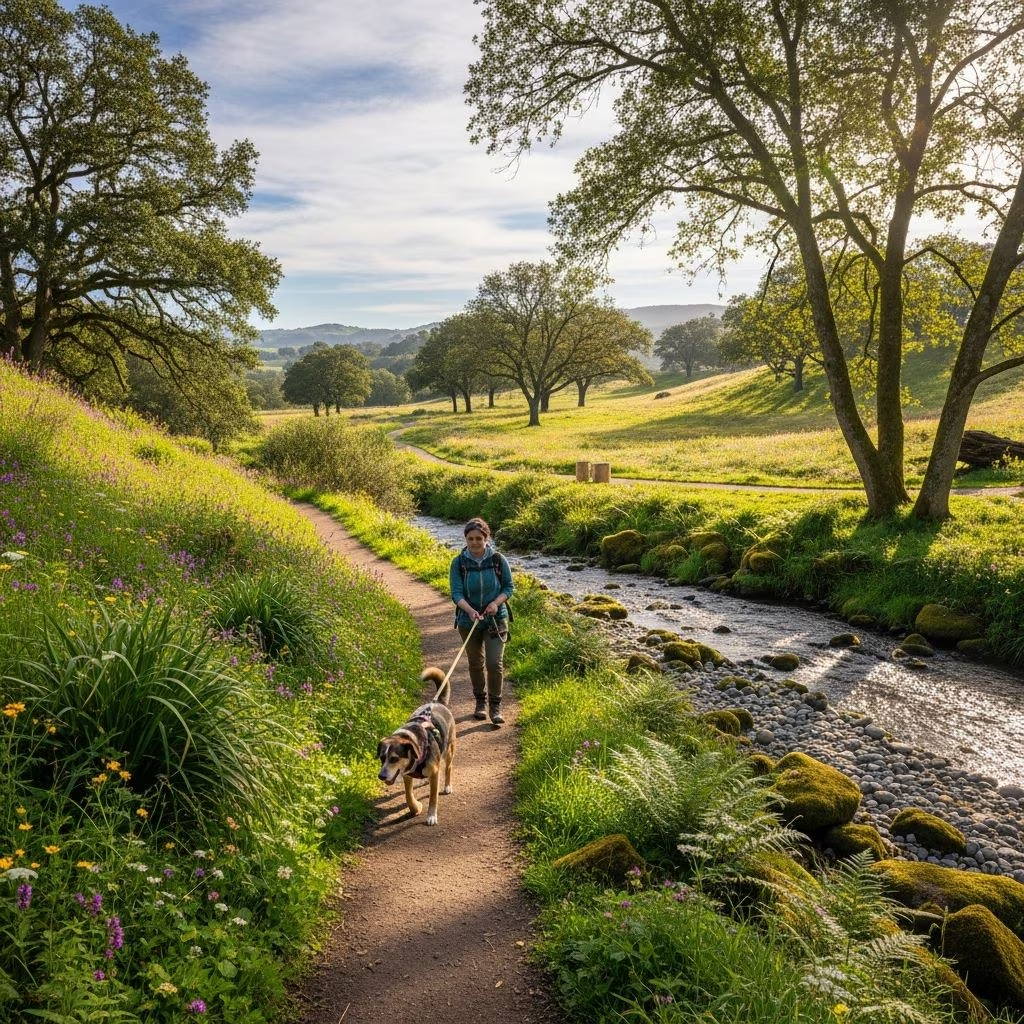
Walking a reactive dog can feel stressful, unpredictable, and sometimes embarrassing. Barking, lunging, or spinning at the end of the leash can turn a simple stroll into a high-stakes event. But with thoughtful route choices, good timing, and practical handling skills, you can dramatically reduce reactivity and make walks safer and more enjoyable for both of you.
This guide explains where to walk reactive dogs, how to structure those walks, and what to do when you cannot avoid triggers like other dogs, people, or fast-moving objects.
Understanding Reactive Dogs and Why Location Matters
A reactive dog is one who responds to certain triggers with an exaggerated emotional and behavioral reaction—for example, barking, lunging, or spinning when they see another dog, person, bicycle, or car. Reactivity is typically about over-arousal and emotion, not about an inherent desire to harm.
Dogs can be reactive because of fear, frustration, poor socialization, genetics, pain, or past experiences. The environment where you walk can either calm those big feelings or constantly provoke them. Choosing the right walking spots is one of the most effective and humane ways to support a reactive dog while you work on training.
- Better locations = fewer surprise triggers and more space.
- Better timing = quieter streets, fewer dogs, and less chaos.
- Better management = safer practice for you and your dog.
Key Principles for Walking a Reactive Dog
Before choosing specific locations, it helps to understand the core principles that make any walk safer and more successful for a reactive dog.
1. Distance is Your Dog’s Best Friend
For most reactive dogs, the safest and most effective immediate response is to increase the distance from the trigger. More space usually means lower arousal and lower risk of an outburst. If your dog reacts strongly, it is often a sign that they were too close for comfort.
- Cross the street when you see a trigger approaching.
- Turn and walk the other way (an “emergency U-turn”).
- Use parked cars, hedges, or buildings as visual barriers.
2. Safety and Predictability Reduce Reactivity
Reactive dogs typically do better in predictable, low-density environments where triggers are easier to spot and avoid. Busy urban streets, narrow hallways, or crowded parks provide few escape routes and can push your dog over threshold quickly.
3. Calm Walks Beat Long Walks
A short, calm walk with minimal triggers is more valuable than a long, chaotic one. Chronic stress and repeated outbursts can worsen behavior and well-being over time. Focus on quality over quantity of walking.
4. Training and Environment Work Together
Behavior modification—like counterconditioning and desensitization—works best when you also manage your dog’s environment. Strategic route planning gives you more chances to reward calm behavior at a safe distance, instead of constantly putting your dog in situations where they feel the need to explode.
Best Types of Places to Walk Reactive Dogs
No single environment works for every dog, but the following categories are generally the safest starting points for many reactive dogs. Whenever possible, visit at off-peak times to limit crowds.
| Location Type | Why It Helps Reactive Dogs | Best Use Tips |
|---|---|---|
| Quiet residential streets | Lower traffic and fewer dogs than busy urban centers | Walk at off-hours; cross streets early to avoid triggers |
| Wide open parks or fields (on leash) | Lots of space to move away from triggers | Stay on the periphery; avoid dog park entrances |
| Empty parking lots or business parks | Predictable layout, fewer surprises at certain times | Use early mornings, evenings, or weekends |
| Nature trails with good visibility | Natural distractions and more distance from people | Avoid narrow, blind corners and peak hiking times |
Quiet Residential Neighborhoods
Calmer side streets with wide sidewalks and good visibility are often ideal for early training walks. They usually have fewer dogs than dense city centers and allow you to plan detours.
- Plan loop routes where you can easily cut your walk short if needed.
- Avoid known “hot spots” like bus stops, school zones, or busy intersections during peak times.
- Use parked cars and driveways to increase distance if you see a trigger ahead.
Parks Without Dog Parks (or Far From Them)
Large parks and playing fields can be great if you stay away from off-leash dog areas and busy entrances. The main goal is space and line of sight.
- Walk along the outer paths or tree lines rather than central, crowded areas.
- Avoid paths that force you into close contact with oncoming dogs or people.
- Keep your dog on a secure leash; reactive dogs usually do not belong in off-leash zones.
Empty Parking Lots and Business Parks
After hours, office parks and large parking lots can be surprisingly peaceful. The open space and clear visibility make it easier to spot triggers at a distance, and you can quickly change direction.
- Check that dogs are allowed and the area is safe and well-lit.
- Avoid active traffic hours and delivery zones for safety.
- Use painted lines or landmarks for training games like loose-leash walking practice.
Nature Trails and Rural Paths
Well-chosen trails can be excellent: quieter than city streets, full of interesting smells, and less visually overwhelming. Some studies suggest that access to green spaces benefits dog welfare and reduces stress-related behaviors.
- Choose wide trails with good visibility so you can step aside when others pass.
- Avoid narrow paths where you cannot create distance.
- Keep your dog leashed even if local rules permit off-leash in some areas; it allows better control around surprise triggers.
Places Reactive Dogs Should Generally Avoid
Some locations are almost guaranteed to overwhelm many reactive dogs. Until you have worked extensively with a qualified trainer or behavior professional, it is often kindest to skip these environments.
1. Off-Leash Dog Parks
Dog parks are chaotic, unpredictable, and crowded—exactly the opposite of what most reactive dogs need. Sudden greetings, charging dogs, and limited exits can trigger intense reactions and may reinforce aggressive or fearful behavior.
- There is no control over other dogs’ behavior or training levels.
- Many dogs at parks display rough play that can scare sensitive or fearful dogs.
- Fights or near-fights can worsen future reactivity.
2. Narrow, Crowded Sidewalks
Crowded, narrow sidewalks leave reactive dogs feeling trapped. With no room to move away, they may feel forced to bark or lunge to create distance.
- Busy downtowns during rush hour.
- Festival areas, markets, and events.
- School zones during drop-off and pick-up.
3. Indoor Hallways, Elevators, and Tight Shared Spaces
Elevators, apartment hallways, and building lobbies often cause intense stress for reactive dogs because other dogs or people can suddenly appear with no escape route.
- Consider using stairs or waiting for an empty elevator when possible.
- Stand diagonally in a corner with your dog behind you to create a body barrier.
- Keep these transitions short and strategic rather than strolling or lingering.
4. Busy Shared Multi-Use Paths
Popular bike paths or waterfront promenades often have joggers, bicycles, scooters, children, and other dogs all in one place. The sheer number of fast-moving triggers can overwhelm your dog’s coping capacity.
- If you must use these paths, stick to quiet times and shorter distances.
- Move onto the grass or far edge when someone passes.
- Watch your dog’s body language closely for early signs of stress (stiffening, staring, lip-licking, yawning, sudden sniffing).
How to Time Your Walks for Fewer Triggers
Even in busier neighborhoods, timing can transform your reactive dog’s experience. Strategic scheduling often matters as much as location.
- Early mornings: Often the quietest time with fewer dogs and people.
- Late evenings: Quieter streets, cooler temperatures, and fewer distractions.
- Avoid peak hours: School start/end times, commuter rush hours, and weekend park rush.
Pay attention to patterns around your home: make a mental “heat map” of when and where you most frequently encounter triggers. Adjust your routes and schedules to stack the odds in your dog’s favor.
Practical Handling Strategies During Reactive Dog Walks
Location and timing are the foundation, but you also need on-leash skills that help you handle unexpected triggers safely and calmly.
1. The Emergency U-Turn
An emergency U-turn is a simple, trained behavior where your dog quickly turns and walks the other way with you when cued. This lets you safely exit a situation before your dog explodes.
- Practice at home using a cheerful cue like “This way!” and reward your dog for turning with you.
- Gradually practice on quiet streets before using it near triggers.
- Pair the U-turn with treats or a short game so your dog sees turning away as a good thing, not a punishment.
2. Using Food and Games Strategically
Food, sniffing, and simple games can help your dog stay below threshold when a trigger is at a safe distance. Many force-free trainers use counterconditioning: pairing the sight of a trigger with something the dog loves so their emotional response gradually changes over time.
- Toss treats on the ground away from the trigger to encourage sniffing and disengagement.
- Use a “find it” cue to scatter a few treats in the grass as another dog passes at a distance.
- Play simple focus games (like “watch me” or “touch”) only if your dog is still comfortable.
3. Avoiding Punishment and Leash Corrections
Punishing reactive behavior—through yelling, leash jerks, or harsh tools—can increase fear and aggression and is not recommended by major veterinary behavior organizations. Instead, focus on management, distance, and positive reinforcement of calm alternatives.
- Do not force your dog to “face” what scares or frustrates them.
- Reward even tiny signs of calm behavior, like glancing away from a trigger.
- Work with a certified behavior professional when reactions are intense or potentially dangerous.
Planning Walk Routes for Your Reactive Dog
Thoughtful planning turns each walk from a gamble into a structured practice session. Use the following steps to design safer daily routes.
Step 1: List Your Dog’s Main Triggers
Start by identifying what reliably sets your dog off. Common triggers include:
- Other dogs (all, or specific sizes/breeds)
- Strangers or certain types of people (men, people with hats, children, etc.)
- Bicycles, scooters, runners, or skateboards
- Vehicles, motorcycles, or loud machinery
Knowing which triggers matter most helps you choose locations where those triggers are rare or easy to avoid.
Step 2: Map Out Safer Zones
Walk around without your dog—or use a map app—to scout for:
- Wide sidewalks and side streets.
- Quiet cul-de-sacs or dead ends.
- Parks with open sight lines and multiple exit paths.
- Business parks or school grounds that are empty at certain times (where allowed).
Step 3: Create Multiple Backup Options
Have at least two or three go-to routes so you can quickly change your plan if one area is unexpectedly busy. Include “escape streets” on each route where you can quickly turn down a quieter side road if needed.
Step 4: Keep Walks Short and Positive
Especially at the beginning, aim for short walks that end on a calm note:
- Stop the walk after a success rather than pushing your luck.
- Do decompression activities at home afterward, like chew toys or snuffle mats.
- Track good and bad days in a simple log so you can notice patterns and improvements.
Frequently Asked Questions (FAQs)
Q: Can a reactive dog ever walk in busier places?
A: Many reactive dogs can learn to cope better in busier environments with systematic training, careful management, and professional guidance. Progress depends on the individual dog, the causes of their reactivity, and how consistently you can avoid overwhelming situations while you teach new skills.
Q: How long should walks be for a reactive dog?
A: There is no fixed ideal length; aim for walks that stay under your dog’s stress threshold. A 15-minute calm walk with only one distant trigger is usually better than a 45-minute walk full of repeated outbursts. Supplement with at-home enrichment and play to meet your dog’s exercise needs.
Q: Is it cruel to avoid dog parks with a reactive dog?
A: No. Many reactive dogs find dog parks extremely stressful, and they can enjoy life richly without them through controlled play with known dog friends, sniffy walks, scent games, and training activities. Quality, not quantity, of social interaction matters most for their welfare.
Q: Should I walk my reactive dog every day?
A: Regular opportunities to move, sniff, and explore are important, but they do not all have to be traditional neighborhood walks. On days when the environment is too busy, you can do shorter potty trips plus indoor games, food puzzles, or yard sniffing instead of forcing a stressful long walk.
Q: When should I seek professional help?
A: Seek help from a veterinarian or certified behavior professional if your dog’s reactions are escalating, if there is any risk of bites, or if you feel anxious or unsafe on walks. They can rule out medical issues, design a behavior plan, and recommend humane training strategies tailored to your dog.
References
- American College of Veterinary Behaviorists: Position Statement on Positive Reinforcement Training — American College of Veterinary Behaviorists. 2021-06-01. https://www.dacvb.org/page/position-statement
- Reactivity and Aggression in Dogs: How to Know the Difference — Kinship / Karen London, PhD. 2023-05-01. https://www.kinship.com/dog-behavior/reactive-vs-aggressive-dog
- 8 Things You Should Never Do With a Reactive Dog on a Walk — Kinship. 2023-07-01. https://www.kinship.com/dog-behavior/leash-reactive-dog-donts
- Social isolation and the mental health of dogs — The Kennel Club (UK). 2022-04-15. https://www.thekennelclub.org.uk/dog-health/health-and-care/socialisation-and-mental-health/
- Green Space Exposure and Dog Wellbeing: A Review — University of Lincoln. 2020-11-10. https://eprints.lincoln.ac.uk/id/eprint/43547/



