Best Parrot Cages and Safe Play Areas
Complete guide to choosing safe, spacious parrot cages and enriched play environments.
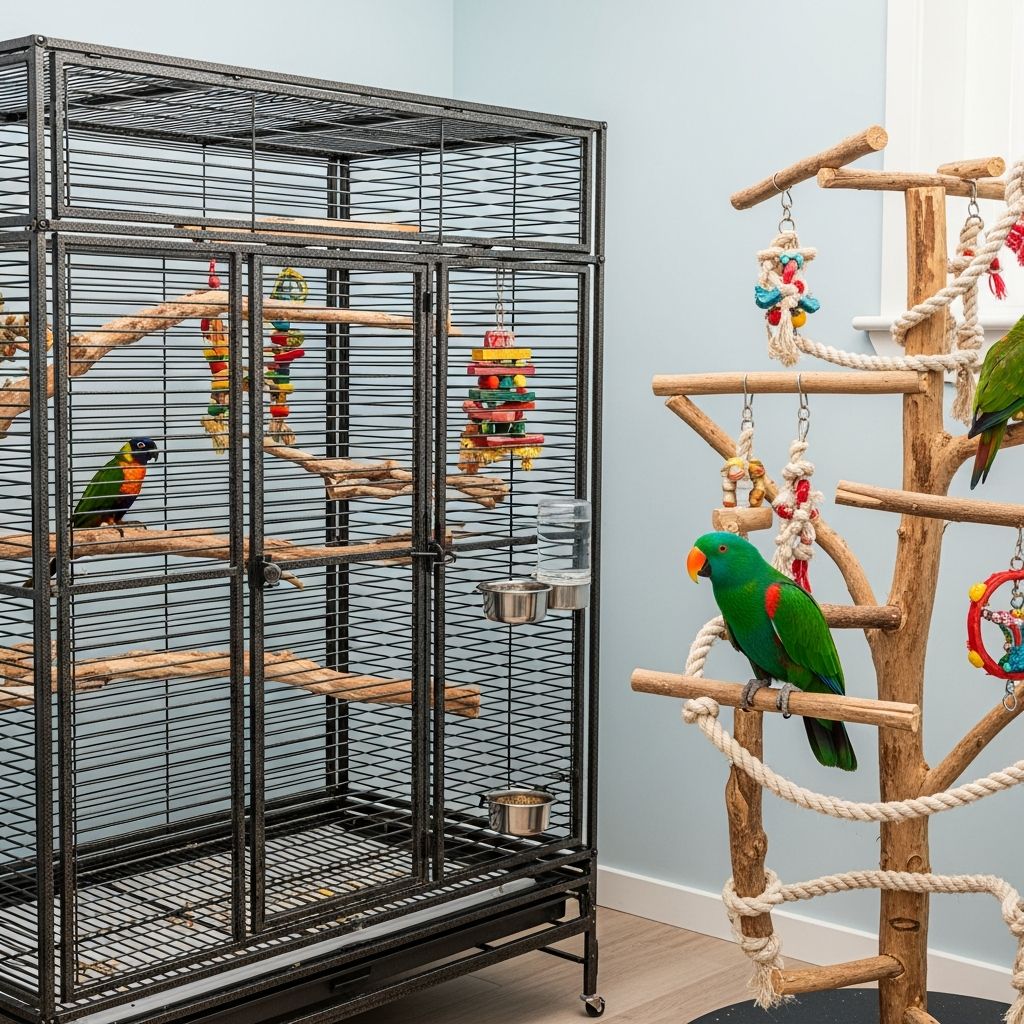
Parrots require two fundamental components for safe, enriched, and healthy housing: a spacious cage and at least one designated, bird-proofed area away from their cage where they can forage, play, and interact with their human family. Understanding how to select and maintain these environments is essential for your parrot’s physical and mental well-being. This comprehensive guide covers everything you need to know about creating the perfect living space for your feathered companion.
Understanding Parrot Housing Needs
The foundation of good parrot care begins with recognizing that birds spend most of their lives on their feet, making proper housing critical to their health and happiness. Unlike many other pets, parrots are highly intelligent, social creatures that require both physical space and mental stimulation. A well-designed cage and play area combination provides the necessary environment for your bird to exercise, play, and maintain proper physical condition.
Selecting the Right Parrot Cage
When purchasing a cage for your parrot, size should be your primary consideration. The cage should be as large as you can afford, providing enough space for your bird to exercise and play while accommodating a wide variety of toys and perches. Many bird owners make the mistake of choosing cages based on price or aesthetics rather than functionality and safety, which can compromise their bird’s health.
Trusted Cage Brands and Materials
Always purchase cages from safe, trusted brands such as HQ, King’s, Prevue Hendryx, Avian Adventures, or A&E. While purchasing cages from marketplaces like eBay may be cheaper, many off-brand cages are manufactured using cheap, dangerous materials that can harm your bird. If you’re considering purchasing a used cage from Craigslist or similar websites, inspect it thoroughly before buying to ensure it meets safety standards and shows no signs of damage or deterioration.
Bar Spacing Considerations
One of the most critical safety features to evaluate is bar spacing. Bar spacing must be wide enough that your bird cannot get its toes stuck between the bars, but narrow enough that it cannot insert its head between the bars. Improper bar spacing can lead to serious injuries or even fatal accidents.
Safe bar spacing guidelines vary by bird size:
- Small birds: approximately 1 cm (½ inch)
- Medium-sized birds: approximately 2 cm (¾ inch)
- Large species: approximately 2.5 cm (1 inch)
Cage Bar Strength and Construction
Consider your parrot’s beak power when selecting a cage. Many cages feature bars that cannot withstand the crushing force of a parrot’s beak, which can lead to broken welds and bent or broken cage bars. This structural failure can create dangerous situations and potentially allow your bird to escape. Quality cages use appropriate wire gauges and construction methods to resist the powerful bite force of larger parrot species.
Cage Types and Designs
Dome Top Cages
Dome top cages provide more vertical space for your bird to climb and play. These designs allow for easier placement of toys and perches within the cage, creating a more enriching environment. The rounded top maximizes usable space and encourages natural climbing behavior. However, dome top cages may present challenges for shorter owners trying to reach birds that prefer hanging out in the uppermost areas.
Play Top Cages
Play top cages feature a built-in play area on the top of the cage, providing an alternate space for your bird to hang out under supervision. These cages are popular when space is limited, and they work well for many birds. However, if your parrot hasn’t been properly trained, getting them down from a play top cage can be challenging. Some play top designs allow you to remove the play top temporarily while training your bird to follow commands, then reattach it once proper manners are established.
Solid Top Cages
Solid top cages can be either flat or rounded (dome top). This style does not open at the top and has no specific play area attached. Solid top designs offer a more compact footprint and are suitable for various parrot sizes depending on the interior dimensions.
Essential Perches and Foot Health
Since birds spend most of their time on their feet, maintaining proper foot health requires providing a variety of perch types, shapes, and sizes within the cage. This diversity helps prevent foot problems and promotes natural behavior patterns. Different perch materials serve different purposes and contribute to overall foot conditioning.
Types of Perches to Include
- Natural wood (distinct from smooth dowel rods)
- Cotton rope perches
- Flat, ledge-like perches
- Swings and boings for movement and play
- Cement or sand perches for nail maintenance
Proper Use of Cement and Sand Perches
When purchasing cement or sand perches, ensure they have a smooth side where your bird’s feet can rest comfortably, with rough surfaces reserved only for nail resting areas. The rough surface of these perches should never contact the sensitive foot pads, as this can create painful sores. Proper cement perch design balances nail conditioning with foot comfort.
Creating Safe Play Areas Beyond the Cage
Play areas can range from simple play stands to dedicated bird rooms or outdoor aviaries. Whatever play area you provide, it must be safe and secure to prevent your bird from injuring itself or being harmed by other animals. Creating a bird-safe environment requires attention to multiple safety considerations.
Essential Safety Measures for Play Areas
- Remove all electrical cords or run them through PVC or similar protective barriers
- Prevent access to ceilings, molding, or walls that the bird could chew on
- Prevent access to ceiling fans, open water sources such as toilets, and open windows
- Ensure the play area is composed of bird-safe materials including untreated wood, stainless steel, ceramic powder coating, cement, acrylic, and PVC
Choosing Bird-Safe Materials
All materials in your parrot’s play area must be thoroughly vetted for safety. Untreated wood, stainless steel, ceramic powder coating, cement, acrylic, and PVC are all appropriate choices. Avoid materials with toxic finishes, paints, or coatings that could harm your bird if chewed. When in doubt, research the specific material or consult with an avian veterinarian.
Play Stands and Standalone Options
Play stands provide a portable option for supervised out-of-cage time. These stands typically feature perches, food and water dishes, and sometimes built-in toys. Play stands are ideal for birds whose owners have limited space but want to provide enrichment opportunities. They’re easily moveable and can be positioned in different rooms to provide environmental variety.
Dedicated Bird Rooms
For bird enthusiasts with multiple parrots or those wanting to provide extensive free-flight space, a dedicated bird room offers the ultimate enrichment opportunity. A bird room requires complete bird-proofing of all surfaces, fixtures, and potential hazards. This includes securing electrical cords, installing protective coverings over ceiling fans, and ensuring all materials are bird-safe.
Outdoor Aviaries
Outdoor aviaries provide natural light, fresh air, and weather exposure that benefits many parrot species. However, outdoor structures must be extremely secure to prevent escapes and protect against predators. Proper construction materials, secure latches, and regular maintenance are essential for safe outdoor housing.
Enrichment and Environmental Enhancement
Both your bird’s cage and play area should contain many different types of enrichment objects, including toys, ropes, perches, and bird-safe plants. Environmental enrichment is crucial for mental stimulation and preventing behavioral problems. Rotating toys regularly maintains interest and provides novelty.
Types of Enrichment Objects
- Foraging toys that encourage natural behavior
- Chewing toys appropriate to your bird’s size and species
- Climbing structures and perches
- Ropes and swings for movement
- Bird-safe plants for exploration
- Puzzle feeders for mental stimulation
Cage Size and Toy Accommodation
When determining appropriate cage size, remember that the cage must accommodate not just your bird, but also all necessary toys, perches, ladders, swings, and food and water bowls. A cage that appears large may become cramped once all essential items are installed. Select a cage size that maintains adequate flying and climbing space even after enrichment items are added.
Maintenance and Cage Cleaning
Regular maintenance keeps your parrot’s environment safe and hygienic. Daily spot cleaning removes soiled bedding and uneaten food, while weekly thorough cleaning ensures a healthy environment. Choose cages with removable trays and easy-access areas to facilitate regular cleaning routines.
Transitioning to New Housing
When introducing your parrot to a new cage or play area, allow time for gradual acclimation. Place familiar toys and perches in the new space to ease the transition. Some birds may initially be hesitant about new environments, so patience and positive reinforcement help them adjust comfortably.
Frequently Asked Questions
Q: How large should my parrot’s cage be?
A: The cage should be as large as you can afford. Generally, the minimum dimensions should allow your parrot to fully spread its wings, move between perches, and have space for toys. Larger is always better for your bird’s physical and mental health.
Q: What is the ideal bar spacing for my parrot cage?
A: Bar spacing depends on your bird’s size. Small birds need approximately 1 cm spacing, medium birds need about 2 cm, and large species require approximately 2.5 cm spacing. This prevents both toe entrapment and head insertion.
Q: Can I use a used cage from an online marketplace?
A: You can purchase used cages, but inspect them carefully for damage, rust, bent bars, and potential safety hazards before purchasing. Ensure all materials are bird-safe and the cage structure is sound.
Q: What are the best perch materials for my parrot?
A: Vary perch types using natural wood, cotton rope, flat ledges, swings, and cement or sand perches. This variety maintains foot health and provides environmental enrichment through different textures and experiences.
Q: How do I bird-proof a play area?
A: Remove or protect electrical cords, prevent access to ceiling fans and open water sources, block chewable surfaces like molding, and use only bird-safe materials such as untreated wood, stainless steel, and ceramic powder coating.
Q: Are play top cages better than dome top cages?
A: Both have advantages. Dome tops offer more climbing space and easier toy placement, while play tops provide built-in supervised play areas. Choose based on your space limitations and your bird’s personality and training level.
Q: How often should I clean my parrot’s cage?
A: Perform daily spot cleaning to remove soiled areas and uneaten food, and conduct thorough weekly cleaning of the entire cage. Regular maintenance prevents disease and maintains a healthy environment.
Q: What materials should I avoid in my parrot’s environment?
A: Avoid toxic coatings, paints, treated woods, electrical cords without protection, and materials with harmful finishes. Stick to bird-safe options like untreated wood, stainless steel, ceramic powder coating, and PVC.
Conclusion
Creating a safe, enriching environment for your parrot requires thoughtful selection of both housing and play areas. By choosing appropriately sized cages from reputable brands, paying attention to critical safety features like bar spacing, and providing diverse perches and enrichment objects, you create a foundation for your parrot’s health and happiness. Remember that your investment in proper housing pays dividends in the form of a healthier, happier, and more well-adjusted companion. Take time to research options, inspect used items carefully, and prioritize safety and enrichment above cost considerations. Your parrot’s wellbeing depends on the quality of its environment.
References
- Best Parrot Cages and Safe Play Areas — Best Friends Animal Society. 2024. https://bestfriends.org/pet-care-resources/best-parrot-cages-and-safe-play-areas
- Considerations When Choosing a Cage — Avian Enrichment. 2024. https://avianenrichment.com/index.php/learn/physical-needs/environment/choosing-a-cage
- Choosing A Parrot Cage — Northern Parrots. 2024. https://www.northernparrots.com/blog/choosing-a-parrot-cage/
Similar Articles







Read full bio of medha deb