

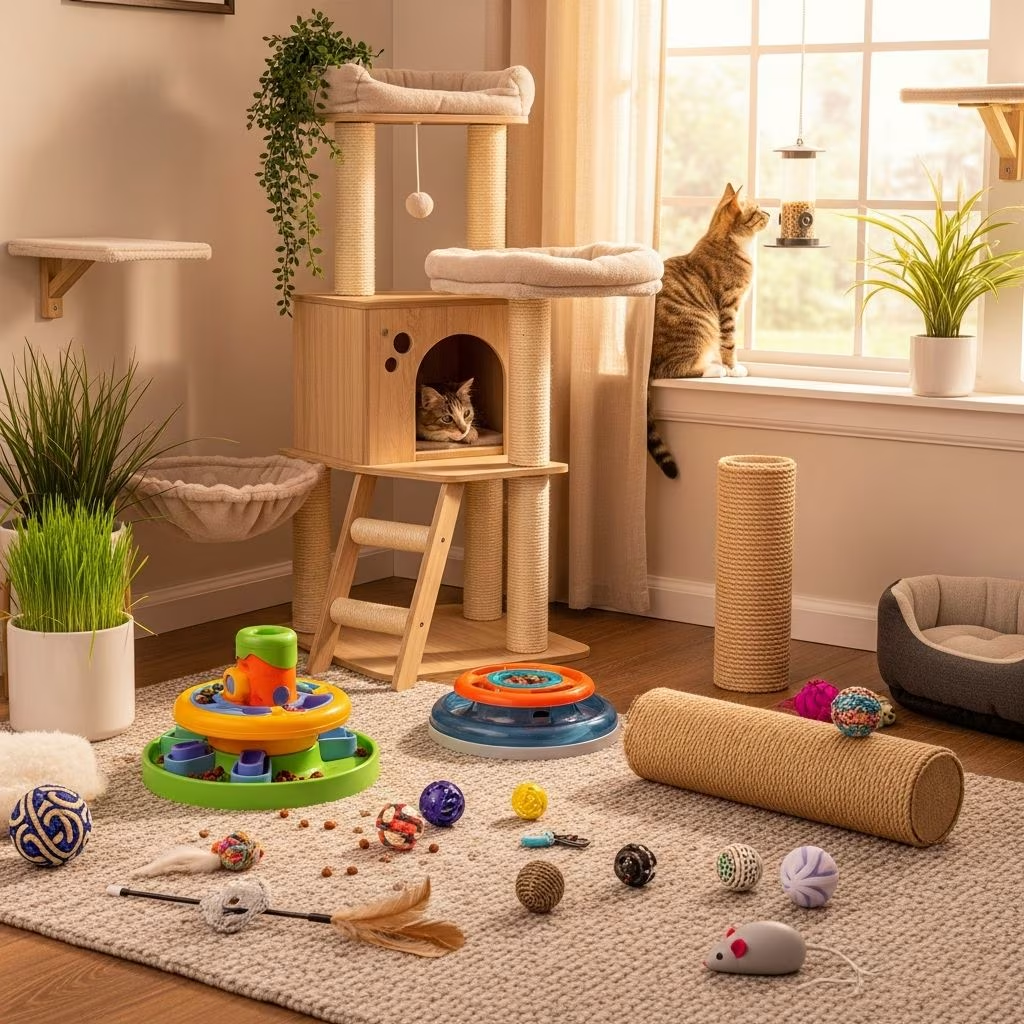
Cat enrichment is the practice of creating a stimulating and engaging environment where your feline companion can express their natural instincts and behaviors in appropriate and healthy ways. For indoor cats especially, enrichment is crucial to their overall wellbeing, mental health, and happiness. When you provide adequate enrichment opportunities, your cat not only leads a more fulfilling life but also tends to display fewer behavioral problems. Additionally, incorporating enrichment activities can deepen the bond you share with your cat as you engage in interactive play and learning experiences together.
Every cat has a unique personality and preferences, so what works wonderfully for one cat might not appeal to another. The key is to experiment with different enrichment strategies and observe which ones capture your cat’s interest and enthusiasm. In this comprehensive guide, we’ll explore numerous ways to enrich your indoor cat’s life, from interactive toys to puzzle feeders, vertical spaces, and beyond.
Understanding Cat Enrichment
Cat enrichment refers to activities and environmental modifications that stimulate a cat’s physical body and mental faculties. Cats have natural instincts to hunt, climb, explore, and play. Indoor cats often lack the opportunities to engage these instincts that they would experience in the outdoor environment. By providing appropriate enrichment, you help your indoor cat satisfy these natural urges in controlled, safe ways.
The benefits of proper enrichment include improved physical fitness, reduced stress and anxiety, decreased destructive behaviors, better appetite regulation, and enhanced cognitive function. Enrichment also provides an important outlet for cats’ energy and curiosity, preventing boredom and the behavioral issues that often accompany it.
Interactive Toys for Cats
Interactive toys are those that engage your cat in direct play, often requiring your participation or attention. These toys are excellent for building your relationship with your cat while providing essential physical exercise and mental stimulation.
Types of Interactive Toys
Interactive toys come in many forms, from simple string toys to laser pointers and feather wands. The best interactive toys encourage your cat to engage in hunting behaviors such as stalking, pouncing, and batting. When selecting interactive toys, look for options that:
- Encourage natural hunting behaviors
- Provide safe play experiences
- Allow for varied play patterns
- Can be rotated to maintain novelty
- Are appropriate for your cat’s age and physical ability
Playing with your cat using interactive toys not only provides physical exercise but also strengthens your bond and helps your cat develop confidence through successful “hunting” experiences. Regular interactive play sessions can also help regulate your cat’s appetite and promote a natural activity cycle.
Self-Play Toys for Cats
Self-play toys are designed for your cat to enjoy independently, without requiring your direct involvement. These toys are especially valuable for times when you’re busy or away from home, as they provide mental and physical stimulation in your absence.
Budget-Friendly Self-Play Options
You don’t need to spend a lot of money on self-play toys. Some of the most enjoyable options for cats are surprisingly simple and inexpensive:
- Cardboard boxes of various sizes
- Large paper bags (with handles removed for safety)
- Crumpled pieces of paper
- Ping pong balls
- Paper balls rolled in string
Commercial Self-Play Toys
Beyond homemade options, numerous commercial self-play toys are available, including catnip-filled toys, metal springs, wall-mounted toys, and battery-operated toys that move unpredictably to capture your cat’s attention. Battery-operated toys can be particularly valuable for cats that are home alone for extended periods, as they provide ongoing entertainment and mental challenge.
Food Puzzles and Puzzle Toys
Puzzle toys represent some of the most powerful enrichment tools available for indoor cats. These toys combine play, activity, and food reward, creating a multi-sensory enrichment experience that engages your cat’s problem-solving abilities and natural foraging instincts.
How Puzzle Toys Work
Puzzle toys stimulate seeking and foraging behavior by requiring cats to think strategically and work through obstacles to access a food reward. At their core, puzzle toys challenge a cat’s problem-solving skills and motor dexterity by presenting puzzles the cat must solve to obtain their prize. This type of cognitive engagement provides mental exercise that helps combat the sedentary and sometimes stressful nature of indoor living.
DIY Puzzle Toy Ideas
Creating your own puzzle toys is easier than you might think. One of the simplest methods is “scatter feeding,” where you toss your cat’s regular kibble across the floor, allowing your cat to hunt for individual pieces rather than eating from a bowl. For increased challenge, hide small portions of kibble in different locations around your home, encouraging your cat to search and forage.
Numerous online resources provide instructions for creating DIY puzzle toys from common household items. These homemade options can be just as engaging as commercial versions while being significantly more economical.
Food Games and Puzzle Variations
To keep puzzle activities fresh and engaging, vary the types of puzzles and games you offer. This variety ensures that your cat continually faces new challenges and must invent new solutions rather than becoming bored with a single, predictable activity. When introducing food-related enrichment games, observe your cat’s preferences beforehand to ensure they enjoy the treats being used as rewards.
Fetch or Chase Games
A simple yet effective food game is to gently toss a treat your cat enjoys in another direction. Start with gentle tosses and gradually escalate to longer throws as your cat becomes comfortable with the activity. This mimics the natural pursuit and capture of prey in the wild. For added complexity, try rolling or tossing a feeder toy shaped like a ball, combining movement, chase, and food reward.
Mystery or Puzzle Boxes
Create a puzzle box by taking a container and cutting several holes in the top, sized large enough for a cat’s paw or a small toy to fit through. Fill the box with treats, toys, or novel scents for your cat to discover. The dimensions should be appropriate for your cat’s living space. Your cat will enjoy poking their paws through holes and investigating the contents, providing extended enrichment and entertainment.
Vertical Space and Climbing Enrichment
Cats are natural climbers with an instinctive need to reach elevated spaces. Providing vertical structures and elevated perches satisfies this important behavioral drive while also creating additional usable space in your home.
Cat Trees and Vertical Furniture
Cat trees, wall-mounted shelves, and other elevated structures give your cat opportunities to climb, observe their environment from above, and feel secure in high vantage points. These structures serve multiple purposes: they provide climbing and clawing outlets, create comfortable resting spots, and allow your cat to survey their territory from a position of security and control.
Window Perches
Placing cat furniture, perches, or resting areas near windows provides your cat with visual enrichment while they observe the outdoor environment. Window perches offer entertainment through bird watching, squirrel spotting, and watching changes in weather and light throughout the day. This passive visual stimulation can keep your cat engaged and mentally stimulated throughout the day.
Creating Kitty Comfort Zones
While stimulating activities are important for enrichment, calming and comfort are equally essential components of a well-rounded enrichment program. Every cat needs a safe space where they can retreat, relax, and feel secure.
Designing Safe Spaces
Effective comfort zones can be created in various locations throughout your home:
- Closets with cozy blankets or beds
- Open crates or carriers lined with soft bedding
- High shelves away from household traffic
- Spaces under beds
- Cat trees with enclosed hideaway sections
- Rooms sectioned off with baby gates for privacy
Equip these comfort zones with soft bedding, blankets, or cushions to make them as inviting as possible. Your cat should feel confident that they can retreat to these spaces whenever they need a break from activity or feel stressed.
Outdoor Enrichment Options
Catteries and Catios
A catio or cattery is an enclosed outdoor space that allows your cat to experience the outdoors safely without the risks of free roaming. Once constructed, you can incorporate additional enrichment sources into your catio, such as toys, cat trees, climbing structures, and interactive elements. Within a catio, you can place sand, plants, and various toys to create a rich outdoor experience. Regularly inspect the structure for safety and stability to ensure your cat remains secure.
Leash Walking and Outdoor Adventures
Some indoor cats enjoy and thrive with outdoor walk experiences. Walking on a leash and harness provides both mental and physical enrichment, allowing your cat to explore new environments, experience different scents and textures, and engage their natural curiosity safely.
Training Your Cat for Leash Walking
Before attempting outdoor walks, you must properly train your cat to walk on a leash and harness. Follow these steps:
- Choose a properly fitting harness that your cat cannot slip out of
- Train your cat indoors to become relaxed and comfortable wearing the harness
- Practice short indoor leash sessions before progressing to outdoor walks
- Gradually introduce outdoor exploration in controlled, quiet environments
- Always supervise outdoor walks and watch for signs of stress or fatigue
If your cat doesn’t take to leash walking, consider using a pet stroller as an alternative way to safely experience the outdoors.
Training and Mental Stimulation
Teaching Your Cat Tricks
Many people assume that cats cannot be trained, but this is far from true. Cats can learn to respond to numerous cues and commands, from basic commands like “sit” and “down” to more complex tricks like “wave” or “jump.” Teaching tricks provides excellent mental stimulation and can strengthen your relationship with your cat through positive interactions.
Positive Reinforcement Training
The most effective and enjoyable training method for cats involves positive reinforcement. This approach rewards desired behaviors rather than punishing unwanted ones. Positive reinforcement training is not only more humane but also more effective and efficient than punishment-based methods.
Clicker Training
Clicker training is one of the most successful positive reinforcement methods for cats. This technique involves using a small device that makes a distinctive clicking sound to mark the exact moment your cat performs a desired behavior, followed immediately by a reward. The click sound becomes associated with positive outcomes, making training faster and more effective. Clicker training can teach your cat virtually any behavior you can reward.
Environmental Enrichment Ideas
Catnip and Catnip-Filled Toys
Catnip is a safe, natural herb that creates a stimulating response in many cats. While you can grow fresh catnip, most cats prefer dried catnip. Catnip-filled toys can be rotated in and out of your cat’s toy collection to maintain novelty and interest. The stimulating effect of catnip typically lasts about fifteen minutes, after which your cat will need a few hours of rest before responding to it again.
Wheat Grass and Chewing Enrichment
Cats have an instinctive need to chew, and growing wheat grass provides a healthy outlet for this behavior. Wheat grass kits are widely available online and at pet supply stores, making it simple to grow fresh grass for your cat to nibble. Wheat grass is safe for cats to consume and helps satisfy their chewing instincts while also providing potential digestive benefits.
Sensory Enrichment with Sand
An innovative and low-cost enrichment activity gaining popularity is providing sand for cats to play in. Cats enjoy rolling in sand, batting it around with their paws, and digging through it, especially when toys are hidden within. This activity brings elements of the outdoor beach experience indoors and provides tactile, sensory enrichment. Use fine sand in a shallow layer on a designated area, ensuring it’s not deep enough to tempt your cat to use it as a litter box.
Rotation and Variety Strategy
One key principle of effective enrichment is maintaining variety. Rather than leaving all toys and enrichment items out constantly, rotate them periodically. This creates novelty and keeps your cat engaged and interested. A toy that wasn’t interesting last week can become fascinating again after a period of absence. Regular rotation also extends the lifespan of your enrichment items and reduces the amount you need to purchase.
Frequently Asked Questions About Cat Enrichment
Q: Why is enrichment important for indoor cats?
A: Indoor cats have limited opportunities to express their natural hunting, climbing, and exploring instincts. Enrichment provides outlets for these behaviors, prevents boredom, reduces stress and behavioral problems, and contributes to overall physical and mental health.
Q: How much enrichment does my cat need?
A: Enrichment needs vary by individual cat. Most indoor cats benefit from multiple enrichment opportunities daily, including interactive play sessions, puzzle feeding, access to vertical spaces, and comfortable rest areas. Aim for at least two interactive play sessions daily of 10-15 minutes each.
Q: Can I make my own puzzle toys?
A: Yes! Many effective puzzle toys can be made from household items. Scatter feeding, puzzle boxes made from containers with holes, and DIY toys made from toilet paper tubes are all simple options. Online tutorials provide numerous ideas for homemade cat enrichment.
Q: What if my cat isn’t interested in a particular enrichment activity?
A: Cats have individual preferences. If your cat doesn’t enjoy a particular toy or activity, try something different. Rotate enrichment items, experiment with various textures and movements, and observe which activities capture your cat’s genuine interest.
Q: Is catnip safe for all cats?
A: Catnip is safe for most adult cats, though not all cats respond to it—some show no interest whatsoever. Kittens typically don’t respond to catnip until they’re several months old. Pregnant or nursing cats should avoid catnip. Always use catnip in moderation and observe your cat’s response.
Q: How do I train my cat to walk on a leash?
A: Start by introducing a properly-fitting harness indoors and allowing your cat to become comfortable wearing it. Practice short indoor leash sessions, rewarding your cat with treats and praise. Only progress to outdoor walks once your cat is relaxed and confident in the harness.
References
- The Best Indoor Cat Enrichment Ideas: Toys, Puzzles, and More — Best Friends Animal Society. 2024. https://bestfriends.org/pet-care-resources/best-indoor-cat-enrichment-ideas-toys-puzzles-and-more
- Enrichment for Shelter Cats — Best Friends Animal Society. 2024. https://bestfriends.org/pet-care-resources/enrichment-shelter-cats
- Enrichment Idea for Cats: Playing in Sand — Best Friends Animal Society. 2024. https://bestfriends.org/stories/features/enrichment-idea-cats-playing-sand
- Cat Behavior and Enrichment — Best Friends Animal Society. 2024. https://bestfriends.org/network/webinars-videos/cat-behavior-and-enrichment
- Cat Training — Best Friends Animal Society. 2024. https://bestfriends.org/pet-care-resources/issues/cat-training



