

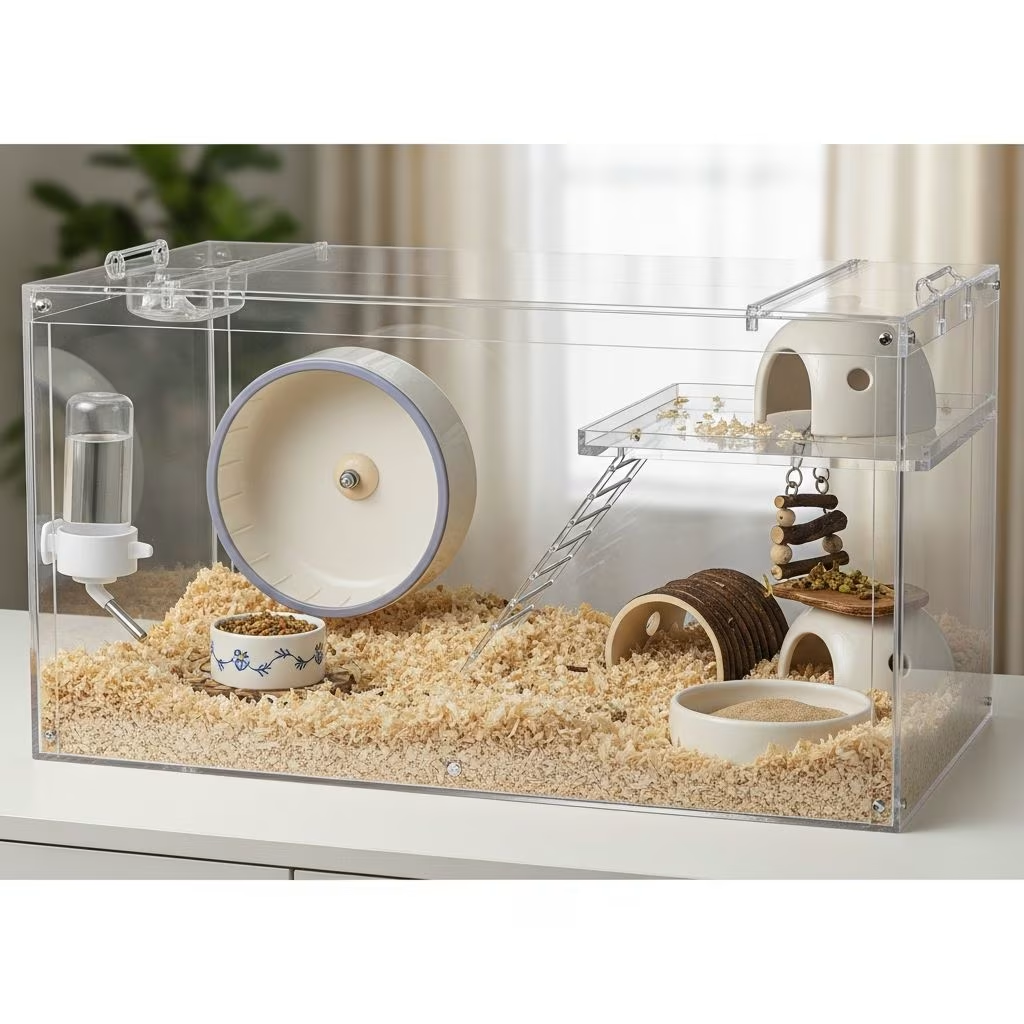
Best Hamster Cages: A Complete Guide to Choosing the Right Home for Your Pet
Selecting the right cage for your hamster is one of the most important decisions you’ll make as a pet owner. A properly sized and well-equipped cage directly impacts your hamster’s physical health, mental well-being, and overall quality of life. While hamsters are small creatures, they have surprisingly large space requirements and active lifestyles that many people underestimate. This comprehensive guide will help you understand cage sizing, types, and setup to ensure your hamster has an ideal living environment.
Understanding Hamster Space Requirements
One of the biggest misconceptions about hamsters is that they require minimal space. In reality, hamsters are highly active animals that need substantial room to express natural behaviors. In the wild, hamsters travel considerable distances nightly, running up to 9 kilometers in a single night while foraging and exploring their territory. This natural activity level must be accommodated in captivity to prevent stress, obesity, and behavioral issues.
The minimum recommended cage size varies slightly depending on the breed and the organization providing the guidelines. However, most expert sources agree that hamsters need significantly more space than what is typically marketed in pet stores. Pet shops often sell cages that are far too small, primarily because smaller enclosures are cheaper to manufacture and require less retail floor space. As a responsible hamster owner, it’s crucial to look beyond commercial marketing and follow expert recommendations.
Minimum Cage Size Requirements by Breed
Different hamster species have varying size requirements based on their body size and activity levels. Understanding these differences ensures you select an appropriately sized cage for your specific hamster breed.
Syrian Hamsters
Syrian hamsters are among the largest hamster species and require the most space. According to veterinary professionals, Syrian hamsters need a minimum of 900 square inches of unbroken floor space, which equates to approximately 40 x 22.5 inches. Some organizations recommend dimensions of at least 100 cm x 50 cm (approximately 775 square inches of floor space). The cage height should be at least 24 inches to accommodate 6-8 inches of bedding and allow the hamster to stand upright comfortably.
Dwarf Hamsters
Dwarf hamsters, including Russian, Campbell’s, and Winter White varieties, have smaller space requirements than Syrian hamsters but still need adequate room. The recommended minimum floor space for dwarf hamsters is approximately 700 square inches or 40 x 17.5 inches. However, it’s important to note that the 100 cm x 50 cm x 40 cm standard applies to all dwarf species. Many expert organizations recommend providing as much space as possible beyond these minimums, as dwarf hamsters benefit greatly from larger enclosures that allow for more enrichment and activity.
Roborovski Hamsters
Roborovski hamsters are the smallest hamster species and are incredibly active. While they technically require less space than larger breeds, they still need a minimum of 450 square inches of floor space. Due to their high activity level, providing a larger cage is always beneficial for their physical and mental health.
Chinese Hamsters
Chinese hamsters have similar space requirements to dwarf hamsters, needing a minimum of 700 square inches of unbroken floor space. The cage height should also be at least 24 inches with adequate bedding depth.
Understanding “Unbroken Floor Space”
A critical concept in hamster housing is the requirement for “unbroken floor space.” This means the entire minimum area must be one continuous floor, not divided into multiple levels or separate connected cages. If you connect two smaller cages together, the total square inches do not count toward meeting minimum requirements. Hamsters need one large, continuous space to move around, explore, and express natural behaviors. Multi-level cages may provide additional vertical space for enrichment, but they cannot replace the essential continuous floor area requirement.
Types of Hamster Cages
Several types of housing options are available for hamsters, each with unique advantages and disadvantages.
Glass Aquariums and Tanks
Glass aquariums and specialized small animal tanks are excellent housing options for hamsters. These enclosures are ideal because they allow for deep bedding (6-8 inches), which is important for burrowing and nest-building behaviors. Glass tanks also reduce the risk of hamsters escaping through wire bars and prevent bedding from being scattered around the room. The main consideration is ensuring adequate ventilation through a mesh lid. When selecting a tank, look for dimensions of at least 100 cm x 50 cm x 50 cm for optimal hamster welfare.
Bin Cages
Many hamster enthusiasts recommend large clear plastic storage bins (40-gallon breeder bins or larger) as budget-friendly housing solutions. A 40-gallon breeder bin provides approximately 600 square inches of unbroken floor space, while 75-gallon tanks offer about 930 square inches. These bins are affordable, allow for deep bedding, and prevent escape. When using bin cages, drill air holes around the sides for proper ventilation and use the interior measurements to calculate actual floor space, not manufacturer dimensions.
Commercial Hamster Cages
Purpose-built hamster cages are available from various manufacturers. However, many commercially available cages are inadequately sized. If choosing a commercial cage, ensure it meets minimum dimension requirements of 100 cm x 50 cm x 50 cm. Some premium options like the Niteangel Bigger World or Vista cages come in appropriate sizes, with the medium size providing about 780 square inches and the large size offering approximately 940 square inches of floor space.
Cage Specifications Comparison
| Cage Type | Typical Size | Floor Space | Bedding Depth | Best For |
|---|---|---|---|---|
| 40-Gallon Bin | 40 x 17.5 inches | ~600 sq in | 6-8 inches | Dwarf hamsters |
| 75-Gallon Tank | 48 x 18.5 inches | ~930 sq in | 6-8 inches | Syrian hamsters |
| 100x50x50cm Tank | 39.4 x 19.7 x 19.7 inches | 775 sq in | 6-8 inches | All breeds |
| Niteangel Vista Medium | Compact design | ~780 sq in | Varies | Dwarf hamsters |
Essential Cage Setup and Accessories
Beyond size, the quality of cage setup significantly impacts hamster welfare and happiness. A well-furnished cage provides mental stimulation, allows natural behaviors, and contributes to overall health.
Bedding
Deep bedding is crucial for hamster well-being. A minimum of 6-8 inches of bedding allows hamsters to burrow and nest, which are natural behaviors essential for psychological health. Choose aspen shavings, hemp bedding, or paper-based bedding rather than cedar or pine, which contain harmful aromatic compounds. The deep bedding layer also helps maintain humidity and temperature regulation.
Exercise Wheel
A large exercise wheel is essential for hamster health. Syrian hamsters need a wheel at least 8-10 inches in diameter, while dwarf hamsters require a minimum of 6-8 inches. Solid surface wheels are preferable to wire wheels, which can cause injury. The wheel should be checked regularly to ensure it’s functioning properly and securely attached to prevent accidents.
Hideaways and Nesting Materials
Hamsters need multiple hideaways throughout their cage to feel secure and reduce stress. These can include commercial hides, cardboard boxes, or wooden structures. Provide unscented tissue paper, aspen shavings, and other safe materials for nesting. Multiple hiding spots help hamsters feel safe and allow them to express natural denning behaviors.
Enrichment Items
Rotate toys, tunnels, and obstacles regularly to maintain mental stimulation. Chew toys keep teeth healthy, and foraging opportunities engage natural instincts. Avoid plastic items that hamsters might ingest or break into sharp pieces. Safe enrichment options include wooden chew blocks, paper-based toys, and DIY tunnels made from toilet paper tubes.
Cage Maintenance and Cleaning
Proper maintenance keeps the cage hygienic and comfortable for your hamster. Spot clean daily by removing soiled bedding, uneaten fresh food, and waste. Perform a complete cage cleaning weekly, replacing all bedding and sanitizing cage surfaces. Use pet-safe cleaning products and avoid harsh chemicals that could harm your hamster. Regular maintenance prevents respiratory issues and ensures a healthy living environment.
Common Mistakes to Avoid
Several common mistakes compromise hamster welfare and should be avoided at all costs:
Purchasing pet store cages: Most pet store cages are far too small and designed for profit margins rather than animal welfare. Always verify dimensions against expert recommendations.
Using multiple connected cages: The unbroken floor space requirement cannot be met by connecting multiple smaller cages, even if the total square inches add up.
Inadequate bedding depth: Hamsters need 6-8 inches of bedding for burrowing. Shallow bedding prevents natural behaviors and causes stress.
Overcrowding with accessories: While enrichment is important, excessive clutter reduces usable space. Balance enrichment with open areas for movement.
Ignoring ventilation: Poor ventilation in tanks or bins causes respiratory issues. Ensure proper air circulation through mesh lids or drilled holes.
Housing Multiple Hamsters
Most hamster species are solitary and territorial. If you choose to house multiple hamsters together, ensure you have significantly more space than the minimum requirement. The general rule is to increase cage space by approximately 200 square inches for each additional hamster. Even with adequate space, monitor hamsters carefully for signs of conflict, as some hamsters are incompatible despite having sufficient room. Syrian hamsters, in particular, are highly territorial and should be housed individually.
Frequently Asked Questions
Q: What’s the absolute minimum cage size for hamsters?
A: The absolute minimum is 100 cm x 50 cm x 50 cm (approximately 775 square inches of unbroken floor space) for all hamster species. However, larger cages are always better for hamster welfare and happiness.
Q: Can I use a tall cage instead of a wide one?
A: No. While height should be at least 24 inches for bedding and comfort, hamsters need wide, unbroken floor space for running and burrowing. A narrow, tall cage doesn’t meet the space requirements.
Q: Is a 20-gallon tank adequate for a hamster?
A: No. A 20-gallon tank provides only about 360 square inches of floor space, which is insufficient even for dwarf hamsters. A minimum 40-gallon breeder bin or larger is recommended.
Q: How often should I clean the hamster cage?
A: Perform spot cleaning daily and complete cage cleaning weekly. This maintains hygiene while preserving beneficial bacteria in bedding.
Q: What type of bedding is best for hamsters?
A: Aspen shavings, hemp bedding, and paper-based bedding are safe options. Avoid cedar and pine, which contain harmful oils. Use a depth of 6-8 inches to allow burrowing.
Q: Do hamsters need a wheel?
A: Yes. An exercise wheel is essential for hamster health and activity. Choose solid surface wheels at least 8-10 inches in diameter for Syrian hamsters and 6-8 inches for dwarf hamsters.
Q: Can Syrian and dwarf hamsters live together?
A: No. Syrian hamsters are solitary and highly territorial. Dwarf hamsters may sometimes cohabitate if raised together from a young age, but this requires careful monitoring and ample space. Individual housing is safest.
Q: What’s the difference between cage floor space and total volume?
A: Floor space refers to the length × width (measured in square inches or centimeters). Total volume includes height. While height is important for bedding depth, the continuous floor space is what allows hamsters to move and burrow naturally.
References
- Hamster Welfare: Cage Advice and Evidence — Hamster Welfare Organization. Accessed November 2025. https://www.hamsterwelfare.com/cage-advice-and-evidence/
- Hamster Cage Sizes and Specifications — PetMD, by Dr. Teresa Manucy, DVM. Accessed November 2025. https://www.petmd.com/exotic/care/hamster-cages
- Hamster Cage — Wikipedia. Accessed November 2025. https://en.wikipedia.org/wiki/Hamster_cage
- Hamster Care and Housing Guide — Blue Cross UK. Accessed November 2025. https://www.bluecross.org.uk/advice/hamster/hamster-care
- Choose the Right Cage for Your Hamster — Tafit Pet. Accessed November 2025. https://www.tafitpet.com/blogs/news/choose-the-right-cage-for-your-hamster
- Hamster Enclosures — Rachel Got Hamsters. Accessed November 2025. https://www.rachelgothamsters.com/hamster-enclosures



