

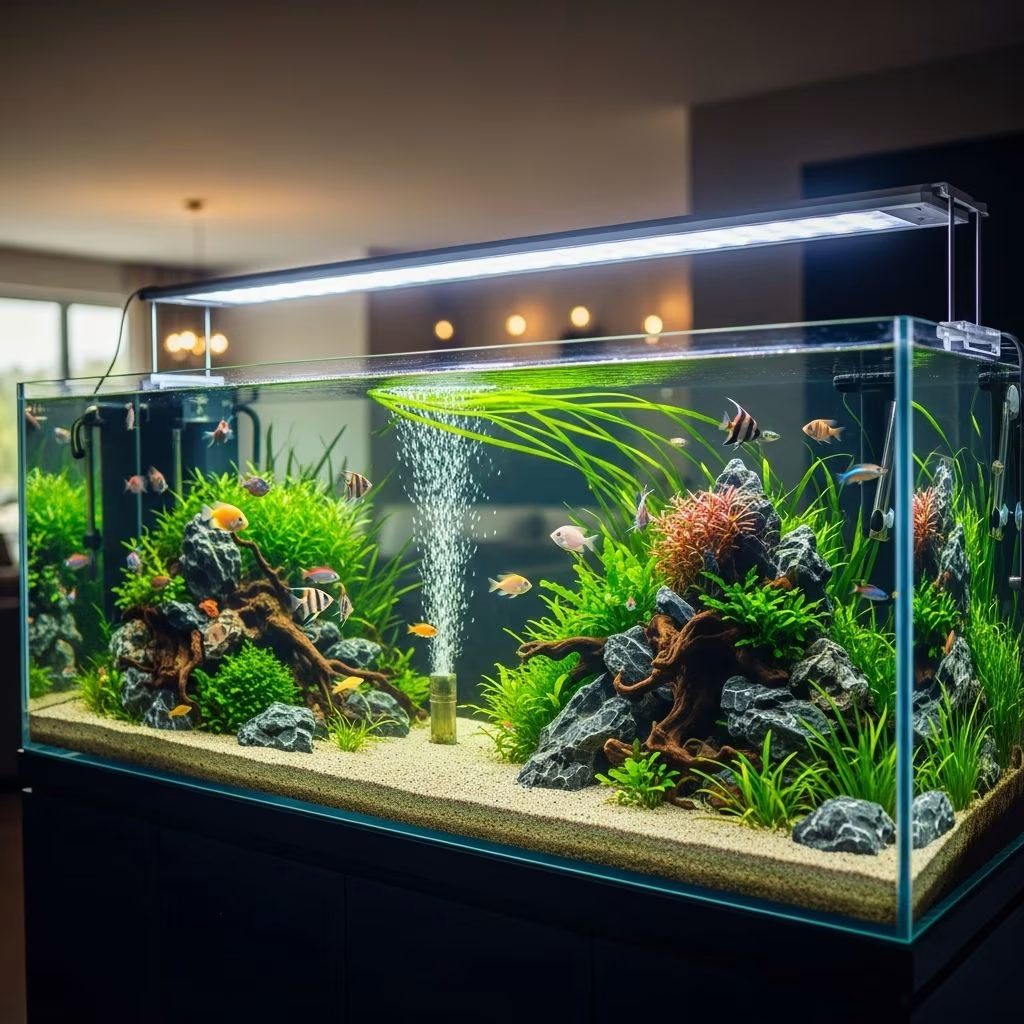
Best Fish Tanks: A Complete Guide to Choosing the Right Aquarium
Selecting the right fish tank is one of the most important decisions you’ll make as an aquarium hobbyist. Whether you’re a beginner or an experienced aquarist, understanding the different tank sizes, dimensions, and their suitable applications will help you create a thriving environment for your aquatic pets. This comprehensive guide covers everything you need to know about choosing the best fish tank for your needs.
Understanding Standard Aquarium Sizes
The aquarium hobby has evolved with several standard tank sizes that have become incredibly popular over the years. These sizes exist partly due to efficiency in manufacturing and shipping, and partly because their dimensions work exceptionally well for many common setups. Knowing these standard sizes helps you visualize what might fit your space and understand the capabilities of each tank.
The 5-Gallon Tank
The 5-gallon tank represents one of the smallest options available for aquarium keeping. With typical dimensions of 16 inches by 8 inches by 10 inches, these compact tanks are ideal for single betta fish or small invertebrates. While bettas can technically survive in smaller containers, a 5-gallon tank provides adequate space for them to thrive and display natural behaviors. These tanks are perfect for desktop setups or small living spaces but require careful attention to water quality due to their limited volume.
The 10-Gallon Tank
Often considered a starter tank, the 10-gallon aquarium typically measures 20 inches long by 10 inches wide by 12 inches high. This size is excellent for a single betta or a few nano fish species. The 10-gallon tank offers more stability than smaller options while remaining compact and affordable. Many beginners start with this size before upgrading to larger systems. However, it’s important to remember that the limited footprint restricts stocking options compared to larger tanks.
The 20-Gallon Tank Variants
The 20-gallon size comes in two popular configurations, each with distinct advantages:
20-Gallon High: This variant measures approximately 24 inches long by 12 inches wide by 16 inches high. The taller profile provides increased vertical space, making it suitable for aquatic plants and fish that appreciate height. The 20-gallon high is a popular upgrade from a 10-gallon tank and works well for beginner community setups.
20-Gallon Long: With nearly identical volume to the high variant, the 20-gallon long measures about 30 inches long by 12 inches wide by 12 inches high. This configuration offers more swimming length, making it ideal for fish species that are active swimmers and benefit from horizontal space rather than vertical space.
The 29-Gallon Tank
Measuring approximately 30 inches long by 12 inches wide by 18 inches high, the 29-gallon tank represents one of the most excellent all-around options for beginners and intermediate aquarists. This size provides a good balance between manageability and capacity, offering room for schooling fish and aquatic decorations. The 29-gallon is the minimum tank size recommended for many medium-sized freshwater fish species, including goldfish and angelfish, making it an incredibly versatile choice.
The 40-Gallon Breeder Tank
The 40-gallon breeder tank deserves special attention due to its fantastic dimensions. At approximately 36 inches long by 18 inches wide by 16 inches high, this tank offers an excellent footprint and floor space. The large surface area makes it prized for territorial fish and advanced aquascaping projects. Despite having the same gallon capacity as other 40-gallon options, the breeder configuration’s floor space provides superior functionality for most applications.
Larger Aquarium Sizes
55-Gallon Tank: A classic large tank option, the 55-gallon typically measures 48 inches long by 13 inches wide by 21 inches high. This relatively narrow but long configuration is excellent for active swimmers and offers stable water conditions with flexible stocking options.
75-Gallon Tank: The 75-gallon aquarium usually measures 48 inches long by 18 inches wide by 21 inches high. Offering more width than the 55-gallon, it provides a better footprint and more floor space for aquascaping. This size is excellent for large species, reef tanks, and extensive setups while maintaining relatively low stress for fish through stable water conditions.
125-Gallon Tank and Beyond: Typically measuring 72 inches long by 18 inches wide by 22 inches high, the 125-gallon represents a common entry into the very large category. While not typical for beginners, these tanks accommodate truly large fish species and specialized setups.
Why Gallons Aren’t Everything: The Importance of Tank Dimensions
One of the most critical lessons in aquarium keeping is understanding that the shape of the tank matters just as much as, if not more than, the total gallons it holds. Consider this: a 40-gallon breeder tank with its generous footprint provides dramatically more floor space than a hypothetical 40-gallon tall tank that might measure only 24 inches long by 12 inches wide but much higher. Fish primarily swim horizontally, not vertically, making floor space and length more important than height for most species.
Tank dimensions affect several important factors:
Surface Area: Larger surface area means better oxygen exchange with the atmosphere, supporting more fish and benefiting their overall health.
Swimming Space: Active species require horizontal length to swim naturally, while tall tanks waste space vertically where most fish don’t utilize.
Aquascaping Possibilities: Wider tanks allow for more creative aquascaping and natural-looking layouts.
Territory Requirements: Territorial fish need adequate floor space to establish and maintain territories.
Choosing the Right Tank Size for Your Fish
Different fish species have dramatically different tank requirements, and selecting an appropriately sized tank is crucial for their health and longevity.
Betta Fish
While betta fish might survive in tiny cups, they thrive much better in properly sized environments. A minimum of a 5-gallon tank is recommended for bettas, though many experienced keepers suggest 10 gallons or more provides superior conditions. Larger tanks allow bettas to display more natural behaviors and reduce stress.
Small Freshwater Fish
Small fish species like guppies and tetras work well in 10 to 20-gallon tanks. These fish should generally measure between ½ inch and 2 inches at most. Many hobbyists dream of schools swimming throughout decorations, but small tanks don’t lend themselves well to schools of numerous fish. Instead, focus on smaller groups with adequate space.
Fancy Goldfish
Fancy goldfish represent one of the oldest and most popular aquarium fish, available in many different varieties. The minimum starting point for goldfish is 20 gallons, with many experienced keepers recommending 30 gallons or more, plus significant extra volume for each additional goldfish. A 29-gallon aquarium would be a good home for 3-4 fancy Ryukin or Oranda varieties. The more room they have, the longer and more luxuriant their fins will be.
Common goldfish, which look like typical carp, get even larger and ideally belong in ponds or truly large aquarium setups of 75+ gallons.
Plecos and Bottom Dwellers
Choosing the right pleco species is important for tank size. The common pleco or Florida pleco will get too large for tanks smaller than 125 gallons and should not be kept in standard home aquariums. A much better choice is the Bristlenose pleco, which maintains a small size and is an excellent algae eater. The Florida pleco does well in very large tanks as an all-around scavenger. Giraffe catfish, a large species reaching up to 24 inches, is a peaceful option suitable for big aquariums of at least 180 gallons.
Cichlids
Cichlids generally dominate aquariums in the 55 to 120-gallon range. While dwarf cichlid species work well in smaller tanks, most cichlids require significant space. Graceful angelfish, colorful mbuna, and large and belligerent Central American cichlids like Oscars, severums, Jack Dempseys, and flower horns all do well in these larger aquariums. These fish are territorial and need adequate space to establish and maintain territories without constant conflict.
Tank Comparison Chart
| Tank Size (Gallons) | Typical Dimensions (L x W x H) | Best For | Pros | Cons |
|---|---|---|---|---|
| 5 | 16″ x 8″ x 10″ | Single betta or inverts | Affordable, compact | Limited stocking, frequent maintenance |
| 10 | 20″ x 10″ x 12″ | Starter tanks, nano fish | Affordable, beginner-friendly | Limited space for communities |
| 20 High | 24″ x 12″ x 16″ | Tropical fish, plants | Good vertical space | Limited swimming length |
| 20 Long | 30″ x 12″ x 12″ | Active swimmers | More swimming length | Limited height for plants |
| 29 | 30″ x 12″ x 18″ | Medium community, goldfish | Excellent all-around size | Intermediate setup complexity |
| 40 Breeder | 36″ x 18″ x 16″ | Territorial fish, aquascaping | Excellent footprint | More expensive than other 40-gal options |
| 55 | 48″ x 13″ x 21″ | Active swimmers, cichlids | Stable conditions, flexible stocking | Narrow for aquascaping |
| 75 | 48″ x 18″ x 21″ | Large species, reef tanks | Wide footprint, excellent for scaping | Requires significant space |
| 125+ | 72″ x 18″ x 22″ | Large specialized setups | Very stable, versatile | Expensive, space-intensive, complex |
Key Considerations When Selecting a Fish Tank
Available Space: Measure your intended location carefully. Remember that tanks need space around them for maintenance access, equipment, and furniture stability.
Fish Species Selection: Always choose your fish first, then select an appropriately sized tank. This ensures you’re not compromising fish welfare for tank aesthetics.
Stability: Larger tanks maintain more stable water conditions than smaller tanks. This is one of the primary advantages of upgrading to bigger systems.
Maintenance Requirements: Smaller tanks require more frequent water changes and maintenance due to faster waste accumulation. Larger tanks offer more buffer against water chemistry changes.
Tank Material: Glass tanks are excellent for beginners, offering durability and excellent visibility. Acrylic tanks are lighter but more prone to scratching.
Filtration Capacity: Ensure your filtration system is rated for your tank’s volume. Oversizing filtration is always better than undersizing.
Frequently Asked Questions
Q: What is the minimum tank size for a betta fish?
A: While bettas can survive in smaller containers, a minimum 5-gallon tank is recommended. Many experienced aquarists suggest 10+ gallons provides better conditions for these fish to thrive and display natural behaviors.
Q: Can I keep goldfish in a 20-gallon tank?
A: While a 20-gallon tank is technically large enough for one goldfish temporarily, a 29-gallon minimum is recommended, with 30+ gallons preferred. Goldfish produce significant waste and benefit from more space. Fancy varieties need 20-30 gallons for the first fish, plus 10-20 gallons per additional fish.
Q: What’s the difference between a 20-gallon high and 20-gallon long?
A: A 20-gallon high tank (24″ x 12″ x 16″) prioritizes vertical space, making it better for plants and fish that appreciate height. A 20-gallon long (30″ x 12″ x 12″) emphasizes horizontal swimming space, ideal for active swimmers. Both hold the same volume but serve different purposes.
Q: Is a 40-gallon breeder tank worth the extra cost?
A: Yes, the 40-gallon breeder tank’s larger footprint (36″ x 18″) provides significantly more usable space than other 40-gallon configurations. This extra floor space supports better territorial behaviors, superior aquascaping options, and more flexible stocking choices, making it an excellent investment for serious aquarists.
Q: How do I know if my tank is large enough for cichlids?
A: Most cichlids require 55+ gallons due to their territorial nature and adult size. Research your specific cichlid species for exact requirements. Dwarf cichlids may work in smaller tanks, but larger varieties need 75+ gallons to thrive without excessive aggression.
Q: What are the advantages of larger tanks?
A: Larger tanks provide more stable water conditions, require less frequent maintenance, allow for more creative aquascaping, support a greater diversity of fish species, and create healthier environments overall. They also provide better buffering against water chemistry fluctuations.
Q: Can tank dimensions really matter more than total gallons?
A: Absolutely. Fish primarily swim horizontally, so a tank with greater length and floor space is often more beneficial than a tall tank of the same volume. Surface area is also crucial for oxygen exchange, making wide, shallow tanks superior to narrow, tall ones in many cases.
Conclusion
Selecting the best fish tank requires balancing several factors including available space, desired fish species, maintenance commitment, and budget. Understanding standard tank sizes and their dimensions helps you make informed decisions that support healthy, thriving aquatic environments. Remember that larger tanks are generally easier to maintain and support more stable conditions, but even smaller tanks can successfully house appropriate fish species when properly maintained. Start with research on your desired fish species, measure your available space carefully, and invest in appropriate filtration and equipment. Whether you’re starting with a 5-gallon betta tank or upgrading to a 125-gallon cichlid setup, choosing the right tank is the foundation for a successful aquarium hobby.
References
- Aquarium Sizes Demystified: Choosing Fish Tank Size & Dimensions — Bubble Magus. 2024. https://bubble-magus.net/blogs/fish-tank-mastery/aquarium-sizes-demystified-choosing-fish-tank-size-dimensions
- Best Beginner Fish by Tank Size — Aqueon. 2024. https://www.aqueon.com/articles/best-beginner-fish-by-tank-size
- How to Choose The Perfect Aquarium Size — AQQA Pet. 2024. https://www.aqqapet.com/how-to-choose-the-perfect-aquarium-size/



