

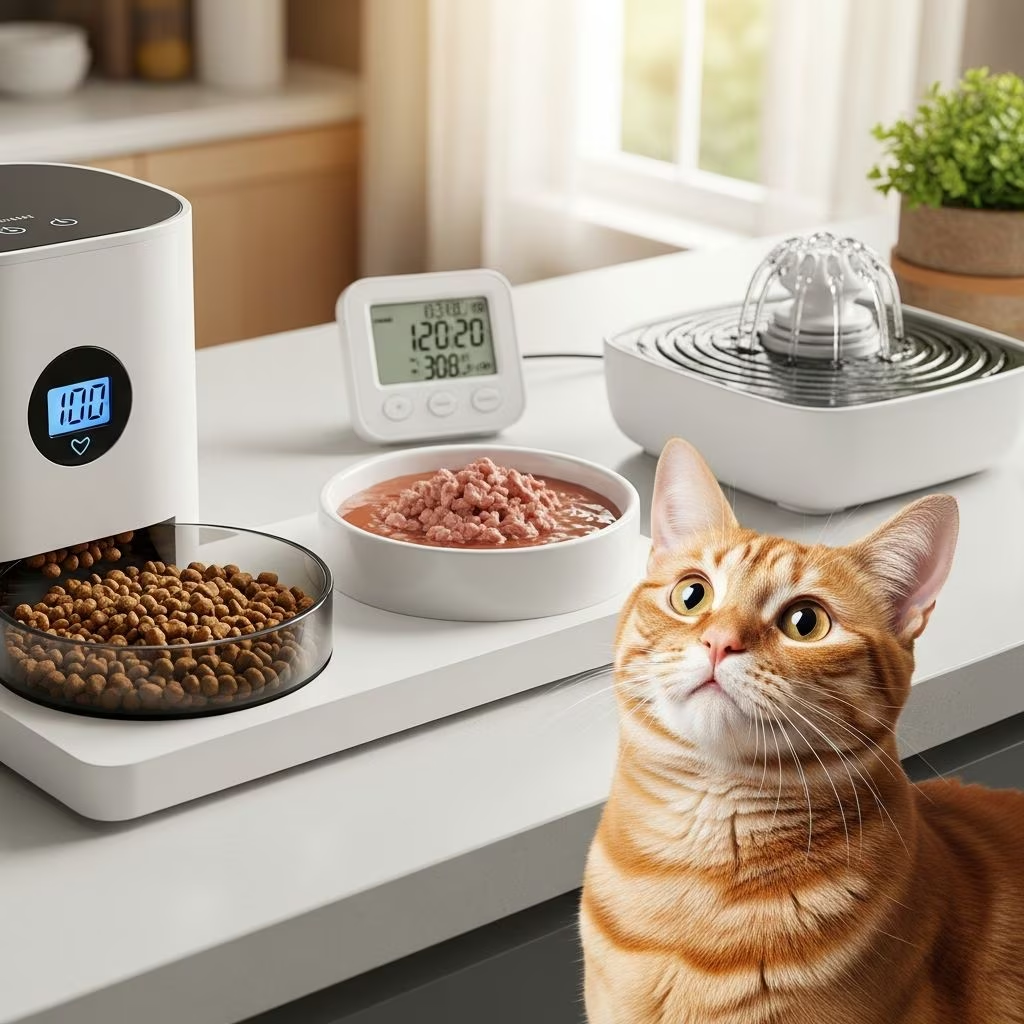
Establishing the right feeding schedule is essential for your cat’s health, weight management, and overall well-being. Cats are obligate carnivores with natural hunting instincts that favor multiple small meals throughout the day, rather than one large feast. The optimal schedule mimics this pattern while fitting into your lifestyle, typically involving **two to three meals per day spaced 8-12 hours apart** for adult cats. This approach helps prevent obesity, supports digestion, and maintains steady energy levels.
Free-feeding—leaving food out all day—may seem convenient but often leads to overeating, especially with dry kibble. Instead, measured meals at consistent times promote better portion control and reduce begging behaviors. Factors like age, activity level, health conditions, and food type (wet vs. dry) all influence the best routine. Always consult your veterinarian for personalized advice, particularly if your cat has special needs.
How Often Should You Feed Your Cat?
The ideal frequency depends on your cat’s life stage and individual needs. Adult cats generally thrive on **two meals per day**, such as morning and evening, aligning with typical human schedules. However, **three smaller meals** can better replicate wild hunting patterns, distributing calories evenly and aiding metabolic health.
Veterinary experts recommend avoiding free-feeding for most cats, as it increases obesity risk— a common issue affecting up to 60% of indoor cats. Scheduled meals allow precise calorie control: typically 20-30 calories per pound of body weight daily, divided across feedings. For example, a 10-pound cat needs about 200-250 calories, split into two 100-125 calorie meals or three 65-85 calorie portions.
- Twice daily: Best for busy owners; e.g., 7 AM and 7 PM.
- Three times daily: Ideal for active cats or those prone to begging; e.g., 7 AM, 2 PM, 7 PM.
- Portion tips: Use a measuring cup; adjust based on weight monitoring weekly.
What Is the Ideal Feeding Schedule for Cats?
The perfect schedule balances your cat’s biology with practicality. Cats in the wild hunt 8-12 times daily but consume small amounts each time. Domesticated cats benefit from **2-3 measured meals**, preventing blood sugar spikes and supporting kidney health—crucial as chronic kidney disease affects 30-40% of seniors.
Key principles include consistency, play before meals to simulate hunting, and separating food from litter boxes/water. Wet food should not sit out longer than 1-2 hours to avoid spoilage, while dry food can be portioned into puzzle feeders for mental stimulation. A sample daily routine:
| Time | Activity | Benefits |
|---|---|---|
| 7 AM | Play session + Breakfast | Kickstarts metabolism, satisfies hunt instinct |
| 12 PM (optional) | Midday snack | Maintains energy, prevents overeating later |
| 5-7 PM | Dinner | Promotes digestion before bedtime |
Transition gradually: Shift times by 15 minutes daily over a week to minimize stress.
What Are the Recommended Feeding Times for Adult Cats?
For healthy adult cats (1-7 years), **morning around 7 AM and evening around 5-7 PM** works best, spacing meals 10-12 hours apart. This aligns with circadian rhythms, providing energy post-sleep and winding down digestion overnight.
Morning meals boost activity, while evening ones prevent nocturnal hunger pangs that lead to 4 AM wake-ups. Studies show scheduled feeding reduces diabetes risk by stabilizing insulin.
Twice a Day: Morning and Evening
Most vets endorse **two meals** for simplicity and efficacy. Benefits include predictable routines that reduce anxiety and overeating.
Morning Around 7 AM
A **7 AM meal** fuels the day, mimicking dawn hunts when cats are crepuscular (active at dawn/dusk).
Evening Around 5 PM
**5 PM dinner** supports overnight fasting (12-14 hours), aiding gut health and weight control.
| Feeding Time | Purpose & Benefits |
|---|---|
| Morning ~7 AM | Kickstarts metabolism, aligns with natural patterns, day-long energy |
| Evening ~5 PM | Digestion support, routine stability, obesity prevention |
How Does a Cat’s Age Affect Their Feeding Schedule?
Age dictates frequency and portions, as energy needs evolve. Kittens grow rapidly, adults stabilize, and seniors slow down.
| Age Group | Feeding Frequency | Notes |
|---|---|---|
| Kittens (0-6 months) | 3-4 times/day | High growth; small stomachs; wean to solids gradually |
| Juvenile (6-12 months) | 2-3 times/day | Transition phase; monitor for overeating |
| Adult (1-7 years) | 2 times/day | Stable energy; focus on weight maintenance |
| Senior (7+ years) | 2-3 times/day, adjusted | Smaller portions; vet for kidney/thyroid issues |
Kittens: 3 to 4 Times a Day
Weaning kittens (4-8 weeks) eat every 4-6 hours, up to **3-4 meals** by 6 months. This fuels 2-3x adult calorie needs (55 kcal/lb body weight). After weaning, no free-feeding post-3 months.
Adults: Twice a Day
Post-growth, **two meals suffice**, with calories at 20 kcal/lb ideal weight.
Seniors: Adjusted Schedule
Seniors may need **smaller, frequent meals** for dental issues or nausea. High-protein, low-phosphorus formulas help kidneys.
How to Transition Your Cat to a New Feeding Schedule
Sudden changes cause stress; **adjust over 7-10 days**. Example: Move dinner from 6 PM to 5 PM by 10 minutes daily. Combine with play: 10-minute hunt simulation before eating reinforces satisfaction.
- Day 1-2: Shift 10 min earlier
- Day 3-5: Add play/pre-meal routine
- Monitor weight/appetite; consult vet if refusal persists
Additional Tips for Success
- Portion control: Weigh food; use apps for calorie tracking.
- Food type: Mix wet/dry for hydration; warm wet food to body temp.
- Multi-cat homes: Feed separately to prevent bullying.
- Health monitoring: Monthly weigh-ins; adjust for sterilization (25% calorie reduction).
Incorporate enrichment: Puzzle feeders extend meals, reducing boredom eating.
Frequently Asked Questions (FAQs)
Q: Can I free-feed my cat?
A: Not recommended for most; leads to obesity. Use for thin, active cats only, with measured daily amounts.
Q: How much should I feed my adult cat?
A: 20-30 kcal per lb body weight, split into meals. E.g., 8-10 oz canned or 1/2-3/4 cup dry daily for 10 lb cat.
Q: What if my cat begs between meals?
A: Increase to 3 meals or add low-cal treats (under 10% calories). Rule out medical issues.
Q: When to feed kittens vs. adults?
A: Kittens 3-4x/day until 6 months; adults 2x/day thereafter.
Q: Best times for working owners?
A: 7 AM breakfast, auto-feeder at 5 PM dinner, or 3 meals with midday feeder.
References
- A Simple Guide To Cat Feeding Times — Cathy’s Critter Care. 2023. https://cathyscrittercare.com/a-simple-guide-to-cat-feeding-times/
- What Is the Best Feeding Schedule for Cats? — Kinship. 2024. https://www.kinship.com/cat-nutrition/best-feeding-schedule-cats
- New Cat Feeding Schedule — Adopt a Pet. 2024. https://www.adoptapet.com/blog/health/cat-feeding-schedule
- Feeding Times and Frequency for Your Cat — VCA Animal Hospitals. 2024-10-01. https://vcahospitals.com/know-your-pet/feeding-times-and-frequency-for-cats



