

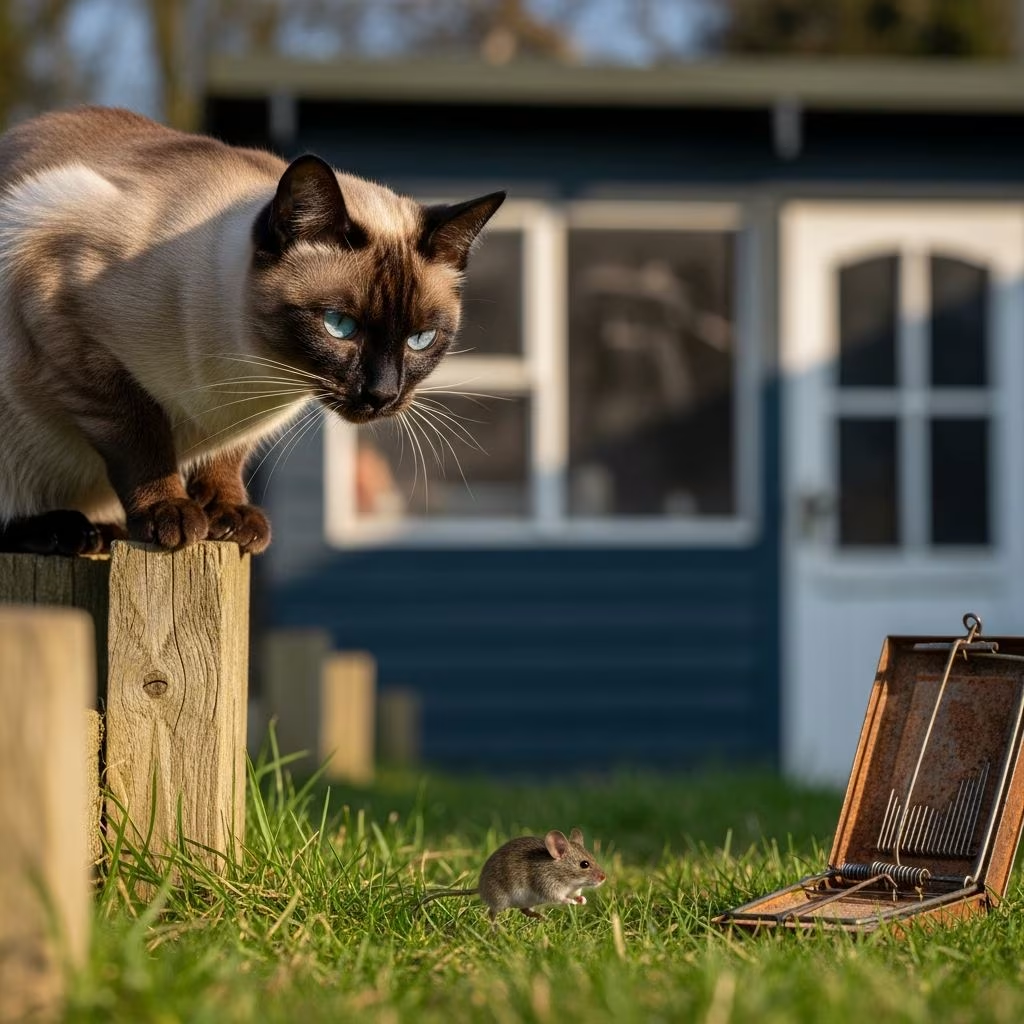
Best Cat Breeds for Pest Control
Looking to add a skilled mouser to your home or family store? While all cats possess some predatory tendencies, these natural hunting abilities can be significantly stronger in certain breeds than in others, often reflected in their style of play and rooted in their historical role controlling pests as well as their genetics. Understanding which breeds excel at pest control can help you choose the perfect feline companion for your needs.
Understanding Feline Hunting Instincts
All cats have inherited predatory instincts from their wild ancestors, but the intensity and effectiveness of these instincts vary considerably among different breeds. Some breeds were specifically developed and selected over centuries for their exceptional ability to catch and eliminate rodents, while others may have evolved these traits incidentally. The hunting prowess of a cat depends on several factors, including physical attributes, temperament, intelligence, and historical purpose.
Interestingly, gender plays a role in mousing ability as well. Female cats tend to be better mousers than their male counterparts across most breeds, demonstrating superior hunting instincts and catching ability. This difference has been well-documented among cat breeders and experts who evaluate feline pest control capabilities.
Maine Coon
The Maine Coon stands as one of the most renowned cat breeds for pest control capabilities. Another breed that has inhabited the country for centuries, the Maine Coon has been held in high regard for its abilities as a mouser since the colonial period in its home state. These impressive cats were professionally used for catching mice on docks and ships, establishing their reputation as exceptional rodent hunters.
One of the largest domestic cat breeds, the Maine Coon is also recognized by its long, water-resistant coat, strong build, and broad chest. Some believe the breed was brought to the Northeast on ships where they were used to control pests and developed weatherproof coats and hardy bodies to survive harsh winters along the coast. With the ability to weigh up to 20 pounds, Maine Coons possess the physical strength and agility necessary to pursue and capture even the most elusive rodents.
Their large, muscular frame combined with sharp claws and teeth makes them effective hunting machines. The Maine Coon has a strong natural hunting instinct and the ability to catch prey quickly, making them an excellent choice for homes or commercial spaces dealing with rodent problems.
Siamese
The Siamese cat is another exceptional household hunter and top choice for pest control. While perhaps not the first breed that comes to mind when considering mousers, the Siamese cat possesses a strong prey drive and is extremely agile. Their slender bodies and sharp reflexes allow them to quickly pursue and catch mice, making them an excellent choice for rodent control.
Siamese cats are among the fastest felines when it comes to catching mice, capable of rapid acceleration and precise movements. These cats are extremely popular as pets because of their unique, distinctive appearance and vocal nature. While Siamese cats can become lazy and enjoy napping, they can be very active when hunting prey. Their strong and muscular bodies make them ideal for following, trapping, and catching mice.
An outgoing, social breed, expect your Siamese to communicate with everyone in the home and be involved in everything you’re doing. The Siamese cat was the first choice for the royal family in Thailand, and this cat breed has long been regarded as a favorite for hunting down rats, mice, and other rodents. The breed is known for their mouse hunting prowess across the globe and possesses excellent hunting instincts for locating and ridding homes of pests.
Siberian
Another breed that developed a long, heavy coat to withstand harsh climates, the Siberian is a relatively new breed to the United States but has made its home in Siberia, Russia, and European countries for far longer. A powerful, strong breed, Siberians can weigh well over 20 pounds, with the males generally being larger than the females.
The Siberian is known for being affectionate, intelligent, and despite its size, very agile. Native to Russia, Siberians are strong and powerful cats that were popular on local farms to keep the rodent population under control. Since they lived in such a cold climate, they developed a thick, heavy coat that keeps them insulated against extreme weather, with fur even inside their ears.
Siberian cats are wonderful at dealing with mice and rats. With their larger size, they can easily take care of big rodents. These cats are known for being very alert and playful, coupled with a sweet expression that their owners find irresistible. They have an even temperament and get along well with children and other pets in the family, making them excellent multi-purpose companions for households seeking pest control.
Chartreux
With broad shoulders, a deep chest, and a muscular body, the Chartreux was immortalized in French literature for being a fine mouser and has lived up to its reputation throughout history. The Chartreux breed hails from France and can be easily identified by their distinctive wooly, blue-colored coat. These cats are particularly good at catching mice because of their powerful broad shoulders, excellent climbing ability, and fast reflexes.
Agile and energetic, the Chartreux is a born hunter and loves a good game of fetch. Good-tempered, loyal, and quiet, the breed makes an excellent and intelligent companion. The Chartreux breed lived with monks, where they protected the grain used to make Charteuse liqueur from neighborhood rodents. They are also very intelligent and possess a natural hunting instinct that makes them effective pest controllers.
These cats are agile, muscular, and very fast, which makes them perfect for catching mice and other fast-moving rodents. The Chartreux enjoys playing games and interacting with their owners, but they also have a more serious side, especially when it comes to hunting rodents.
Japanese Bobtail
Originally brought to Japan from Korea to act as ratters in silk factories, Japanese Bobtails make excellent mousers and rat-catchers. One of the most ancient cat breeds, the Japanese Bobtail is still considered sacred in its native country and makes an affectionate, friendly companion. Most enjoy the company of both children and adults and have been known to play in the water from time to time.
Their name is somewhat deceiving, as Japanese Bobtails originally came from Korea. They were bred specifically as hunting cats, helping silk factories keep the mouse population at bay. When the breed made its stateside debut, it gave up its seafaring ways and became a favorite among farmers who needed help keeping rodents and other pests away from their valuable crops. These cats were even professionally used for catching mice on various vessels and farms throughout history.
Persian
Because cats generally have hunting instincts, even breeds you wouldn’t think to be good mousers have been known to catch mice, including the Persian. A popular breed from the very first cat shows in the 1800s, Persians have been called “furniture with fur” but should not be underestimated in their hunting capabilities.
This intelligent breed loves to play but may lack the amount of curiosity other cats possess. However, Persians are known for their higher-than-average intelligence, and the females of the breed are particularly gifted when it comes to catching mice. While they may not be the most obvious choice for pest control, Persians demonstrate that hunting ability can surprise even experienced cat owners and should not be overlooked based on breed stereotypes.
Other Notable Hunting Breeds
Beyond the primary breeds discussed, several other cat breeds deserve mention for their pest control abilities. The Norwegian Forest Cat shares similar characteristics with the Maine Coon and Siberian, featuring a thick coat and excellent hunting instincts developed in harsh Scandinavian climates. The Manx cat breed originates from a region located between England and Ireland known as the Isle of Man and used to sail on sea vessels where they would take care of any mice infestations.
The Burmese cat is another notable hunter, and more than most other breeds, Burmese cats have a habit of thinking with their stomach, making them motivated hunters. These cats also possess strong predatory instincts and are effective at rodent control when given the opportunity.
Factors That Enhance Hunting Ability
Several characteristics contribute to a cat breed’s effectiveness as a mouser. Physical attributes such as size, muscular build, sharp claws, and powerful teeth are essential for capturing and subduing rodents. Behavioral traits including alertness, agility, quick reflexes, and strong prey drive determine how successfully a cat can locate, pursue, and capture moving targets.
Intelligence also plays a significant role, as smart cats can learn hunting techniques, understand rodent behavior, and adapt their strategies accordingly. Additionally, a cat’s historical purpose and selective breeding for specific traits have shaped their current hunting capabilities. Breeds developed for pest control over many generations naturally excel in this role.
Choosing the Right Breed for Your Needs
When selecting a cat breed for pest control purposes, consider your living situation, climate, and lifestyle. Larger breeds like Maine Coons and Siberians require more space and may need more exercise, while smaller, more agile breeds like Siamese cats can thrive in apartments while still maintaining their hunting prowess. Consider the climate you live in, as some breeds with thick coats are better suited to cold environments.
Think about your family situation as well. Many of these breeds are excellent with children and other pets, making them suitable for family homes. The personality of the breed matters too – some are more vocal and social, while others are quieter and more independent. Your personal preferences regarding cat temperament and interaction level should factor into your decision.
Frequently Asked Questions
Q: Are all cats capable of catching mice?
A: While all cats have some predatory instincts, not all cats are equally effective at catching mice. Some breeds have been specifically developed for hunting and possess stronger prey drives, better physical attributes, and superior hunting instincts compared to others.
Q: Do female cats make better mousers than males?
A: Yes, in most breeds, female cats tend to be better mousers than males. Female cats often demonstrate stronger hunting instincts and catching abilities, making them preferable choices for pest control purposes.
Q: Which cat breed is the best for pest control?
A: The Maine Coon is widely recognized as one of the best cat breeds for pest control. These cats were historically used on ships and docks for rodent control and possess exceptional hunting abilities combined with large, muscular builds that make them effective hunters.
Q: Can Siamese cats catch mice effectively?
A: Yes, despite not being the first breed people think of for mousing, Siamese cats are excellent hunters. They possess strong prey drives, are extremely agile, and are among the fastest felines when it comes to catching mice.
Q: Are larger cat breeds better at catching mice?
A: While larger size can be an advantage, it’s not the only determining factor. Both large breeds like Maine Coons and medium-sized, agile breeds like Siamese cats excel at pest control. Success depends on a combination of physical attributes, hunting instinct, and prey drive.
Q: Can Persian cats catch mice?
A: Yes, Persian cats can catch mice despite their reputation as lap cats. They possess hunting instincts and intelligence, with females of the breed being particularly skilled at mousing, though they may be less obvious choices than other specialized hunting breeds.
Q: What makes a cat breed good at catching mice?
A: Several factors contribute to a breed’s mousing ability, including physical strength and agility, sharp claws and teeth, strong prey drive, intelligence, alertness, quick reflexes, and historical breeding for pest control purposes.
References
- Best Cat Breeds for Pest Control — Chewy. 2024. https://www.chewy.com/education/cat/general/behavior-breeds-best-cat-breeds-for-pest-control
- Best Cats For Mice: Top 7 Hunting Breeds, According To Feline Experts — StudyFinds. 2024. https://studyfinds.org/best-cats-for-mice/
- Which cat hunts mice best? A comprehensive guide — Flappie Doors. 2024. https://flappiedoors.com/en/blogs/jagdverhalten/welche-katze-jagt-am-besten-maeuse
- Top Cat Breeds for Catching Mice — Victor Pest. 2024. https://www.victorpest.com/articles/top-cat-breeds-for-catching-mice



