

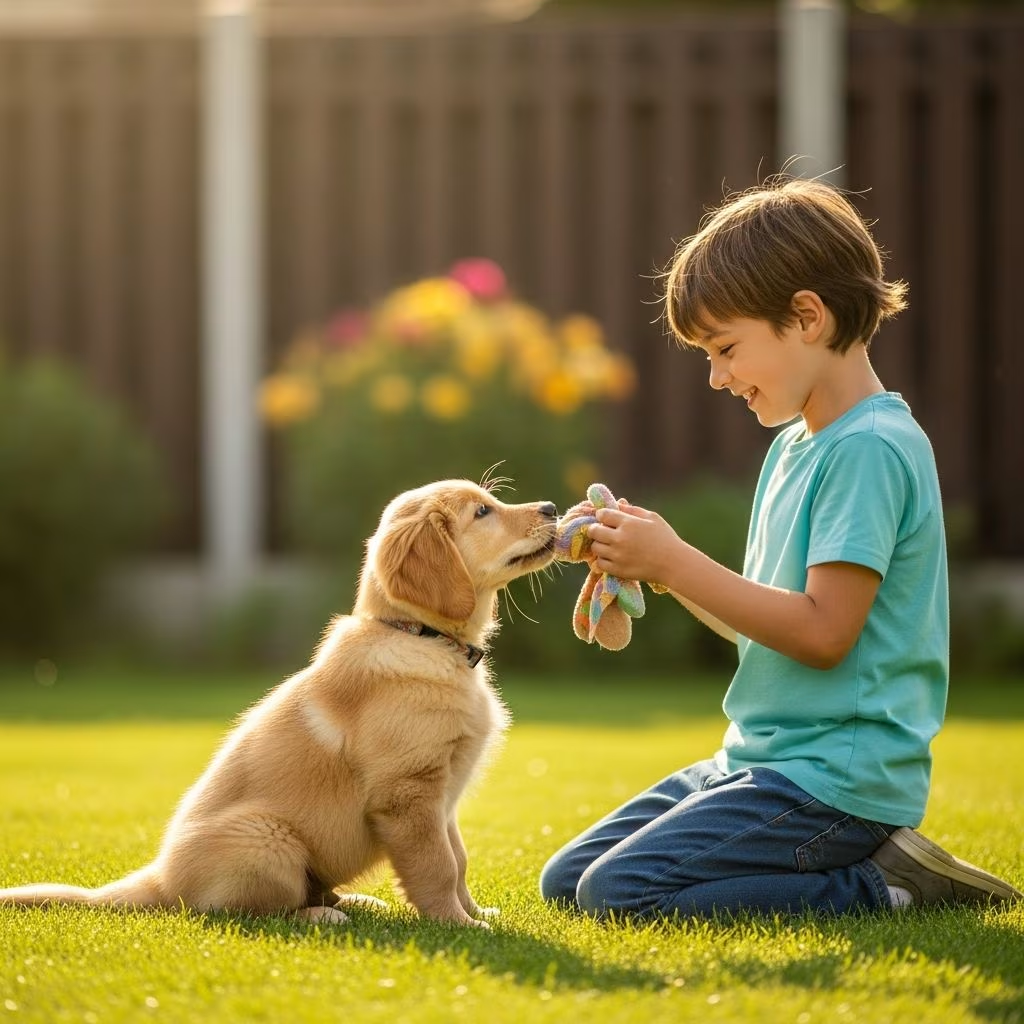
Determining the right time to bring a dog into a family with children involves evaluating developmental milestones, safety factors, and long-term responsibilities. While no universal age fits every household, research and expert insights point to school-age children, particularly around 7-12 years, as an optimal window where kids can engage meaningfully while parents manage core duties.
Understanding Child Development and Pet Interactions
Children’s ability to interact safely and responsibly with dogs evolves with age. Infants and toddlers lack impulse control, making unsupervised contact risky. As kids grow, cognitive and emotional skills improve, enabling better pet stewardship.
- Key developmental shifts occur around ages 4, 7, and 8-12, influencing readiness for pet ownership.
- Younger children require constant oversight to prevent accidental harm to the dog or themselves.
- Older kids develop empathy and routine adherence, fostering positive bonds.
Early Years: Toddlers and Preschoolers (Ages 0-4)
For families with very young children, introducing a dog demands caution. Children under 4 often grab, poke, or climb on animals without recognizing boundaries, which can provoke defensive reactions from even gentle dogs.
At this stage, constant supervision is essential. Toddlers’ unpredictable movements and lack of danger awareness heighten bite risks. Experts recommend delaying pet acquisition until after the toddler phase if possible, prioritizing child safety.
| Age Group | Capabilities | Risks | Recommendations |
|---|---|---|---|
| 0-3 years | Limited impulse control; no responsibility understanding | High injury risk to child or dog | Adult-only care; no new pets |
| 3-4 years | Basic rule-following; simple tasks like petting | Still needs full supervision | Observe temperament; choose calm adult dogs |
That said, some families succeed with older, patient dogs under vigilant management. Puppies are particularly challenging here due to their high energy and teething needs.
Middle Childhood: Building Responsibility (Ages 5-7)
Around age 5 or 6, many children gain enough coordination and awareness to follow basic safety protocols, such as giving pets space or using gentle touches. This marks a transitional phase where kids can assist with light duties like filling water bowls.
By age 4, social awareness emerges, allowing multi-step instructions like “sit calmly before petting.” However, full responsibility remains with adults. Impulse control is budding but inconsistent.
Benefits include early empathy lessons and routine-building. Drawbacks: short attention spans mean tasks often go unfinished without reminders.
Prime Time: School-Age Kids (Ages 8-12)
Experts widely regard 8-12 as the sweet spot for a child’s first dog. Kids here exhibit empathy, perspective-taking, and impulse regulation, enabling safe play and genuine care.
- They understand routines, like daily walks or feeding schedules.
- Desire for independence motivates task completion.
- Energy levels match active dogs, supporting play without chaos.
Studies in child psychology highlight how pets at this age boost emotional resilience and responsibility. Parents report easier management as kids train puppies safely.
Teen Years: Companions and Emotional Support
Adolescents (13+) view dogs as confidants amid school pressures and identity formation. They handle advanced care independently, from grooming to basic training.
However, teens’ schedules may limit consistency, so family commitment is key. Pets provide stress relief, with benefits like reduced anxiety noted in developmental research.
Choosing the Right Dog for Your Family’s Age Group
Dog selection is as crucial as timing. Match breed temperament, size, and energy to children’s ages and lifestyles.
| Child Age | Ideal Dog Traits | Examples |
|---|---|---|
| Under 6 | Adult (2+ years), calm, patient, low prey drive | Labrador Retriever (senior), Greyhound |
| 6-12 | Mid-energy, trainable, family-oriented | Golden Retriever, Beagle |
| 13+ | Active or low-maintenance based on lifestyle | Border Collie, Cavalier King Charles Spaniel |
Avoid puppies under young kids; opt for 8-10 week olds only with older children, post-socialization window. Adult rescues often suit families better, with established manners.
Practical Steps for Successful Introduction
Preparation ensures harmony. Involve kids in research: visit shelters, read care books, discuss lifelong commitment.
- Assess family readiness: time, space, budget for vet bills/training.
- Train the dog on child-specific cues like ignoring rough play.
- Set house rules: no hugging sleeping dogs, always ask permission.
- Supervise initially; gradually increase independence.
Enroll in positive reinforcement classes. Monitor for stress signals in both child and dog.
Benefits of Dogs for Child Development
Beyond companionship, dogs teach invaluable lessons:
- Empathy: Reading canine body language builds emotional intelligence.
- Responsibility: Daily care instills routine and accountability.
- Physical Health: Walks encourage activity, combating sedentary habits.
- Mental Wellness: Interaction lowers cortisol, aiding focus and mood.
Common Pitfalls and How to Avoid Them
Mismatches lead to relinquishment. Avoid:
- Impulse adoptions without temperament tests.
- Overlooking allergies or phobias.
- Unequal chore division; use charts for fairness.
Budget for unexpected costs: average annual dog expenses exceed $1,500, per veterinary data.
FAQs
Is 4 years old too young for a family dog?
Possible with adult dogs and supervision, but assess your child’s maturity. Many wait until 5-6.
Should I get a puppy or adult dog for kids?
Adults for young children; puppies suit 8+ with committed training.
Can dogs help shy children?
Yes, they build confidence through shared activities and unconditional love.
What if my child loses interest?
Commit as a family; pets live 10-15 years. Foster shared ownership early.
Are certain breeds safer with kids?
Temperament trumps breed; prioritize socialization and testing.
Real Family Experiences
Families report thriving bonds post-7, with kids training dogs independently. One parent noted easier puppy phases with school-agers matching energy levels. Others waited for elementary age, easing early chaos.
Individual variation matters: observe your child’s empathy, follow-through, and pet interest.
References
- Is there an ideal age to get my child a puppy? — Dog Meets Baby. 2023. https://www.dogmeetsbaby.expert/post/is-there-an-ideal-age-to-get-my-child-a-puppy
- Child’s First Pet: 5 Psychology, Best Age, Benefits for Kids — Michael Fence. 2024. https://michaelfence.com/childs-first-pet/
- Is It A Good Idea For Kids To Grow Up With A Dog? — Loudoun Pediatrics. 2023. https://www.loudounpeds.com/is-it-a-good-idea-for-kids-to-grow-up-with-a-dog/
- Children and Dogs: Important — Homeward Pet Adoption Center. 2013. https://www.homewardpet.org/wp-content/uploads/2013/04/Before-You-Adopt-Children-and-Dogs1.pdf
- What’s the Best Age to Bring Your New Puppy Home? — American Kennel Club. 2024. https://www.akc.org/expert-advice/puppy-information/best-age-bring-puppy-home/



