
Besnoitiosis In Animals: 5 Key Prevention Steps For Livestock
Exploring the chronic parasitic threat affecting cattle, equids, goats, and reindeer with skin lesions and fertility issues.
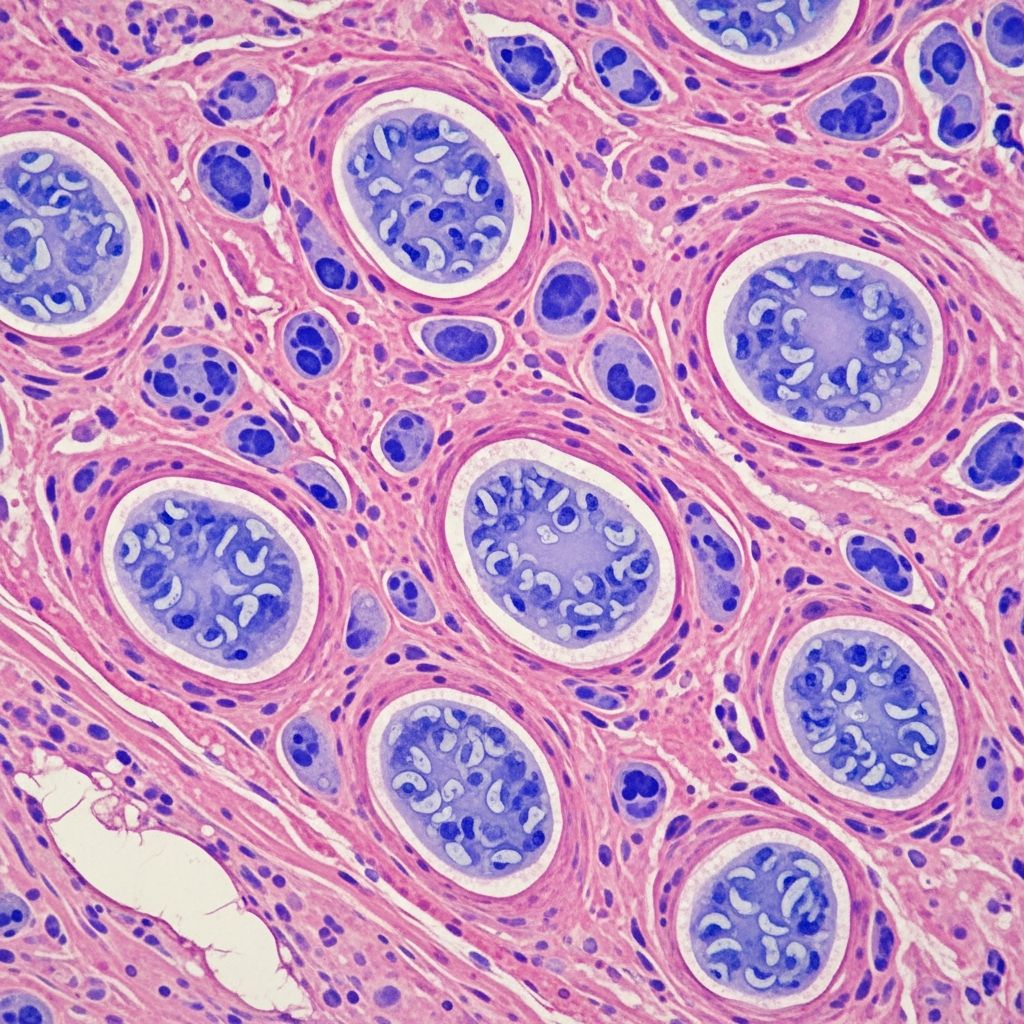
Besnoitiosis represents a significant parasitic infection in various animal species, primarily manifesting as chronic skin conditions and reproductive impairments. Caused by protozoans of the Besnoitia genus, this disease leads to economic losses through reduced productivity and animal welfare challenges.
Understanding the Parasite and Its Life Cycle
The Besnoitia genus includes several species that target specific hosts, such as B. besnoiti in cattle, B. caprae in goats, B. bennetti in equids, and B. tarandi in reindeer. These apicomplexan parasites feature two key asexual stages in intermediate hosts: rapidly dividing tachyzoites during acute infection and slow-growing bradyzoites forming protective cysts in chronic phases. Tachyzoites invade endothelial cells, causing vascular damage, while bradyzoites cluster into visible cysts in skin, mucous membranes, and other tissues.
The full life cycle remains partially enigmatic, especially for equine and caprine forms, with definitive hosts unidentified. Transmission likely occurs via ingestion of infected tissues or mechanical vectors, though specifics vary by species.
Geographical Spread and Emerging Trends
Bovine besnoitiosis thrives in sub-Saharan Africa and the Middle East, with reemergence in Europe noted since 2010 by the European Food Safety Authority. Cases in equids appear in the US, France, and Belgium, while reindeer infections cluster in Arctic regions of North America and Europe. Goat besnoitiosis is limited to areas like Iran and Kenya.
Recent studies highlight its expansion, with donkey cases confirmed in Italy via molecular detection, signaling potential risks to equid populations globally.
Clinical Progression Across Species
Besnoitiosis typically unfolds in distinct phases: incubation (2 weeks to 2 months), acute febrile stage, and chronic sclerodermatous phase. Many infections stay subclinical, but severe cases prove debilitating.
Acute Phase Manifestations
During the initial febrile period, animals experience hyperthermia (up to 41.6°C), lethargy, inappetence, and lymphadenopathy. Vascular proliferation of tachyzoites triggers edema (anasarca), vasculitis, thrombosis, and hyperemia. Respiratory distress from pneumonitis may occur in cattle, alongside orchitis and lameness in bulls.
- Fever and depression
- Generalized swelling
- Lymph node enlargement
- Orchitis in males
Chronic Phase Characteristics
The chronic stage features bradyzoite cysts, pathognomonic in scleral conjunctiva (scleral pearls). Skin thickens, folds, and develops alopecia, hyperkeratosis, hyperpigmentation, and crusts, earning nicknames like ‘elephant skin disease’. Lesions affect face, ears, limbs, perineum, and mucous membranes.
In bulls, testicular atrophy and induration lead to infertility from pampiniform plexus damage. Females may abort during acute fever. Affected hides diminish leather value.
| Species | Key Chronic Signs | Reproductive Impact |
|---|---|---|
| Cattle | Scleral cysts, skin folding, orchitis | Sterility in bulls, abortions |
| Equids | Facial cysts, limb alopecia, nasal lesions | Unknown, but systemic debilitation |
| Goats/Reindeer | Mucosal cysts, hide thickening | Fertility decline observed |
Species-Specific Insights
Bovine Besnoitiosis
The most studied form, bovine besnoitiosis causes weight loss, milk drop, and persistent carriers. Mortality is low (1-10%), but recovery is protracted. Calves under six months rarely show signs.
Equid and Donkey Infections
B. bennetti produces pinpoint cysts on skin, nares, pinnae, and sclera. Donkeys in Italy displayed antibodies and skin DNA confirmation, with hematological changes.
Other Hosts
Reindeer show leg and facial hair loss with thickened skin; goats exhibit similar but less documented patterns.
Diagnostic Approaches
Diagnosis combines clinical observation, serology, cytology, histopathology, and PCR. Scleral cysts confirm chronic cases visually. Serologic tests like ELISA or Western Blot detect antibodies; PCR on biopsies identifies DNA.
Hematology may reveal anemia or elevated globulins; semen analysis monitors bull fertility.
- Visual cyst inspection
- Serological assays
- Molecular PCR
- Biopsy confirmation
Economic and Welfare Implications
Besnoitiosis erodes farm profitability via treatment costs, culling, and production losses. Infertile bulls necessitate replacements; poor hides reduce income. Chronic pain from skin lesions compromises welfare.
Prevention and Management Strategies
No vaccine or treatment exists; control relies on biosecurity, herd monitoring, and culling. Key measures include:
- Quarantine new animals
- Serologic screening pre-breeding
- Sperm quality checks in bulls
- Vector control (flies, ticks)
- Avoid feeding suspect hay/silage
In endemic herds, subclinical carriers perpetuate spread. Selective breeding for resistance shows promise.
Research Frontiers and Future Directions
Ongoing studies probe life cycles, definitive hosts, and vaccines. European surveillance tracks spread; molecular tools enhance detection.
Frequently Asked Questions (FAQs)
What causes besnoitiosis?
Besnoitia species protozoans, with host-specific variants like B. besnoiti for cattle.
Is besnoitiosis fatal?
Mortality is low (1-10%), but severe cases lead to sterility and prolonged recovery.
How is it diagnosed in the field?
Scleral cysts are diagnostic; confirmed by serology or PCR.
Can besnoitiosis spread to humans?
No zoonotic risk identified; it affects animals only.
What are the best prevention steps?
Biosecurity, testing, and culling infected animals.
References
- Besnoitiosis in donkeys: an emerging parasitic disease of equids in Italy — PMC/NCBI. 2021-04-28. https://pmc.ncbi.nlm.nih.gov/articles/PMC8084774/
- Besnoitiosis in Animals — Merck Veterinary Manual. 2023. https://www.merckvetmanual.com/infectious-diseases/besnoitiosis/besnoitiosis-in-animals
- Bovine besnoitiosis – Flock and Herd case studies — Flock and Herd. 2010. http://www.flockandherd.net.au/cattle/reader/bovine-besnoitiosis.html
- Retrospective study of bovine besnoitiosis in the Auvergne Rhône-Alpes region, France (2017–2023) — Frontiers in Veterinary Science. 2025. https://www.frontiersin.org/journals/veterinary-science/articles/10.3389/fvets.2025.1621589/full
- Besnoitiosis in Alaska’s Species — Alaska Department of Fish and Game. 2023. https://www.adfg.alaska.gov/index.cfm?adfg=disease.general7
Similar Articles








Read full bio of medha deb


