

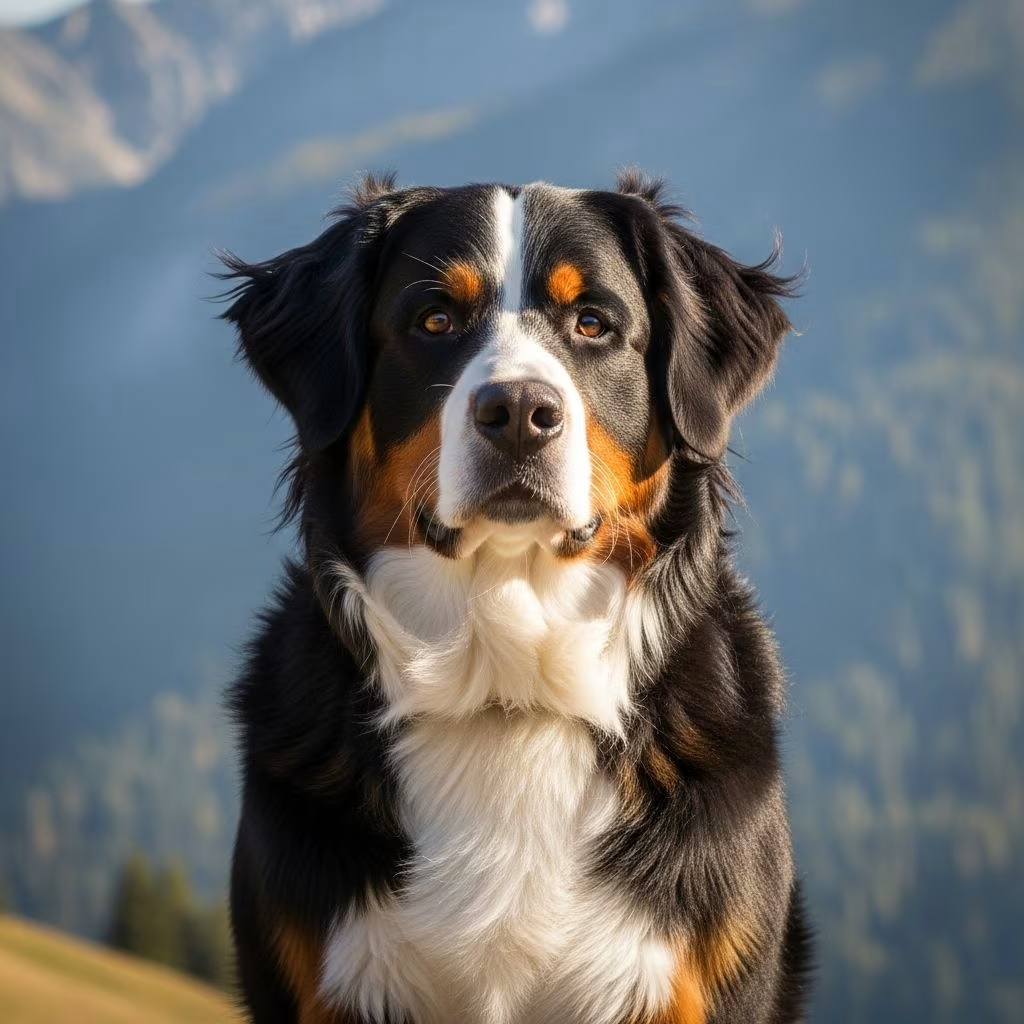
The question of whether Bernese Mountain Dogs possess protective qualities often surprises those unfamiliar with the breed. While these dogs are celebrated for their calm demeanor and friendly nature, they simultaneously demonstrate genuine protective behaviors rooted in centuries of selective breeding and working heritage. Understanding this dual nature reveals why Bernese Mountain Dogs have become increasingly popular among families seeking both companionship and security.
The Foundation of Protective Behavior
Bernese Mountain Dogs exhibit protective instincts that stem from an intricate combination of genetic predisposition and environmental factors. Unlike more aggressive guard dog breeds, their protection manifests through vigilance, alertness, and territorial awareness rather than overt aggression. These dogs develop an exceptionally strong bond with their families, and this attachment directly correlates with their willingness to intervene during threatening situations.
The breed’s protective nature operates on a spectrum. Bernese Mountain Dogs demonstrate consistent awareness of their surroundings and the activities of family members. When they perceive potential threats, they respond with measured reactions—typically barking to alert their owners rather than immediately engaging in confrontation. This measured approach reflects their intelligence and the capacity to assess situations before responding.
Physical attributes contribute significantly to their protective presence. Their substantial size, ranging from 70 to 115 pounds, combined with a deep, resonant bark, creates a natural deterrent effect. Potential intruders often reconsider their intentions upon encountering a large dog with a commanding presence, even without aggressive displays.
Historical Roots: Alpine Working Heritage
The protective instincts observed in modern Bernese Mountain Dogs trace directly to their origins in the Swiss Alps. For centuries, farmers in the canton of Bern utilized these dogs for multiple demanding purposes. The breed’s primary responsibilities included herding cattle, pulling heavily loaded carts across mountainous terrain, and defending livestock and property against wild predators.
This multifaceted working role required dogs with exceptional judgment, strength, and loyalty. The harsh Alpine environment and constant threats demanded animals capable of making independent decisions about when to alert their handlers and when to take protective action. Natural selection favored dogs that possessed both courage and temperament stability—dogs that wouldn’t overreact to minor disturbances but would respond decisively to genuine threats.
The Romans introduced large molossian-type dogs to the Swiss region over two millennia ago, and these animals interbred with local dogs to create what eventually became the Bernese Mountain Dog. This ancient lineage contributed to the breed’s inherent sense of responsibility toward their human family and property.
Unlike guard dogs bred exclusively for aggression and confrontation, Bernese Mountain Dogs evolved as all-purpose working animals. This comprehensive background shaped a breed capable of gentle livestock handling one moment and determined defense the next. The ability to modulate their response based on circumstances became fundamental to the breed’s character.
Watchdog Versus Guard Dog: Understanding the Distinction
A critical distinction exists between watchdog and guard dog classifications, and Bernese Mountain Dogs firmly occupy the watchdog category. Watchdogs alert their owners to potential problems through vocalizations and behavioral changes, while guard dogs are trained to physically confront and restrain threats.
Bernese Mountain Dogs excel at the watchdog role because of their natural inclination to monitor activity and their strong desire to communicate what they observe. Their barking pattern demonstrates intelligence—they bark at unusual occurrences but typically settle once assured the situation poses no threat. This selective vocalization makes them practical family companions rather than animals that bark excessively at routine activities.
While these dogs possess the physical capability to serve as guard dogs, their temperament makes them less suitable for this demanding role. Guard dog work requires sustained aggression and a willingness to engage with threats, qualities that conflict with the Bernese Mountain Dog’s fundamental nature. Additionally, their substantial body mass and slower movements, particularly as they age, limit their agility compared to dog breeds specifically selected for rapid response work.
This distinction actually enhances their value as family protectors. Families benefit more from a dog that alerts them to problems while maintaining a gentle disposition than from an animal trained for confrontation that might inadvertently harm children or guests.
The Protective Temperament Profile
Calm Confidence and Measured Response
The defining characteristic of Bernese Mountain Dog protection is its calm, measured quality. These dogs possess an inherent confidence that doesn’t require aggressive posturing. They assess situations with apparent deliberation before responding, rarely panicking or overreacting to ordinary stimuli.
This calm demeanor serves multiple protective functions. It prevents false alarms that would desensitize owners to their alerts, making genuine warnings more meaningful. It also allows the dog to maintain clear judgment, distinguishing between situations requiring response and those requiring acceptance.
Loyalty-Driven Devotion
Bernese Mountain Dogs form exceptionally strong attachments to their family members. This profound loyalty creates the emotional foundation for their protective behaviors. These dogs don’t protect out of programmed aggression or territorial imperatives alone—they protect because they genuinely care about the wellbeing of those they love.
This emotion-based protection manifests in ways that purely trained guard dogs may not achieve. Bernese Mountain Dogs demonstrate sensitivity to the emotional states of family members, often positioning themselves closer to vulnerable individuals and appearing to monitor their condition with genuine concern.
Environmental Sensitivity
These dogs possess remarkable perceptiveness regarding their environment. They detect subtle changes in activity patterns, unusual sounds, and unfamiliar presences long before most humans notice anything amiss. This heightened awareness, combined with their willingness to communicate observations through barking, makes them effective early warning systems.
Training and Socialization: Optimizing Protective Instincts
Natural protective instincts reach their full potential only when refined through proper training and early socialization. Bernese Mountain Dogs benefit significantly from exposure to diverse people, animals, and environments during their formative months. This exposure teaches them to recognize normal social situations and to distinguish routine activity from genuinely threatening behavior.
Early socialization prevents the development of excessive fear or defensiveness. Dogs that encounter varied social situations learn that most strangers pose no threat, reducing anxiety and inappropriate responses. A well-socialized Bernese Mountain Dog can greet visitors warmly while remaining alert to potential problems.
Basic obedience training establishes communication pathways between dog and owner. Dogs that understand commands like “sit,” “stay,” and “leave it” can be directed away from confrontations or managed during stressful situations. This training doesn’t diminish protective instincts—it channels them productively.
Owners interested in enhancing their Bernese Mountain Dog’s protective capabilities should consider professional training programs specializing in this breed. Experienced trainers understand how to develop the dog’s natural instincts without creating an aggressive, uncontrollable animal. Programs typically focus on territory recognition, appropriate threat assessment, and controlled response development.
Behavioral Characteristics of Protective Bernese Mountain Dogs
| Behavior | Manifestation | Interpretation |
|---|---|---|
| Protective Positioning | Standing between family members and strangers or potential threats | Demonstrates readiness to physically intervene if necessary |
| Alert Barking | Deep, loud vocalizations at unusual activity or unfamiliar people | Communication of perceived problems to owners |
| Boundary Monitoring | Increased attention to perimeter activity, windows, and doors | Territorial awareness and property protection |
| Selective Friendliness | Warm greeting to known visitors, caution with strangers | Discernment between safe and unknown individuals |
| Physical Proximity | Following family members through the home, particularly children | Commitment to monitoring and protecting vulnerable members |
Aggression: The Important Reality Check
Despite their protective nature, Bernese Mountain Dogs are not inherently aggressive dogs. The breed standard emphasizes stability, friendliness, and confidence rather than dominance or aggressiveness. A well-adjusted Bernese Mountain Dog poses no threat to welcomed family guests, children’s playmates, or established household pets.
However, acknowledging that these are still large, powerful animals is essential. All dogs possess the capacity for aggression when genuinely threatened or poorly trained. Bernese Mountain Dogs can bite if cornered, protecting their offspring, or defending family members during genuine emergencies. This capacity for defensive aggression differs fundamentally from an aggressive temperament.
Aggression or excessive fearfulness in Bernese Mountain Dogs typically reflects poor socialization, abusive treatment, or inadequate training rather than inherent breed tendencies. Responsible ownership includes preventing situations that might trigger defensive responses in any dog.
Suitability as Family Protectors
Bernese Mountain Dogs occupy an ideal position for families seeking both protection and companionship. They provide genuine security value while maintaining the gentle temperament that makes them safe around children and appropriate for most household situations.
These dogs excel at alerting families to problems without the liability concerns of more aggressive guard breeds. A barking Bernese Mountain Dog prompts family members to investigate, often preventing problems before they escalate. Their size and presence alone deter many potential threats, providing security benefits without requiring the dog to engage in dangerous confrontations.
For families with young children, Bernese Mountain Dogs demonstrate remarkable gentleness combined with apparent understanding of their protective responsibility. They often position themselves as self-appointed guardians of children, monitoring their activities and intervening if they perceive danger.
Frequently Asked Questions
Will a Bernese Mountain Dog attack an intruder?
Bernese Mountain Dogs rarely attack without extensive training or genuine threats to family safety. Their protective response typically involves alerting owners through barking rather than engaging in combat. However, they may physically intervene if family members face immediate danger.
Do Bernese Mountain Dogs need special protection training?
Standard training and socialization address most protective instincts naturally. Professional protection training is optional and recommended only for owners specifically desiring enhanced capabilities. Basic obedience suffices for most families.
How early do protective instincts develop?
Alert and protective behaviors often emerge by 6-12 months of age. However, these instincts continue developing throughout the dog’s life, becoming more refined and confident with maturity and experience.
Are Bernese Mountain Dogs suitable for apartments?
While their size presents space considerations, their calm temperament makes them surprisingly adaptable to apartment living. Their protective alertness doesn’t require extensive territory, and they don’t typically exhibit problematic barking behavior.
Can Bernese Mountain Dogs live peacefully with other pets?
Yes, when properly socialized. Their protective instincts extend to household animals they consider part of their family. Early introduction to other pets establishes positive relationships rather than competitive dynamics.
Conclusion: The Gentle Guardian
Bernese Mountain Dogs represent a unique combination of qualities that few breeds achieve—genuine protective capabilities paired with gentle, stable temperament. Their heritage as Swiss Alpine working dogs shaped a breed capable of serious responsibility while maintaining warmth and friendliness. These characteristics make them outstanding family dogs that provide real security value without the challenges associated with more aggressive guard breeds.
For families considering a Bernese Mountain Dog, the protective aspect should be viewed as an additional benefit rather than the primary justification for ownership. Their exceptional loyalty, intelligence, and desire to please create dogs that naturally contribute to household safety through alertness and vigilance. Combined with their affectionate nature and compatibility with children, Bernese Mountain Dogs represent an increasingly attractive option for families seeking both protection and companionship in one magnificent package.
References
- Are Bernese Mountain Dogs Protective? Breed Characteristics and Family Safety — Hepper. 2024. https://articles.hepper.com/are-bernese-mountain-dogs-protective/
- Are Bernese Mountain Dogs Protective of Their Owners? — The Bernese (Official Breed Resource). 2024. https://thebernese.org/are-bernese-mountain-dogs-protective/
- Understanding Bernese Mountain Dog Temperament: A Comprehensive Guide for Dog Lovers — Houndsy. 2024. https://www.houndsy.com/blogs/modern-tails/understanding-bernese-mountain-dog-temperament-a-comprehensive-guide-for-dog-lovers
- Are Bernese Mountain Dogs Natural Protectors for Your Family? — Vocal Media. 2024. https://vocal.media/petlife/are-bernese-mountain-dogs-natural-protectors-for-your-family
- The Bernese Mountain Dog: Origin, Temperament, Health — Weenect. 2024. https://www.weenect.com/us/en/guide/dog-breeds/bernese-mountain-dog/



