

Understanding Benign Mammary Tumors in Dogs
Mammary tumors represent one of the most common health concerns affecting female dogs, accounting for approximately 42% of all diagnosed tumors in this population. These tumors can be classified into two distinct categories: benign (non-cancerous) and malignant (cancerous). While both forms present significant health considerations, they differ substantially in their diagnostic approaches, treatment protocols, management strategies, and long-term outcomes. Understanding these differences is crucial for dog owners and veterinary professionals seeking to provide optimal care for affected animals.
Benign mammary tumors, also known as non-cancerous growths, originate from the breast tissue and do not spread to other parts of the body. However, it is important to note that dogs can develop both benign and malignant tumors simultaneously, making thorough evaluation essential. Additionally, research suggests that malignant tumors may develop from benign ones over time, underscoring the importance of regular monitoring and appropriate intervention.
Risk Factors and Breed Predisposition
The development of mammary tumors in dogs is significantly influenced by reproductive status and hormonal factors. Dogs that are spayed prior to their first heat cycle have only a 0.5% risk of developing mammary tumors. However, this risk increases dramatically after the first or second heat cycle, rising to 8% and 26% respectively. This clear correlation between reproductive history and tumor development emphasizes the protective effects of early spaying.
Certain dog breeds demonstrate a higher predisposition to developing mammary tumors. These breeds include Chihuahuas, Poodles, Dachshunds, Yorkshire Terriers, Cocker Spaniels, Brittany Spaniels, English Setters, Boxer Dogs, and Doberman Pinschers. While the genetic basis for this predisposition remains incompletely understood, ongoing veterinary research continues to investigate potential genetic mutations and hereditary factors that may contribute to tumor development in these breeds.
Diagnostic Procedures and Evaluation
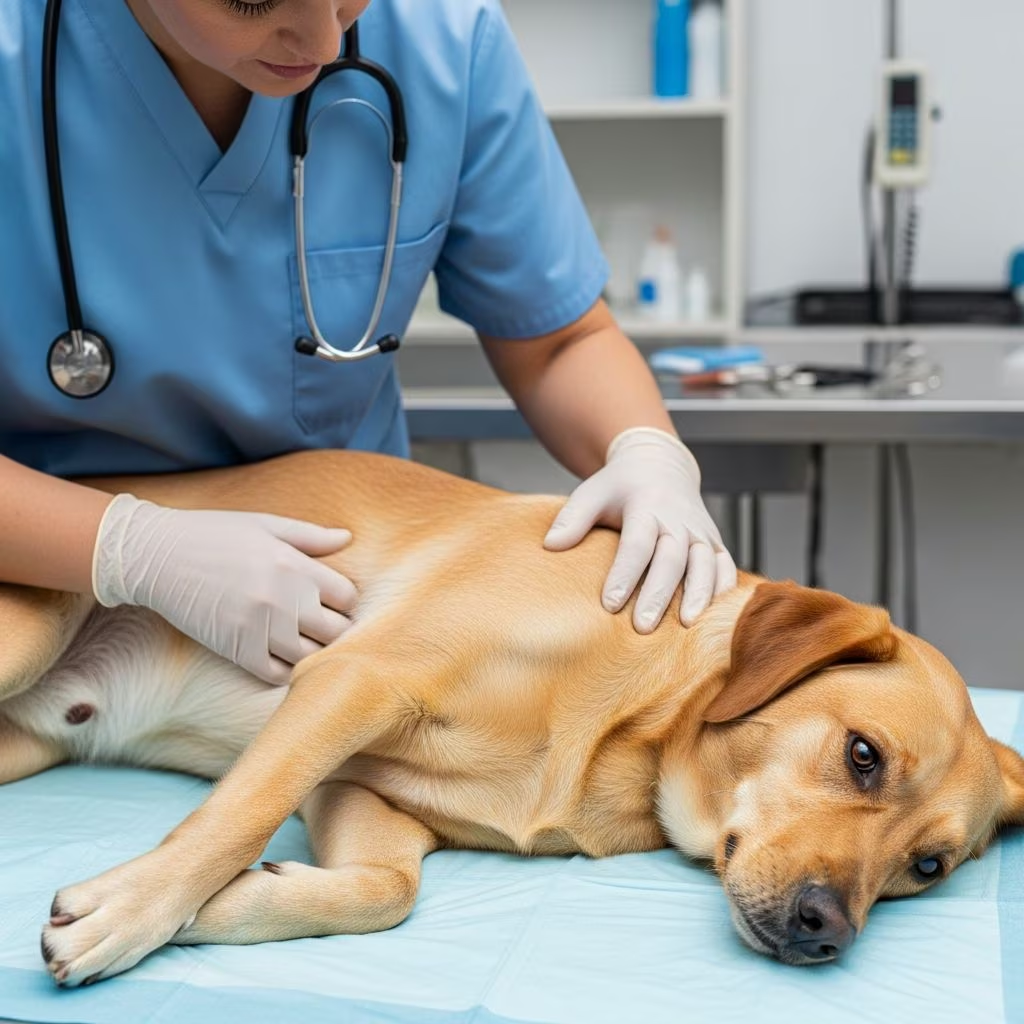
Accurate diagnosis of benign mammary tumors requires a comprehensive evaluation approach. Your veterinarian will typically begin with a thorough physical examination, palpating the mammary glands to identify any abnormal masses or lumps. Any suspicious growths warrant further investigation to distinguish between benign and malignant lesions.
One of the most definitive diagnostic tools is a biopsy, which involves the surgical excision of a small piece of the tumor tissue. This tissue sample is then examined by a veterinary pathologist under a microscope through a process called histopathology. Histopathology not only confirms whether a tumor is benign or malignant but also provides valuable information about how the tumor is likely to behave and progress.
For dogs with benign mammary tumors where malignancy is suspected, further investigation is recommended before surgical removal. This may include:
- Chest X-rays to evaluate for potential lung involvement
- Abdominal ultrasound to assess internal organs
- Fine needle aspiration (FNA) sampling of local lymph nodes
Treatment Options for Benign Mammary Tumors
Surgery represents the gold standard treatment for dogs with benign mammary tumors. The primary objective of surgical intervention is complete removal of the affected tissue while preserving as much normal mammary tissue as possible.
Surgical Approach: If a biopsy was not performed prior to surgery to confirm the benign nature of the mass, the surgical excision must be significantly larger than the visible tumor to ensure removal of all affected tissue. The removed tissue should be sent for histopathological analysis to confirm the benign diagnosis and determine whether any additional treatment is necessary.
The extent of surgical removal depends on several factors including the size, location, and number of tumors present. Options may range from conservative removal of the affected mass alone to removal of the entire affected mammary gland, depending on the specific clinical situation.
Concurrent Spaying: If your dog is intact (not spayed) at the time of tumor surgery, veterinarians strongly recommend performing an ovariohysterectomy (spaying) concurrently with tumor removal. This procedure removes the ovaries and uterus, eliminating the source of reproductive hormones that may stimulate additional tumor development. Performing both procedures simultaneously provides several advantages, including a single anesthesia event, reduced overall recovery time, and improved long-term tumor prevention.
Post-Surgical Considerations
Following surgical removal of benign mammary tumors, most dogs recover well with appropriate post-operative care. Your veterinarian will provide specific instructions regarding wound care, activity restriction, and follow-up appointments to ensure proper healing.
It is important to understand that while the prognosis for benign mammary tumors is generally excellent, dogs with benign tumors have an increased risk of developing malignant tumors in the future. Regular monitoring through physical examinations and prompt reporting of any new lumps or abnormalities to your veterinarian is essential for early detection of any malignant transformation.
Differentiation Between Benign and Malignant Tumors
While benign and malignant mammary tumors can present similarly during physical examination, several characteristics help distinguish between them. Malignant tumors are more likely to be firmly attached to surrounding tissue, irregular in shape, and potentially accompanied by skin changes or discharge. Additionally, malignant tumors are more likely to have spread to regional lymph nodes or distant organs at the time of diagnosis.
This is why histopathological examination following surgical removal is so important. The microscopic analysis provides definitive classification and guides decisions regarding any additional treatment that may be necessary.
Prevention Strategies
The most effective prevention strategy for mammary tumors in dogs is early spaying. Dogs spayed before their first heat cycle have substantially lower lifetime risk compared to intact females. For dogs already diagnosed with benign mammary tumors, concurrent ovariohysterectomy during surgical removal helps reduce the risk of future tumor development.
Regular physical examinations by your veterinarian are also valuable for early detection of any developing masses. Monthly self-examination by the dog owner, performed by gently palpating the mammary glands, can help identify new growths between veterinary visits.
When Multiple Tumors Are Present
Approximately 50-70% of dogs with mammary tumors develop multiple tumors involving more than one gland or both mammary chains. In these cases, the affected or even all mammary glands may need to be removed depending on the extent of disease. Multiple tumors increase the complexity of treatment planning and may alter the surgical approach.
For dogs with multiple tumors, comprehensive staging and histopathology of all masses is particularly important to identify any malignant lesions that may require additional treatment beyond surgery alone.
Frequently Asked Questions
Q: How common are benign mammary tumors in dogs?
A: While approximately 50% of all canine mammary tumors are benign, these tumors are still among the most common tumors diagnosed in female dogs, accounting for 42% of all diagnosed tumors overall.
Q: Can benign mammary tumors become malignant?
A: Research suggests that malignant tumors may develop from benign tumors over time. Dogs with benign mammary tumors have an increased risk of developing malignant tumors in the future, making regular monitoring important.
Q: Is surgery always necessary for benign mammary tumors?
A: Yes, surgery is considered the best treatment option for benign mammary tumors. Surgical removal is recommended to eliminate the mass and reduce the risk of malignant transformation.
Q: What is the recovery time after mammary tumor surgery?
A: Recovery typically takes 10-14 days, though this varies depending on the extent of surgery and your individual dog’s healing response. Your veterinarian will provide specific post-operative care instructions.
Q: Can my dog get another mammary tumor after surgical removal?
A: Yes, dogs can develop new tumors in other areas of the mammary tissue. Regular physical examinations and prompt reporting of any new lumps are important for early detection.
Q: Why is spaying recommended if my dog is intact?
A: Concurrent spaying removes the source of reproductive hormones that may stimulate additional tumor development, reducing the risk of future mammary tumors and other reproductive cancers.
Q: What should I expect during the post-operative period?
A: Post-operative care typically includes wound care, activity restriction, pain management, and suture removal at 10-14 days. Your veterinarian will provide detailed instructions specific to your dog’s surgery.
Prognosis and Outlook
The prognosis for dogs with benign mammary tumors is excellent. Most dogs live normal, healthy lives following surgical removal of benign masses. However, continued vigilance is necessary, as these dogs remain at increased risk for developing malignant tumors in the future.
Working closely with your veterinarian to establish a monitoring schedule and maintaining awareness of any new lumps or changes in the mammary tissue will help ensure early detection and treatment of any future concerns.
References
- Benign Mammary Tumors in Dogs — VCA Animal Hospitals. 2024. https://vcahospitals.com/know-your-pet/mammary-tumors-in-dogs-benign
- Mammary Cancer in Dogs and Cats: What Every Pet Owner Should Know — Morris Animal Foundation. 2024. https://www.morrisanimalfoundation.org/article/mammary-cancer-in-dogs-and-cats
- Mammary Tumors in Dogs – Reproductive System — Merck Veterinary Manual. 2024. https://www.merckvetmanual.com/reproductive-system/mammary-tumors-in-dogs/mammary-tumors-in-dogs
- Mammary cancer | Canine Health Information — Cornell University College of Veterinary Medicine. 2024. https://www.vet.cornell.edu/departments-centers-and-institutes/riney-canine-health-center/canine-health-information/mammary-cancer
- Mammary Tumors — American College of Veterinary Surgeons. 2024. https://www.acvs.org/small-animal/mammary-tumors/
- Malignant Mammary Tumors in Dogs — VCA Animal Hospitals. 2024. https://vcahospitals.com/know-your-pet/mammary-tumors-in-dogs-malignant



