

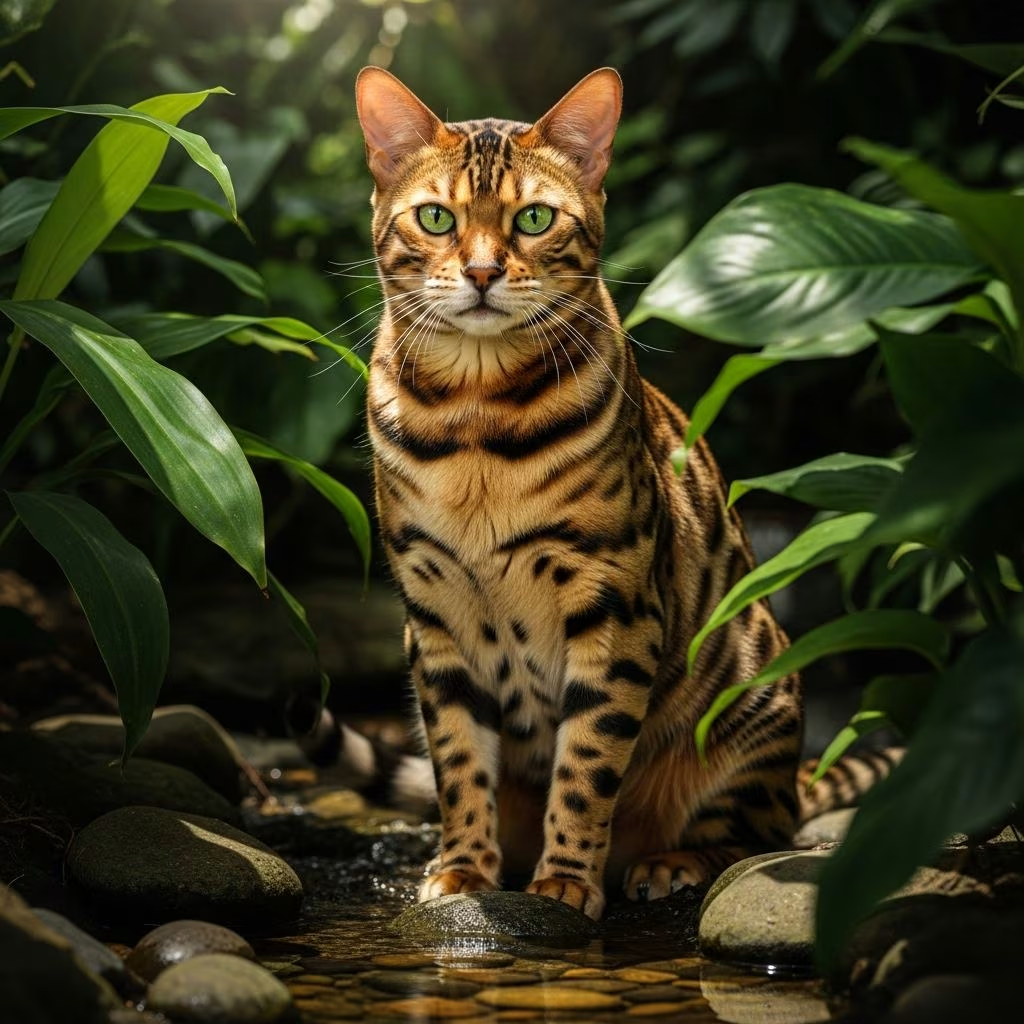
Bengal cats captivate with their leopard-like patterns and boundless energy, blending exotic aesthetics with affectionate domestic traits. Developed through selective breeding, these felines offer a unique companionship for active households.
Tracing the Roots: The Hybrid Beginnings
The Bengal breed emerged in the United States during the 1960s, pioneered by geneticist Jean Mill, who crossed the small Asian leopard cat (Prionailurus bengalensis) with domestic shorthairs to capture wild beauty in a pet-friendly package. This initial hybridization produced kittens with striking spotted coats, but early generations often inherited unpredictable temperaments and fertility challenges, particularly in males.
Jean Mill’s work built on earlier experiments, including those by Dr. Willard Centerwall, who studied feline hybrids for medical research. By incorporating breeds like the Burmese, Egyptian Mau, Abyssinian, and American Shorthair, breeders stabilized the lineage, breeding out wild instincts over generations. A key milestone came in 1982 when Mill acquired a tailless, glitter-coated wild cat named Delhi from India, whose offspring introduced the signature shimmering fur.
Official recognition followed: The International Cat Association (TICA) granted experimental status in the 1980s, advancing to championship in 1991. Today, Bengals must be at least four generations removed from wild ancestry, retaining just about 6% wild blood while embodying domestic reliability.
Striking Physical Features
Bengals boast a medium-to-large, muscular frame with a foreign type body—long, sleek, and powerfully athletic, often weighing 8-15 pounds. Their heads are broad with large ears, expressive almond-shaped eyes in shades of green, gold, or blue, and a distinctive ‘wild’ facial profile marked by bold whisker pads and high cheekbones.
| Feature | Description |
|---|---|
| Body Type | Strong, muscular, graceful gait |
| Coat | Short, dense, glittered (shimmering effect) |
| Patterns | Spotted, marbled, rosettes, arrowheads |
| Colors | Brown, snow, silver, charcoal bases |
The coat stands out for its pelt-like texture and high contrast patterns mimicking leopards—random spots, marbled swirls, or tri-colored rosettes on a vivid base like tawny brown or ivory. A genetic ‘glitter’ trait gives the fur a sparkling sheen under light, unique to the breed. Snow Bengals display pointed patterns like Siamese, while silver variants offer a metallic sheen.
Vibrant Temperament and Lifestyle Fit
Renowned for kitten-like vitality into adulthood, Bengals are confident, curious explorers with high intelligence and bold sociability. They thrive on interaction, often forming strong bonds with owners, children, dogs, and other cats, making them ideal for dynamic families or seniors seeking engagement.
- Affectionate yet Independent: Bengals demand playtime but respect personal space, purring loudly during cuddles.
- Highly Active: Expect zooming, climbing, and fetching—energy levels demand outlets like puzzle toys or agility setups.
- Water Lovers: Inherited from wild roots, many splash in baths, sinks, or pools.
- Vocal and Communicative: Chirps, trills, and meows convey needs distinctly.
They’re poor fits for sedentary homes; boredom leads to mischief like door-scratching or counter-surfing. Early socialization ensures well-adjusted adults.
Health Considerations and Longevity
Bengals generally enjoy robust health, living 12-16 years with proper care, thanks to hybrid vigor from diverse genetics. However, screen out breed-specific issues:
- Pra (Progressive Retinal Atrophy): Genetic eye degeneration; DNA testing recommended for breeders.
- HCM (Hypertrophic Cardiomyopathy): Heart thickening; annual ultrasounds advised.
- Patellar Luxation: Kneecap dislocation in some lines.
- Bladder Issues: Sensitivity to diet; monitor for crystals.
Prospective owners should seek health-tested pedigrees from reputable catteries registered with TICA or CFA. Regular vet checkups, balanced nutrition, and dental care mitigate risks.
Daily Care and Grooming Routines
Low-maintenance coats require weekly brushing to distribute oils and reduce normal shedding. Bengals self-groom efficiently but appreciate baths—use feline shampoo and provide scratching posts for nail health.
Nutrition favors high-protein, grain-free diets mimicking wild diets; portion control prevents obesity in these athletes. Fresh water is crucial, as they often prefer running fountains.
Exercise and Enrichment Essentials
Daily sessions of 30-60 minutes—interactive toys, leash walks, or cat trees—prevent destructive behaviors. Vertical spaces and window perches satisfy climbing instincts.
Litter and Home Setup
Large, open litter boxes suit their size; unscented, clumping litter preferred. Secure homes prevent escapes, given their adventurous spirits.
Choosing and Bringing Home a Bengal
Acquire from ethical breeders emphasizing health clearances, not pet stores or unverified sources. Kittens should be handled from birth for sociability. Budget $1,500-$5,000 for quality pedigrees, plus ongoing costs for premium food and toys.
Adoption from rescues suits adults; test compatibility with your lifestyle.
Fun Facts and Trivia
- Bengals can leap 4 feet high, rivaling professional athletes.
- Their ‘glitter’ gene creates a diamond-dust effect on fur.
- Some Bengals learn tricks like high-fives or retrieving balls.
- They rank among top agile cat breeds, excelling in agility competitions.
Frequently Asked Questions (FAQs)
Are Bengal cats hypoallergenic?
No, but their short coats shed minimally compared to longhairs.
Can Bengals live with other pets?
Yes, with proper introductions; their sociable nature shines.
Do Bengal cats like water?
Many do, often joining showers or playing in puddles.
How much exercise do they need?
At least 30 minutes daily of active play.
Are Bengals good for apartments?
Possible with ample enrichment, but prefer space for activity.
References
- Bengal Cat Breed: History, Personality, Appearance, Health & Care — Heads Up For Tails. 2023. https://headsupfortails.com/blogs/cats/bengal-cat-breed
- From Wild to Wonderful: The Fascinating History of Bengal Cats — Purebred Kitties. 2023. https://purebredkitties.com/blogs/bengal-cat/from-wild-to-wonderful-the-fascinating-history-of-bengal-cats
- Bengal History — Royal Bengal Cattery. 2023. https://royalbengalcattery.com/about-bengals/bengal-history.html
- Bengal — Governing Council of the Cat Fancy. 2023. https://www.gccfcats.org/getting-a-cat/choosing/cat-breeds/bengal/
- What is the Origin of the Bengal Breed — The Bengal Cats. 2023. https://www.thebengalcats.com/pages/what-is-the-origin-of-the-bengal-breed
- Bengal cat — Wikipedia. 2026. https://en.wikipedia.org/wiki/Bengal_cat
- Bengal — Cat Fanciers’ Association. 2023. https://cfa.org/breed/bengal/



