

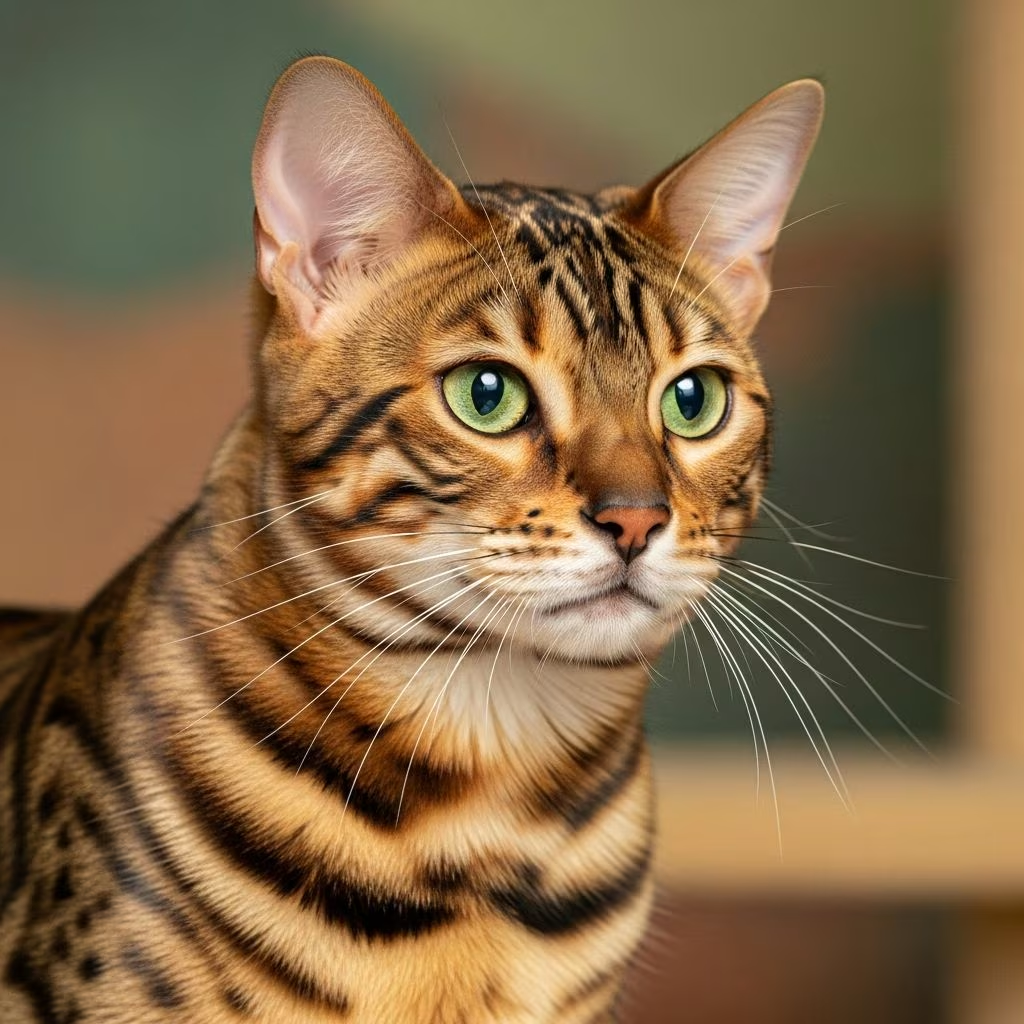
Bengal cats captivate with their wild-inspired appearances, featuring a spectrum of colors and intricate patterns derived from their Asian leopard cat ancestry. These felines display coats in shades from warm browns to cool silvers, with patterns mimicking leopards or marble stone, all influenced by specific genetic traits.
Understanding the Diversity of Bengal Coat Colors
The allure of Bengal cats lies in their coat variations, which range across several primary categories. Each color group offers distinct visual appeal, shaped by genetic factors that breeders carefully select for optimal expression. Brown remains the hallmark color, evoking the savanna’s golden hues, while others introduce cooler or lighter tones for variety.
The Iconic Brown Bengal Coat
Brown Bengals dominate the breed, showcasing ground colors from tawny gray to vibrant orange-gold. Their markings, in black or deep brown, provide stark contrast, highlighting rosettes or spots against the base. Eyes typically glow in green, gold, or amber, enhancing their fierce expression.
Shades within browns include honey, caramel, and cinnamon-like warms, with a preference for rich, vivid tones. A black-tipped tail and minimal white on the belly are prized features, linking them visually to wild felines.
Cool Elegance of Silver Bengals
Silver Bengals stand out with icy white to steel-gray bases, accented by jet-black or charcoal markings. The inhibitor gene suppresses warm pigments, yielding a crisp, tarnish-free coat—ideal specimens avoid yellow or rusty undertones, especially on face and paws. Green eyes complement this dramatic palette.
Silvers can overlay other colors, like silver snow or silver blue, expanding possibilities while maintaining high contrast.
Delicate Snow Bengal Variations
Snow Bengals encompass lighter palettes, divided into seal lynx point (SLP), seal sepia, and seal mink. SLP starts nearly white, developing faint patterns from cool cream or ivory bases with blue eyes—a unique trait. Sepia and mink offer ivory to tan grounds with aqua, green, or gold eyes, their patterns emerging subtly.
These recessive types require specific gene pairings, resulting in point-coloring that darkens extremities.
Exploring Unique and Rare Bengal Colors
Beyond standards, Bengals produce rarer hues through recessive genes, adding exclusivity. Charcoal overlays darken any base with smoky patterns, while blues introduce powdery tones—both expanding the breed’s palette without black markings.
Charcoal: The Smoky Overlay
Charcoal Bengals feature carbon-gray bases with minimal rufous, topped by intense dark patterns. This trait, from combined agouti genes, appears across colors like charcoal brown or silver, creating a shaded, velvety look. Eyes vary by base color, often gold or green.
As a masking pattern, it intensifies markings without altering the underlying hue.
Blue and Other Diluted Shades
Blue Bengals display steely powder-blue coats with peachy undertones and metal-gray patterns—never black. Recessive genetics demand both parents carry the dilution gene. Variants like silver blue maintain cool tones.
Rarer still are lilac or melanistic (solid black) cats, where patterns ghost faintly under uniform color, revealing rosettes when wet or backlit.
Signature Patterns That Define Bengals
Bengal patterns—spotted or marbled—mimic wild cats, with rosetting adding luxury. Spots resemble cheetah or leopard prints, while marbles swirl like agate stone, both demanding clear contrast and random placement for authenticity.
| Pattern Type | Description | Key Features |
|---|---|---|
| Spotted | Distinct circular or oval marks | Rosettes with dark edges, open centers; cheetah-like on flanks |
| Marbled | Swirling, marbled designs | Horizontal flows, preferred darker; velvet-like depth |
Quality patterns avoid uniformity, with belly spotting and paw pads matching markings. Tail rings and facial stripes complete the wild aesthetic.
Genetics Behind Bengal Coat Magic
Bengal colors stem from key genes: dominant brown (B), recessive snow (cs/cb for lynx, sepia, mink), and inhibitor (I) for silvers. Charcoal arises from Apb/a combos, blues from dilution (d), ensuring predictable breeding.
Genetic testing aids breeders in preserving traits, avoiding off-colors like unexpected solids. Understanding inheritance helps predict kitten outcomes, vital for standard adherence.
Care Tips for Maintaining Vibrant Coats
Bengal coats thrive with minimal grooming—their short, thick fur sheds lightly and resists matting. Weekly brushing distributes oils, enhancing sheen. Diet rich in omega-3s supports pigmentation; avoid sun excess to prevent fading.
Bathe sparingly, using cat-safe shampoos for shows. Health checks ensure no underlying issues dull the coat.
Choosing Your Ideal Bengal Color and Pattern
Select based on lifestyle: active browns suit families, elegant silvers fit modern homes. Research breeders for pedigrees emphasizing clarity. Consider allergies—silvers shed less visibly.
Adopt from reputable sources verifying health and genetics for long-term vibrancy.
Frequently Asked Questions
What is the most common Bengal cat color?
Brown Bengals are the most prevalent, prized for their golden bases and bold markings resembling wild leopards.
Do all Bengal cats have blue eyes?
No, only seal lynx point snow Bengals consistently have ice-blue eyes; others range green, gold, or aqua.
Can Bengal patterns change as they grow?
Kittens’ patterns develop over 1-2 years, gaining contrast; snow types may start faint, darkening later.
Are there solid-colored Bengals?
Melanistic Bengals appear black but reveal ghost patterns; true solids are non-standard.
How do I identify a high-quality Bengal coat?
Look for vivid contrast, minimal tarnish, random patterns, and aligned facial markings without stripes.
References
- Bengal Cat Colors: Guide to Bengals Skin Coats, Genetics & Patterns — NorCal Bengals. 2023-05-15. https://www.norcalbengals.com/post/bengal-cat-colors-guide
- Bengal Cat Color & Pattern Info — Belle Ami Bengals. 2024-02-10. https://www.belleamibengals.com/bengal-colors-and-patterns
- Colors and Patterns — Adelhills Bengal Cats. 2023-11-20. https://www.bengalcatbreeder.com.au/index.php/the-breed/colors-and-patterns
- Colors and Patterns – Bengal Cat Lovers Blog — BengalCats.co. 2024-01-05. https://bengalcats.co/bengal-cat-colors-patterns/
- Bengal Cat Colors – 6 Common to Rare Coat Colors & Patterns — Litter-Robot Blog. 2023-08-12. https://www.litter-robot.com/blog/bengal-cat-colors/



