

Bengal Cat Breed: Facts, Temperament & Care Guide
The Bengal cat stands as one of the most visually striking and captivating cat breeds in the feline world. Created through the cross-breeding of Asian leopard cats (Prionailurus bengalensis) with domestic cats, particularly the Egyptian Mau, Bengals represent a unique blend of wild aesthetics and domesticated temperament. Their name derives directly from the leopard cat’s taxonomic classification, reflecting their exotic heritage. What makes Bengals truly exceptional is their combination of a dramatically wild appearance with an increasingly domesticated and affectionate personality, making them compelling companions for experienced cat owners seeking something extraordinary.
Physical Characteristics and Appearance
The Bengal cat possesses a striking physical presence that immediately captures attention. These are medium to large cats featuring a sleek, muscular build with substantial boning that creates an athletic silhouette. Their hindquarters sit slightly higher than their shoulders, contributing to their poised and ready stance. The Bengal’s overall structure is well-balanced without exaggerated features, presenting a lean and elegant outline that distinguishes them from other domestic cat breeds.
Head and Facial Features
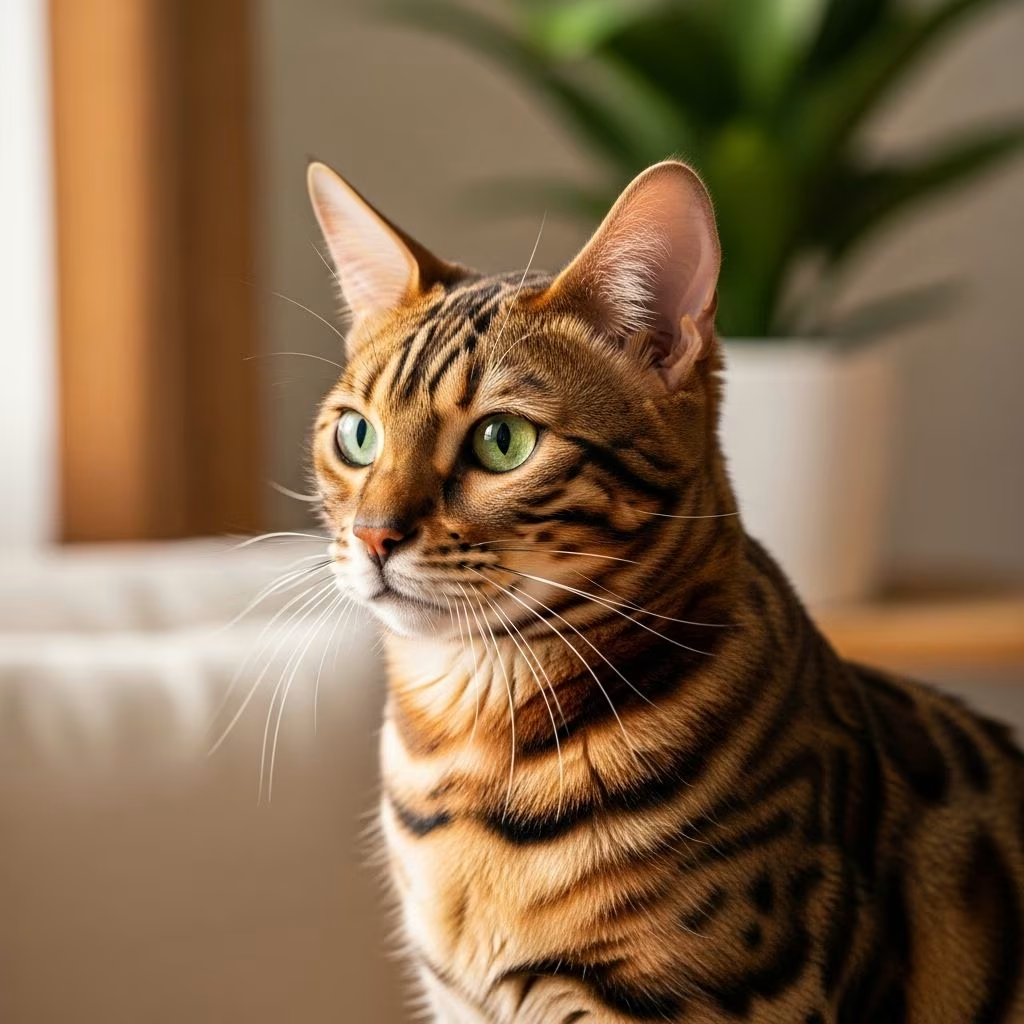
Bengals display a distinctive broad head with modified wedge shape and rounded contours, appearing longer than it is wide. Their high cheekbones contribute to their alert and inquisitive expression. The ears are proportionally small and positioned naturally, while their eyes convey an expressive nocturnal quality that emphasizes their wild ancestry. This combination creates what breeders describe as the breed’s characteristic “wild appearance,” despite their fully domesticated nature.
Coat and Coloration
Perhaps the most celebrated feature of the Bengal is their extraordinary coat. The fur is short, close-lying, soft, and luxurious, with a texture that feels silky to the touch. What truly sets Bengal coats apart is their unique “glitter” effect—an iridescent shimmer caused by light reflection at the hair tips, creating a sparkling, jewel-like appearance that makes their coats appear to shimmer under light. This brilliant fur effect represents one of the most distinctive visual characteristics of the breed.
Bengals display diverse coat patterns inherited from their wild ancestry. Their markings can be spotted, rosetted, arrowhead-shaped, or marble patterned, resembling their leopard cat ancestors. The breed comes in multiple color variations, including brown, snow silver, blue, and melanistic (black) patterns. The traditional brown Bengal features rich brown or tawny ground colors with bold spotted or rosetted markings. Snow Bengals display lighter, cream-colored coats with subtle markings, while blue Bengals showcase cool gray-blue tones. These varied patterns give each Bengal a unique appearance, making no two cats exactly alike.
Temperament and Personality Traits
Energy and Activity Levels
Bengali cats are renowned for their exceptional energy and activity levels that persist throughout their lives. These cats maintain a kitten-like energy and attitude well into their senior years, distinguishing them from many other breeds that naturally slow down with age. Bengals are highly active and inquisitive, constantly seeking mental and physical stimulation. Their high activity levels make them playful and adventurous companions, always ready for engagement and exploration. This characteristic makes them ideal for owners who can provide extensive environmental enrichment and interactive play.
Intelligence and Trainability
Bengal cats exhibit exceptional intelligence and cognitive abilities that place them among the cleverest feline breeds. They demonstrate remarkable problem-solving skills, can learn tricks comparable to dogs, and often enjoy playing fetch and other interactive games. Many Bengals are quite trainable and often learn to respond to commands, walk on a harness and leash, and even use human toilets with proper training. Their sharp wit and curiosity drive them to explore their surroundings with keen adventure, making them engaging and intellectually stimulating companions.
Water Affinity
A distinguishing characteristic of Bengals is their fascination with and love of water—highly unusual among domestic cats. Bengals often enjoy swimming, watching running water, and may attempt to join their owners in the shower or play in bathtubs. This trait reflects their wild ancestry and makes them unique among domesticated feline companions. Owners frequently report their Bengals displaying unusual enthusiasm for water-related activities.
Vocality and Communication
Bengal cats are notably talkative and expressive in their communication with humans. They communicate through chattering, meowing, purring, and chirping with greater frequency and volume than many other cat breeds. Their meow is sometimes described as slightly husky or more pronounced than typical domestic cats. Bengals use their vocal abilities to express their needs, seek attention, and engage with their human companions in interactive ways. When content, their purrs are often exceptionally loud, sometimes audible from another room.
Affection and Sociability
Most Bengal cats are tender and deeply affectionate toward their human companions. Despite their wild appearance, they are easy-going and friendly, displaying genuine fondness for their owners. They are independent yet appreciate interactive relationships with their people. Bengals tend to be attention-seekers, actively engaging with their owners through play and interaction rather than displaying the aloof behavior common in more reserved cat breeds. Their adaptability and outgoing nature allow them to coexist harmoniously with dogs and other pets in many households.
Activity Needs and Exercise Requirements
Climbing and Mountaineering
Bengals possess extraordinary climbing abilities and love to climb wherever their ingenuity allows. They display athletic prowess comparable to their wild ancestors, scaling heights and navigating spaces that would challenge other cats. Bengals adore trees, high shelves, and elevated cupboards, requiring vertical territory in their living environments. Providing cat trees, wall-mounted shelves, and climbing opportunities is essential for satisfying their natural climbing instincts and preventing destructive behaviors.
Enrichment and Mental Stimulation
Bengals require high levels of environmental enrichment including simulated hunting games and interactive play. These intelligent cats need regular mental stimulation to prevent boredom and associated behavioral problems. Interactive toys, puzzle feeders, wand toys, and games that mimic hunting provide essential mental engagement. Many owners find that Bengals particularly enjoy interactive play sessions with their owners, making daily engagement time crucial for their wellbeing.
Object Manipulation and Curiosity
Bengals are known for their curious behavior of hiding objects, sometimes described as attempting to capture owner attention through this behavior. Their innate curiosity means they may find objects interesting and move them to different locations. Securing small items, toxic plants, and hazardous materials is important in Bengal households, as their inquisitive nature drives them to explore and manipulate their environment.
Grooming and Coat Care
Bengal cats require weekly grooming to maintain their stunning coats in optimal condition. Despite their short coat length, regular brushing removes loose hair, distributes natural oils, and keeps their luxurious fur looking its best. Weekly grooming sessions also provide bonding opportunities and allow owners to check for any skin issues or abnormalities. Their minimal shedding compared to longer-haired breeds makes maintenance relatively manageable for dedicated owners.
Litter Box Requirements
Bengals are exceptionally clean cats with particular preferences regarding their litter facilities. They require impeccable, clean litter trays and may refuse to use facilities that don’t meet their cleanliness standards. The tray should be cleaned multiple times within 24 hours to maintain their preferences. Many Bengal owners find success training their cats to use human toilets, eliminating the need for traditional litter box maintenance. This training requires patience but often proves worthwhile for committed owners.
Living Environment Considerations
Space Requirements
Bengals require extensive outdoor space or environments that accommodate their high activity levels and climbing abilities. These cats are not ideal for apartment living unless owners can provide significant environmental enrichment and dedicated play areas. Access to secure outdoor spaces, such as catios or enclosed gardens, greatly enhances their quality of life. For indoor-only Bengals, creating vertical territory, providing interactive toys, and ensuring daily engagement is essential.
Calm Environment
Despite their high energy, Bengals also benefit from calm environments where they can retreat and rest. Providing quiet spaces, comfortable beds, and areas for relaxation helps balance their active nature. Bengals can typically be left alone for a few hours but thrive with regular owner interaction and engagement.
Ideal Owner Profile
Bengal cats benefit significantly from experienced cat owners who understand their unique needs and temperament. These cats are not suitable for first-time cat owners or families seeking a passive, low-maintenance pet. Ideal Bengal owners appreciate their wild appearance, embrace their high energy, provide extensive enrichment, and enjoy interactive relationships with their feline companions. Owners must be prepared for their vocal nature, climbing abilities, and strong personalities.
Color Patterns and Varieties
Brown Bengal
The classic brown Bengal features warm, rich ground colors with distinctive spotted or rosetted markings. These cats display the most iconic Bengal appearance, resembling miniature leopards with their bold pattern contrast.
Snow Bengal
Snow Bengals possess lighter, cream-to-ivory colored coats with silver undertones and subtle ghost-like markings. This pattern includes seal point, blue point, and lynx point variations, each displaying unique color characteristics while maintaining the distinctive Bengal structure.
Silver Bengal
Silver Bengals showcase sleek gray-to-silver ground colors with bold black markings, creating striking contrast. The silver coloration gives these cats an especially elegant and distinctive appearance.
Blue Bengal
Blue Bengals display cool gray-blue ground colors ranging from soft to deeper blue-gray tones. Their markings appear in contrasting shades, creating unique visual appeal within this color variation.
Melanistic Bengal
Melanistic Bengals display dramatic coloration appearing nearly black or very dark, though ghost tabby markings remain visible in kittens. As adults, most appear predominantly solid colored, though their underlying pattern genetics remain present.
Health and Lifespan
Generally healthy cats when sourced from reputable breeders, Bengals typically enjoy lifespans of 12-16 years with proper care. Responsible breeders screen for genetic conditions and maintain health testing standards. Regular veterinary care, appropriate nutrition, and environmental enrichment contribute to optimal health and longevity.
Frequently Asked Questions
Q: Are Bengal cats suitable for families with children?
A: Bengals can live with children when properly socialized, but they’re better suited for families with older children who understand their need for active play. They’re not ideal for homes with very young children who might misinterpret their energetic nature.
Q: Do Bengal cats require outdoor access?
A: While Bengals can live indoors, they benefit greatly from secure outdoor space or extensive environmental enrichment. Catios or enclosed gardens provide ideal solutions for indoor-outdoor access.
Q: How vocal are Bengal cats?
A: Bengals are among the most talkative cat breeds, communicating frequently with various vocalizations. Their chattiness is one of their defining characteristics and should be expected by prospective owners.
Q: Can Bengal cats be left alone?
A: Bengals can typically be left alone for a few hours but thrive with regular interaction. Extended periods alone may lead to boredom and behavioral issues.
Q: What makes Bengal coats glitter?
A: The glitter effect results from light reflection or refraction at the hair tips, creating an iridescent shimmer unique to the Bengal breed.
Q: Are Bengals good swimmers?
A: Yes, Bengals unusual among domestic cats love water and often enjoy swimming, bathing, and water play.
Q: How often should I groom my Bengal?
A: Weekly grooming maintains their coat health, removes loose hair, and provides bonding opportunities with your Bengal.
Q: What is the typical cost of a Bengal kitten?
A: Bengal kittens from reputable breeders typically cost $1,000-$3,000 or more, depending on lineage, color, and breeder reputation.
Q: Do Bengal cats get along with other pets?
A: With early socialization, Bengals can coexist harmoniously with dogs and other cats, thanks to their adaptable and outgoing nature.
Q: What kind of food do Bengal cats need?
A: Bengals require high-quality, protein-rich cat food supporting their active metabolism. Consult your veterinarian for specific nutritional recommendations.
References
- Bengal Breed Standard — The Cat Fanciers’ Association. 2024. https://cfa.org/breed/bengal/
- Bengal Cat Breed Information — Purina UK. 2024. https://www.purina.co.uk/find-a-pet/cat-breeds/bengal
- 15 Fascinating Facts About Bengal Cats — Feliway. 2024. https://us.feliway.com/blogs/news/15-fascinating-facts-about-bengal-cats
- 27 Facts About Bengals — Royal Bengal Cattery. 2024. https://royalbengalcattery.com/about-bengals/27-facts-about-bengals.html
- Bengal Cat — Wikipedia. 2024. https://en.wikipedia.org/wiki/Bengal_cat



