

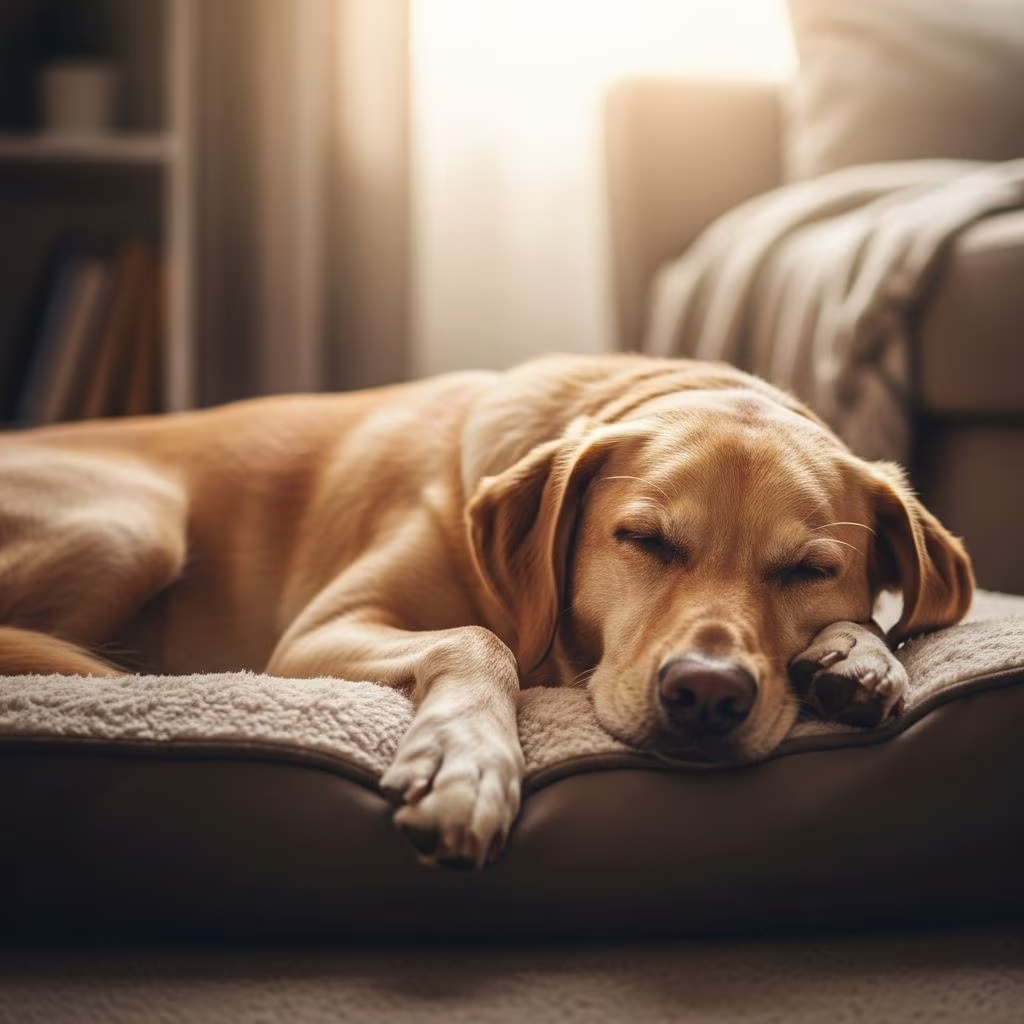
Training is one of the best ways to build a strong bond with your dog, but it can also feel slow and frustrating when new cues do not seem to stick. Recent research suggests that one simple change can significantly improve your dog’s learning: letting them nap after training.1 When dogs sleep after practicing a cue, their brains are busy processing and storing that new information, which can lead to better performance later.
This article explains how naps support dog training, what science says about sleep and memory in dogs, and how you can structure your sessions and environment so your dog learns more effectively and enjoys the process.
Why Sleep Matters for Dogs Learning New Cues
Sleep is not just down time for dogs. During sleep, their brains replay recent experiences and strengthen the connections that support learning and memory. Studies using non-invasive sleep recordings in dogs show that training before a nap changes brain activity during sleep, indicating active processing of new information.1
Researchers have found that dogs perform newly learned cues better after a sleep period compared with immediately after training.1 This pattern is consistent with human research, where sleep supports both short-term and long-term memory consolidation.2
How Sleep Supports Memory in Dogs
Although research in dogs is still developing, several mechanisms are thought to be involved:
- Memory consolidation: During certain sleep stages, the brain replays and stabilizes new experiences, helping turn short-term learning into long-term memory.2
- Synaptic remodeling: Sleep allows brain connections (synapses) involved in new skills to be strengthened while unnecessary connections are reduced, improving efficiency.3
- Emotional regulation: Well-rested dogs are generally less irritable and more resilient, which supports calm, focused training sessions.4
For dogs, this means that a nap after practicing a new cue helps the brain file that skill away so it is easier to retrieve later.
What a Key Study Revealed About Naps and New Cues
A notable study from a Hungarian research team explored how sleep after training affects dogs’ ability to learn a new verbal cue for an already known behavior (for example, using a fresh word for “sit”).1 The researchers used two main experiments to examine both immediate and longer-term effects.
Experiment 1: Three-Hour Nap After Learning
In the first experiment, dogs were taught a new cue for a behavior they already understood. After the learning session, the dogs were encouraged to take a three-hour nap while their sleep was monitored using polysomnography (a comprehensive sleep study technique).1
Key findings included:
- Dogs performed the new cue better after the nap than they did directly after training.
- Sleep recordings suggested dogs might have slept more deeply after learning, which is consistent with the idea that the brain works harder to process fresh information.1
In practice, this implies that if your dog seems to understand a cue during training but is not reliable, allowing a long, uninterrupted sleep afterward can improve their performance the next time you ask for that behavior.
Experiment 2: Different Post-Training Activities
The second experiment looked at what happens when dogs engage in different activities for one hour immediately after training. After learning a new cue, dogs were assigned to one of four conditions for that hour:1
- Sleep (a short nap)
- On-leash walk
- Unrelated training (learning additional, different skills)
- Play with a food-stuffed toy (e.g., a Kong-style toy)
The dogs were then retested:
- After the one-hour break (short-term test)
- Again one week later (long-term test)
Short-Term vs. Long-Term Effects
| Post-Training Activity (1 hour) | Short-Term Effect (after 1 hour) | Long-Term Effect (after 1 week) |
|---|---|---|
| Sleep (short nap) | No clear improvement | Improved performance after several nights of sleep |
| On-leash walk | No clear improvement | Improved performance similar to the sleep group |
| Play with food-stuffed toy | Worse performance on new cue | Performance remained poorer compared with nap/walk groups |
| Unrelated training | Worse performance on new cue | Still worse after a week, suggesting interference |
These results suggest that:
- Sleep and calm activity (like a walk) support long-term retention, especially after dogs have had several full nights of sleep.
- Highly engaging or complex activities right after training, such as intense toy play or learning additional skills, may interfere with how well a new cue is stored and recalled later.
Why Some Post-Training Activities Help and Others Hurt
Not all post-training activities affect learning the same way. The type and intensity of what your dog does next can either support or compete with the new information they just learned.
How Naps and Walks Support Learning
In the study, dogs that slept or went for a calm leash walk after learning did not show big improvements right away, but after a week they performed the new cue more reliably.1 That suggests that:
- A short nap may prime the brain for deeper processing once the dog gets overnight sleep.
- A relaxed walk can act as a mental break, helping lower arousal and giving the brain space to begin consolidating new information.
From a practical perspective, alternating focused training with quiet time or gentle walks can help prevent mental fatigue and give your dog a chance to recharge.
Why Intense Play and Extra Training Can Backfire
Dogs that played with a high-value food toy or were given additional, unrelated training right after learning the new cue actually performed worse on that cue, both shortly afterward and, in the case of extra training, even a week later.1
There are several likely reasons:
- Competing memories: When multiple new cues or very exciting activities follow one another, the dog’s brain may struggle to prioritize which information to store, causing confusion.
- Overload: Learning multiple new skills in quick succession can overwhelm a dog, especially if they are young or easily stressed.
- Attention shift: A food-stuffed toy directs the dog’s attention fully to the toy and away from the trainer, making it harder for the training session’s information to be retained.
Using these activities is not wrong, but timing matters. They may be better at other points in the day rather than immediately after learning a new cue you want to stick.
How Many Naps Do Dogs Need for Healthy Learning?
Dogs, especially puppies, already spend much of their day asleep. Understanding normal sleep needs can help you plan training sessions around your dog’s natural rhythm.
- Adult dogs commonly sleep around 12–14 hours per day, combining nighttime sleep with daytime naps.4
- Puppies may sleep 18–20 hours per day, because their brains and bodies are developing rapidly.5
Veterinary experts note that sleep in young animals is crucial for brain development, information processing, and physical growth.5 A well-rested puppy is more capable of absorbing new cues and is less likely to display overtired, hyper behaviors that can be mistaken for extra energy.
Signs Your Dog or Puppy Needs a Nap
Recognizing when your dog is ready for rest can prevent frustration and make training smoother. Common signs of fatigue include:
- Yawning, blinking, or struggling to keep their eyes open
- Suddenly lying down or seeking a quiet area
- Becoming more mouthy or grabby than usual
- Zoomies or chaotic behavior that appears out of proportion to the situation
That over-the-top, “wild” behavior often means your dog is overtired, not under-exercised. A calm break or a nap usually helps more than more stimulation.
Designing Training Sessions With Naps in Mind
To take advantage of the memory boost that sleep provides, you can design your dog’s training schedule to build in rest and recovery.
Before Training: Set Your Dog Up for Success
- Choose a time of day when your dog is awake but not overexcited, such as mid-morning or early evening.
- Make sure your dog’s basic needs (toilet break, thirst, hunger) are addressed so they can focus.
- Keep sessions short—often 5–10 minutes is enough, especially for puppies.
During Training: Focus on One Main Goal
- Work on one new cue or concept per session whenever possible.
- Use high-value rewards and clear, consistent cues.
- End the session on an easy success, so your dog finishes feeling confident.
After Training: Transition to Rest
The transition out of training is important. Abruptly stopping without a clear end can leave some dogs frustrated or wound up. Instead:
- Give a predictable end-of-session signal (for example, “All done!”).
- Offer a few minutes of calm affection or quiet time together.
- Guide your dog to a comfortable, familiar resting place such as a bed or crate.
- Allow for a nap of 30–60 minutes or more, depending on age and schedule, before moving on to anything demanding.
If a nap is not practical immediately, opt for a calm walk instead of intense play or more complex training.
Controlling the Training Environment for Better Learning
Even with well-timed naps, your dog’s ability to remember new cues depends heavily on where and how you train. A calm, predictable environment helps your dog focus, which makes the practice before the nap more effective.
Start in Low-Distraction Settings
- Begin training in quiet, familiar areas—your living room, kitchen, or a fenced yard.
- Limit visual and sound distractions by turning off the TV and keeping other pets in another room.
- Keep the training area small so your dog is not tempted to wander away.
As your dog becomes reliable with a cue, you can gradually add distractions to help them generalize the behavior.
Progress Gradually to More Challenging Places
Once a cue is well learned in a calm space, you can practice in:
- The backyard with mild noises or movement in the distance
- A quiet park during less busy times
- More distracting environments, like busier streets or dog-friendly stores, but only after earlier steps are solid
With each step up in difficulty, it helps to:
- Use higher-value rewards than you use at home.
- Ask for slightly easier versions of the behavior at first.
- Keep sessions short and give your dog regular breaks.
Practical Tips: Putting It All Together
To make the most of naps in your dog’s training:
- Plan important new cues for times when a nap or calm period can follow soon after.
- Avoid stacking multiple difficult lessons back-to-back.
- Use walks or gentle sniffing sessions as low-pressure breaks between focused training blocks.
- Reserve highly exciting toys or games for times when you are not relying on your dog to remember a brand-new cue.
- Watch for signs of tiredness and be willing to end the session early if your dog is fading.
Frequently Asked Questions (FAQs)
Q: How long should my dog nap after training?
A: There is no single perfect length, but research suggests that longer, deeper sleep supports better memory consolidation than very brief rests.1 For many dogs, a 30–90 minute nap after training is helpful, while normal overnight sleep further strengthens learning.
Q: Is it okay to train my dog right before bedtime?
A: Yes. Training shortly before a longer sleep period may be especially beneficial because the dog’s brain has many continuous hours to consolidate new information.2 Keep the session positive and not overly intense so your dog can settle easily afterward.
Q: My dog seems hyper after training. Does that mean they need more exercise?
A: Not always. Many dogs, especially puppies, become excitable or mouthy when overtired. In those cases, a calm break and a nap may help more than adding extra stimulation.
Q: Can I still use puzzle toys or food-stuffed toys if they hurt learning?
A: Puzzle toys are useful for enrichment but may not be ideal immediately after teaching a brand-new cue. You can still use them at other times of the day or after skills your dog already knows well.
Q: How do I know if my dog is sleeping too much?
A: While many adult dogs sleep around half the day, sudden changes in sleep patterns, excessive lethargy, or difficulty waking can signal a health problem.4 If you notice a significant change or have concerns, consult your veterinarian.
References
- Sleep and learning in dogs: Effects of training and sleep on memory consolidation — Institute of Cognitive Neuroscience and Psychology, Hungarian Academy of Sciences. 2017-05-01. https://econtent.hogrefe.com/doi/10.1027/1618-3169/a000382
- Sleep facilitates memory consolidation — Born J., Wilhelm I., Nature Reviews Neuroscience. 2012-02-22. https://www.nature.com/articles/nrn3112
- Synaptic homeostasis and sleep: a hypothesis — Tononi G., Cirelli C., Sleep Medicine Reviews. 2006-02-01. https://doi.org/10.1016/j.smrv.2005.05.002
- Behavior problems in dogs related to inadequate sleep — American College of Veterinary Behaviorists (position summary). 2021-06-01. https://www.dacvb.org/page/behaviorfaq
- Sleep in animals: a state of adaptive inactivity — Siegel J., Nature. 2005-10-27. https://www.nature.com/articles/nature04259



