

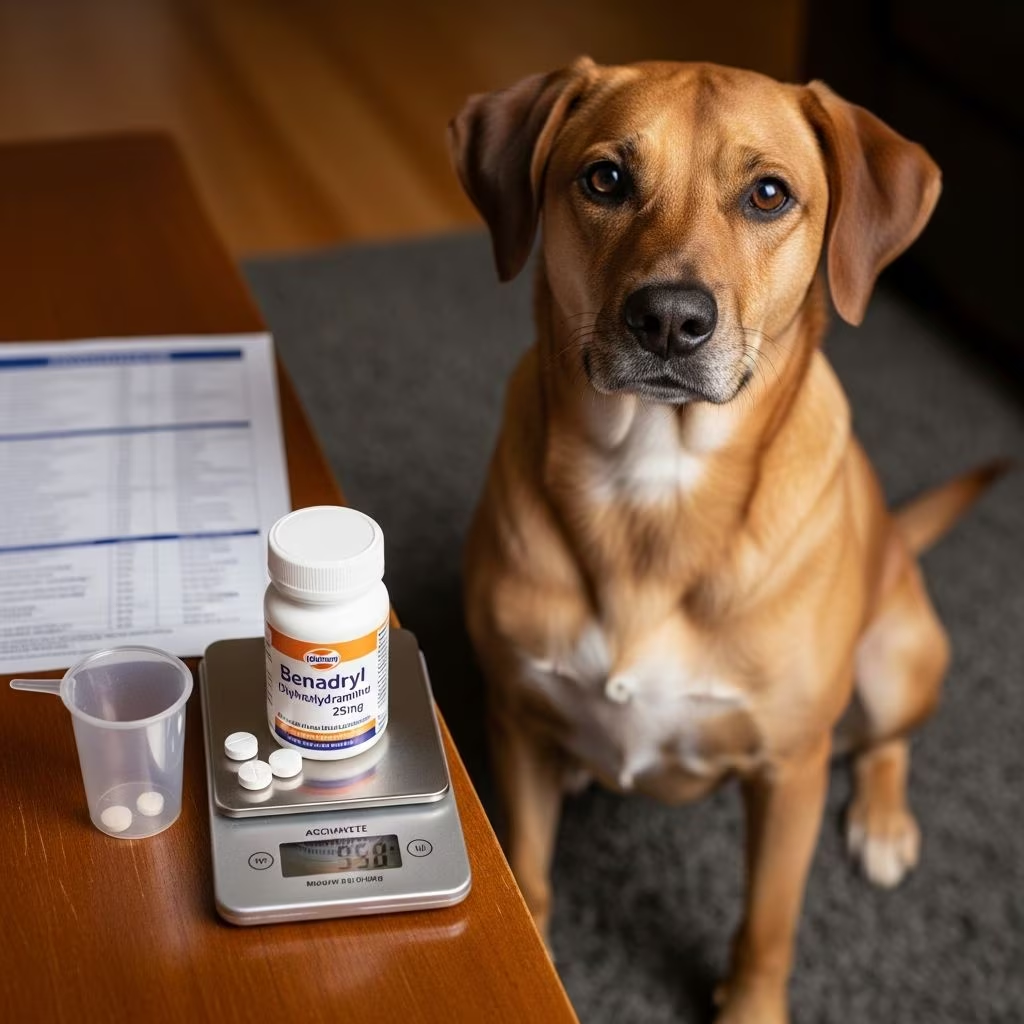
Benadryl for Dogs: How Much Can I Give My Dog?
As a pet owner, you may find yourself wondering whether Benadryl is safe for your dog and, if so, how much you should administer. Benadryl, the common name for diphenhydramine, is an over-the-counter antihistamine that can help manage various conditions in dogs, including allergies, itching, and motion sickness. However, proper dosing is crucial to ensure your dog’s safety and the medication’s effectiveness. Understanding the correct dosage based on your dog’s weight and individual needs is essential before giving any medication to your pet.
Understanding Benadryl Dosage for Dogs
The correct Benadryl dosage for dogs is determined primarily by their body weight. According to the Merck Veterinary Manual, the recommended dosage range is 2 to 4 milligrams per kilogram of body weight, or approximately 0.9 to 1.8 milligrams per pound of your dog’s weight. For most practical purposes, veterinarians recommend a simplified approach: approximately 1 mg of Benadryl per pound of body weight as a standard dose.
This straightforward calculation makes it easier for pet owners to determine the appropriate amount without complex conversions. For example, a 10-pound dog would typically receive about 10 mg per dose, while a 50-pound dog would receive approximately 50 mg. The dosage can be given two to three times daily, typically spaced 8 to 12 hours apart, depending on your dog’s specific symptoms and your veterinarian’s recommendations.
Benadryl Dosage Chart by Weight
To help pet owners determine the appropriate dosage for their dogs, here is a comprehensive dosage chart based on body weight. This chart provides both tablet and liquid Benadryl dosing recommendations:
| Dog’s Weight (lbs) | Benadryl Tablets (mg) | Liquid Benadryl (12.5 mg/5 ml) |
|---|---|---|
| 10 pounds | 10 mg | 4 ml |
| 20 pounds | 20 mg | 8 ml |
| 30 pounds | 30 mg | 12 ml |
| 40 pounds | 40 mg | 16 ml |
| 50 pounds | 50 mg | 20 ml |
| 60 pounds | 60 mg | 24 ml |
| 70 pounds | 70 mg | 28 ml |
| 80 pounds | 80 mg | 32 ml |
| 100 pounds | 100 mg | 40 ml |
This chart simplifies the dosing process by providing ready-made recommendations for common dog weights. Keep in mind that these are general guidelines, and your veterinarian may recommend adjustments based on your individual dog’s health status and specific condition being treated.
Maximum Recommended Dosage
While Benadryl can be helpful for dogs, it’s important to administer the correct amount and not exceed maximum recommended dosages. The maximum recommended dosage is 4 milligrams per kilogram of body weight (mg/kg). To give you practical examples:
– A small dog weighing around 10 pounds should receive no more than 18-20 mg- A medium-sized dog weighing 25 pounds could be given up to 45 mg- A larger dog weighing 50 pounds should not exceed 90 mg- Very large dogs weighing 100 pounds should not receive more than 200 mg
Never exceed these maximum dosages without direct guidance from your veterinarian, as overdosing can lead to adverse effects and potential health complications.
How Often Can I Give My Dog Benadryl?
You can safely give your dog two to three doses of Benadryl during each 24-hour period, with doses typically spaced 8 to 12 hours apart. This means you could potentially give Benadryl in the morning, afternoon, and evening if necessary. However, the frequency should be determined based on your dog’s symptoms and your veterinarian’s specific recommendations.
For mild allergies or itching, starting with once or twice daily administration may be sufficient. More severe symptoms may warrant three daily doses. Always follow your veterinarian’s advice regarding frequency, as they understand your dog’s individual health needs and medical history.
Different Forms of Benadryl for Dogs
Benadryl comes in several different formulations, each with specific considerations for dogs:
Tablets and Capsules
Standard Benadryl tablets typically come in 25 and 50 mg sizes. Tablets should be given whole or crushed and mixed with a small amount of food to ensure your dog consumes the entire dose. For small dogs under 15 pounds, tablets can be difficult to portion accurately.
Liquid Benadryl
Liquid formulations are particularly useful for small dogs or those who have difficulty swallowing pills. When using liquid Benadryl, measure the dosage accurately using a syringe or dropper. The liquid can be mixed with your dog’s food or administered directly into their mouth. Most liquid Benadryl formulations contain 12.5 mg per 5 ml, making precise dosing easier.
Children’s Chewable Tablets
Children’s formulations of Benadryl may be easier to administer to small dogs. Dogs weighing less than 15 pounds can be more easily dosed with the children’s form, which is a lower strength than the standard adult tablets.
Injectable Forms
Veterinarians may use injectable diphenhydramine for severe allergic reactions or anaphylaxis. When given by injection directly into muscle, the dosage is 0.5 mg to 2 mg per kilogram of body weight.
Important Dosing Considerations
Several factors should influence your decision about Benadryl dosing for your dog:
Severity of Symptoms
If your dog is experiencing mild allergies or itching, the lower end of the dosage range may be sufficient. However, for more severe symptoms such as significant swelling, sneezing, or hives, your veterinarian may recommend a higher dosage within the safe range.
Timing of Administration
Benadryl appears to work better in dogs when started at the very onset of allergic symptoms, compared to using it during the peak of symptoms. This means if you notice your dog beginning to itch or show early signs of an allergic reaction, administering Benadryl promptly may provide better results.
Age and Health Status
Age, weight, and other health conditions can all be factors in determining the appropriate dosage. Older dogs or those with certain medical conditions may require dosage adjustments. Always inform your veterinarian about your dog’s complete medical history.
Common Uses of Benadryl for Dogs
Benadryl can be used to manage several conditions in dogs:
– Allergic reactions from food or environmental triggers- Anaphylaxis (severe allergic reactions)- Allergic skin disease and itching- Motion sickness during travel- Anxiety-related symptoms
However, Benadryl is not appropriate for all conditions, and some dogs may have underlying health issues that make antihistamines unsuitable. This is why veterinary consultation is essential before starting any medication.
Potential Side Effects
While Benadryl is generally considered safe for dogs when dosed correctly, some side effects may occur:
– Lethargy or sedation- Constipation- Dry mouth- Urinary retention- Increased heart rate in some cases
Most dogs tolerate Benadryl well, and side effects are typically mild. However, if your dog experiences severe or persistent side effects, contact your veterinarian immediately.
When to Consult Your Veterinarian
Before giving Benadryl to your dog, consult with your veterinarian, especially if:
– Your dog is pregnant or nursing- Your dog has existing health conditions- Your dog is taking other medications- Your dog is very young or elderly- Your dog has a history of adverse reactions to medications- The symptoms persist despite Benadryl treatment- You’re unsure about the appropriate dosage for your dog
Your veterinarian can provide personalized recommendations based on your dog’s specific needs and medical history, ensuring safe and effective treatment.
Frequently Asked Questions (FAQs)
Q: How much Benadryl can I give my 60-pound dog?
A: For a 60-pound dog, the standard dose is approximately 60 mg. Since Benadryl commonly comes in 25 and 50 mg tablets, a dose of 50 mg would be a good starting point. This can be given two to three times daily as needed, spaced 8 to 12 hours apart.
Q: Can I give my dog 50 mg of Benadryl?
A: You can generally give 50 mg of Benadryl to dogs that weigh 50 pounds or more, as this dose falls within the standard 1 mg per pound recommendation. For smaller dogs, this dosage would be too high.
Q: What if my dog weighs less than 10 pounds?
A: For very small dogs, liquid Benadryl or children’s chewable tablets are more appropriate, as they allow for more precise dosing. A 5-pound dog, for example, would need only 5 mg per dose. Consult your veterinarian for guidance on liquid dosing or appropriate formulations for tiny dogs.
Q: How long does Benadryl take to work in dogs?
A: Benadryl typically begins working within 15 to 30 minutes when given orally, though individual dogs may vary. For optimal results, administer Benadryl at the first sign of allergic symptoms rather than waiting until symptoms peak.
Q: Are there any drug interactions I should know about?
A: Benadryl may interact with certain medications. Always inform your veterinarian about any other medications or supplements your dog is taking before starting Benadryl treatment.
Q: Is human Benadryl the same as veterinary Benadryl?
A: While the active ingredient (diphenhydramine) is the same, human and veterinary formulations may differ. Some human formulations contain additional ingredients that may not be safe for dogs. Always check the ingredient list and consult your veterinarian about using human-formulated Benadryl for your dog.
Q: Can I give my dog Benadryl every day?
A: While Benadryl can be given two to three times daily, long-term daily use should only be done under veterinary supervision. Your veterinarian may recommend alternative treatments or monitor your dog more closely if extended use is necessary.
Best Practices for Administering Benadryl
To ensure safe and effective administration of Benadryl to your dog, follow these best practices:
Measure Accurately: Use precise measurements when administering liquid Benadryl. A syringe or dropper is more accurate than estimating amounts.
Mix with Food: If your dog is resistant to taking medication, mix crushed tablets or liquid with a small amount of food. Ensure your dog consumes the entire dose.
Monitor Your Dog: After administering Benadryl, observe your dog for any adverse reactions or changes in behavior. Keep track of effectiveness and any side effects.
Keep Records: Document when you give Benadryl, the dosage amount, and your dog’s response. This information will be valuable for your veterinarian.
Store Properly: Keep Benadryl in a cool, dry place, away from direct sunlight and moisture. Check expiration dates regularly and dispose of expired medication properly.
Conclusion
Benadryl can be a safe and effective option for managing allergies and allergic reactions in dogs when used correctly and under proper guidance. Remember that the appropriate dosage is based on your dog’s weight, with a practical dose of approximately 1 mg per pound, given two to three times daily as needed. Always consult with your veterinarian before administering Benadryl to your dog, especially if your dog has underlying health conditions or is taking other medications. By following the recommended guidelines and maintaining open communication with your veterinary professional, you can help manage your dog’s allergies and keep them comfortable and healthy.
References
- Benadryl Dosing For Dogs: How To Use It Safely — Kingsdale Veterinary Hospital. 2024. https://www.kingsdale.com/benadryl-dosing-for-dogs-how-to-use-it-safely
- Can I Give My Dog Benadryl? — WebMD. https://www.webmd.com/pets/dogs/can-i-give-my-dog-benadryl
- Benadryl for Dogs: Is Diphenhydramine Safe for Dogs? — Pet Place. https://www.petplace.com/article/drug-library/drug-library/library/diphenhydramine-benadryl-for-dogs
- Benadryl® for Dogs: How Much Can I Give My Dog? — Chewy. https://www.chewy.com/education/dog/health-and-wellness/benadryl-for-dogs
- Can I Give My Dog Benadryl? And if So, How Much? — PetMD. https://www.petmd.com/dog/care/can-i-give-my-dog-benadryl-and-if-so-how-much
- Benadryl For Dogs: Uses, Side Effects, and Dosage Information — American Kennel Club. https://www.akc.org/expert-advice/health/benadryl-for-dogs/
- Benadryl for Dogs: Uses, Dosage, and Side Effects — GoodRx. https://www.goodrx.com/pet-health/dog/benadryl-for-dogs



