

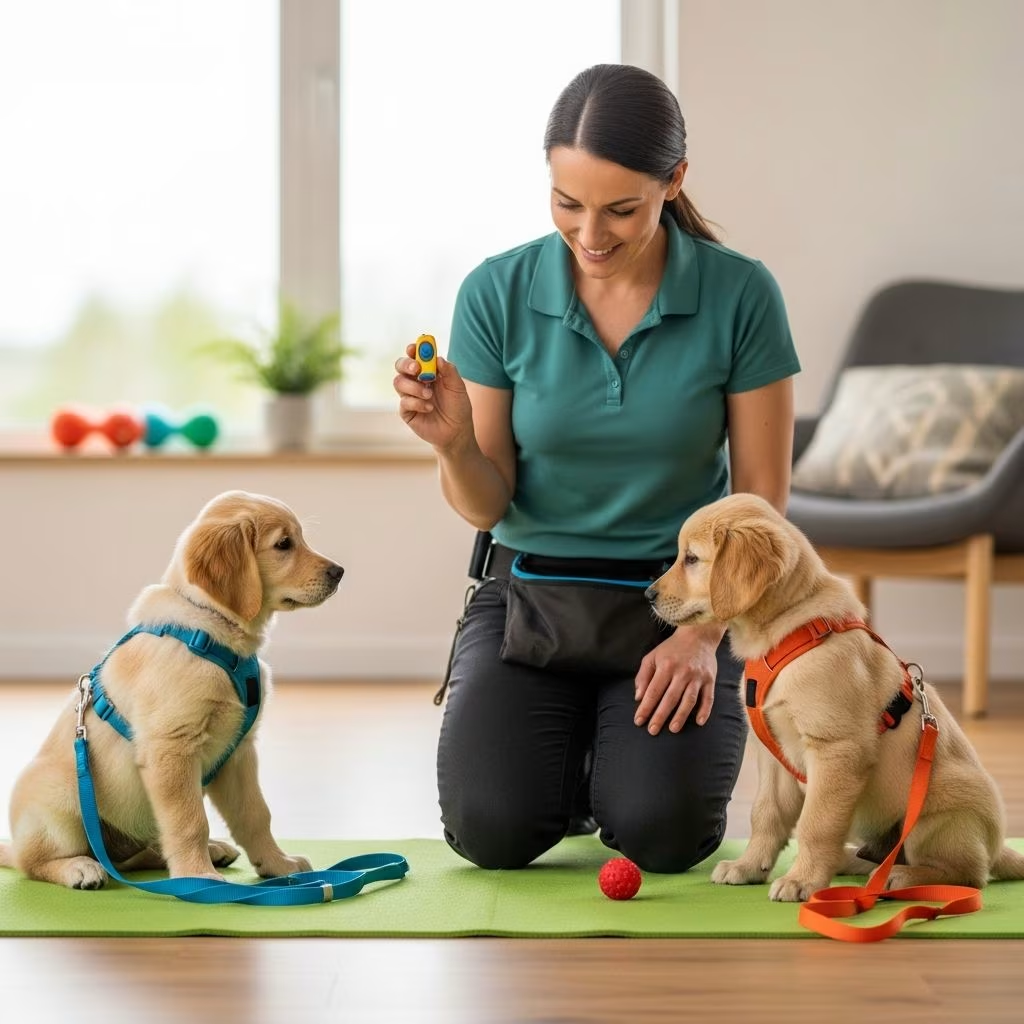
Bringing home one puppy is a big commitment. Bringing home two puppies at once is a lifestyle shift. With the right strategy, you can raise confident, well-mannered dogs, but it demands planning, structure, and a clear understanding of the unique challenges that come with littermates or same-age pups living together.
This guide explains why raising two puppies together is harder than it looks, how to prevent common behavior problems like littermate syndrome, and practical, step-by-step training strategies you can start using immediately.
Why Training Two Puppies at Once Is So Challenging
When two puppies grow up together, they often form an intense bond with each other. That bond can be wonderful, but it can also compete with the bond you need to build between each dog and their humans.
Many trainers and behavior professionals warn that raising littermates or same-age puppies can lead to problems such as:
- Hyper-attachment between the puppies, making separation distress more likely
- Poor social skills with unfamiliar dogs because they mostly practice playing with each other
- Difficulty focusing during training, as each pup is a constant distraction to the other
- Fearful or reactive behavior if they rely on each other instead of learning to cope independently
Behavior experts sometimes refer to this cluster of issues as littermate syndrome—not a formal diagnosis, but a shorthand for patterns commonly seen when two puppies are raised together with little structure.
Is It Ever a Good Idea to Get Two Puppies?
Two puppies can be successful in the same household if you are prepared to:
- Invest significantly more time in training and management than you would with one puppy
- Provide individual attention and training sessions for each pup
- Actively manage their relationship so they do not become over-dependent on each other
Think of it this way: raising two puppies is not “twice the work”—it is often closer to exponential effort because you are managing two individuals and their relationship.
Understanding Littermate Syndrome and Hyper-Attachment
Littermate syndrome describes a pattern where two puppies growing up together develop such an intense bond that their emotional and behavioral development is negatively affected.
Key issues often include:
- Separation distress when the puppies are apart
- Anxiety or shutdown in new environments without the other dog present
- Difficulty coping with normal life stressors, such as strangers, noises, or new dogs
Some behaviorists believe the core problem is hyper-attachment: the puppies rely so heavily on each other that they fail to build independent coping skills and strong relationships with humans.
| Healthy Sibling Bond | Possible Littermate Syndrome |
|---|---|
| Puppies enjoy each other but can relax apart. | Panic, whining, or destruction when separated. |
| Each pup can focus on humans during training. | Neither pup can concentrate if the other is nearby. |
| Play is balanced and easily interrupted. | Play escalates quickly; they ignore humans. |
| Comfortable meeting unfamiliar dogs and people. | Overwhelmed or fearful without their sibling. |
Before You Bring Home Two Puppies: What to Consider
If you are still deciding whether to bring home two puppies, consider the following questions:
- Do you have time for separate walks, training, and play sessions every day?
- Can you crate and house them separately at least part of the time?
- Are all family members on board with consistent training and rules?
- Do you have the budget for double vet care, training classes, and enrichment?
Many veterinarians and behavior professionals recommend staggering dogs’ ages instead—raising one puppy to adulthood and then adopting a second dog later, which can reduce behavior risks and make training more manageable.
Management Basics: Setting Up Your Home for Two Puppies
Success with two puppies starts with smart management. Your goal is to help each dog develop as an individual while still enjoying a positive relationship with their companion.
Separate Crates and Sleeping Arrangements
Each puppy should have their own crate or confined area so they can rest and self-soothe without relying on the other dog.
- Place crates in the same room initially if it helps them settle, but avoid letting them share a single crate.
- Practice taking one puppy out at a time, so they learn patience and do not rush doors together.
- Pair crate time with long-lasting chews or food puzzles to build positive associations.
Separate Resources
To prevent tension and resource guarding, give each puppy their own:
- Food and water bowls
- Bedding and resting spots
- Toys and chews (or supervise carefully if sharing)
Feeding in separate spaces can reduce competition and allows you to monitor each puppy’s appetite closely, which is important for health monitoring.
Core Training Strategy: Train Each Puppy as an Individual First
The most important rule when training two puppies is: teach each dog separately first, then gradually practice together.
Short, Focused One-on-One Sessions
Research on learning in dogs shows they learn best with short, frequent sessions using positive reinforcement. For two puppies, that means:
- Working with one puppy for 5–10 minutes while the other is safely confined with a chew or toy
- Switching roles so both get equal one-on-one time
- Keeping sessions upbeat, with plenty of rewards for correct responses
Start in low-distraction environments (like a quiet room) and gradually increase distractions only after each pup understands the basics.
Essential Skills to Teach Each Puppy
Each puppy should learn core life skills independently before you expect them to behave well together. Foundational behaviors include:
- Name recognition and attention to handler
- Sit, down, and stand
- Come when called (recall)
- Loose-leash walking
- Go to mat/place and relax
- Leave it and drop it
- Crate training and independent settling
Many of these basics are included in structured puppy classes, which remain one of the most effective ways to establish good manners early in life.
Socialization: Beyond Playing With Each Other
The critical socialization period in puppies typically extends up to about 12–16 weeks of age, when experiences strongly shape their long-term confidence and behavior. When you have two puppies, it can be tempting to assume they will “socialize each other,” but that is not sufficient.
Why Two Puppies Need Separate Social Experiences
Two same-age pups who mostly interact with each other may fail to learn how other dogs communicate, which can lead to awkward or even unsafe interactions later.
To build well-rounded dogs, provide:
- Individual outings to new places (parks, pet-friendly stores, quiet streets)
- Controlled meetings with friendly, vaccinated adult dogs and well-matched puppies
- Positive exposure to a variety of people, surfaces, sounds, and environments
Short, positive sessions—pairing new experiences with treats and play—help reduce the risk of fear and anxiety as the puppies mature.
Playtime Management Between the Puppies
Puppies can play hard and fast, and when there are two, play can escalate quickly. Your job is to:
- Supervise play and interrupt if it becomes too intense (chasing to the point of distress, body slamming, pinning that does not stop, or one puppy frequently trying to escape)
- Build in frequent “pauses in play”—separating them for a minute or two to let arousal come down
- End play while they are still having fun, then offer quiet activities like chews or naps
Teaching them to respond to cues like “come” or “that’s enough” during play helps ensure they learn to listen even when excited.
Preventing and Managing Problem Behaviors
Common problem behaviors in households with two puppies include excessive barking, rough play, jumping, and destructive chewing. Many of these issues stem from over-arousal, lack of structure, or inadequate individual training.
Over-Arousal and Difficulty Settling
Two puppies can keep each other in a constant state of excitement. To encourage calm behavior:
- Teach a clear “settle” on mat or bed for each puppy separately
- Use crates or gated areas for scheduled rest times so they do not rehearse endless rough play
- Provide mental enrichment (snuffle mats, puzzle feeders) to tire their brains instead of just physical play
Preventing Resource Guarding and Conflict
Guarding food, toys, or people can become an issue when two puppies are raised together. Prevention strategies include:
- Feeding separately and picking up bowls after meals
- Supervising high-value chews and separating if needed
- Teaching each pup to trade (exchange item for a treat) and to respond to “leave it” and “drop it”
Early intervention from a qualified behavior professional is important if you see serious guarding, growling, or fights over resources.
Building Strong Bonds: You, Not Just Each Other
One of the largest risks with two puppies is that they bond more strongly with one another than with their humans. To raise dogs who look to you for guidance:
- Schedule daily one-on-one time with each puppy: walks, training, play, or cuddle sessions
- Rotate which human works with which puppy so they respond to all family members
- Practice calling them individually by name and rewarding quick responses
The goal is for each puppy to see you as the center of their world—not just their sibling.
When and How to Train the Puppies Together
Only after each puppy can reliably perform core behaviors alone should you start practicing with them together.
Step-by-Step Progression
- Step 1: Train each puppy alone until they can respond to basic cues with moderate distractions.
- Step 2: Work in the same space but with visual barriers (e.g., gates or crates) so they can hear or see one another without full access.
- Step 3: Practice simple behaviors with both on leash, one dog working while the other practices settling or staying beside a handler.
- Step 4: Gradually increase the difficulty—longer stays, recalls past each other, loose-leash walking side by side.
Reward generously for calm behavior and listening to cues around their sibling.
Professional Help: Classes and Behavior Support
Raising two puppies is often smoother with professional guidance.
Puppy Classes
Many trainers recommend enrolling each puppy in separate puppy classes or, at minimum, ensuring they are handled by different family members so each dog can focus on their own human.
High-quality puppy classes typically include:
- Basic manners and obedience skills
- Guided, appropriate play with other puppies
- Handling for vet and grooming procedures
- Advice on home management and problem prevention
When to See a Behavior Professional
Seek help from a veterinarian or certified behavior professional if you notice:
- Severe distress when the puppies are apart
- Fights, injuries, or serious conflict during play
- Persistent fear of people, dogs, or new environments
- Escalating resource guarding or aggression
Early intervention is associated with better outcomes in many canine behavior issues.
Frequently Asked Questions (FAQs)
Q: Is it ever recommended to get two puppies at the same time?
A: Many behavior professionals discourage adopting two puppies together because of the increased risk of behavior problems, but it can work if you are prepared for separate training, socialization, and management for each dog and their relationship.
Q: How long should I separate the puppies for training sessions?
A: Aim for 5–10 minute individual sessions several times a day. Keep one puppy in a gated area or crate with a safe chew while you train the other, then switch roles.
Q: Can my puppies share a crate?
A: It is better for each puppy to have their own crate. Separate crates help them learn to self-soothe, prevent over-attachment, and reduce conflict over space and resources.
Q: Will two puppies automatically socialize each other?
A: No. Puppies that only play with each other may fail to learn appropriate social skills with unfamiliar dogs. Each pup still needs controlled, positive exposure to other dogs, people, and environments.
Q: What if I am already struggling with my two puppies?
A: Start by increasing individual crate time, implementing separate short training sessions, and reducing unsupervised joint play. If conflict, intense anxiety, or aggression is present, consult your veterinarian and a qualified behavior professional as soon as possible.
References
- Overall, Karen L. Manual of Clinical Behavioral Medicine for Dogs and Cats. — Elsevier. 2013-06-01. https://doi.org/10.1016/C2009-0-30147-0
- American Veterinary Society of Animal Behavior. AVSAB Position Statement on Puppy Socialization. — AVSAB. 2008-06-26. https://avsab.org/wp-content/uploads/2019/01/Puppy_Socialization_Position_Statement_Download_-_10-3-14.pdf
- American College of Veterinary Behaviorists. Decoding Your Dog. — Houghton Mifflin Harcourt. 2014-01-07. https://www.hmhbooks.com/shop/books/Decoding-Your-Dog/9780544334601
- Casey, Rachel A., et al. Human directed aggression in domestic dogs (Canis familiaris): Occurrence in different contexts and risk factors. — Applied Animal Behaviour Science. 2014-04-01. https://doi.org/10.1016/j.applanim.2014.02.002
- Macready, Alison et al. Preventing behavior problems in companion animals in the home. — Journal of Veterinary Behavior. 2020-01-01. https://doi.org/10.1016/j.jveb.2019.08.001



