European Rabbit Behavior: Care, Communication, And Housing
Understanding European rabbit behavior: communication, territoriality, social dynamics, and care.
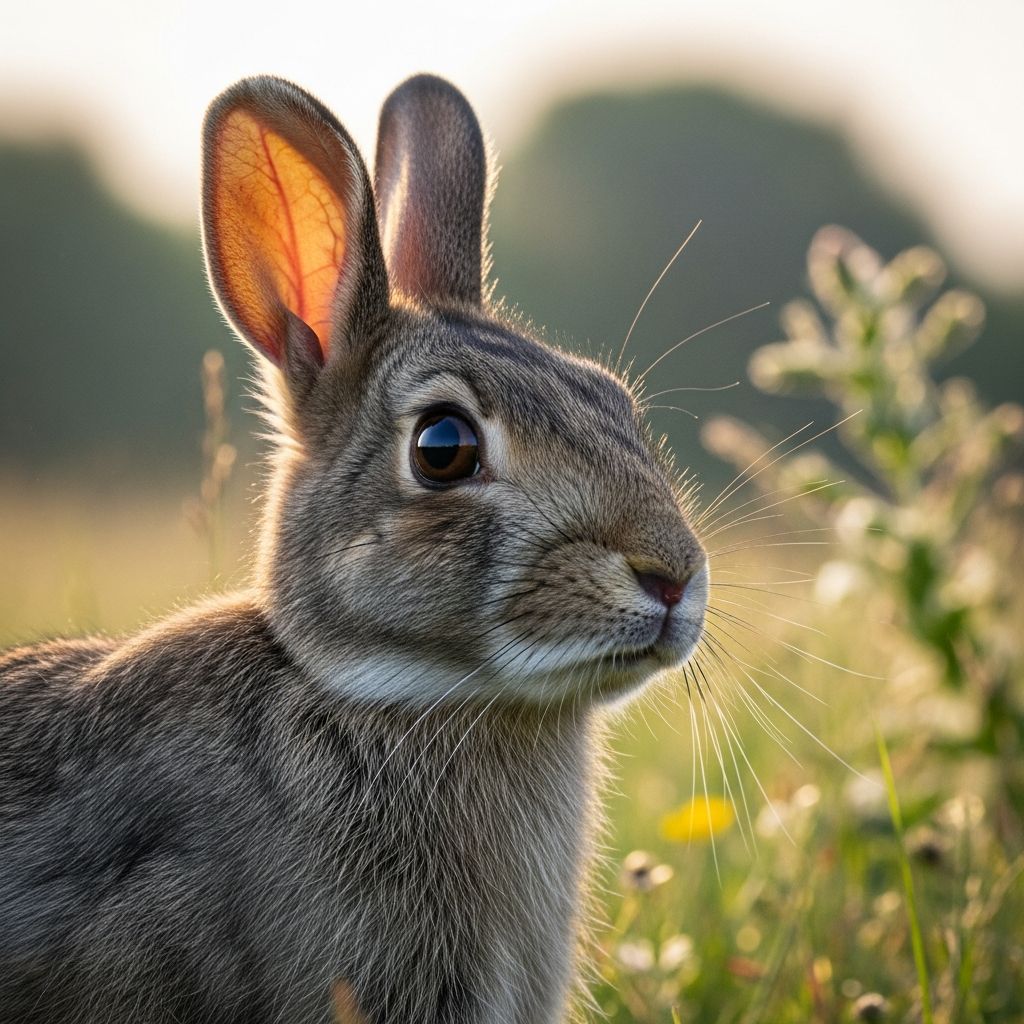
Understanding the Behavioral Essentials of European Rabbits
The European rabbit (Oryctolagus cuniculus) is a fascinating prey species with complex behavioral patterns shaped by millions of years of evolution. Understanding these behaviors is essential for veterinarians, caretakers, and rabbit enthusiasts who wish to provide optimal care and recognize important health and behavioral indicators. Rabbits are not solitary animals as commonly believed; they are highly social creatures with intricate communication systems, territorial behaviors, and social hierarchies. Their behavior reflects their dual nature as both prey animals requiring vigilance and social beings requiring companionship and stimulation.
Basic Biological and Behavioral Characteristics
European rabbits exhibit several fundamental behavioral traits that define their species. Rabbits are prey animals, which significantly influences how they respond to their environment and interact with other individuals. They naturally live in underground burrows or warrens, which provide protection from predators and serve as social hubs for colony living. One distinctive behavior is their use of latrines—designated areas where rabbits consistently deposit fecal pellets and urine, a behavior that continues even in domestic settings.
Rabbits are crepuscular animals, meaning they are most active during dawn and dusk hours, with significantly reduced activity during midday and nighttime hours. This activity pattern is crucial to understand when planning care schedules and environmental enrichment. As voracious eaters, rabbits consume large quantities of plant material throughout their active periods. An often misunderstood behavior is coprophagy and cecotrophy, wherein rabbits consume certain fecal pellets—specifically the soft cecotrophs produced in their cecum—to extract essential nutrients and vitamins. This is a normal, healthy process rather than a sign of nutritional deficiency or behavioral problems.
Social Structure and Colony Organization
European rabbits are highly social animals that naturally form colonies with complex social organizations. In wild populations, colonies typically consist of 6 to 10 individuals of both sexes, though this number can vary based on environmental conditions and resource availability. These colonies are subdivided into smaller social groups, with a typical composition including a dominant male and several subordinate females and males. Research indicates that groups may consist of approximately four to five unrelated males guarding up to 8 females, though social systems vary considerably and can range from pairs to groups of up to 20 individuals.
The social hierarchy is particularly important and influences numerous aspects of rabbit behavior and wellbeing. Dominance hierarchies in rabbits are established through agonistic encounters, and unfamiliar rabbits commonly demonstrate aggressive behavior when introduced as they establish rank order. However, these fights for dominance are normal social responses and necessary for colony function. Single rabbits may display signs of withdrawal, listlessness, hyperactivity, and destructiveness when lacking companionship and adequate stimulation. Stereotypic behaviors such as pawing at cage corners, excessive grooming, wire biting, and overeating often indicate a single rabbit that would benefit from appropriate social housing and enrichment.
Territoriality and Scent Marking Behaviors
Territoriality is a fundamental aspect of rabbit behavior, both in wild and domestic settings. Rabbits are highly territorial animals that use scent to mark and maintain boundaries around their core territory. Each colony maintains and defends its core area, typically around a breeding warren, from neighboring groups. Territory boundaries are marked through multiple scent communication methods that demonstrate the sophistication of rabbit communication systems.
Territorial scent marking occurs through several distinct mechanisms. Rabbits possess special submandibular glands on their chin that produce scent, which they deposit by rubbing their chin on branches, objects, and locations within their territory—a behavior called chinning. Urine is also deposited around territory boundaries as a scent marker. Additionally, rabbits have anal glands that produce a scented mucus coating on hard pellets, which are deposited in shallow scrapes called latrines or on conspicuous locations such as anthills along territory borders. Pellets used for territorial marking are typically darker in color than those not used for territorial purposes.
In domestic settings, all territorial behaviors observed in wild rabbits can be observed in house rabbits. Territorial scent marking is most prominent in intact male rabbits, which may urinate on perceived boundaries or even on their caregivers. Dominant males scent mark more frequently than subordinates, and dominant males mark most frequently in the presence of subordinate rivals. Female rabbits will scent mark their offspring, and does are openly hostile to other young, even pursuing and killing young from other colonies. Chewing and digging are also observed as territorial behaviors, particularly in does. Aggression between rabbits frequently arises from defense of territory, making understanding these behaviors critical for managing multi-rabbit households.
Communication and Body Language
European rabbits communicate through a combination of vocalizations, body language, and scent signals. Understanding these communication methods is essential for interpreting rabbit behavior and responding appropriately to their needs and emotions.
Vocalizations
European rabbits are relatively quiet animals compared to other species, though they possess at least two distinct vocalizations. The best-known vocalization is a high-pitched treble scream or squeal, often described as resembling the cry of a piglet. This distress call occurs when rabbits are in extreme distress, such as being caught by a predator or trap. During spring breeding season, bucks express contentment by emitting grunting sounds when approaching other rabbits. These grunts resemble shrill hiccups and are emitted with the mouth closed. Aggression is expressed with a low growl, which serves as a warning before potential aggressive interactions.
Physical Communication and Body Language
Rabbits utilize sophisticated body language to communicate emotional states and intentions. The alert rabbit may raise up on its rear limbs to scan the environment, but more subtle signs also indicate alertness. An erect tail communicates excitement, with the underlying stimulus potentially being positive, such as anticipation of food, or negative, such as perception of a threat. Ears directed up and forward indicate alertness. These signals may be combined with head bobbing, often performed as rabbits carefully evaluate novel stimuli in their environment.
Ear, head, or body shaking is often a sign of displeasure and can occur in response to annoying smells or unwanted handling. Interestingly, this behavior can also be observed as rabbits settle down and become relaxed enough to eat or groom, indicating the complexity of rabbit communication. Nudging or nuzzling with the nose is a positive behavior wherein house rabbits seek attention or petting from their caregivers. When rabbits have had enough interaction, they may push the caregiver’s hand away, communicating clear boundaries.
Licking is an important sign of affection and social acceptance in rabbits. Mutual grooming, or allogrooming, is believed to strengthen the social bond between rabbits. Nipping, frequently perceived as an expression of anger or annoyance, can also be performed merely to solicit attention, making context essential for proper interpretation. The “happy hop,” also called a “binky” or “dancing,” occurs when rabbits run around quickly and kick up their rear limbs, possibly leaping into the air with all four feet off the ground. Happy hops are most often observed during early evening hours and are considered expressions of exuberance in domestic rabbits.
Sexual and Reproductive Behaviors
Sexual behavior in rabbits manifests differently in males and females and significantly influences overall behavior and temperament. Understanding these behaviors is crucial for caregivers managing intact rabbits.
Sexual Behavior in Males (Bucks)
Sexual behavior in growing and mature male rabbits frequently manifests as territoriality. Chinning is frequently observed, and even juveniles that were previously litter trained may begin to urinate and defecate outside of their designated litter box. Bucks may spray urine on floors, walls, furniture, other pets, and even household members. Males can display signs of constant sexual drive and may mount companions, furniture, toys, and people. These behaviors can be problematic in household settings and are one reason spaying and neutering are recommended for domestic rabbits.
Sexual Behavior in Females (Does)
Chinning, circling, honking or oinking sounds, as well as nesting behavior including destructive digging and chewing, are all frequently observed in reproductively active female rabbits. Like males, does may also mount companions and spray urine. They often display intense mood swings, becoming more aloof, more irritable, and even aggressive toward other rabbits, other pets, and people as they protect their territory. Does may display hyperactivity or restlessness that does not subside until they are mounted by a buck, indicating the powerful influence of reproductive hormones on behavior.
Behavioral Indicators and Health Considerations
Several behavioral indicators provide important information about rabbit health and wellbeing. Stereotypic and abnormal behaviors are indicators of poor wellbeing and are significantly associated with single housing of rabbits in cages. Research demonstrates that singly housed does spend more time engaged in abnormal behaviors, including sham digging, floor chewing, and bar biting, compared to paired does. In contrast, rabbits housed in larger pens with appropriate space exhibited more species-typical behaviors, including rearing, stretching, hopping, and running.
Cage size is a significant contributor to sustained aggression in socially housed rabbits. Although domesticated rabbit species are derived from wild European rabbits, they retain many behaviors of their wild counterparts. Wild rabbits demonstrate submission by fleeing or retreating, and cages typically used for social housing frequently do not provide sufficient space for adequate retreat. When dominant animals cannot establish sufficient distance from subordinates, they may attack in response to this perceived challenge, resulting in fighting and injuries.
Environmental and Housing Considerations
Understanding rabbit behavior has direct implications for appropriate housing and environmental design. Rabbits require adequate space for species-typical behaviors, including running, jumping, stretching, and rearing. Housing should accommodate both the physical space requirements and the psychological needs of these social animals. For socially housed rabbits, sufficient space must allow subordinate animals to retreat from dominant individuals, reducing tension and aggression.
Environmental enrichment should encourage natural behaviors such as foraging, digging, and exploring. Hide spaces, tunnels, and areas for digging provide outlets for natural behaviors and reduce stress. Multiple feeding stations, water sources, and litter areas reduce conflict in multi-rabbit households. Lighting conditions should reflect the crepuscular nature of rabbits, with activity periods aligned to early morning and evening hours when possible.
Nutritional Behavior and Feeding Patterns
As voracious eaters, rabbits spend significant portions of their active periods foraging and consuming plant material. In wild settings, rabbits graze variably around their warren, creating a gradient of progressively lower vegetation and reduced nutritional content closer to the burrow, where grazing is most intense, to higher vegetation and available nutrition further away. This foraging pattern reflects the trade-off between nutrition and predation risk, with rabbits willing to venture farther for better food quality when predation pressure is lower.
During times of food scarcity, rabbits increase their food intake and selectively consume plant parts with the highest nitrogen content. In domestic settings, this behavior manifests as strong food motivation and the importance of providing appropriate, varied, and abundant plant-based food sources. Understanding these feeding behaviors helps prevent obesity, malnutrition, and behavioral problems associated with inadequate or inappropriate diet.
Predator Avoidance and Escape Behaviors
As prey animals, rabbits have evolved sophisticated predator avoidance behaviors. The main defense against predators is to run and hide, utilizing vegetation and burrows for cover. Rabbits are well-known for their digging ability and create networks of burrows that serve as refuges. During escape, rabbits use their distinctive white tail underside in tail flagging, a pursuit-deterrence signal that communicates danger to relatives and potentially confuses predators by honestly signaling the rabbit’s ability to escape. The display of a white tail warns a rabbit’s relatives of potential danger before fleeing, and during escape, the tail display serves both to indicate escape capability and to potentially confuse the predator.
Frequently Asked Questions (FAQs)
Q: Are European rabbits social animals?
A: Yes, European rabbits are highly social animals that naturally live in colonies of 6 to 10 individuals. Single rabbits may show signs of stress, including withdrawal, listlessness, hyperactivity, and destructiveness. Providing companionship and appropriate social housing significantly improves wellbeing.
Q: What does it mean when a rabbit binkies or “happy hops”?
A: Binkying or “happy hopping” is an expression of exuberance and joy in rabbits. This behavior involves rapid running and jumping with all four feet leaving the ground. It is most commonly observed during early evening hours and indicates a content and healthy rabbit.
Q: Why do rabbits spray urine?
A: Urine spraying is territorial marking behavior, particularly common in intact male rabbits. Dominant males mark more frequently than subordinates, especially in the presence of rivals. This behavior significantly decreases with spaying and neutering.
Q: What is cecotrophy?
A: Cecotrophy is the consumption of soft fecal pellets called cecotrophs, which are produced in the rabbit’s cecum. This behavior is normal and necessary for extracting essential nutrients and B vitamins, not a sign of illness or nutritional deficiency.
Q: How can I tell if my rabbit is stressed or unhappy?
A: Signs of stress or unhappiness include withdrawal, listlessness, hyperactivity, destructive behaviors, stereotypic behaviors such as bar biting or excessive grooming, and overeating. These behaviors are particularly common in singly housed rabbits and improve with appropriate social housing and environmental enrichment.
Q: What does licking mean in rabbit behavior?
A: Licking is a sign of affection and social acceptance in rabbits. When rabbits lick their caregivers or other rabbits, they are showing trust and bonding. Mutual grooming between rabbits strengthens their social bonds.
Q: Are rabbits nocturnal or crepuscular?
A: European rabbits are crepuscular, meaning they are most active during dawn and dusk hours. They are most active during early morning and early evening, with reduced activity during midday and nighttime hours.
References
- Behavior Essentials: The European Rabbit — LafeberVet. Accessed 2025. https://lafeber.com/vet/behavior-basics-the-european-rabbit/
- The Social Nature of European Rabbits (Oryctolagus cuniculus) — National Center for Biotechnology Information (NCBI). 2016. https://pmc.ncbi.nlm.nih.gov/articles/PMC5113872/
- European rabbit — Animal Diversity Web. University of Michigan Museum of Zoology. https://animaldiversity.org/accounts/Oryctolagus_cuniculus/
- European rabbit | Wildlife Online — Wildlife Online. https://www.wildlifeonline.me.uk/animals/species/european-rabbit
- European rabbit – Wikipedia — Wikimedia Foundation. https://en.wikipedia.org/wiki/European_rabbit
Similar Articles








Read full bio of Sneha Tete