
Beginning Your Rally Obedience Journey
Master the fundamentals of rally dog sports and compete confidently.
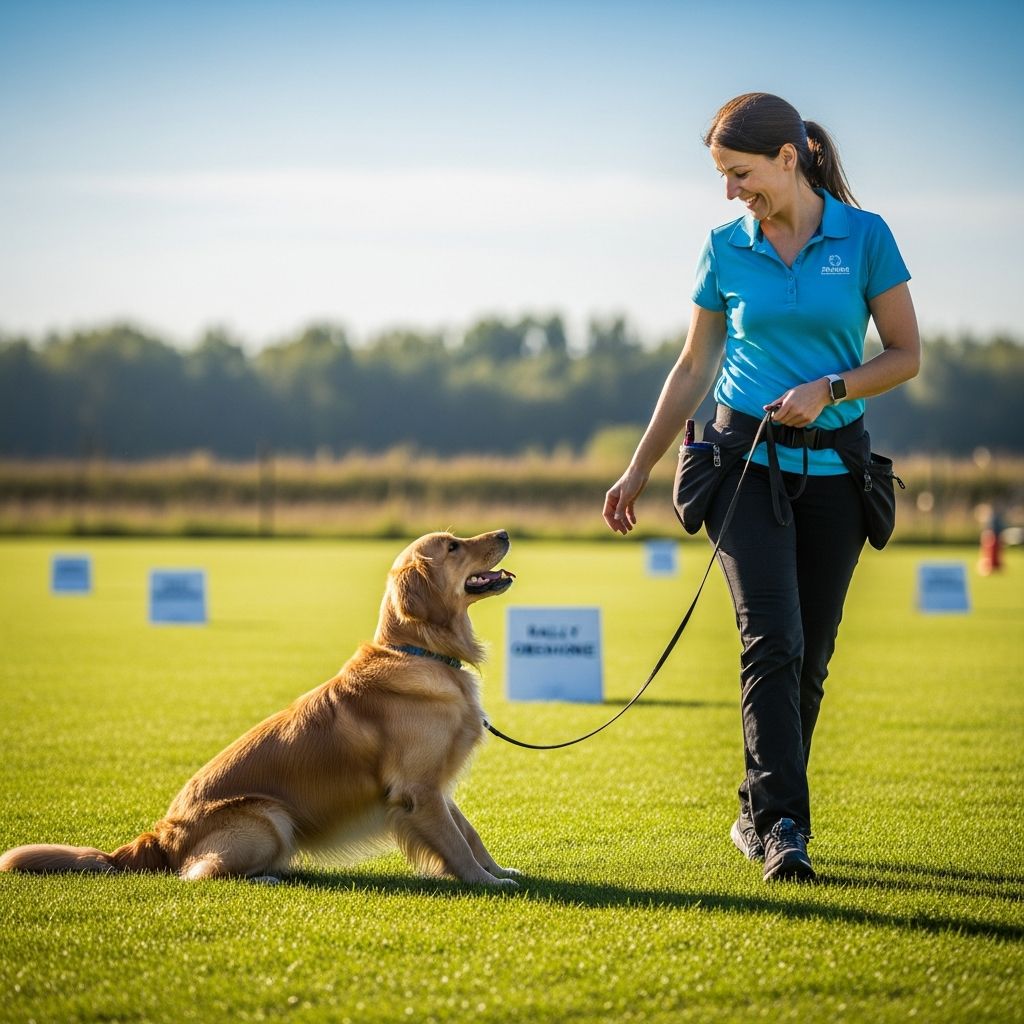
Rally obedience represents one of the most accessible and enjoyable dog sports available today, combining the precision of traditional obedience with the collaborative energy of teamwork between handler and canine partner. Unlike formal obedience competitions that emphasize rigid structure and minimal communication, rally celebrates the bond between you and your dog while rewarding clear direction, consistent training, and mutual understanding. Whether you are seeking a fun recreational activity or aspiring toward competitive titles, rally obedience accommodates dogs of all ages, sizes, and experience levels.
Understanding the Fundamentals of Rally
Rally obedience is fundamentally a sport built on communication and partnership. In this discipline, you and your dog navigate a predetermined course together at a comfortable pace that you establish. The course consists of 10 to 20 stations, each marked with a sign that instructs you both to perform a specific obedience exercise. These exercises range from directional changes to position modifications, requiring both handler and dog to execute movements with precision and harmony.
The defining characteristic that distinguishes rally from traditional obedience is the unrestricted communication permitted throughout the course. Handlers are encouraged to use verbal commands, hand signals, body language, clapping, and leg tapping to guide and praise their dogs. This encourages genuine dialogue between handler and pet, creating an atmosphere of cooperation rather than obedience through constraint.
Rally courses typically require approximately 3 minutes to complete, though this duration extends as competitors advance through higher difficulty levels. Each course is thoughtfully designed by a certified judge to present appropriate challenges while maintaining fairness across all competing teams.
Core Competencies Your Dog Must Master
Before entering rally training formally, your dog should possess fundamental obedience capabilities. These prerequisite skills form the foundation upon which rally expertise develops.
- Heeling — The cornerstone exercise in rally, heeling requires your dog to move alongside you on a loose leash, maintaining position on your left side. This movement forms the primary means of navigation throughout any rally course.
- Positional commands — Your dog must respond reliably to sit, down, and stand instructions, both while heeling and stationary.
- Stay training — Rally incorporates exercises where your dog remains in position while you move around or away from them.
- Recall reliability — Coming to you promptly when called proves essential for many advanced rally maneuvers.
- Loose-leash walking — Foundational walking skills ensure your dog can navigate courses without pulling or excessive tension.
If your dog demonstrates gaps in any of these areas, investing time in a basic obedience class with a qualified instructor before starting rally-specific training will significantly accelerate your progress.
Navigating the Training Progression System
Rally operates through a structured level system that allows teams to progress at appropriate paces. The American Kennel Club, which oversees most organized rally competitions in North America, maintains six distinct levels, beginning with Novice class for newcomers.
Novice level characteristics include:
- All exercises performed with your dog on leash
- Courses containing 10-15 signs
- Foundational exercises such as 360-degree turns and pace variations
- Unlimited handler communication and encouragement
- Three qualifying scores required to earn the Novice title
As you progress through subsequent levels, courses become more complex, off-leash work is introduced, and exercises demand greater precision and independence from your dog. However, maintaining practice on foundational skills remains important regardless of your advancement level.
Understanding Rally Scoring and Qualification Standards
Rally employs a forgiving scoring methodology compared to traditional obedience. You begin each course with a perfect score of 100 points. Judges then deduct points for various infractions such as improper positioning, incompletely executed exercises, or handler errors. To qualify, you must retain a minimum score of 70 points.
This approach reduces anxiety for newer competitors while still maintaining standards for advancing through levels. The emphasis shifts from perfection to demonstrating competence and clear communication between handler and dog.
Launching Your Training Program
The most effective path to rally success begins with finding qualified instruction. Most communities offer rally obedience classes through local dog training clubs, established obedience schools, or certified private trainers.
Steps to initiate your rally journey:
- Research local training facilities and instructors with rally expertise
- Request to observe a class before enrolling to assess teaching style and facility quality
- Enroll in a beginner class appropriate for your dog’s experience level
- Commit to consistent home practice between lessons
- Follow your instructor’s guidance on progression timeline
Quality instruction accelerates learning significantly. Trainers provide immediate feedback, demonstrate proper technique, and guide you through common obstacles that self-taught teams often encounter.
Designing Effective Home Training Sessions
While classes provide structure and professional guidance, home practice amplifies your progress exponentially. Establishing a consistent practice routine strengthens the skills your dog learns during formal lessons.
Optimal home practice parameters include:
- Training frequency of 3-4 sessions weekly
- Session duration appropriate to your dog’s age and attention span (younger dogs benefit from shorter sessions)
- Focus on precision and teamwork rather than speed
- Varied environments to generalize skills beyond training class settings
- Progressive difficulty, beginning with Novice-level signs before advancing
Home practice should emphasize quality over quantity. Short, focused sessions where both you and your dog remain engaged produce superior results compared to lengthy, potentially frustrating training periods.
Creating Rally Courses in Your Training Environment
You need not possess specialized facilities to practice rally at home. Simple course creation uses readily available materials and equipment.
Essential components for home course setup:
- Rally sign sets (commercially available or DIY constructions)
- Suitable practicing areas such as yards, parks, or indoor spaces
- Sufficient spacing between stations (minimum 10 feet)
- Clear course markings and directional indicators
Begin your home courses with straightforward Novice-level exercises, gradually introducing greater complexity as your dog demonstrates proficiency. Altering course layouts regularly maintains engagement and challenges your dog’s adaptability.
Mastering Essential Rally Exercises
Rally courses incorporate numerous exercises, but certain fundamental movements appear consistently across all levels.
Basic positional transitions include:
- Sit in heel position — Your dog assumes a sitting posture while maintaining proper heel position beside you
- Down in heel position — Your dog lies down while remaining in heel position
- Stand in heel position — Your dog stands from a sitting position while staying in heel position
- Front position — Your dog sits facing you directly
- Finish movements — Your dog returns to heel position by circling behind you (finish right) or swinging around your left side (finish left)
Movement-based exercises involve:
- Directional turns (90-degree and 180-degree movements)
- Pace modifications (accelerating, decelerating, or maintaining speed)
- Spiral patterns and serpentine courses
- Distance work (sending your dog away from you)
Master individual exercises before combining them into full course sequences. This systematic progression ensures your dog develops solid comprehension of each component.
General Course Performance Rules
Understanding rally’s operational guidelines prevents confusion during training and competition.
Key performance regulations include:
- Courses begin when you and your dog pass the Start sign and conclude at the Finish sign
- Your dog should maintain heel position unless specific exercises require otherwise
- Execute exercises in the order indicated by numbered stations
- Course paths generally proceed to the left of each sign (some directional exercises position signs directly ahead)
- Handler touching your dog is prohibited, but verbal and visual communication is unlimited
Familiarizing yourself with these guidelines ensures smooth performance both during training and official competitions.
Building Competitive Readiness
Once you and your dog achieve proficiency through consistent training, considering competition participation provides motivation and structure. Competitions range from local club events to regional and national championships.
Preparation for competitive participation involves:
- Attending several classes to develop competition-appropriate performance
- Practicing in varied environments and under different conditions
- Becoming comfortable with audience presence and unfamiliar spaces
- Understanding specific competition rules for your sanctioning organization
- Registering your dog with the appropriate kennel club if required
Your first competition represents a learning experience rather than a performance test. Concentrate on executing exercises cleanly and enjoying the process with your dog rather than achieving perfect scores.
Frequently Asked Questions About Rally Obedience
Q: At what age can my dog begin rally training?
A: Most trainers recommend waiting until your dog has achieved basic obedience competency, typically around 6-12 months of age depending on breed and individual development. Younger dogs benefit from shorter training sessions due to limited attention spans.
Q: Are certain dog breeds better suited for rally?
A: Rally welcomes all dogs regardless of breed, size, or background. Mixed breeds, rescues, and purebreds all compete successfully at every level. Your dog’s trainability and your commitment matter far more than pedigree.
Q: How much does rally training cost?
A: Costs vary by location and trainer experience. Group classes typically range from modest to moderate pricing, while private lessons cost more but offer personalized instruction. Competition fees depend on your sanctioning organization and competition level.
Q: Can dogs with behavioral issues participate in rally?
A: Dogs with significant aggression, fear, or anxiety issues should address these concerns with a qualified trainer before beginning rally. Dogs with mild reactivity can often benefit from the structure and positive reinforcement rally provides, though individual assessment is necessary.
Q: How long does it take to achieve a rally title?
A: Progression varies widely based on training frequency, your dog’s learning speed, and exercise consistency. Many teams earn their Novice title within 6-12 months of regular training.
Selecting the Right Training Facility
Quality instruction dramatically influences your rally experience and success trajectory. When evaluating training facilities and instructors, consider instructor credentials, training methodology, class structure, and facility environment.
Many facilities permit prospective students to observe classes before committing to enrollment. Taking advantage of observation opportunities allows you to assess whether the training environment aligns with your goals and preferences.
Conclusion: Your Rally Adventure Awaits
Rally obedience offers an exceptional opportunity to deepen your relationship with your dog while engaging in a legitimate competitive sport. The combination of foundational obedience, ongoing communication, and progressive challenges creates an activity that remains rewarding across years of participation. By establishing a strong foundation, committing to consistent training, and maintaining realistic expectations, you and your dog can experience the satisfaction and joy that rally obedience provides. Whether pursuing competitive titles or simply enjoying recreational participation, your rally journey promises enrichment and memorable moments with your canine companion.
References
- A Rally Primer with Practice Sequences and Level 1 Exercises — Rally Dogs. https://www.rallydogs.com/binary/files/2020-04-Rally-Primer-Getting-Started-with-Rally.pdf
- What is Rally Obedience for Dogs? A Beginner’s Guide to Rally — Antinol UK. https://antinol.co.uk/blogs/education/what-is-rally-obedience-for-dogs-a-beginners-guide
- Creating a Home Dog Rally Course: Essential Equipment for Practice — JJ Dog Training. https://www.jjdog.com/blog/creating-a-home-dog-rally-course
- Getting Started in Rally — American Kennel Club. https://www.akc.org/sports/rally/get-started/
Similar Articles








Read full bio of medha deb


