

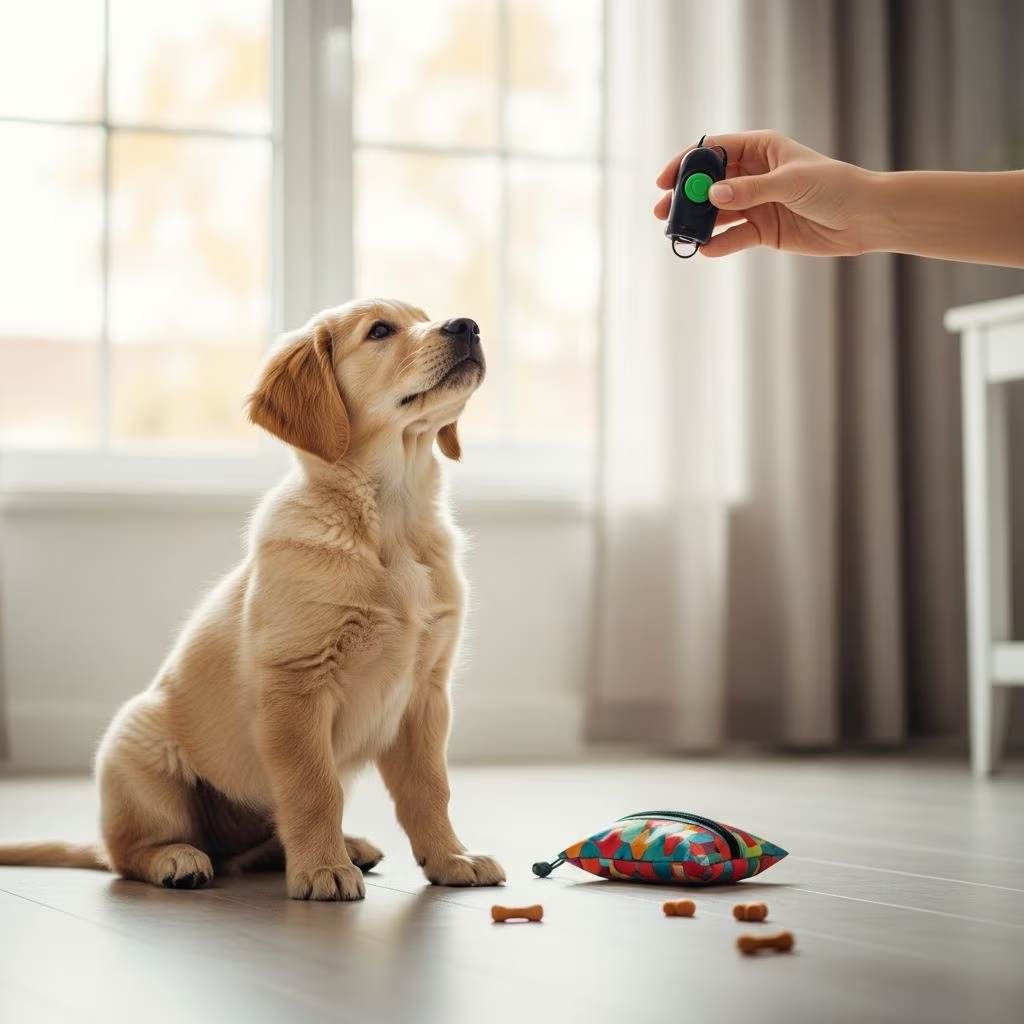
Training your dog from the ground up creates a strong foundation for a harmonious relationship. This guide outlines practical steps for novices, focusing on core skills like responding to calls, polite walking, and settling behaviors. Using positive methods ensures quick progress and boosts confidence for both you and your pet.
Why Start Training Early
Early training prevents behavioral issues and enhances safety. Puppies absorb lessons rapidly, forming habits that last a lifetime. Consistent practice builds trust and communication, making everyday interactions smoother. Research from animal behavior experts emphasizes starting in low-distraction settings to maximize retention.
Essential Principles for Success
Effective training relies on a few key rules. Keep sessions brief—five to ten minutes—to match a dog’s attention span. Use high-value rewards like small treats or praise immediately after desired actions. Consistency across family members avoids confusion. Patience is vital; progress varies by breed, age, and temperament.
- Short, frequent sessions prevent fatigue.
- Positive reinforcement encourages repetition.
- Clear, single-word cues simplify understanding.
- End on a positive note for motivation.
Gathering Your Training Toolkit
Simple tools amplify results. A standard flat leash and front-clip harness provide control without discomfort. High-quality treats motivate eager learners. A clicker marks precise moments for rewards, speeding learning. Toys add variety for play-based reinforcement.
| Tool | Purpose | Tips |
|---|---|---|
| Flat Leash & Harness | Leash manners | Avoid retractables for beginners; opt for 4-6 ft length. |
| Treats | Rewards | Use soft, smelly ones; break into tiny pieces. |
| Clicker | Behavior marking | Charge first by pairing clicks with treats. |
| Toys | Engagement | Choose puppy favorites for fetch practice. |
Mastering the Sit Command
Sit is the cornerstone of obedience, useful for greetings and impulse control. Hold a treat above your dog’s nose, move it back over their head while saying “sit.” Their rear naturally lowers. Click or praise instantly, then treat. Practice 10-15 times per session, fading the lure over days.
Common pitfall: Pushing the hindquarters—let them offer the behavior voluntarily. Gradually add distance and duration before releasing with “okay.”
Teaching a Reliable Stay
Stay builds self-control, essential for doorways and vet visits. From sit, say “stay” with a palm-out signal, step back one pace. Return and reward if they hold position. Build duration to 30 seconds, then distance. Practice in varied spots like kitchen or yard.
- Start close, one step at a time.
- Use a release word to end the stay.
- Increase challenges slowly to avoid frustration.
Recall: Calling Your Dog Safely
A solid “come” can save lives in emergencies. In a quiet room, say their name + “come” cheerfully, backing away to entice movement. Reward lavishly upon arrival—treats, pets, play. Progress to longer leashes outdoors, adding mild distractions like toys.
Pro tip: Never call for punishment; always make coming rewarding. Practice before meals when hunger heightens motivation.
Leash Walking Without Pulling
Polite leash manners make outings enjoyable. Start indoors: Reward for walking beside you without tension. Use “heel” or “let’s go,” treating every few steps. Outdoors, stop if pulling occurs—resume when slack returns. Front-clip harnesses redirect naturally.
For strong pullers, change direction abruptly to teach focus. Sessions before meals leverage food drive.
Down for Calm Settling
The down command promotes relaxation in stimulating environments. From sit, lure a treat to the floor between paws, saying “down.” Praise the full prone position. Fade lure by using hand signals alone. Combine with stay for longer settles.
Leave It for Impulse Control
Prevent grabbing hazards with “leave it.” Place a low-value item down, cover with your foot if needed, and offer a better treat for looking away. Say the cue once, reward disinterest. Advance to dropped food or toys.
Introducing Name Recognition
Your dog’s name should mean “pay attention.” Say it once; when they look, reward. Practice amid mild noise. This foundation sharpens all other cues.
Building a Daily Routine
Integrate training into life: Morning sits before breakfast, evening recalls in the yard. Track progress in a journal. Vary rewards to maintain interest—mix food, toys, life rewards like walks.
Overcoming Common Hurdles
Dogs ignore cues? Return to basics in distraction-free zones. Regression? Shorten sessions, up rewards. Fearful pups need gentler pacing. Multi-dog homes require individual turns.
| Problem | Solution |
|---|---|
| Ignores commands | Lower distractions, higher value rewards. |
| Pulls on leash | Stop walking, reward slack leash. |
| Excited jumping | Turn away, reward four-on-floor. |
| Slow recall | Practice with long line, never chase. |
Advanced Steps and When to Seek Help
Once basics solidify, teach fetch: Lure holding toy, then tossing short distances. Group classes offer socialization. If aggression or severe fears persist, consult certified trainers.
FAQs
What age is best to start training?
Puppies as young as 8 weeks thrive on early lessons, but adults learn too with patience.
How often should I train?
3-5 short sessions daily yield best results without overwhelming your dog.
Are treats always necessary?
Initially yes for motivation; phase to verbal praise or play as skills build.
What if my dog regresses?
Go back a step, ensure consistency, and rule out health issues.
Can I train multiple dogs together?
Practice individually first, then together once proficient.
References
- 5 Dog Training Tips for Beginners — Open Farm. 2023. https://openfarmpet.com/blogs/news/dog-training-tips-for-beginners
- Dog Training 101: Basic Training Tips for Dogs and Puppies — CareCredit. 2024. https://www.carecredit.com/well-u/pet-care/how-to-train-your-dog/
- The Basics of Training Your Dog — University of Wisconsin 4-H Extension. 2021-05-01. https://4h.extension.wisc.edu/files/2021/05/The-Basics-of-Training-Your-Dog.pdf
- How to Train a Dog & Dog Obedience Training — American Kennel Club (AKC). 2025. https://www.akc.org/expert-advice/training/
- How to Train Your Dog & Top Training Tips — RSPCA. 2024. https://www.rspca.org.uk/adviceandwelfare/pets/dogs/training



