

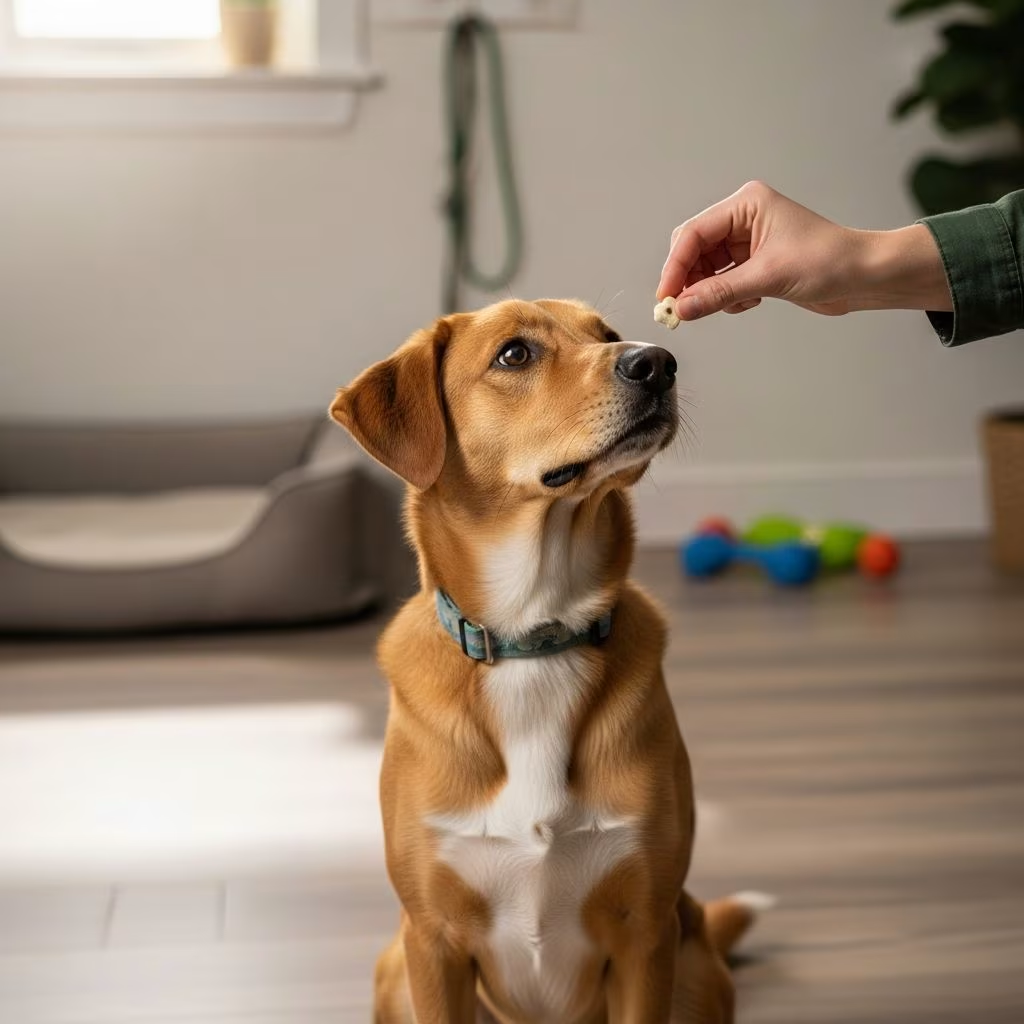
Training your dog from the ground up creates a foundation for a harmonious relationship filled with mutual respect and clear communication. New owners often feel overwhelmed, but starting with simple, consistent methods yields remarkable results. This guide outlines proven strategies drawn from expert recommendations to help you teach essential skills effectively.
Why Start Training Early
Early training prevents behavioral issues and enhances safety. Puppies and adult dogs alike benefit from structured sessions that reinforce good habits. Positive reinforcement, using treats and praise, builds trust without fear, leading to faster learning and stronger bonds. Sessions should remain fun to keep both you and your dog engaged.
Essential Preparation for Success
Before diving into commands, gather high-value treats, a clicker if desired, and a quiet space. Short sessions of 5-10 minutes multiple times daily work best to maintain focus. Consistency across family members ensures your dog understands expectations clearly.
- Select small, soft treats your dog loves.
- Practice in low-distraction areas first.
- End sessions on a positive note.
Mastering the Sit Command
The sit command is foundational, helping control impulses like jumping. Hold a treat above your dog’s nose, move it back over their head slowly. Their rear naturally lowers as they follow. Say “sit” once, then reward immediately with the treat and enthusiastic praise. Repeat 5-10 times per session, gradually fading the treat lure.
| Step | Action | Tips |
|---|---|---|
| 1 | Hold treat at nose level | Use smelly, soft treats |
| 2 | Move treat backward | Say command once only |
| 3 | Reward when bottom touches ground | Praise excitedly |
Practice before meals to heighten motivation. Within days, most dogs respond reliably.
Teaching the Down Command
Once sit is solid, transition to down for calming behaviors. From a sit position, hold a treat at nose level and lower it straight to the ground between their paws. As they stretch forward and lie down, mark with a clicker or word like “yes,” then treat. If they stand, reset to sit without reward.
Build duration by delaying the treat slightly after they lie down. This command aids in relaxing high-energy dogs during stressful situations.
- Start close to avoid frustration.
- Use gentle luring motions.
- Increase difficulty by adding distance.
Recall Training: Come When Called
Recall saves lives by ensuring your dog returns amid distractions. Begin indoors with a long leash. Say their name cheerfully followed by “come,” backing away excitedly to encourage movement. Reward lavishly upon arrival—treats, pets, toys. Never call for punishment.
Progress outdoors, using the leash to guide if needed. Practice in varied settings, always rewarding heavily. A 6-foot non-retractable leash allows safe exploration.
| Environment | Leash Length | Reward Level |
|---|---|---|
| Indoors | Short | High |
| Backyard | Medium | High |
| Park | Long | Jackpot |
Stay Command for Impulse Control
Stay builds patience. From sit or down, say “stay” with a flat palm signal, take one step back. Hold for 1-2 seconds, return to reward if they remain. Gradually increase steps, time, and distractions. Release with “okay” or “free.”
Eye contact reinforces focus. Short successes prevent failure.
Leash Walking and Heel
Loose-leash walking prevents pulling. Start with your dog at your left side. Use treats to reward position near your knee. Say “heel” as you step off with your left foot. If they forge ahead, stop motion until they return, then reward.
Practice in quiet areas, fading treats over time. Teach a release cue like “go sniff” for breaks.
Advanced Basics: Leave It and Drop It
Prevent ingestion of hazards with “leave it.” Place a low-value item on the floor, cover with your foot if grabbed. Offer a high-value treat from your other hand when they disengage. Reward for ignoring.
For drop it, trade a toy for a treat. Say the command, present treat near their mouth until they release.
Positive Reinforcement Principles
Act as a “vending machine”—commands cue rewards, not demands. Use markers like clickers to pinpoint exact behaviors. Charge the clicker first by pairing it with treats repeatedly. Variable rewards maintain engagement long-term.
Avoid repeating commands; it teaches ignoring. Celebrate small wins to build momentum.
Common Mistakes to Avoid
- Inconsistent cues confuse dogs.
- Long sessions lead to fatigue.
- Punishment erodes trust.
- Skipping basics hinders progress.
Tailoring Training to Your Dog
Puppies learn quickly but tire fast; adults may need patience. High-energy breeds require more exercise first. Read body language—yawning signals stress. Adjust pace accordingly.
Tools and Resources
Clickers sharpen timing. Long leashes enable safe practice. High-quality kibble or soft treats motivate without overfeeding.
Building a Daily Routine
Integrate training into walks, meals, play. Morning review, evening new skills. Track progress in a journal for motivation.
Frequently Asked Questions
How long until my dog learns sit?
Most grasp it in 1-3 sessions with consistency.
What if my dog ignores commands?
Reduce distractions, increase treat value, ensure hunger.
Can I train without treats?
Praise and toys work, but food accelerates learning.
Is crate training part of basics?
Yes, for house manners; make it positive.
When to seek professional help?
If aggression or fear persists after weeks.
Next Steps for Lifelong Learning
Once basics solidify, explore agility, tricks, or socialization classes. Consistent practice cements skills for a well-mannered companion.
References
- 5 Dog Training Tips for Beginners — Open Farm. 2023. https://openfarmpet.com/blogs/news/dog-training-tips-for-beginners
- Dog Training 101: Basic Training Tips for Dogs and Puppies — CareCredit. 2024. https://www.carecredit.com/well-u/pet-care/how-to-train-your-dog/
- Dog Training Basics — FOUR PAWS International. 2023. https://www.fourpawsusa.org/our-stories/publications-guides/dog-training-basics
- The Basics of Training Your Dog — University of Wisconsin 4-H Extension. 2021-05-01. https://4h.extension.wisc.edu/files/2021/05/The-Basics-of-Training-Your-Dog.pdf
- Dog Training For Dummies Cheat Sheet — Dummies.com. 2023. https://www.dummies.com/article/home-auto-hobbies/pets/dogs/training/dog-training-for-dummies-cheat-sheet-208990/
- How to Train Your Dog & Top Training Tips — RSPCA. 2024. https://www.rspca.org.uk/adviceandwelfare/pets/dogs/training



