

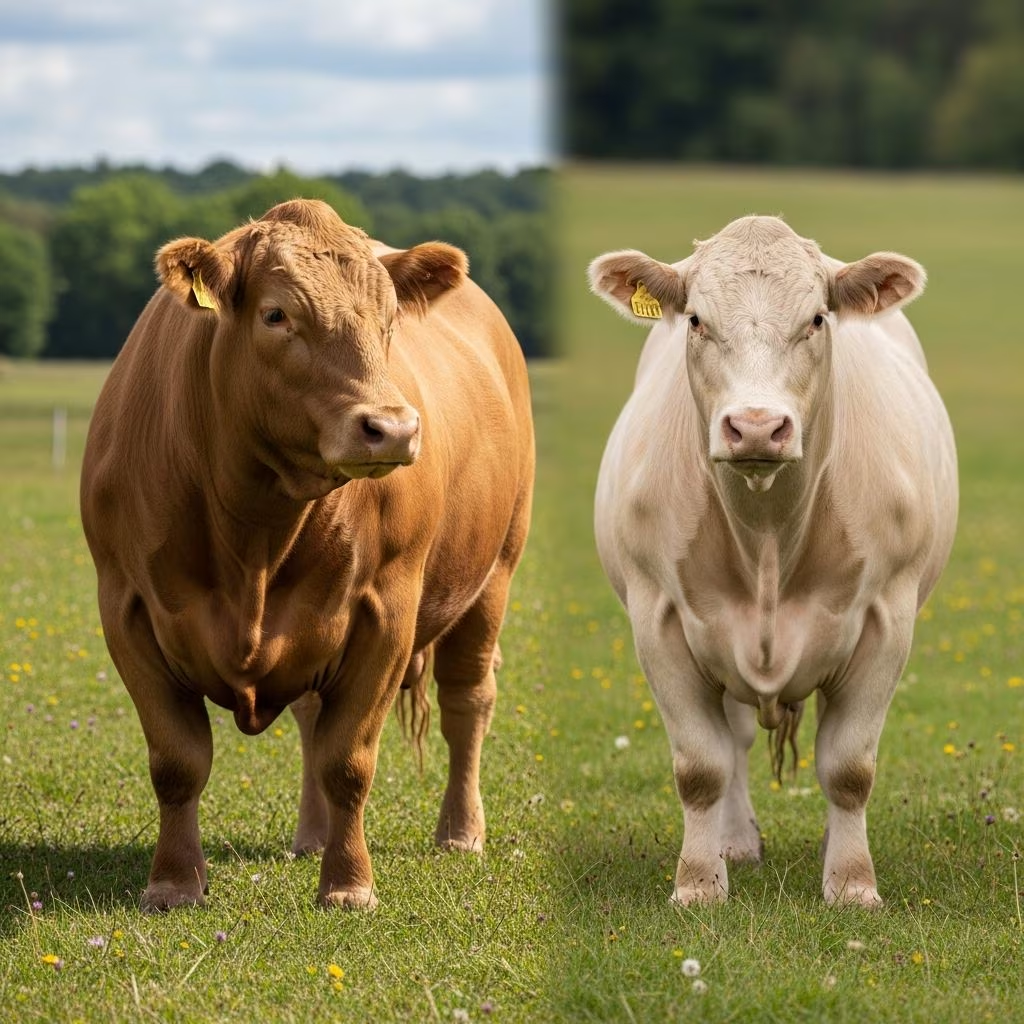
Cattle farming divides into two primary categories: beef production focused on meat yield and dairy operations centered on milk output. Beef cattle prioritize muscle development and fat marbling for high-quality cuts, while dairy cattle channel energy into lactation for substantial milk volumes. These divergent goals shape everything from breed selection to daily care.
Physical Characteristics and Body Builds
Beef cattle exhibit robust, muscular frames designed for weight gain and meat quality. Their bodies feature thick necks, broad backs, strong shoulders, and powerful rumps, supported by sturdy legs suited for grazing across varied pastures. This stocky build promotes efficient fat deposition and lean muscle, essential for steaks, roasts, and ground beef.
In contrast, dairy cattle display leaner, more angular physiques resembling endurance athletes. Prominent hip bones and visible ribs reflect their high metabolism directed toward milk synthesis rather than mass accumulation. Large, well-developed udders hang low for easy milking, a trait absent in beef counterparts where udders remain smaller and positioned higher.
| Feature | Beef Cattle | Dairy Cattle |
|---|---|---|
| Body Shape | Stocky, muscular, rounded | Lean, angular, thin-necked |
| Legs | Strong, short for stability | Narrower for agility |
| Udder | Small, compact | Large, prominent |
| Skeleton Visibility | Minimal (covered by muscle/fat) | Often visible (ribs, hips) |
These structural variances ensure beef animals thrive in extensive grazing while dairy ones adapt to confined milking routines.
Breeds Commonly Used in Each Sector
Beef production favors hardy breeds like Black Angus, known for superior marbling and tenderness; Hereford, valued for resilience in harsh climates; and Simmental, prized for rapid growth and dual-purpose versatility. Brahman crosses add heat tolerance in warmer regions.
- Angus: Black-coated, excellent meat quality with fine marbling.
- Hereford: Red with white faces, strong foraging ability.
- Charolais: White, large-framed for high carcass weight.
Dairy operations rely on high-output breeds such as Holstein, the black-and-white standard producing vast milk quantities; Jersey, smaller but butterfat-rich; and Brown Swiss, noted for longevity and protein content. Guernsey and Ayrshire offer balanced yields with unique milk flavors.
- Holstein: Highest volume producer, up to 9 gallons daily.
- Jersey: Efficient feed converters, creamy milk.
- Ayrshire: Durable, adaptable to pastures.
Breed choice influences farm profitability, with beef emphasizing carcass value and dairy targeting lactation peaks.
Milk Production Capacities Compared
Dairy cows generate 7-10 gallons of milk daily, milked 2-3 times to maintain comfort and output. Annual yields per cow can exceed 2,800 gallons in efficient herds, as seen in Texas operations averaging 7.84 gallons per day. This demands precise management post-calving, with lactation lasting about 300 days followed by a 60-day dry period for udder recovery.
Beef cows produce merely 1-2 gallons daily, sufficient solely for calf nourishment. Their lactation supports offspring growth without commercial harvesting, conserving energy for maternal body condition.
Both types calve annually to sustain cycles, but dairy bulls occasionally cross into beef lines for hybrid vigor.
Nutrition and Feeding Strategies
Beef cattle diets emphasize forages like pasture grasses, supplemented by grains in finishing phases for marbling. Grass-fed regimens build flavor, while grain boosts weight gain. Their pasture-based life leverages natural grazing.
Dairy feeds balance forages (hay, silage) with concentrates for energy-dense nutrition, plus minerals and vitamins. High-protein grasses underpin milk synthesis—one pound of crude protein fuels 10 pounds of milk. Grains prevent metabolic strain from intense lactation.
| Nutrient Focus | Beef Cattle Diet | Dairy Cattle Diet |
|---|---|---|
| Primary Base | Grasses/pasture (70-90%) | Forages + grains (balanced) |
| Energy Use | Muscle/fat gain | Milk production |
| Supplements | Limited grains late-stage | Concentrates, minerals daily |
These tailored rations optimize health and productivity.
Farm Management and Housing Practices
Beef herds roam open ranges or pastures, fostering natural behaviors and low-input systems. Stocky builds endure weather extremes, minimizing shelter needs.
Dairy cows occupy free-stall barns or rotational pastures with frequent milking parlors. Environments provide bedding, water, and feed bunks for hygiene and rest, countering their slimmer frames.
Health protocols differ: beef focuses on parasite control and vaccinations for growth; dairy emphasizes mastitis prevention and foot care amid high-output stress.
Terminology Essentials for Cattle Farmers
Understanding bovine terms clarifies operations:
- Bull: Intact male capable of breeding.
- Steer: Castrated male raised for meat.
- Cow: Female post-calving.
- Heifer: Pre-calving female.
- Calf: Young bovine, any sex.
Beef utilizes steers/heifers for premium meat; dairy retains cows for milking, culling others.
Economic Roles and Market Outputs
Beef cattle yield prime cuts, byproducts like hides and gelatin. Marketed by live weight or graded carcasses.
Dairy generates milk for fluid, cheese, butter; culled cows supply lower-grade beef. Focus remains lactation economics.
Crossbreeding dairy-beef hybrids addresses feedlot gaps, though pure beef outperforms in gain efficiency.
Challenges and Sustainability Considerations
Beef faces grassland pressures; dairy grapples with metabolic demands risking ketosis. Both advance via genetics and precision feeding for lower emissions.
Frequently Asked Questions (FAQs)
Can dairy cows be used for beef?
Yes, retired dairy cows provide ground beef, though meat quality lags due to lean builds.
Do beef cows need milking?
No, their minimal output feeds calves naturally without intervention.
What is the lifespan difference?
Beef to slaughter at 18-24 months; dairy milked 4-6 years before culling.
Are there dual-purpose breeds?
Some like Milking Shorthorn balance both, but specialization dominates.
How does climate affect choices?
Beef suits extensive lands; dairy thrives in controlled settings.
References
- What’s the difference between beef cattle and dairy cattle? — Texas Farm Bureau. 2021-06-01. https://tabletop.texasfarmbureau.org/2021/06/whats-the-difference-between-beef-cattle-and-dairy-cattle/
- What’s the Difference Between Beef and Dairy Cattle? — Kansas Farm Food Connection. 2019-02-28. https://kansasfarmfoodconnection.org/blog/2019/02/28/what%E2%80%99s-the-difference-between-beef-and-dairy-cattle
- Dairy Cow Vs Beef Cow: What is the Difference? — YouTube (video transcript). N/A. https://www.youtube.com/watch?v=FMzbJk85pok
- Dairy Cows vs. Beef Cows — Star Blends. N/A. https://www.starblends.com/news/dairy-vs-beef-cows/
- Dairy cattle — Wikipedia (background, primary refs used). N/A. https://en.wikipedia.org/wiki/Dairy_cattle
- Beef on Dairy Factsheet — University of California Davis eBEEF. 2023. https://ebeef.ucdavis.edu/sites/g/files/dgvnsk7331/files/inline-files/Factsheet2_2023.pdf



