

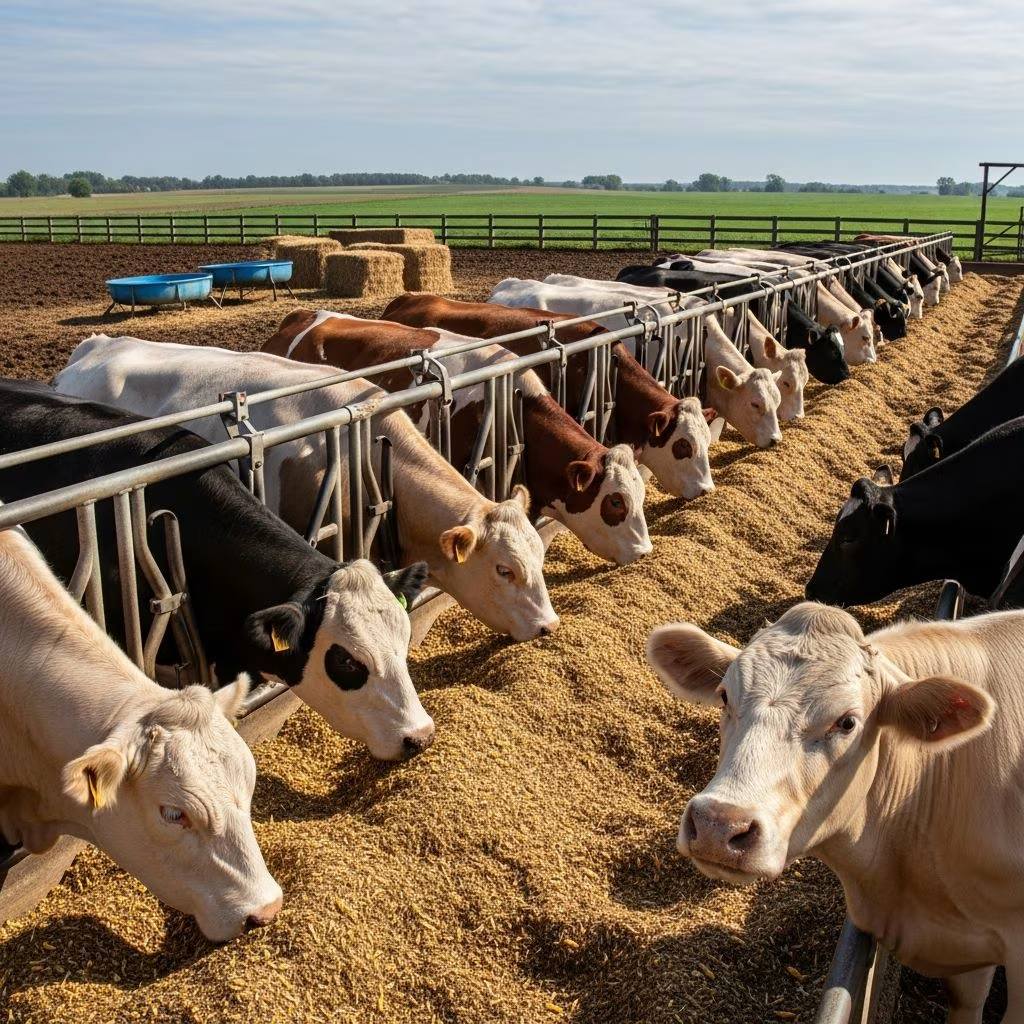
Effective nutrition forms the foundation of successful beef cattle operations, directly influencing growth rates, reproductive success, and overall herd vitality. Balancing energy, protein, minerals, vitamins, and water according to animal stage and environmental factors ensures cost-effective production while minimizing health risks.
Core Nutrients for Beef Cattle Health
Beef cattle thrive on diets providing water, energy from carbohydrates and fats, protein for tissue building, macrominerals like calcium and phosphorus, trace minerals such as zinc and copper, and vitamins including A and E. Requirements vary by body weight, production phase, genetics, and climate; for instance, cold stress elevates energy demands by up to 20-30%.
Energy drives daily maintenance, growth, and milk production. Sources include forages for fiber and grains for concentrates. Protein splits into degradable intake protein (DIP) for rumen microbes and undegradable intake protein (UIP) for direct absorption. Most forage diets demand DIP supplementation.
Mineral and Vitamin Essentials
Forages rarely supply full mineral needs, necessitating free-choice mixes or ration additions. Key macrominerals include:
- Calcium and Phosphorus: Maintain 1.5:1 to 2:1 Ca:P ratio to prevent urinary calculi; lactating cows need 0.3-0.4% calcium.
- Salt (Sodium Chloride): 0.2-0.5% of dry matter diet, often via free-choice blocks.
Trace minerals like copper (10 ppm minimum, antagonized by molybdenum/sulfur), zinc (30 ppm), and selenium (0.1 ppm) require careful balancing to avoid toxicities.
| Mineral | Minimum Requirement | Maximum Safe Level |
|---|---|---|
| Zinc | 30 ppm | 500 ppm |
| Manganese | 20-40 ppm | 1,000 ppm |
| Selenium | 0.1 ppm | 5 ppm |
| Copper | 10 ppm | 40 ppm (Bos taurus) |
Vitamins A from beta-carotene in green forages and E for muscle health demand supplementation in stored feeds. Fat limits: 5% dry matter for roughage diets, 6.5% for grains.
Forage-Based Diets: Foundation of Beef Feeding
Pasture and hay dominate beef nutrition, matching animal needs to forage quality. High-quality legume hay (early bloom grass/legume) supports lactating cows at 2.5% body weight intake, while average pasture suits dry cows at 2.2%.
Assess forage via lab analysis for total digestible nutrients (TDN), crude protein, and fiber. Match to cattle stage:
- Calves/Yearlings: Higher concentrates (>30% grain) for 2+ lb/day gains.
- Growing Heifers: 50-60% TDN forages with protein boosts.
- Lactating Cows: >59% TDN to sustain milk yield.
Phase feeding adjusts nutrients precisely, reducing excesses by 5-10% nitrogen/phosphorus via growth promotants and precise formulation.
Supplementation Strategies for Peak Performance
Protein tops supplementation costs in cow-calf systems. For low-quality forages (<8% crude protein), add 0.5-1 lb/day natural (alfalfa) or non-protein nitrogen sources. Energy via grains or byproducts cuts hay needs in winter.
Mineral programs: Monitor intake (4 oz/head/day target) and rotate feeders. Water quality testing guides adjustments, as contaminants alter needs.
Grain finishing elevates performance but risks acidosis; limit fats and introduce gradually. Grass-fed systems emphasize pasture rotation for sustained quality.
Nutrition Across Production Stages
Newborn Calves to Weaning
Colostrum delivers immunity and energy. Creep feed (16-18% protein) from 2-3 months boosts weaning weights by 30-50 lbs. Weaners need 12-14% protein, 70% TDN for 2.5 lb gains.
Replacement Heifers and Bulls
Target 55-65% puberty by yearling age with 2.5-3 lb daily gain on 12% protein diets. Bulls require higher energy for semen quality.
Breeding Cows: Pre- and Post-Calving
Last trimester demands 20% more energy; thin cows at breeding fail to conceive. Post-calving, peak lactation needs top forages or 4-6 lb grain. Body condition score 5-6 at calving optimizes rebreeding.
| Stage | Daily Intake (% BW) | Forage Quality (TDN %) |
|---|---|---|
| Dry Cow | 2.2 | 52-59 |
| Lactating Cow | 2.5 | >59 |
| Growing Steer | 2.8 | 70+ |
Finishing Cattle
High-grain (80-90%) rations achieve 3-4 lb gains. Balance with ionophores for efficiency, monitoring bunk for refusals to curb waste.
Feed Management and Efficiency Tips
Bunk reading prevents over/underfeeding: clean bunk for ad libitum, sorted feed signals adjustments. Process forages coarsely to retain fiber digestion.
- Minimize waste: Fence pastures properly, test hay before feeding.
- Water access: 1-3 gal/100 lb body weight daily; clean sources vital.
- Environmental tweaks: Windbreaks cut cold stress energy needs.
Manure nutrient strategies: Precise diets slash nitrogen (0-25%) and phosphorus (0-30%) excretion.
Common Pitfalls and Health Risks
Overfat diets impair fiber breakdown; mineral imbalances cause lameness or poor immunity. Copper excess toxifies sensitive breeds. Regular testing and nutritionist consults mitigate issues.
FAQs
How much water do beef cattle need daily?
Expect 1-3 gallons per 100 pounds body weight, rising with lactation or heat.
When to supplement protein in forage diets?
When crude protein drops below 8%, add 0.5-1 lb/head/day.
What’s the ideal Ca:P ratio?
1.5:1 to 2:1 prevents calculi.
Can grass-fed match grain-fed gains?
With quality pastures and supplements, yes, though slower.
How to body condition score cows?
Scale 1-9: 1=emaciated, 9=obese; target 5-6 at calving.
References
- Beef Cattle Nutrition and Feeding — Penn State Extension. 2023. https://extension.psu.edu/animals-and-livestock/beef-cattle/nutrition-and-feeding/
- Nutrient Requirements of Beef Cattle — Merck Veterinary Manual. 2023. https://www.merckvetmanual.com/management-and-nutrition/nutrition-beef-cattle/nutrient-requirements-of-beef-cattle
- Feed and Animal Management for Beef Cattle — USDA NRCS. 2020. https://efotg.sc.egov.usda.gov/references/public/ND/feed_animal_managment_for_beef_cattle.pdf
- Beef Cow Nutrition Guide — Kansas State University. 2022. https://bookstore.ksre.k-state.edu/pubs/beef-cow-nutrition-guide_C735.pdf
- Nutrient Requirements of Beef Cattle — Oklahoma State University Extension. 2021. https://extension.okstate.edu/fact-sheets/print-publications/e/nutrient-requirements-of-beef-cattle-e-974-a.pdf



